

07
45 min
Terrace of the Elephants
លានជល់ដំរី
The Terrace of the Elephants is a monumental platform in Angkor Thom, the walled royal city of the Khmer Empire near Siem Reap.
- Must see
- Historic monument
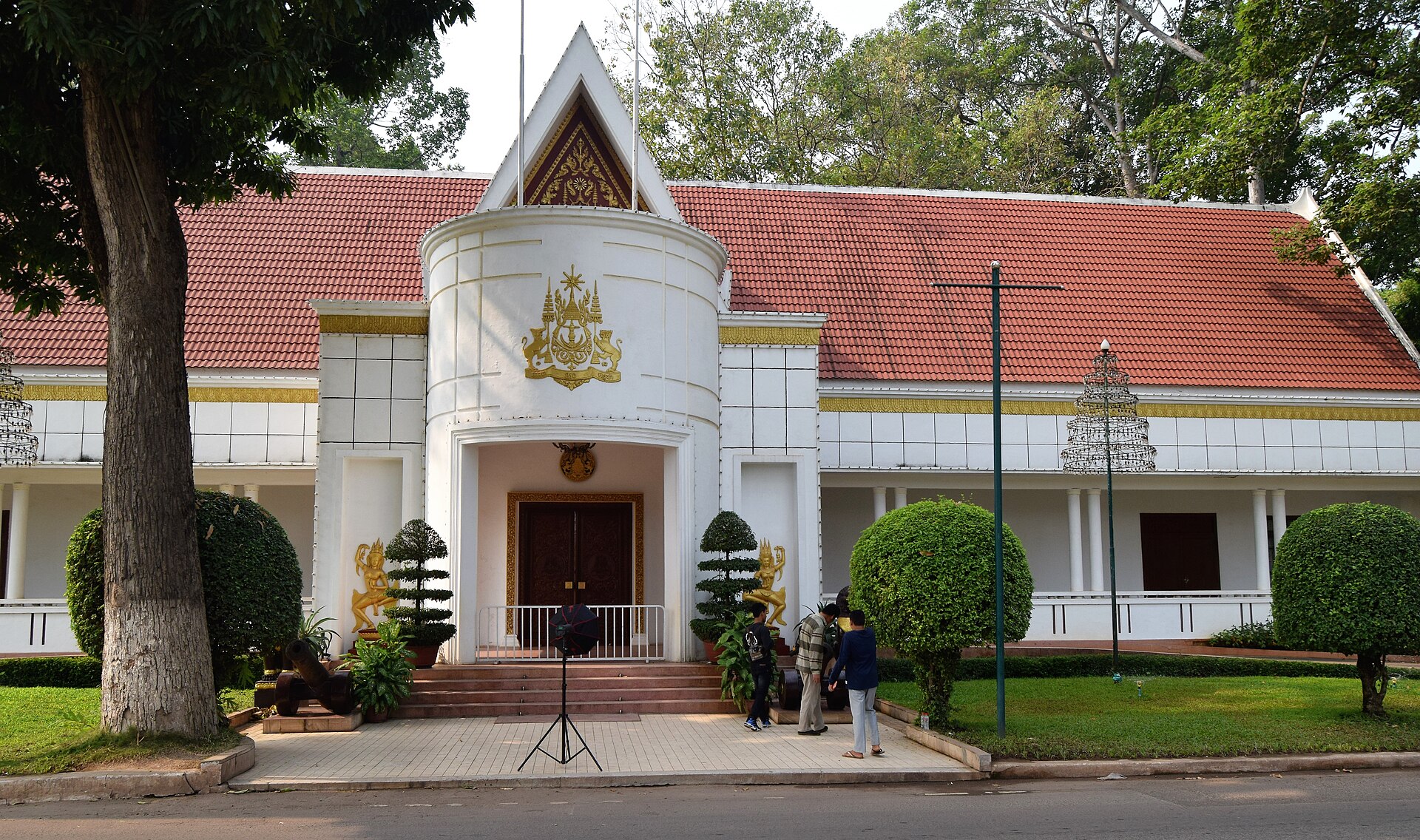
City guide · Cambodia
Siem Reap town is the service base for the much larger Angkor visitor region. The Old Market and riverside form the compact evening centre, while the national m...
Photograph · Anne and David · Public domain
Set your days, your pace and the hours you actually want to be out. The planner works around closing days and travel time, and leaves room to eat.
Reviewed by Elena Voss · Roavina Travel Editor
Siem Reap town is the service base for the much larger Angkor visitor region. The Old Market and riverside form the compact evening centre, while the national museum and road to Angkor run north. Temple circuits spread across a wide archaeological landscape, and Tonle Sap villages, Banteay Srei and Phnom Kulen require separate outward journeys.
Checked 2026-08-26
September · The Siem Reap provincial strategy identifies September as one of the wettest months and records that the city river can overflow during September or October.
Ranked by importance — sitelinks, pageviews and heritage status, not editor preference.
36 places match
Category
Typical visit duration
Interests
លានជល់ដំរី
The Terrace of the Elephants is a monumental platform in Angkor Thom, the walled royal city of the Khmer Empire near Siem Reap.
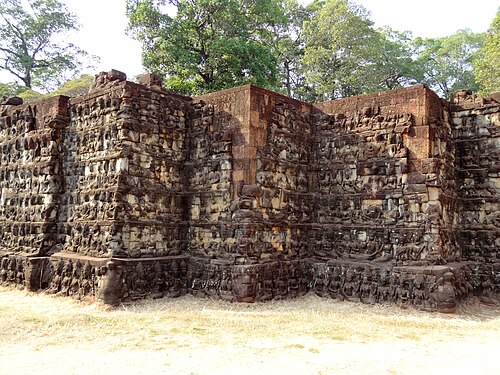
លានស្តេចគំលង់
The Terrace of the Leper King is a carved stone platform in Angkor Thom, immediately north of the Terrace of the Elephants.
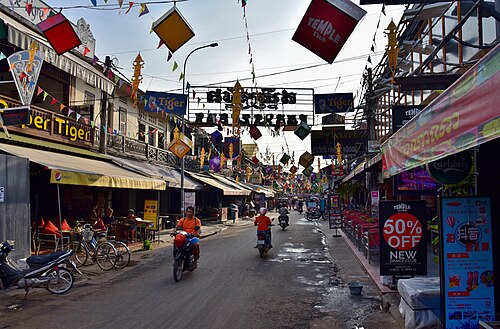
Pub Street is a compact central thoroughfare in Siem Reap, Cambodia, renowned as the city's primary nightlife and dining district. The street and its immediate surrounds concentrate numerous restaurants, bars, and retail establishments catering predominantly to international visitors.
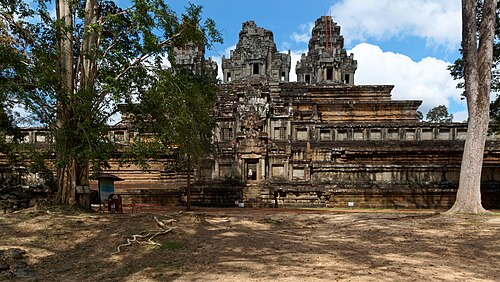
ប្រាសាទតាកែវ
Ta Keo is an unfinished Khmer temple-mountain within the Angkor Archaeological Park, a UNESCO World Heritage site.
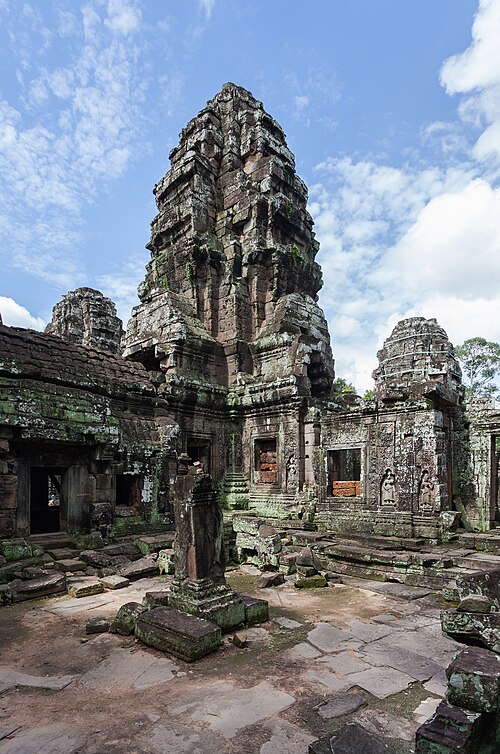
ប្រាសាទបន្ទាយក្តី
Banteay Kdei is a Buddhist temple in the Angkor Archaeological Park, built during the reign of Jayavarman VII in the late twelfth or early thirteenth century.
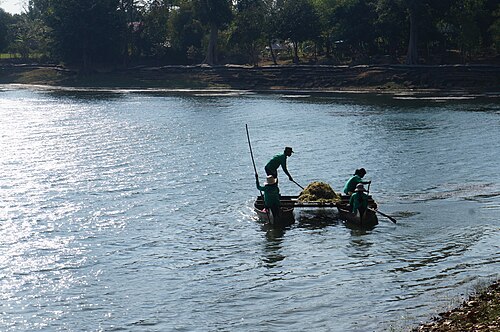
ស្រះស្រង់
Srah Srang is a baray, or reservoir, situated within the Angkor Archaeological Park near Siem Reap, Cambodia. Constructed during the Khmer Empire, it forms part of the UNESCO World Heritage Site inscribed in 1992.
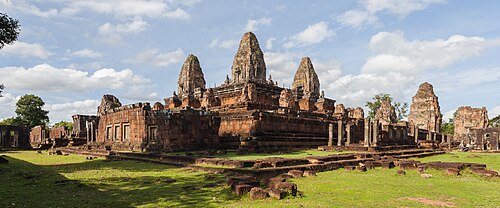
ប្រាសាទប្រែរូប
Pre Rup is a Hindu temple mountain at Angkor, built under King Rajendravarman and dedicated in 961 or early 962. Brick, laterite, and sandstone define its stepped form.
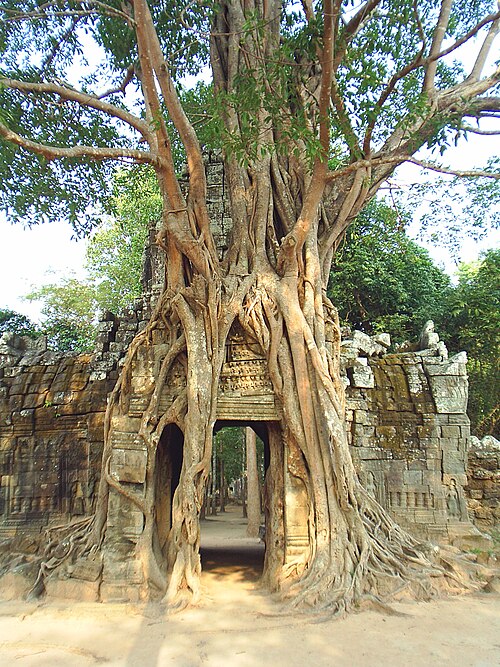
ប្រាសាទតាសោម
Ta Som is a small Buddhist temple built in the late 12th century during the reign of King Jayavarman VII. It sits within the Angkor Archaeological Park, a UNESCO World Heritage Site.
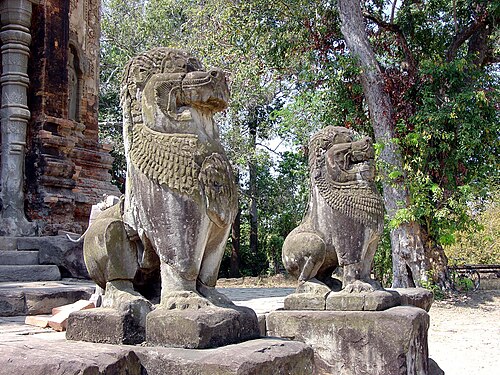
Preah Ko is a Hindu temple in the Roluos group, located east of Siem Reap in Cambodia. Built in the late ninth century during the reign of King Indravarman I, it represents one of the earliest Khmer temple mountains.
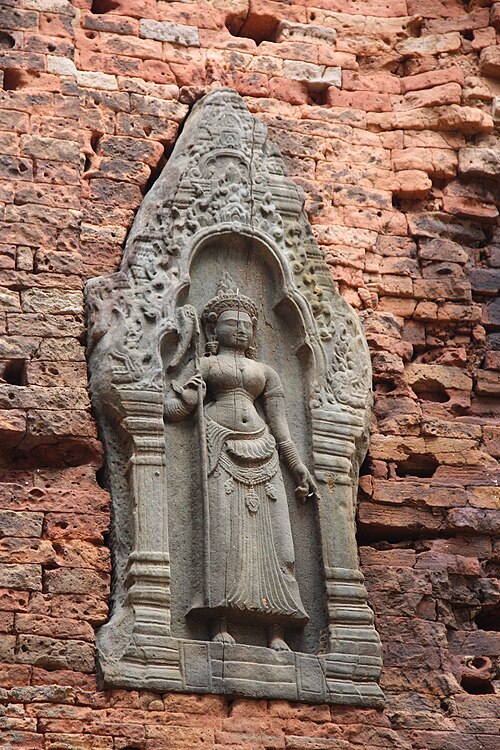
Lolei is an early Hindu temple in the Roluos group east of Siem Reap. Built during the reign of King Indravarman I in the late ninth century, it represents an important stage in early Khmer architecture.
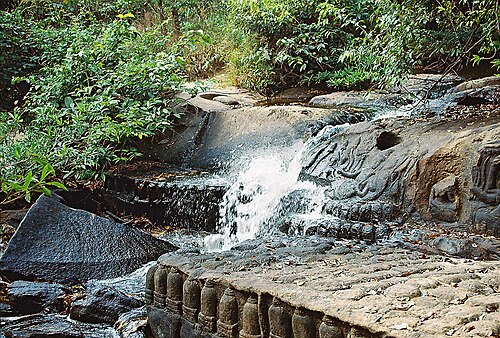
ក្បាលស្ពាន
Kbal Spean is an archaeological site in the Kulen Hills northeast of Siem Reap, Cambodia. Known as the River of a Thousand Lingas, it features Hindu and Buddhist stone carvings on the riverbed and surrounding rocks.
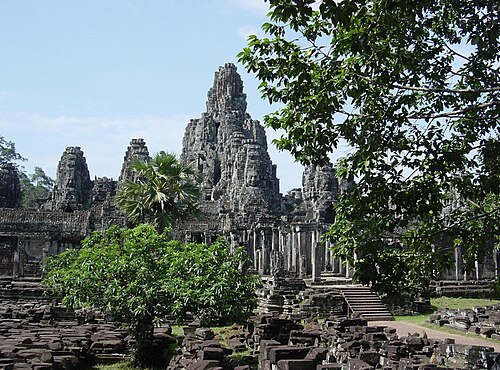
អង្គរធំ
Angkor Thom is a vast walled city and former Khmer imperial capital inside the Angkor Archaeological Park near Siem Reap.
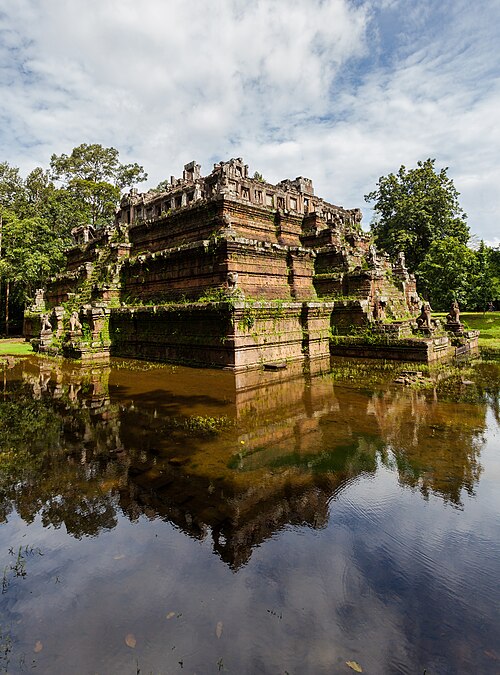
ប្រាសាទភិមានអាកាស
Phimeanakas is a Hindu temple within the Royal Palace enclosure of Angkor Thom, north of Siem Reap. The three-tiered pyramid represents the temple-mountain form associated with Mount Meru in Hindu cosmology.
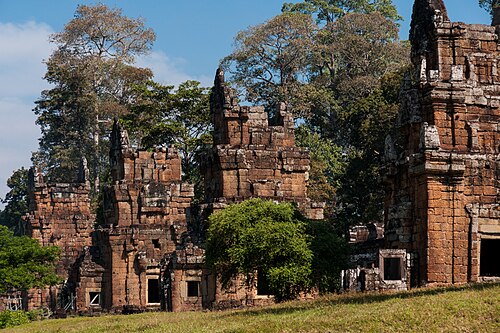
ប្រាសាទសួព្រ័ត
Prasat Suor Prat is a row of twelve laterite and sandstone towers situated opposite the Terrace of the Leper King and adjacent to the Royal Palace enclosure within Angkor Thom, Siem Reap Province, Cambodia.
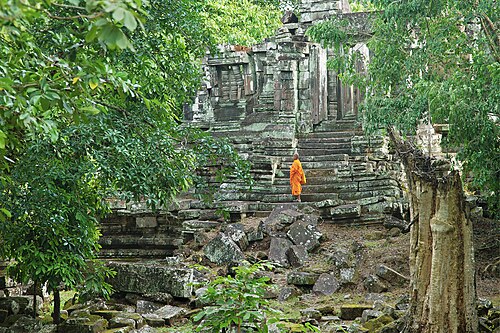
The Preah Pithu Group is a cluster of five small Hindu temple ruins located within the Angkor Archaeological Park near Siem Reap, Cambodia. These temples are part of the broader UNESCO World Heritage Site inscribed in 1992.
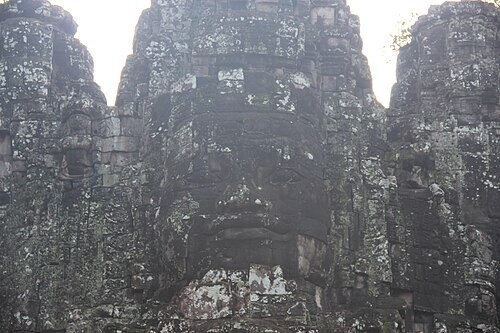
Victory Gate stands among the monumental entrances of Angkor Thom, the walled city that served as the last great capital of the Khmer Empire.
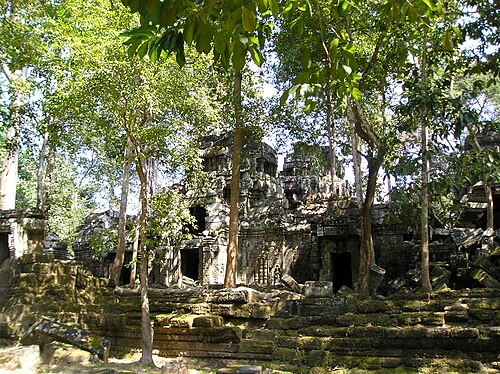
ប្រាសាទតានៃ
Ta Nei is a lesser-known Angkorian temple situated within the Angkor Archaeological Park near Siem Reap, Cambodia.
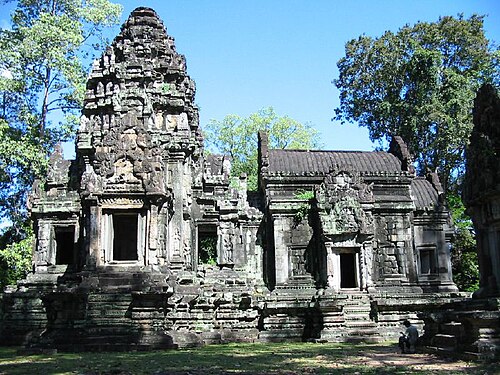
ប្រាសាទធម្មនន្ទ
Thommanon is a Khmer temple ruin located in the Angkor archaeological park near Siem Reap, Cambodia. It was constructed during the reign of King Suryavarman II in the early 12th century, contemporaneous with Angkor Wat.
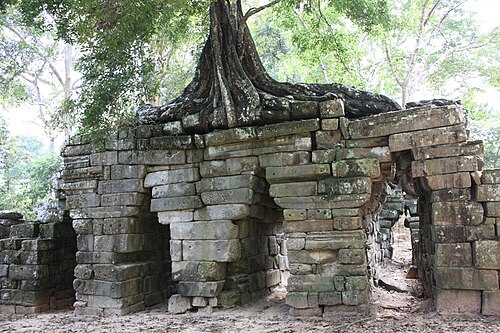
ស្ពានថ្ម
Spean Thma is an ancient stone bridge located in the Angkor Archaeological Park near Siem Reap, Cambodia. Its name translates to 'Stone Bridge' in Khmer.
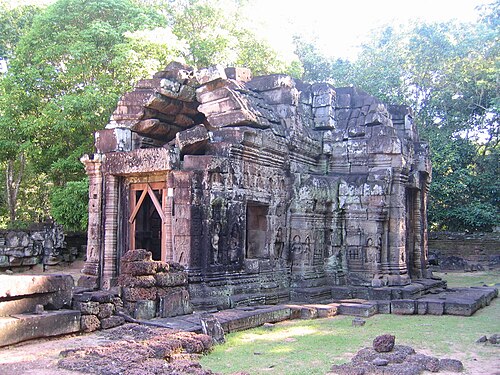
ប្រាសាទក្រោលគោ
Krol Ko is a Buddhist temple within the Angkor Archaeological Park near Siem Reap, Cambodia. It forms part of the UNESCO World Heritage Site inscribed in 1992.
Thnal Baray (Ancient Reservoir)
East Baray is a vast ancient reservoir constructed during the Khmer Empire period, forming part of the broader Angkor archaeological landscape. This monumental water engineering work represents the sophisticated hydraulic infrastructure that sustained the medieval city of Angkor.
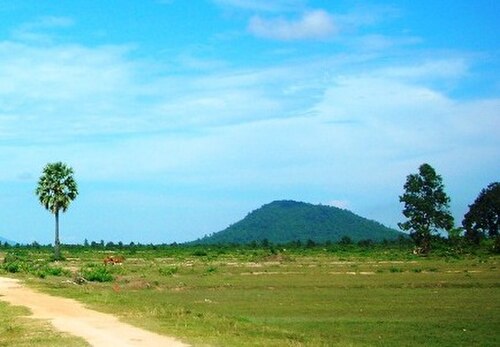
Phnom Bok is a hilltop temple northeast of Siem Reap, reached by climbing Phnom Bok mountain.
Chau Srei Vibol is a Khmer temple ruin situated in the Siem Reap region of Cambodia. The site forms part of the broader Angkor archaeological heritage area, which UNESCO recognizes as World Heritage site 668.
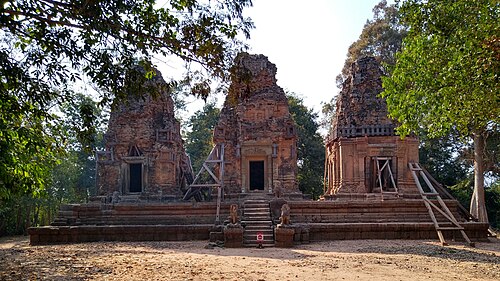
ប្រាសាទបាទជុំ
Prasat Bat Chum is a historical temple site located in the Siem Reap region of Cambodia. The structure forms part of the broader Angkorian archaeological landscape that draws visitors from across the world.
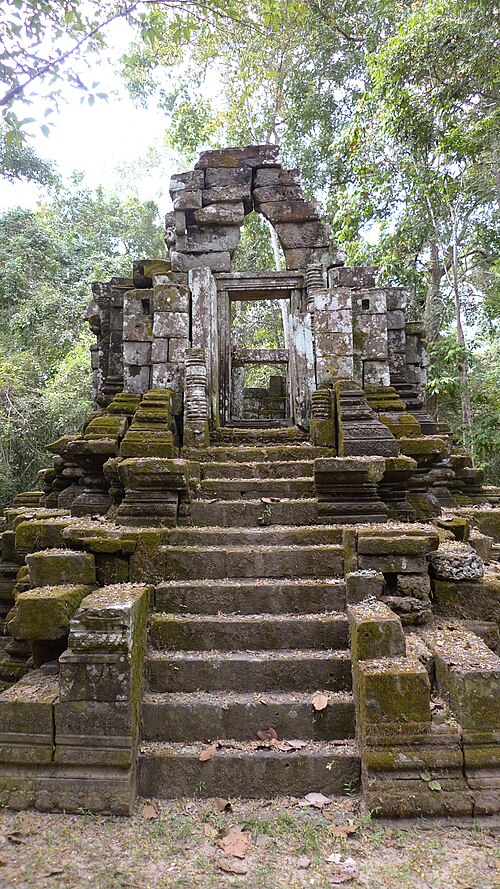
មង្គលាថ៌
Mangalartha is a Buddhist temple monument within the Angkor archaeological landscape near Siem Reap. It belongs to the later phases of Angkorian religious building and offers a smaller-scale encounter with Khmer heritage than the celebrated central temples.
Keep the town centre, Old Market and riverside as one walkable cluster. Plan Angkor Wat and Angkor Thom as a circuit rather than isolated stops, then use another route for the eastern temples. Banteay Srei, Phnom Kulen and Tonle Sap are outside the core temple circuit and should not be squeezed between central ruins without allowing for road time.
Checked 2026-08-26
Walking works within individual town districts, but the official visitor guidance notes that distances between districts are too great for walking. Bicycles suit experienced riders on selected routes, while remork-motos, motorbike taxis, private cars and minivans cover temple circuits and outer sites. Agree the route and return arrangement before leaving the town area.
Checked 2026-08-26
A fixed stay length is not recorded. Build the visit around the Old Market, riverside and Angkor circuits, then add Banteay Srei, Phnom Kulen and Tonle Sap only when the available time supports a separate journey.
Group places by district instead of crossing the city repeatedly. Start with the Old Market, riverside and Angkor circuits; treat Banteay Srei, Phnom Kulen and Tonle Sap as separate routes with their own travel allowance.
Use Walking, bicycle, remork-moto and hired car. Walk within compact clusters and consult the linked official transport information before making longer transfers or relying on a particular route.
Only within individual neighbourhood clusters. The main visitor areas are separated by distances, waterways, major roads or regional approaches, so longer links normally need public transport or a licensed vehicle.
Plan Banteay Srei, Phnom Kulen and Tonle Sap separately from the Old Market, riverside and Angkor circuits. Check the current route, return connection and any access requirements on the official source before departure.