
1 min walk
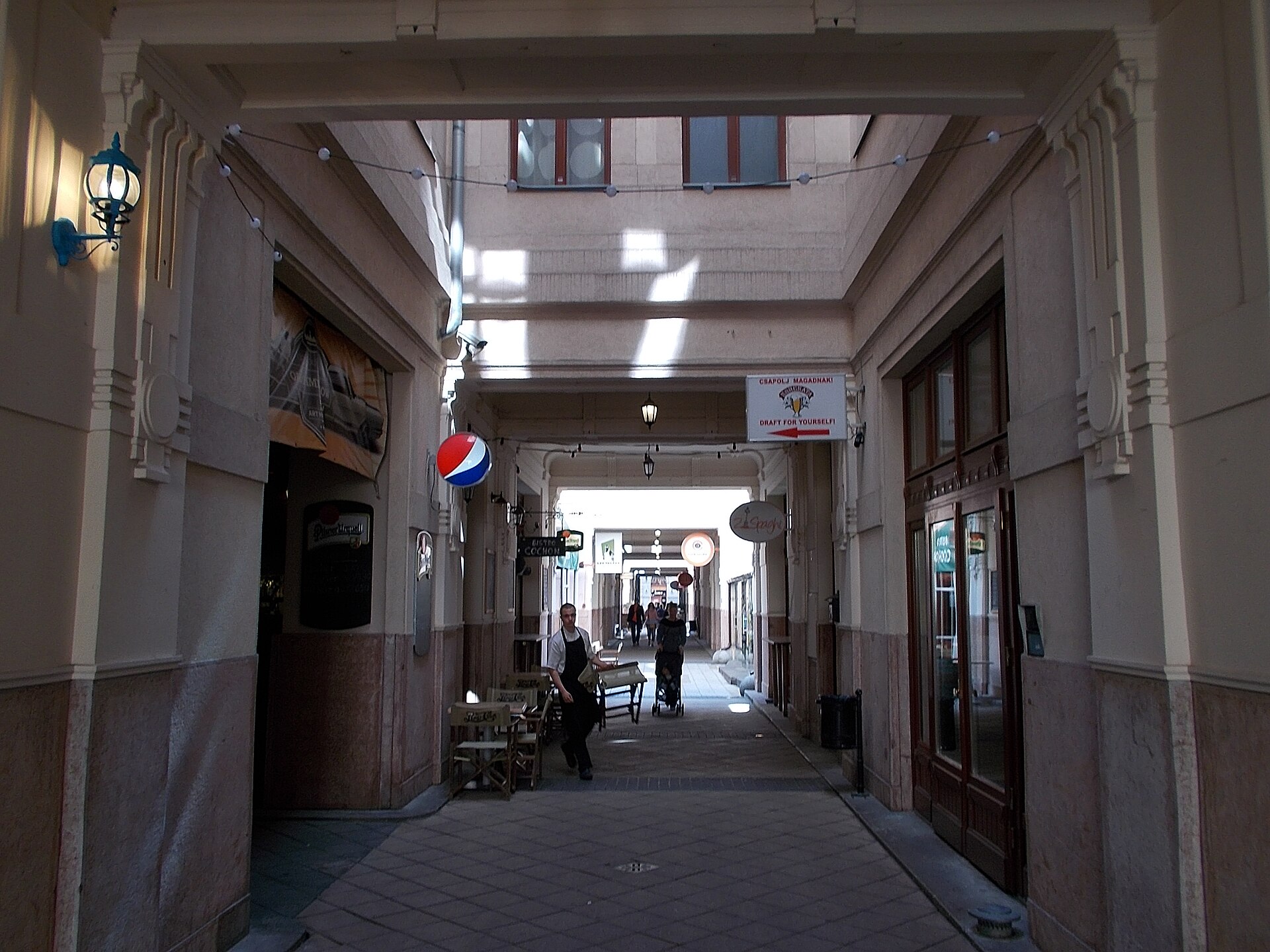
Gozsdu Courtyard
- High
- Activity
Language · 11 published
Place of worship · Budapest
Rumbach utcai zsinagóga
Reviewed by Elena Voss · Roavina Travel Editor
| Monday | 10:00 – 18:00 |
|---|---|
| Tuesday | 10:00 – 18:00 |
| Wednesday | 10:00 – 18:00 |
| Thursday | 10:00 – 18:00 |
| Friday | 10:00 – 18:00 |
| Saturday | Closed |
| Sunday | 10:00 – 18:00 |
Also recorded: 10:00 – 16:00
Parsed from OpenStreetMap opening hours on 2026-09-09.
This place is a Attraction. It was established in 1873. It was built in the Moorish Revival architecture style. It was designed by Felix Buzzi.
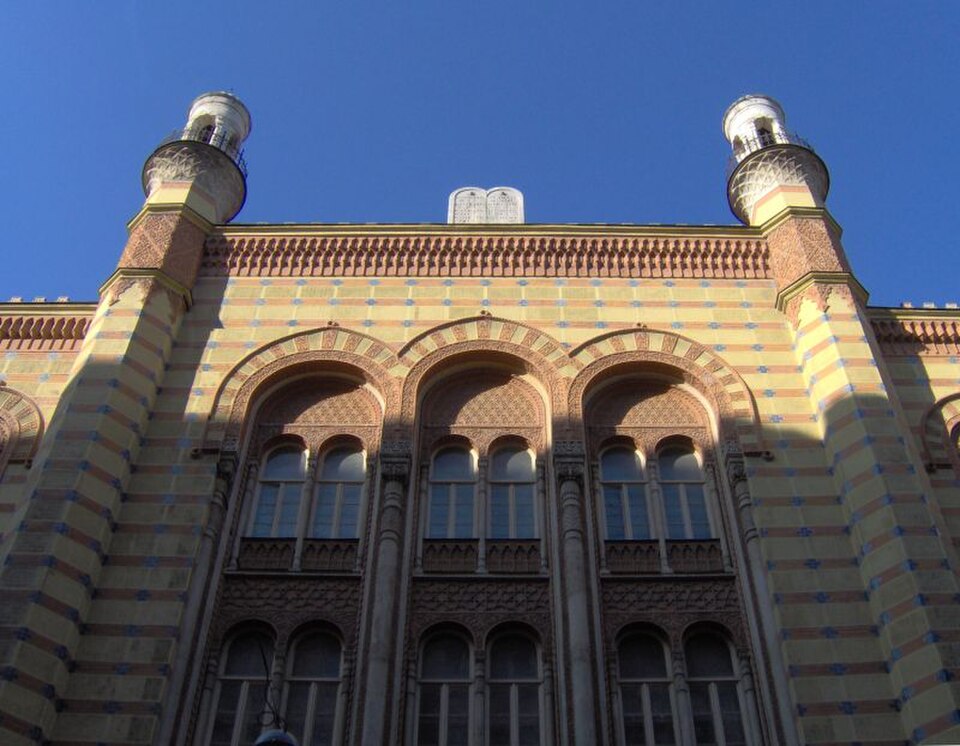
Rumbach Street Synagogue is a landmark of Budapest’s Jewish Quarter and a notable 19th-century Moorish Revival building. Otto Wagner designed the synagogue, which was completed in 1872 for the Neolog Jewish community. Patterned brickwork, ornate arches and Islamic-influenced decoration give the building a distinctive identity within central Pest. The synagogue also represents the religious and architectural life of Budapest before the Holocaust. Its position on Rumbach Street makes it a natural stop while walking between the quarter’s cafés, historic streets and other Jewish heritage sites. Rumbach Street Synagogue stands in Budapest's Jewish Quarter as a significant 19th-century Moorish Revival religious building. Designed by architect Otto Wagner and completed in 1872, it served the Neolog Jewish community. The structure features distinctive Islamic-influenced decorative elements, including patterned brickwork and ornate arches. Following decades of neglect during the communist era, restoration efforts have addressed its deteriorated condition. The synagogue represents an important chapter of Hungarian Jewish architectural heritage and urban religious life before the Holocaust. Current operational status is not verified. Restoration activities have occurred; visitors must confirm access before travel.
Checked 2026-08-26 · Source
Inside, the synagogue is defined by Moorish Revival decoration, including painted stucco, geometric patterns, horseshoe arches and stylised foliate column capitals. The original ark and Torah reading platform remain important parts of the historic interior. Multi-tiered women’s galleries run along the sides, reflecting the arrangement associated with Neolog synagogue design. The interior should be read as a carefully restored religious space rather than as a conventional museum room. Look upward as well as across the walls, since the ceiling and galleries contribute strongly to the building’s visual character. The interior preserves Moorish Revival decorative schemes with elaborate painted stucco and geometric patterns covering walls and ceilings.
Checked 2026-08-26 · Source
Allow about 30 to 45 minutes for a focused visit centred on the surviving architectural details. The compact building suits travellers who want to study the arches, galleries, painted surfaces and geometric decoration without setting aside half a day. Visitors with a strong interest in synagogue architecture or Budapest’s Jewish history can spend longer examining the interior. Rumbach Street Synagogue combines easily with the Dohány Street Synagogue and Jewish Museum, creating a concentrated heritage walk through District VII.
Checked 2026-08-26 · Source
Spring and autumn are comfortable seasons for walking through Budapest’s Jewish Quarter and combining Rumbach Street Synagogue with nearby sites. Summer brings warmer weather and heavier visitor activity, while winter calls for protection from cold temperatures during the surrounding walk. Religious observance can shape the atmosphere and visitor movement inside a synagogue. The building’s historical importance rewards a slower visit when the quarter feels less crowded, especially for travellers who want time to study decorative details rather than make a quick photograph.
Checked 2026-08-26 · Source
Nearby Jewish sites may use their own admission arrangements, and a ticket for one synagogue should not be treated as a ticket for another. The most useful itinerary choice is to group Rumbach Street Synagogue with the quarter’s other landmarks, allowing the day to remain flexible around the sites that can be entered.
Checked 2026-08-26 · Source
Rumbach Street Synagogue stands on Rumbach utca in Budapest’s central District VII. Astoria station on metro line M2 is within walking distance, and tram lines 47 and 49 serve nearby streets. The central Pest setting also makes the synagogue practical to reach on foot from many hotels and attractions. District VII has limited street parking and busy urban paving, so a walking route or public transport is more suitable than planning the visit around a car.
Checked 2026-08-26 · Source
Rumbach Street Synagogue is a religious and memorial place, so quiet, respectful behaviour matters even when the building is visited as heritage. Restoration work has shaped the site’s recent history and can affect movement through historic interiors. The surrounding Jewish Quarter is dense and busy, which calls for ordinary care with personal belongings. Uneven historic surfaces may make movement harder for some visitors. Keep voices low, follow signs, and give worshippers and other visitors space around the building.
Checked 2026-08-26 · Source
The strongest photographs at Rumbach Street Synagogue come from its Moorish Revival geometry: horseshoe arches, patterned brickwork, painted stucco, galleries and decorative ceiling surfaces. Frame the repeated patterns rather than treating the interior as a single wide room. The building’s religious and memorial character calls for restraint, particularly when other visitors are present. Flash, tripods and other equipment should not dominate the visit. Exterior views from Rumbach Street help place the synagogue within the close urban fabric of Budapest’s Jewish Quarter.
Checked 2026-08-26 · Source
Rumbach Street Synagogue is a Moorish Revival building, distinguished by Islamic-influenced decoration, patterned brickwork, ornate arches and geometric interior patterns.
Architect Otto Wagner designed Rumbach Street Synagogue, which was completed in 1872 for Budapest’s Neolog Jewish community.
The interior includes painted stucco, geometric decoration, horseshoe arches, stylised foliate column capitals, multi-tiered women’s galleries, the ark and the Torah reading platform.
A focused architectural visit usually takes about 30 to 45 minutes, with additional time useful for travellers studying the decorative details or combining nearby Jewish heritage sites.
The synagogue is on Rumbach utca in Budapest’s District VII, within the historic Jewish Quarter and within walking distance of Astoria metro station.
Rumbach Street Synagogue can be combined with Dohány Street Synagogue and the Jewish Museum as part of a compact walking route through Budapest’s Jewish Quarter.
Loading the interactive map…
The interactive map could not be loaded.

Last updated:
Source: OpenStreetMap contributors, Wikidata ·