
3 min walk
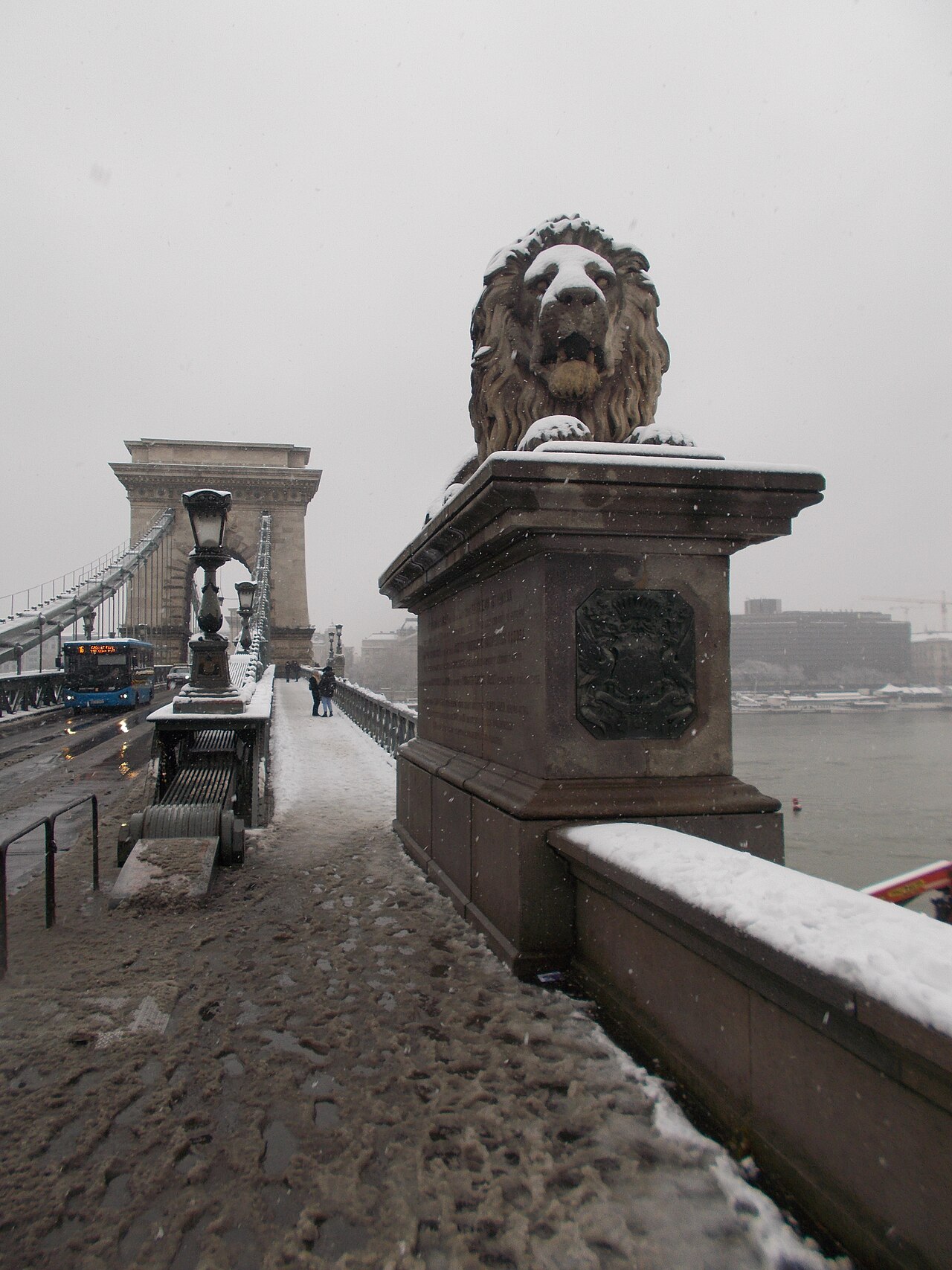
Lions on the Chain Bridge
- Notable
- Art and culture venue
Language · 11 published
Historic monument · Budapest
Széchenyi lánchíd
Editorial responsibility: Elena Voss · Roavina Travel Editor
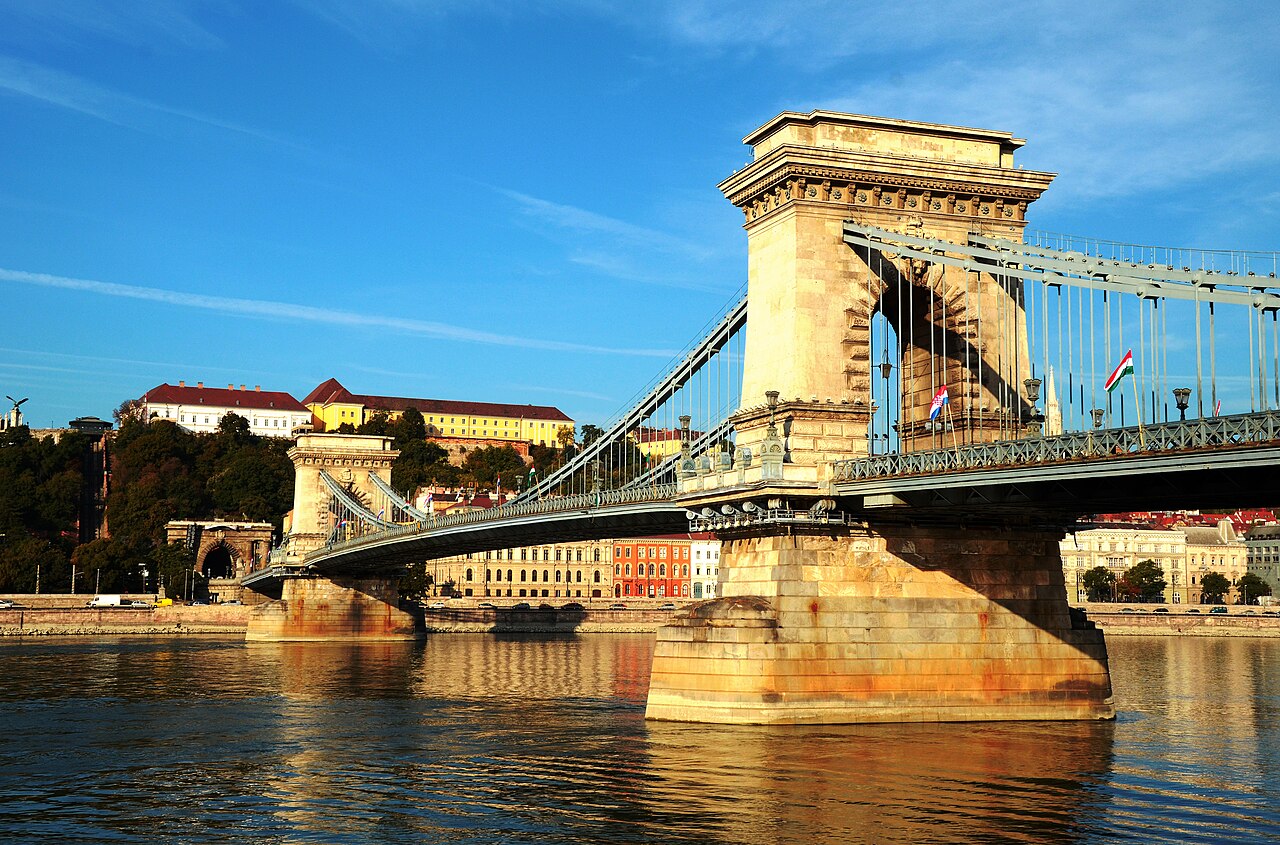
This place is a Attraction. It opened in 1849. It was built in the Renaissance Revival architecture style. It was designed by William Tierney Clark. It is built of stone. It carries the historic monument of Hungary heritage designation.
Széchenyi Chain Bridge is the Danube crossing between Széchenyi István tér in Pest and Clark Ádám tér in Buda. Use it to connect a riverside walk with the foot of Castle Hill. The bridge opened in 1849, was destroyed in January 1945 and reopened after reconstruction on 20 November 1949, exactly a century after its original opening. The span you cross is therefore a rebuilt historic bridge, rather than an untouched nineteenth-century structure.
The latest major renovation finished in 2023. BKK confirms that both pedestrian pavements reopened on 4 August 2023. Older notices describing a construction closure belong to that earlier phase; check current service notices for a disruption affecting your travel date.
Checked 2026-09-25 · Source
The visit is an outdoor crossing: look at the stone lions at the bridgeheads, the towers, the chains and the restored lamps and railings. BKK's restoration account explains that the lions were cleaned and repaired in a workshop, with surviving weathering retained on their limestone surfaces. The renewed appearance does not mean that every stone carving is a modern replacement.
The renovation also replaced the deteriorated concrete road deck with steel panels. Beneath the approaches are anchorage chambers where the chains terminate; these are engineering spaces described in BKK's project record, not visitor rooms on this walking route. Concentrate on the visible structure and river views rather than looking for a museum entrance.
Checked 2026-09-25 · Source
Allow about 30 minutes for a sightseeing crossing with pauses. This is Roavina's planning allowance, not an operator-issued visit duration or a measured personal walking time. BKK gives the bridge's length as 380 metres. A direct crossing and a visit with photographs should not be scheduled as the same activity.
Decide which bank you want to finish on before setting out. Walking to the far end and back adds another crossing; continuing to Castle Hill adds a separate uphill journey. Keep that onward journey outside the bridge allowance, particularly if a child, wheelchair user or slower walker needs a different pace. Shorten the visit to one bridgehead if crossing the whole span does not suit your group.
Checked 2026-09-25 · Source
Choose daylight if your priority is examining the stonework and finding your onward route. Choose an evening visit if the illuminated bridge is your main interest; its renewed decorative lighting can also display special colours. These are different photographic choices, not a claim that one hour or month always has fewer visitors.
Check event notices before relying on a crossing. For example, BKK's 20 August 2026 arrangements temporarily closed the bridge to pedestrians from 19:00 until after the fireworks. That dated restriction has passed; it demonstrates why a public bridge should not be presented as an unconditional 24-hour access guarantee. Use BKK journey planning and service updates for your actual travel date.
Checked 2026-09-25 · Source
Walking across the bridge requires no admission ticket. BKK's historical account records that crossing tolls continued until 1918; those old charges are not today's visitor prices. Do not confuse the river crossing with transport to the top of Castle Hill.
The Buda Castle Funicular at Clark Ádám tér is a separate paid service. Its ticket covers the funicular ride, not a bridge attraction. Check BKV's current fares and operating notices if you want to add it; a bridge walk can be planned independently of a funicular booking.
Checked 2026-09-25 · Source
For a walk towards Buda, start at Széchenyi István tér on the Pest bank. For the opposite direction, start at Clark Ádám tér beside the Castle Tunnel. BKV places the funicular's lower station at this Buda bridgehead and lists buses 16 and 105 and trams 19 and 41 as ways to reach it.
Use BudapestGO through BKK journey planning for the departure time and stop that fit your route, rather than treating these route numbers as a timetable. The funicular climbs from Clark Ádám tér to Szent György tér; reaching its lower station does not mean you have already reached the hilltop castle area. BKV currently announces maintenance closure for 5–16 October 2026, so check that notice before planning a ride on those dates.
Checked 2026-09-25 · Source
The restriction on private cars does not make the road a pedestrian street. BKK's permanent traffic arrangement permits public buses, taxis, motorcycles, bicycles, scooters and vehicles using emergency signals. Use the pedestrian pavements; do not step into the road to take a photograph or assume that an approaching lane is empty.
The Széchenyi Promenade proposal describes planned improvements around the bridgeheads and remains labelled as under preparation. It cannot establish that a promised crossing, wider pavement or accessible approach already exists. We have not verified a complete step-free route through both squares or bridge toilet facilities from the operator sources consulted. If those facilities determine whether you can visit, confirm the specific approach before setting out.
Checked 2026-09-25 · Source
Decide whether you want details of the bridge or a wider riverside scene. On the crossing, the chains, towers and lions provide close subjects; frame them from the pavement without obstructing other walkers. A photograph made from the bridge cannot show the whole span in the same way as a view from the bank.
For a wider Buda backdrop, Budapest's official tourist office recommends the Danube Promenade between Chain Bridge and Elisabeth Bridge. Treat that as an additional riverside walk after the crossing, rather than extra time hidden inside a short bridge stop. Keep the camera position on a permitted pedestrian route and follow any barriers or on-site restrictions.
Checked 2026-09-25 · Source
Yes. The pedestrian crossing has no admission ticket. BKK records that the historical bridge toll ended in 1918.
Private cars are excluded under BKK's permanent arrangement. Bicycles use the roadway alongside permitted buses, taxis and motorcycles; the car restriction does not turn the roadway into a pedestrian promenade.
A complete step-free approach through both squares has not been verified in the operator sources used for this guide. Check your exact route rather than relying on the bridge's accessibility tag alone.
Roavina suggests about 30 minutes for a sightseeing crossing of the 380-metre bridge. This planning estimate excludes a return crossing, the climb to Castle Hill and a funicular ride.
Yes. BKK temporarily closed pedestrian access for the 20 August 2026 fireworks. That restriction has passed; consult current notices for your own date.
Its lower station is at Clark Ádám tér, beside the Castle Tunnel at the Buda end of the bridge. The upper station is at Szent György tér. Check BKV's maintenance notices before travelling.
Loading the interactive map…
The interactive map could not be loaded.
Last updated:
Source: OpenStreetMap contributors, Wikidata ·