
_(14995308504).jpg)

26
1 hour
Mansfeld Péter park
Mansfeld Peter Park is a public green space in Budapest named after Peter Mansfeld, a figure associated with Hungarian history.
- Must see
- Nature site
- Budapest
Country guide
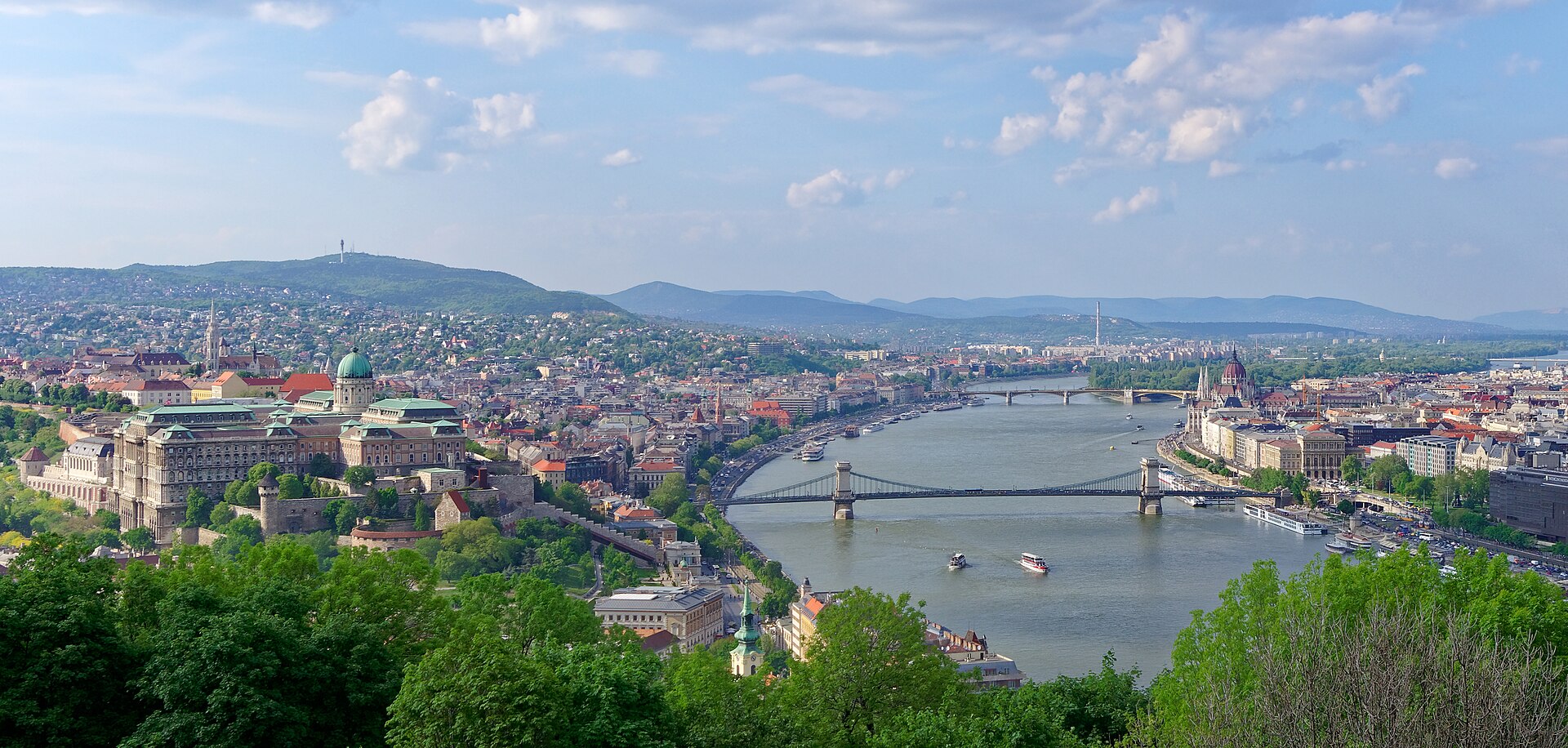
Hungary is landlocked inside the Carpathian Basin, drains entirely into the Danube, and is dominated by wide lowland plains with seven neighbours around the rim...
Photograph · Jakub Hałun · CC BY-SA 4.0
Reviewed by Elena Voss · Roavina Travel Editor
Hungary is landlocked inside the Carpathian Basin, drains entirely into the Danube, and is dominated by wide lowland plains with seven neighbours around the rim. Just over 9.5 million people live here, and Budapest pulls hard enough that most itineraries amount to the capital plus one decision. The Danube cuts the city in two and carries on north through the bend towns; the plains run east toward Romania; Lake Balaton lies southwest and does the work a coast would do in a country that has none. Hungarian is one of the few languages in Europe outside the Indo-European family, which is the first thing a visitor notices on a road sign and the last thing they get used to.
Checked 2026-08-25
Every city catalogued in this country so far, ranked by how much there is to see.
Photograph · Thomas Depenbusch (Depi) from Cologne, Germany · CC BY 2.0
Ranked by importance — sitelinks, pageviews and heritage status, not editor preference.
38 places match
Category
Typical visit duration
Interests
Mansfeld Peter Park is a public green space in Budapest named after Peter Mansfeld, a figure associated with Hungarian history.
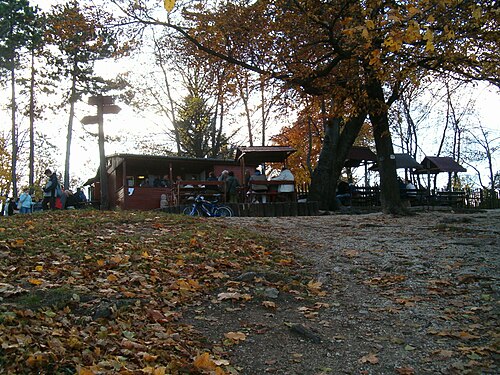
Normafa is a popular recreational area and viewpoint situated in the Buda Hills on the western side of Budapest, Hungary.
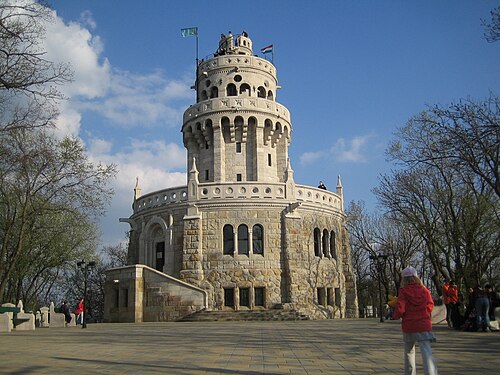
Erzsébet-kilátó
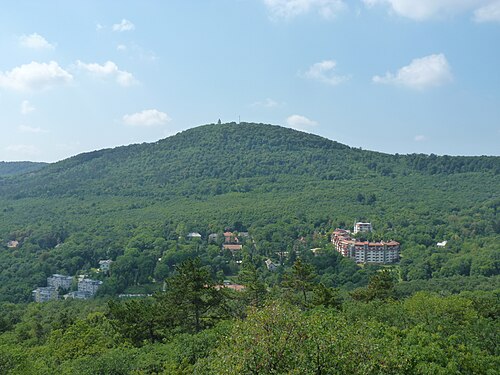
Elizabeth Lookout is a historic observation tower on János Hill, the highest point of Budapest. Named after Empress Elisabeth of Austria, it rises above the wooded Buda Hills and opens the city from a completely different angle than central viewpoints.
János-hegy
Janos Hill is Budapest’s highest point and a woodland destination in the Buda Hills. Its appeal comes from the contrast between quiet deciduous forest and broad views over the Hungarian capital.
Orczy park
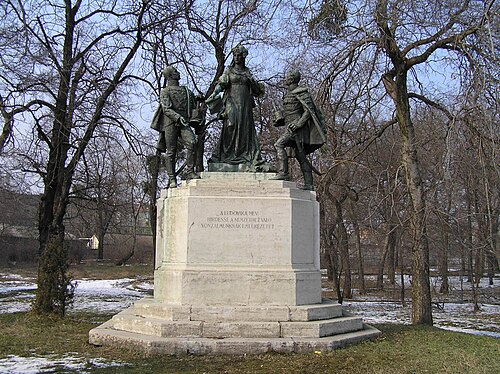
Orczy Garden is a public park in Budapest, Hungary. It occupies a green space in the city's eighth district, serving as a recreational area for residents and visitors.
Fiumei úti sírkert
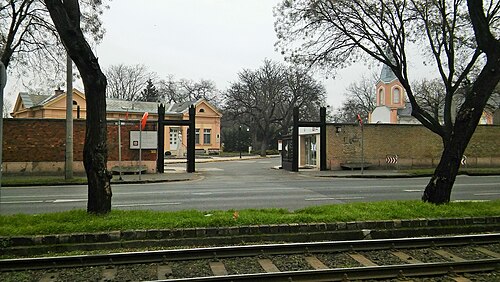
Kerepesi Cemetery is a historic burial ground in Budapest’s eighth district, established in 1847 and remembered as a national pantheon. Its avenues, graves, mausoleums, and memorials connect the city’s political, artistic, and intellectual history with a quiet garden landscape.
Belvárosi Nagyboldogasszony-templom
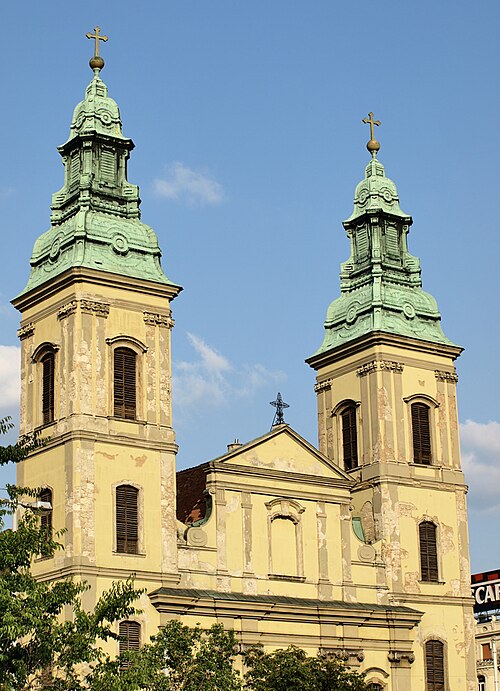
Inner City Parish Church stands near the Elizabeth Bridge on Budapest’s Pest riverbank and ranks among the city’s oldest ecclesiastical buildings. Its foundations incorporate remains from Roman Contra-Aquincum, while the present structure reflects medieval, Gothic, Ottoman and Baroque phases.
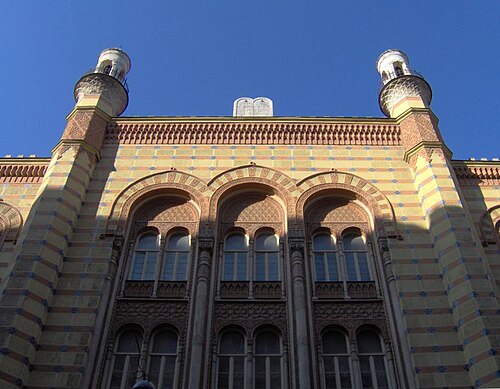
Rumbach utcai zsinagóga
Rumbach Street Synagogue is a landmark of Budapest’s Jewish Quarter and a notable 19th-century Moorish Revival building. Otto Wagner designed the synagogue, which was completed in 1872 for the Neolog Jewish community.
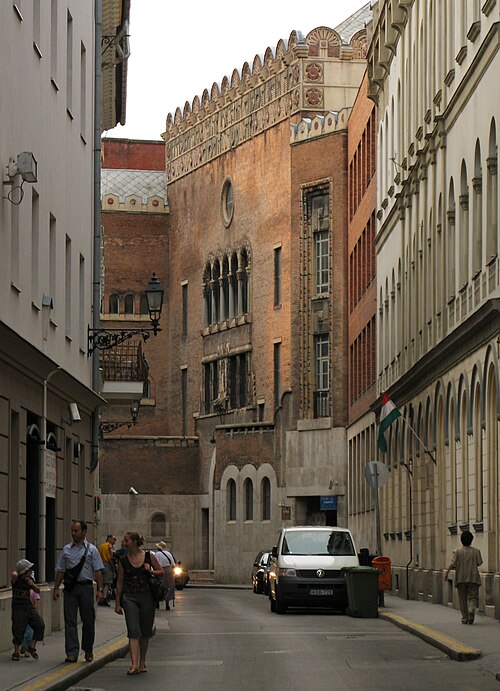
Sász-Chevra Zsinagóga
Kazinczy Street Synagogue is an Orthodox Jewish house of worship in Budapest’s historic Jewish Quarter. The synagogue adds an important Orthodox presence to a district also known for Neolog Jewish heritage, including the nearby Dohány Street Synagogue.
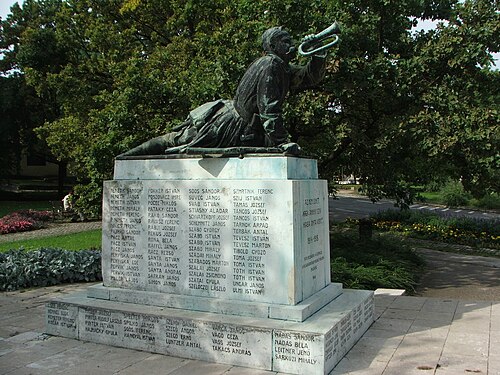
Out-of-centre Hősök tere proxy is a mapped location in Budapest that shares its name with the famous Heroes’ Square.
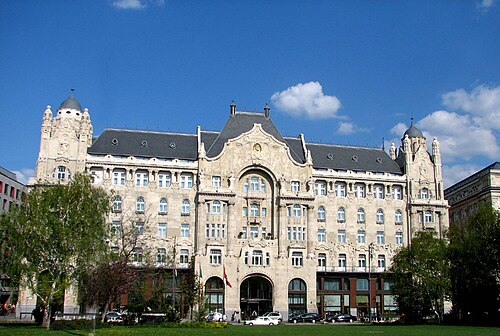
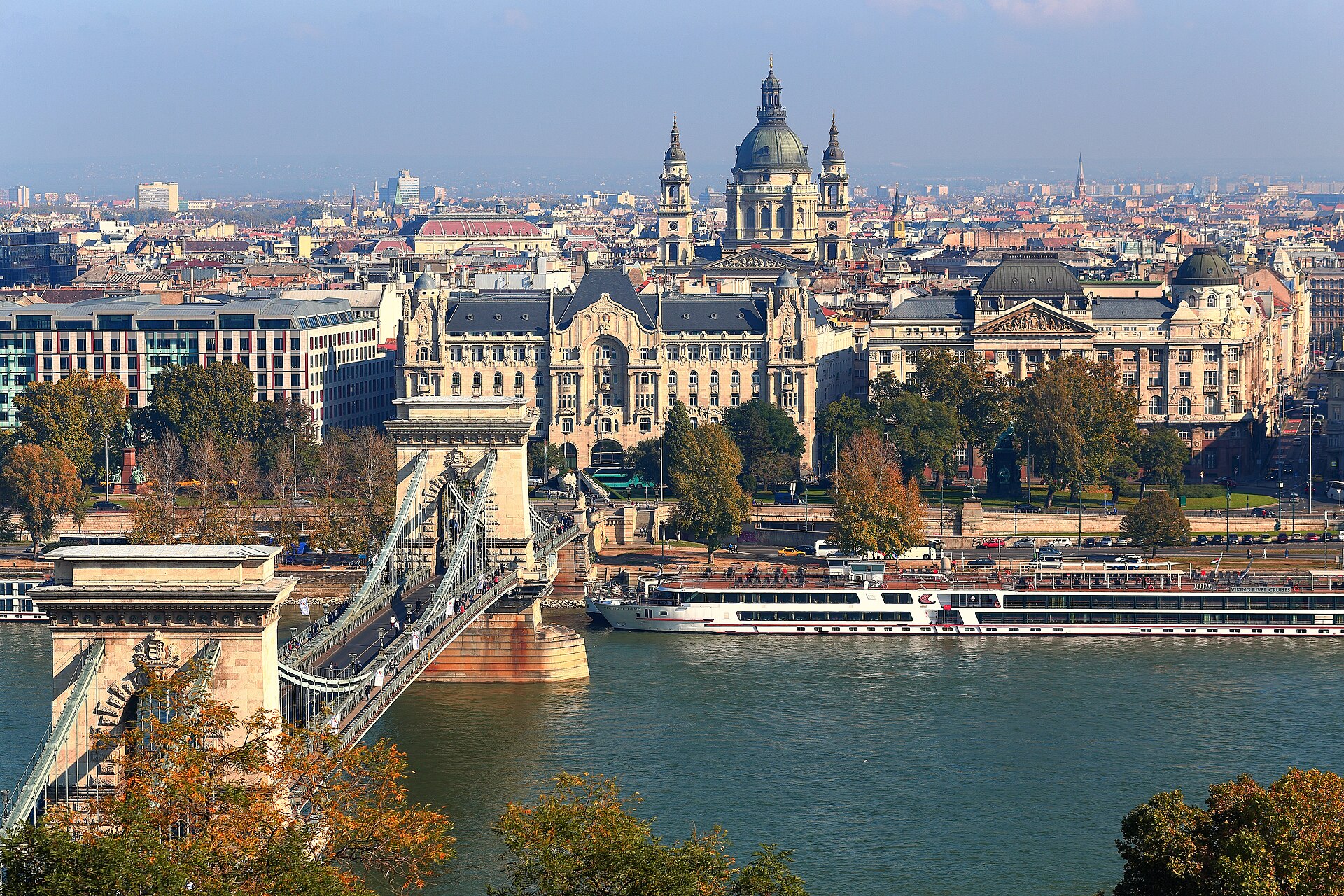
Gresham-palota
Gresham Palace is a prominent Art Nouveau building on Budapest’s Danube riverfront. The palace dates from the early twentieth century and occupies a central position beside the Chain Bridge, giving it an important architectural and urban setting.
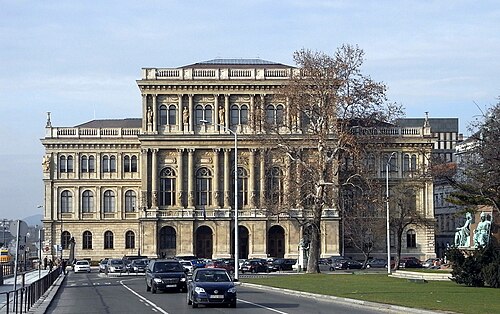
Magyar Tudományos Akadémia
The Hungarian Academy of Sciences is the premier learned society of Hungary, founded in 1825 by Count István Széchenyi. Its neoclassical headquarters stands prominently on the Danube embankment at Széchenyi István Square in central Budapest.
Arena Mall üzletközpont
Five to seven days gives Budapest four days and leaves room for Eger, Pécs, Lake Balaton or the Danube Bend. Choose one extension; repeated returns to the capital can consume the time an overnight would preserve.
Hungary’s consular information service carries the current entry and visa rules. Check the passport-specific requirement and the complete Schengen itinerary rather than assuming another member state’s answer applies unchanged.
Budapest Airport is the principal international gateway. Intercity trains and coaches radiate from the capital, while Budapest uses its own metro, tram, bus and suburban-rail fare system.
April through June and September through October are practical for Budapest and regional sightseeing. Lake Balaton’s summer season and winter operating patterns create different transport and opening considerations.
Hungarian forints (HUF) are the recorded currency even though some businesses may display other currencies. Fees and acceptance are Not recorded; verify the HUF total and avoid accepting an unclear conversion.
Call 112 in a Hungarian emergency. Electricity is 230 V through Type C and F sockets; national tap-water guidance is Not recorded in the cited material.