
7 min walk
Kota Tua Jakarta
- Must see
- Historic monument
Language · 11 published
Museum · Jakarta
Museum Bahari
Reviewed by Elena Voss · Roavina Travel Editor
| Monday | Closed |
|---|---|
| Tuesday | 09:00 – 15:00 |
| Wednesday | 09:00 – 15:00 |
| Thursday | 09:00 – 15:00 |
| Friday | 09:00 – 15:00 |
| Saturday | 09:00 – 15:00 |
| Sunday | 09:00 – 15:00 |
Checked 2026-08-31 · Source
Read from the OpenStreetMap access tags; anything not listed has no tag recorded.
Set the group type to family in the planner and the day window contracts to about three quarters of a solo day.
This place is a Museum. It opened in 1977. It is run by local government.
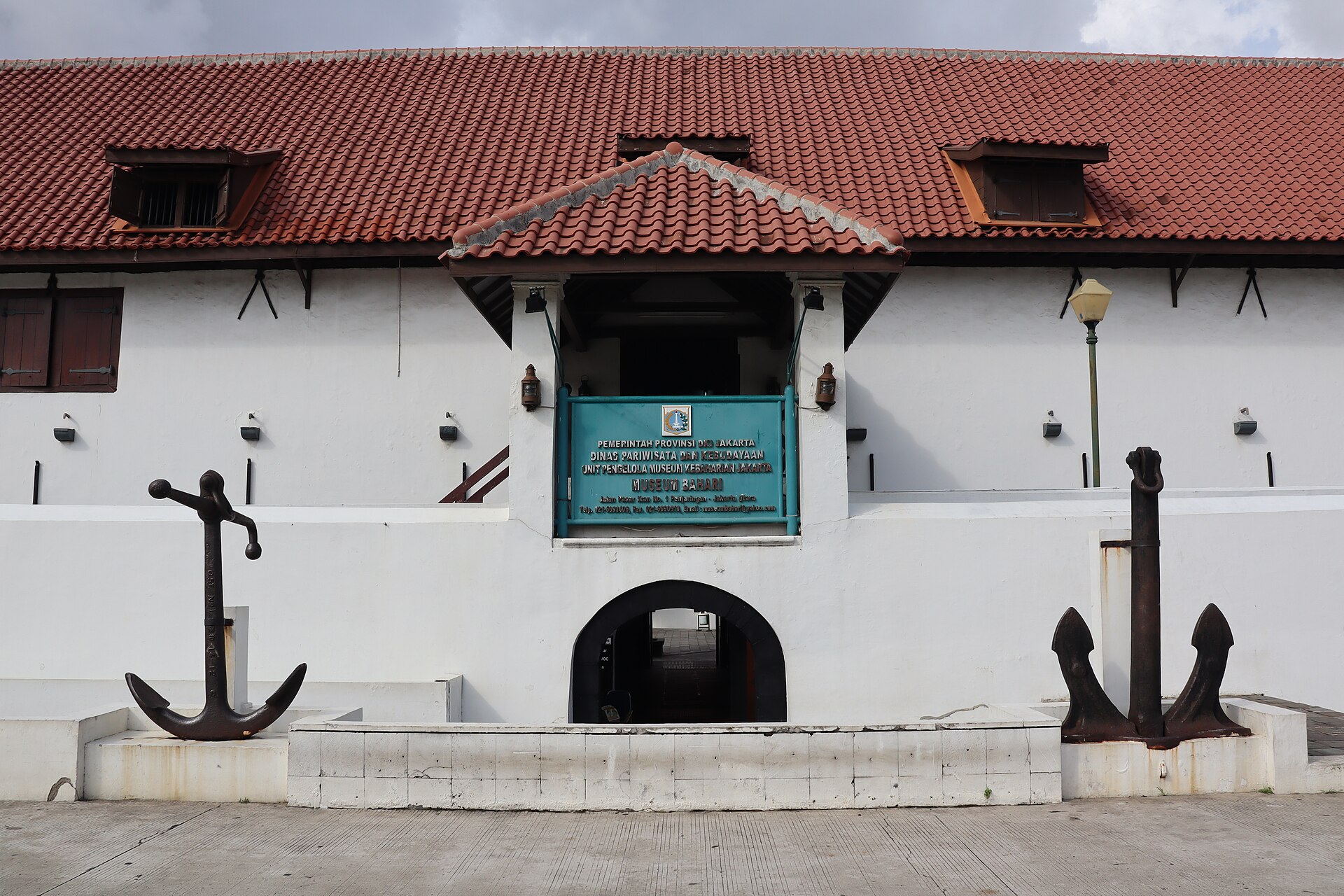
The Maritime Museum, known locally as Museum Bahari, occupies a historic site in Jakarta's old Sunda Kelapa harbor area. The museum celebrates Indonesia's seafaring traditions and maritime heritage in a city shaped by centuries of ocean trade. Housed within restored Dutch colonial warehouses, the institution preserves artifacts that speak to the archipelago's identity as a maritime nation and Jakarta's evolution from a vital port settlement into Indonesia's sprawling modern capital. The current visitor schedule is specific: Open Tuesday-Sunday 09:00-15:00; closed Monday and selected public holidays. Restoration and conservation can close warehouse sections or the watchtower. The admission position is equally concrete: Adult admission is IDR 5,000 under the municipal museum tariff; the nearby Syahbandar Tower may follow separate access controls. For access planning, Courtyards and selected ground-floor warehouse displays are accessible with help, but stairs, timber thresholds and uneven floors limit the complete route. The warehouse complex preserves the relationship between Jakarta’s trading waterfront, ship technology and the communities that connected islands across the archipelago. Its collection turns the surviving port fabric into evidence for Indonesia’s maritime history.
Checked 2026-08-31 · Source
The museum's collections encompass nautical instruments, traditional vessel models, maritime paintings, and colonial-era documents. Exhibits trace Indonesian boat-building techniques across diverse island cultures. Historic maps and photographs illustrate Jakarta's harbor transformation. The warehouse architecture itself constitutes part of the heritage display, with thick walls and traditional construction methods visible. Ship figureheads and navigational equipment demonstrate technological development. The connection between maritime commerce and Indonesia's national formation receives interpretive attention throughout the galleries. A flexible visit lets travellers connect Maritime Museum with the rest of the day without treating one room, viewpoint or photograph as the whole experience. The useful pace depends on personal interest and conditions on arrival.
Checked 2026-08-31 · Source
Visitors typically allocate between sixty and ninety minutes for a meaningful museum experience. This duration accommodates careful examination of permanent displays without excessive haste. The compact site layout permits efficient circulation through exhibition spaces. Those with specialized interest in maritime history or Indonesian nautical culture may prefer extended visits. Photography enthusiasts and readers of detailed exhibit labels should adjust timing accordingly. The surrounding harbor district warrants additional exploration for visitors seeking broader contextual understanding of Jakarta's maritime heritage zone.
Checked 2026-08-31 · Source
Open Tuesday-Sunday 09:00-15:00; closed Monday and selected public holidays. Restoration and conservation can close warehouse sections or the watchtower. Arrive early enough for security and the main route before final admission. Weekends, school holidays, ceremonies and special events increase crowds or alter individual areas. Jakarta heat, humidity and rain affect outdoor parks, squares and zoo paths, while indoor museums remain more controlled. The dated operator notice always overrides the normal weekly pattern.
Checked 2026-08-31 · Source
Adult admission is IDR 5,000 under the municipal museum tariff; the nearby Syahbandar Tower may follow separate access controls. Use the official operator and retain the ticket or timed confirmation. General entry does not include separately priced museums, rides, animal zones, workshops, parking, rentals or food unless stated. Free access can still require registration or security. Concessions and foreign-visitor prices require the identity document named by the venue.
Checked 2026-08-31 · Source
TransJakarta and local buses reach Pakin; from Jakarta Kota station continue north by bus or taxi toward Sunda Kelapa. Allow a traffic buffer and use the full Indonesian venue name in ride-hailing apps. Kota Tua, central civic parks and large recreation complexes contain several entrances, so navigate to the named gate. Public transport avoids parking constraints, while pedestrian crossings, heat and rain can lengthen the final walk.
Checked 2026-08-31 · Source
Courtyards and selected ground-floor warehouse displays are accessible with help, but stairs, timber thresholds and uneven floors limit the complete route. Follow the designated accessible route and staff instructions. Historic thresholds, zoo terrain, traffic islands, event perimeters and temporary installations can narrow access. Keep bags compact, retain tickets and identification, respect ceremonies and leave lifts, ramps, paths and emergency routes clear for other visitors.
Checked 2026-08-31 · Source
Photography policies within Indonesian museums vary considerably without universal standardization. Flash photography restrictions commonly protect light-sensitive artifacts and painted surfaces. Tripod and professional equipment use typically requires advance authorization. The warehouse architecture offers distinctive interior spatial qualities for photographic documentation. Natural lighting conditions through original windows create atmospheric effects though potentially challenging exposure situations. Exterior photography captures the distinctive colonial warehouse silhouette against harbor activity. Drone operation would require specific permits given proximity to active port facilities. Visitors should seek staff guidance upon entry regarding current regulations.
Checked 2026-08-31 · Source
Monday.
IDR 5,000.
Yes.
No.
No; it can follow separate access controls.
Sunda Kelapa.
Loading the interactive map…
The interactive map could not be loaded.

Last updated:
Source: OpenStreetMap contributors, Wikidata ·