
22 min walk
Electricity and New Energy Museum
- Must see
- Museum
Museum · Jakarta
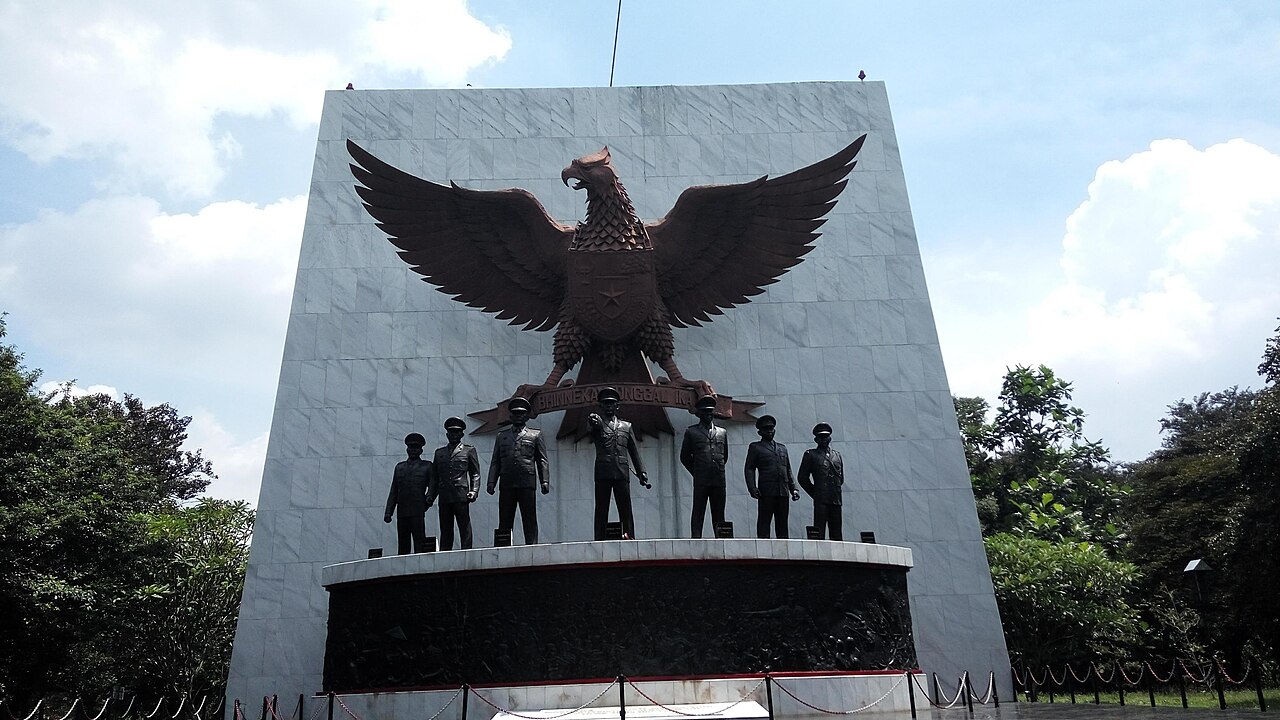
Monumen Pancasila Sakti
| Monday | 08:00 – 16:00 |
|---|---|
| Tuesday | 08:00 – 16:00 |
| Wednesday | 08:00 – 16:00 |
| Thursday | 08:00 – 16:00 |
| Friday | 08:00 – 16:00 |
| Saturday | 08:00 – 16:00 |
| Sunday | 08:00 – 16:00 |
Checked 2026-08-31 · Source
Not recorded
Source · Checked 2026-08-31
The Pancasila Sakti Monument and Museum, known locally as Monumen Pancasila Sakti, forms part of the Lubang Buaya memorial complex in Jakarta. The site commemorates the events of 30 September 1965, when seven Indonesian National Army officers were killed. The monument stands alongside a museum, preserved houses, and the well where the bodies were disposed. The complex serves as a state-sponsored memorial and historical education site, presenting the official narrative of what the New Order regime termed the Gestapu affair.
Checked 2026-08-31 · Source
The memorial complex contains multiple components: the Pancasila Sakti Monument itself, a museum building, the original well at Lubang Buaya, and preserved houses used in the historical presentation. The museum displays documents, photographs, and dioramas related to the 1965 events. The well remains a focal point of visitor attention. The houses reportedly include structures associated with the Indonesian Communist Party and affiliated organizations. The site presents these elements within a curated narrative framework emphasizing national ideology.
Checked 2026-08-31 · Source
Visitors typically allocate between one and two hours for the complete memorial complex. The museum interior requires approximately thirty to forty-five minutes for examination of displays and documentation. Additional time is needed to view the monument grounds, the well, and the preserved houses. School groups and organized tours may extend visits through guided explanations. Individual visitors with strong interest in Indonesian political history might spend longer examining photographic and documentary materials in detail. Casual visitors may complete the circuit more quickly.
Checked 2026-08-31 · Source
Open daily 08:00-16:00; national ceremonies around 1 October and official events can restrict ordinary visitor access. Arrive early enough for security and the main route before final admission. Weekends, school holidays, ceremonies and special events increase crowds or alter individual areas. Jakarta heat, humidity and rain affect outdoor parks, squares and zoo paths, while indoor museums remain more controlled. The dated operator notice always overrides the normal weekly pattern.
Checked 2026-08-31 · Source
Adult admission uses the current monument/museum tariff; school groups and documented categories receive operator concessions. Use the official operator and retain the ticket or timed confirmation. General entry does not include separately priced museums, rides, animal zones, workshops, parking, rentals or food unless stated. Free access can still require registration or security. Concessions and foreign-visitor prices require the identity document named by the venue.
Checked 2026-08-31 · Source
The complex is in Lubang Buaya, East Jakarta. TransJakarta and local buses serve Pondok Gede/Lubang Buaya, followed by a local connection to Jalan Raya Pondok Gede. Allow a traffic buffer and use the full Indonesian venue name in ride-hailing apps. Kota Tua, central civic parks and large recreation complexes contain several entrances, so navigate to the named gate. Public transport avoids parking constraints, while pedestrian crossings, heat and rain can lengthen the final walk.
Checked 2026-08-31 · Source
Main outdoor paths, monument plaza and some galleries are accessible, but the historic well area, steps and older exhibition buildings limit a complete step-free circuit. Follow the designated accessible route and staff instructions. Historic thresholds, zoo terrain, traffic islands, event perimeters and temporary installations can narrow access. Keep bags compact, retain tickets and identification, respect ceremonies and leave lifts, ramps, paths and emergency routes clear for other visitors.
Checked 2026-08-31 · Source
Photography policies at Indonesian state memorial sites vary by location and administrative discretion. Visitors should observe posted signage and staff guidance regarding camera use, particularly within museum interiors where flash photography may be restricted to protect documentary materials. Drone operation would require appropriate permits given proximity to military-related commemorative functions. Respectful photographic practice is advisable given the site's function as a memorial to deceased individuals. Commercial or journalistic photography may involve separate authorization requirements.
Checked 2026-08-31 · Source
Yes. It is open daily from 08:00 to 16:00 under the regular schedule.
Yes. National ceremonies around 1 October and official events can restrict ordinary visitor access.
No. Main outdoor paths, the monument plaza and some galleries are accessible, but the historic well area, steps and older exhibition buildings limit a complete step-free circuit.
Yes. School groups and documented categories receive operator concessions on the current monument and museum tariff.
The visit combines outdoor monuments with indoor galleries.
No. It is in Lubang Buaya, East Jakarta.
Loading the interactive map…
The interactive map could not be loaded.
Last updated:
Source: OpenStreetMap contributors ·