
26
2 hours
Muslim Quarter
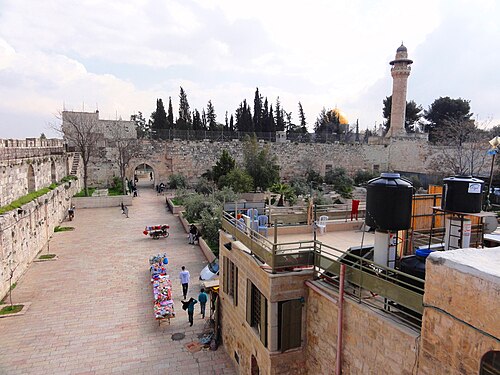
The Muslim Quarter occupies the northeastern part of Jerusalem’s walled Old City and is the largest and most populous of its four traditional quarters.
- Must see
- Activity

City guide · Israel
Jerusalem’s visitor geography centres on the Old City, but major museums, markets and neighbourhoods extend far beyond its walls. The Old City is a dense walkin...
Photograph · askii · CC BY-SA 2.0
Set your days, your pace and the hours you actually want to be out. The planner works around closing days and travel time, and leaves room to eat.
Editorial responsibility: Elena Voss · Roavina Travel Editor
Jerusalem’s visitor geography centres on the Old City, but major museums, markets and neighbourhoods extend far beyond its walls. The Old City is a dense walking zone divided into distinct quarters, while the modern centre follows Jaffa Road toward Mahane Yehuda. Yad Vashem, the Israel Museum, Mount Herzl and Ein Karem require separate journeys, so avoid treating every landmark as one continuous walk.
Checked 2026-08-26
November · November in Jerusalem has mean high 19.9°C, mean low 12.8°C, rainfall 54.8 mm, and 7.1 rain days. A modest rain or temperature trade-off still leaves comfortable touring conditions. November in Jerusalem benefits from a sheltered stop if the weather changes.
Ranked by importance — sitelinks, pageviews and heritage status, not editor preference.
71 places match
Category
Typical visit duration
Interests
The Muslim Quarter occupies the northeastern part of Jerusalem’s walled Old City and is the largest and most populous of its four traditional quarters.
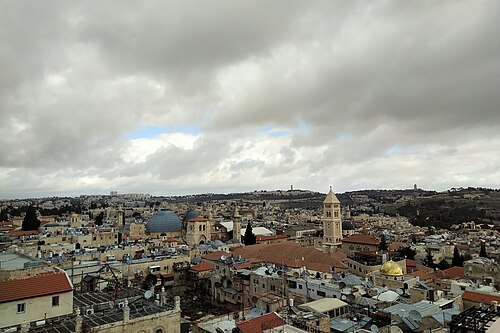
The Christian Quarter is one of the four traditional quarters of the Old City of Jerusalem. It occupies the northwestern quadrant of the walled city and contains numerous sites of profound significance to Christianity.
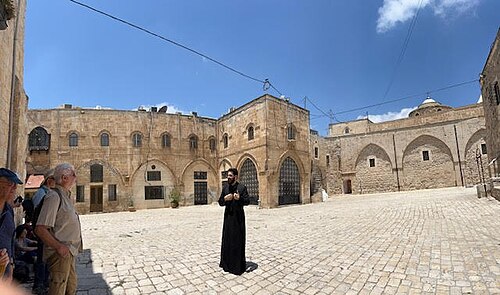
The Armenian Quarter is one of the four traditional quarters of the Old City of Jerusalem. It occupies the southwestern corner of the walled city and represents the smallest of the four quarters by population.
Ein Kerem
Ein Karem is a former village south-west of Jerusalem, today a neighbourhood on the outskirts of the modern city. Its name means "Spring of the Vineyard" in both Hebrew and Arabic.
שוק מחנה יהודה
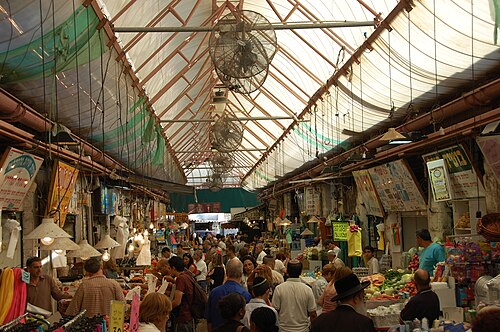
Mahane Yehuda Market is Jerusalem's principal public market and a significant independent food and cultural destination. Operating for over a century, it functions as a traditional Middle Eastern shuk with covered alleyways and open-air sections.
The First Station (HaTakhana HaRishona) is Jerusalem's original railway station, opened in 1892 during the Ottoman period as the eastern terminus of the Jaffa–Jerusalem railway.
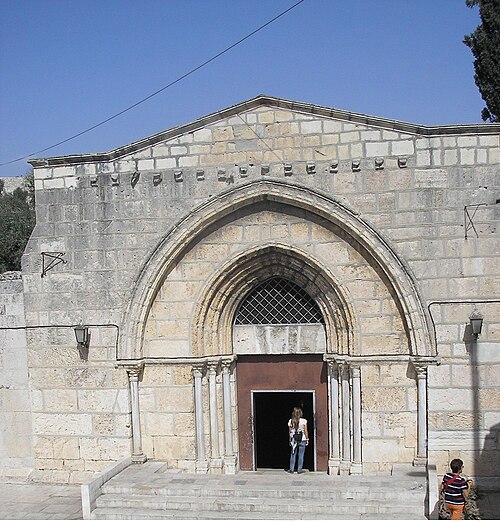
قبر السيدة العذراء مريم
The Tomb of the Virgin Mary is a Christian shrine in Jerusalem traditionally believed to be the burial place of Mary, mother of Jesus.
היכל הספר
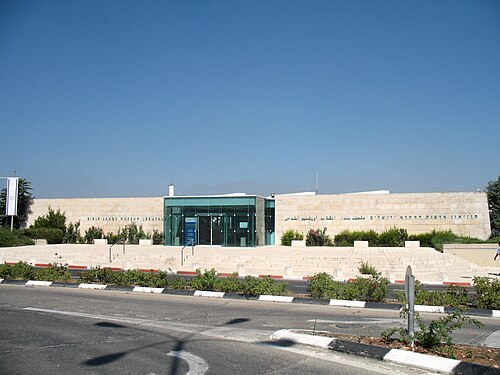
ארצות המקרא
The Bible Lands Museum is a cultural institution in Jerusalem dedicated to the history and archaeology of biblical lands. Its Hebrew name, ארצות המקרא, reflects its focus on regions and peoples mentioned in biblical texts.
מוזיאון לאומנות האיסלאם
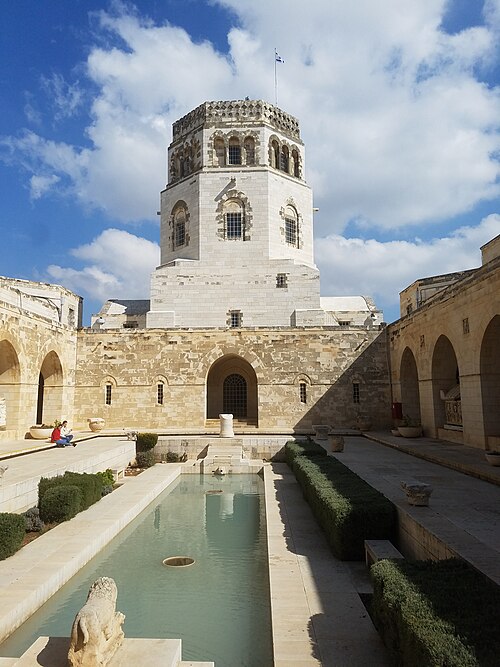
מוזיאון רוקפלר
The Rockefeller Archaeological Museum is an archaeological museum in Jerusalem. It houses a significant collection of artifacts recovered from excavations conducted in the region during the British Mandate period and earlier.
מוזיאון על התפר
גבעת התחמושת
מרכז בגין
ידידי ישראל
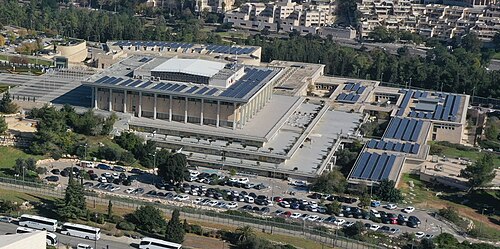
The Knesset is the unicameral national legislature of Israel, located in Jerusalem's Givat Ram neighborhood. Established in 1949 following Israel's independence, it serves as the seat of parliamentary democracy for the state.
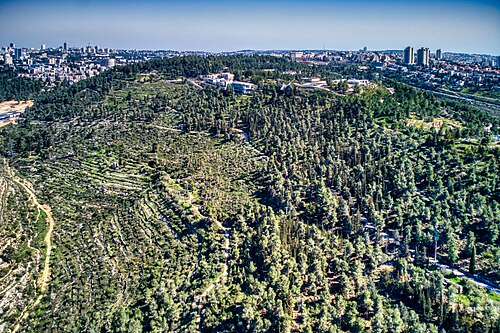
הר הרצל
Mount Herzl is a prominent hill in western Jerusalem that serves as Israel's national cemetery and the site of The Herzl Museum dedicated to Theodor Herzl, the founder of modern political Zionism.
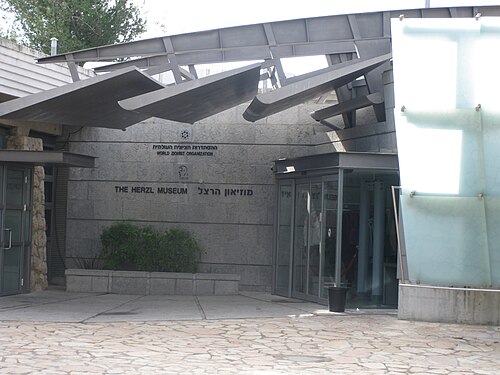
The Herzl Museum is a Jerusalem museum devoted to Theodor Herzl, the founder of modern political Zionism. It stands on Mount Herzl, a national memorial area that also contains Herzl’s grave, military cemeteries, and other commemorative sites.
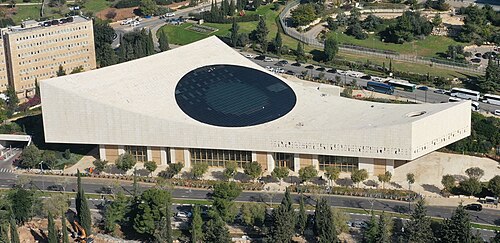
The National Library of Israel serves as the country's central research library and pre-eminent cultural institution dedicated to preserving the intellectual heritage of Israel and the Jewish people.
גן החיות התנכי
The Tisch Family Zoological Gardens, popularly known as the Jerusalem Biblical Zoo, is a zoo in the Malha neighbourhood of Jerusalem.
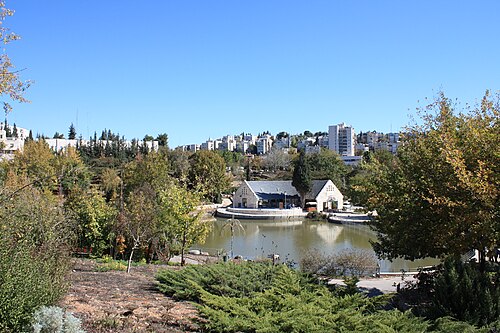
הגן הבוטני
Jerusalem Botanical Gardens is a living plant collection and public green space in Jerusalem. It combines botanical conservation, research, education, and visitor enjoyment.
Gazelle Valley
Gazelle Valley, formerly the Pri Har Valley, is an open space of 260 dunams (about 64 acres) in the heart of Jerusalem, on the edge of the Givat Mordechai neighbourhood opposite the busy Patt Intersection.
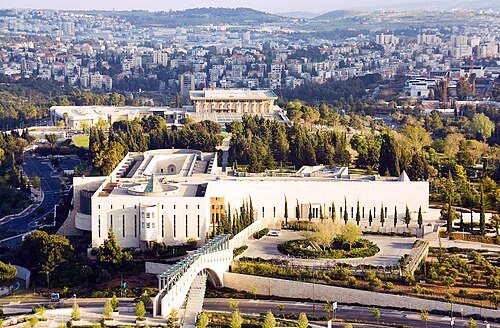
The Supreme Court of Israel is the highest judicial authority in the State of Israel, located in Jerusalem. It serves as both the final court of appeals and the High Court of Justice for administrative matters.
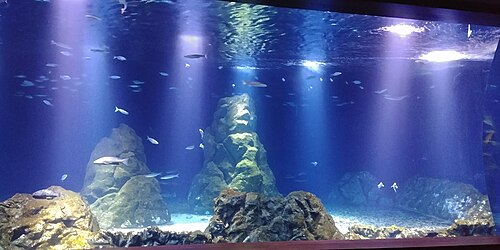
אקווריום ישראל
The Gottesman Family Israel Aquarium is a public aquarium in Jerusalem that opened on 19 June 2017. It focuses on Israel's marine environments: the Red Sea, the Mediterranean Sea, the Sea of Galilee and the Dead Sea.
קניון ממילא
The walled Old City forms the historic core, with Jaffa Gate linking it to Mamilla and the modern centre. Jaffa Road runs northwest through the city centre and Mahane Yehuda toward the main transport corridor. The Israel Museum and government precinct lie to the west, while Mount Herzl and Yad Vashem are farther out. Mount Zion and the Mount of Olives should be planned as separate elevated clusters.
Checked 2026-08-26
Walk inside the Old City and between nearby central districts, allowing extra time for stone surfaces, slopes and security checks. Use light rail and buses for the modern centre and outer museums. The government tourist office provides maps and current public-transport guidance; consult it or the relevant operator before travel because services and access arrangements can change.
Checked 2026-08-26
Suggested stay for a first visit: 3–4 days. Build the visit around the Old City first, then add the modern centre, major museums and separate hilltop clusters according to time.
Yes, and walking is the practical way to explore its lanes. Expect slopes, worn stone surfaces, stairs and busy access points.
Yad Vashem, Mount Herzl, the Israel Museum and some outer neighbourhoods sit beyond the compact Old City and central walking area. Use light rail or buses where appropriate.
The Ministry of Tourism’s Jerusalem office provides maps, brochures and guidance on sites, tours and public transportation.
Treat it as a separate elevated cluster. Although visually close to the Old City, the terrain and approach make a dedicated route more practical.

