

1 min walk
Palazzo Strozzi
- Must see
- Museum
Language · 11 published
Historic monument · Florence
Palazzo Tornabuoni
Reviewed by Elena Voss · Roavina Travel Editor

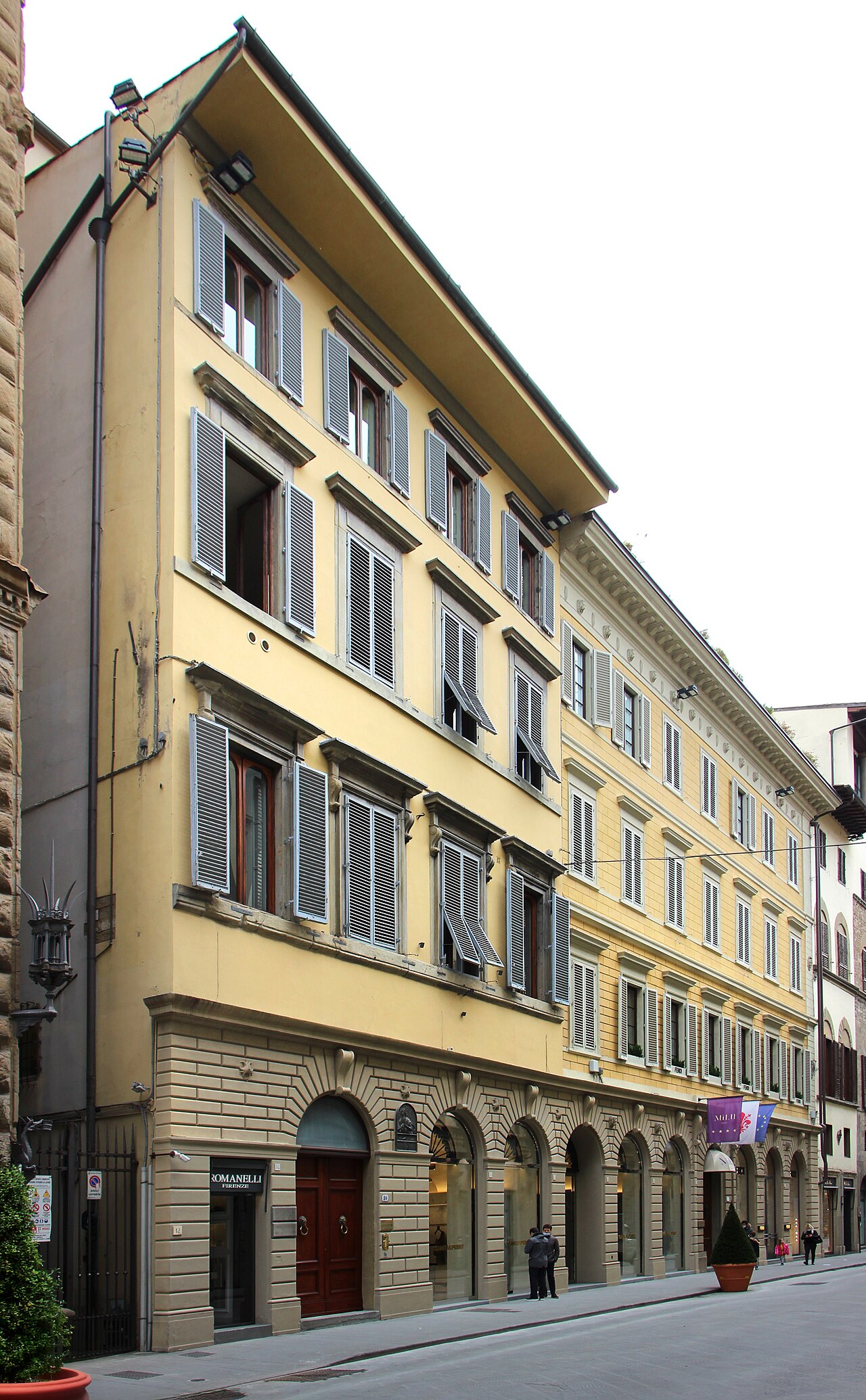
Palazzo Corsi-Tornabuoni, also known as Palazzo Tornabuoni, is a historic palazzo in the centre of Florence. It belongs to the sequence of Renaissance and aristocratic buildings that shape the city’s historic streets. The palace is associated with Florence’s noble urban culture and remains important as part of the built setting rather than as a conventional museum stop. Its central position allows travellers to encounter it during a broader walk linking churches, squares, shopping streets, and other palazzi. Look at the building as one element in a continuous historic environment: the narrow streets, adjoining façades, entrances, and changes in scale all help explain how elite residences fitted into everyday Florentine life.
Checked 2026-08-26 · Source
Plan this visit around the exterior and the surrounding streets rather than a museum interior. Palazzo Corsi-Tornabuoni is a private historic palazzo, so the useful experience comes from observing its frontage, proportions, architectural details, and position within Florence’s historic centre. Compare it with nearby aristocratic façades to see how different residences created a shared urban language while retaining their own identities. Doorways, window rhythms, stonework, and the relation between the upper floors and the street are worthwhile details. The city around the palace is not merely a route to another attraction; it supplies the historical context that makes a short exterior visit rewarding.
Checked 2026-08-26 · Source
A brief pause of fifteen to thirty minutes is enough for most visitors viewing Palazzo Corsi-Tornabuoni from the street. Use the time to identify the building, inspect the façade from a safe public position, and take a few photographs before continuing through the historic centre. Travellers with a strong interest in Renaissance architecture can extend the stop by comparing nearby palazzi and recording differences in scale, ornament, and street relationship. There is no need to reserve a large block of the day for this landmark. Its greatest practical value is as a compact architectural waypoint within a longer walking itinerary.
Checked 2026-08-26 · Source
Visit Palazzo Corsi-Tornabuoni in daylight, when the façade and surrounding streets can be read clearly. Spring and autumn are particularly pleasant for a walking route through central Florence. Summer brings intense heat and high pedestrian numbers, so an early start makes the stop calmer and leaves more energy for the rest of the city. Winter offers a quieter streetscape and softer crowds, although daylight is shorter. Morning or late afternoon can give the building more character through angled light. Since this is an exterior stop, the best moment is also the moment when the surrounding street feels comfortable and uncongested.
Checked 2026-08-26 · Source
Treat Palazzo Corsi-Tornabuoni as a street-side architectural landmark, not as a standard ticketed museum. A traveller walking past can appreciate the exterior without planning a separate admission visit. This makes it suitable for a flexible Florence itinerary, especially between major museums or churches with fixed entry arrangements. Keep your ticket budget for attractions with established public visitor routes. The palace can still add historical depth to a day of sightseeing because it shows how much of Florence’s heritage is embedded in ordinary streets rather than concentrated inside formal museum buildings.
Checked 2026-08-26 · Source
Walk to Palazzo Corsi-Tornabuoni through Florence’s compact historic centre. The palace is convenient to include when moving between central landmarks, squares, and the streets around Santa Maria Novella. Travellers arriving by train can begin from Santa Maria Novella station and continue on foot through the city’s historic fabric. Buses serve the wider centre, but the final approach remains a walk along narrow urban streets. Driving is a poor choice for this kind of visit because traffic restrictions, limited road space, and scarce convenient parking complicate the journey. Comfortable shoes are more useful than a car for reaching and exploring the palazzo.
Checked 2026-08-26 · Source
Palazzo Corsi-Tornabuoni retains the character of a private residence, so do not enter doorways, courtyards, or restricted areas without a clear invitation. The centre’s narrow streets can place pedestrians close to cyclists, deliveries, and limited vehicle traffic. Uneven paving may be tiring, particularly during a long day of sightseeing. Keep bags secure in crowded areas and avoid stopping in the middle of the pavement while studying the façade. The building may be partly hidden by parked vehicles, street activity, or neighbouring structures. Move patiently to find a clear view while respecting residents, businesses, and everyone using the street.
Checked 2026-08-26 · Source
Photograph Palazzo Corsi-Tornabuoni from public thoroughfares and use the narrow street to create a sense of scale. A full elevation may be difficult to capture, so detail studies of windows, stonework, entrances, and the upper façade can produce stronger images. Morning and late-afternoon light can reveal relief and texture, while diffuse weather helps preserve detail across bright surfaces. Keep equipment compact and leave room for people to pass. Avoid photographing into private interiors or lingering directly outside entrances. The most informative images connect the palace to the neighbouring buildings and show how it contributes to Florence’s continuous historic streetscape.
Checked 2026-08-26 · Source
It is also known as Palazzo Tornabuoni, a historic palazzo in central Florence.
Allow about fifteen to thirty minutes for exterior observation and photography, or longer if comparing nearby historic palaces.
Yes. Its central location makes it a convenient architectural waypoint during a walk through Florence’s historic centre.
Study the façade’s proportions, windows, stonework, entrances, and relationship to the neighbouring Renaissance streetscape.
Daylight is essential; early morning or late afternoon can provide calmer streets and more revealing angled light.
Remain on public paths, avoid private entrances, keep the pavement clear, and respect residents and nearby businesses.
Loading the interactive map…
The interactive map could not be loaded.
Last updated:
Source: OpenStreetMap contributors, Wikidata ·