.jpg)
4 min walk
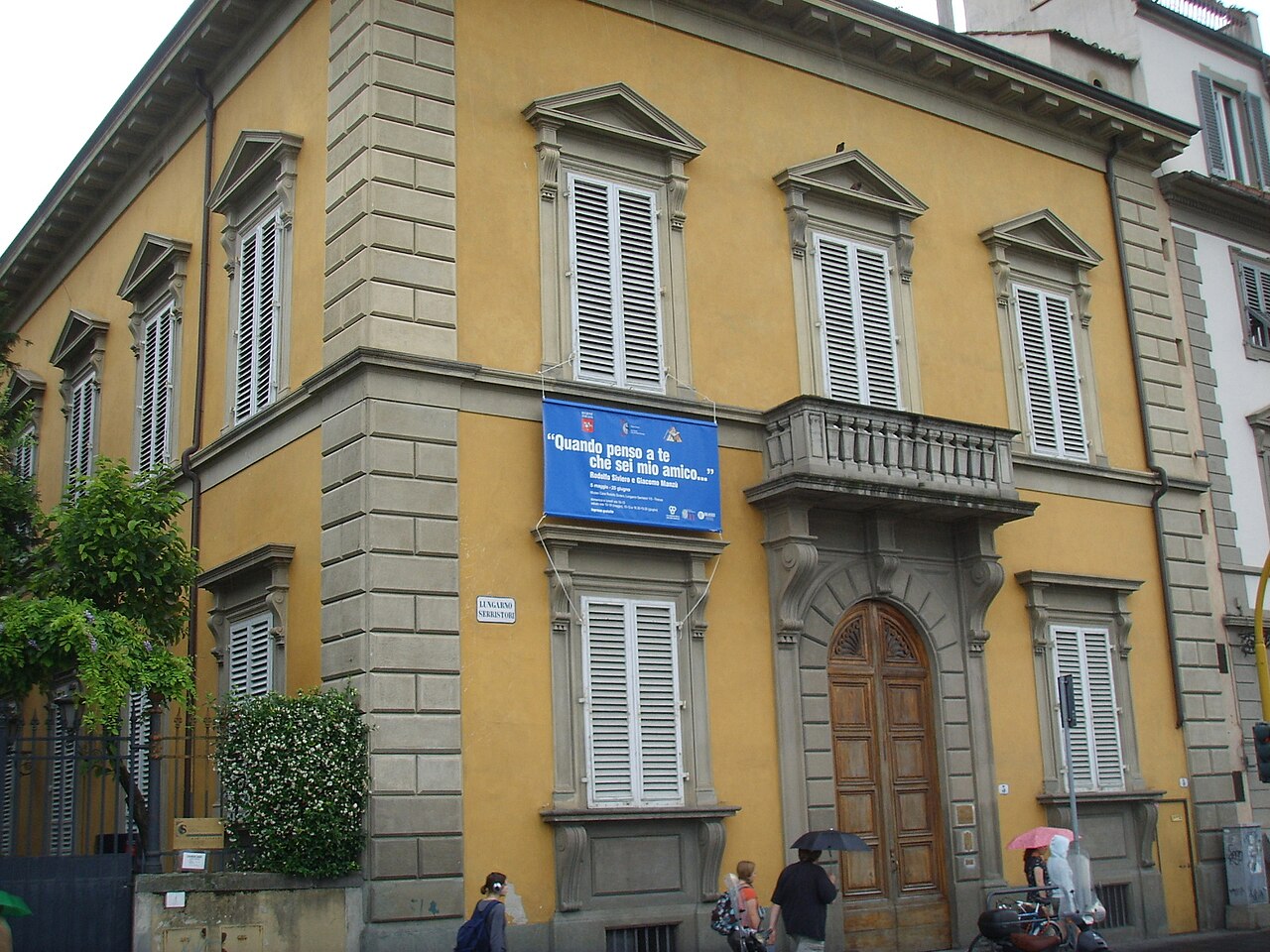
Casa museo Rodolfo Siviero
- Must see · Heritage site
- Museum
Language · 11 published
Historic monument · Florence
Piazzale Michelangiolo
Reviewed by Elena Voss · Roavina Travel Editor
| Monday | 00:00 – 23:59 |
|---|---|
| Tuesday | 00:00 – 23:59 |
| Wednesday | 00:00 – 23:59 |
| Thursday | 00:00 – 23:59 |
| Friday | 00:00 – 23:59 |
| Saturday | 00:00 – 23:59 |
| Sunday | 00:00 – 23:59 |
Checked 2026-08-31 · Source
Read from the OpenStreetMap access tags; anything not listed has no tag recorded.
Set the group type to family in the planner and the day window contracts to about three quarters of a solo day.
This place is a Attraction. It was established in 1869.
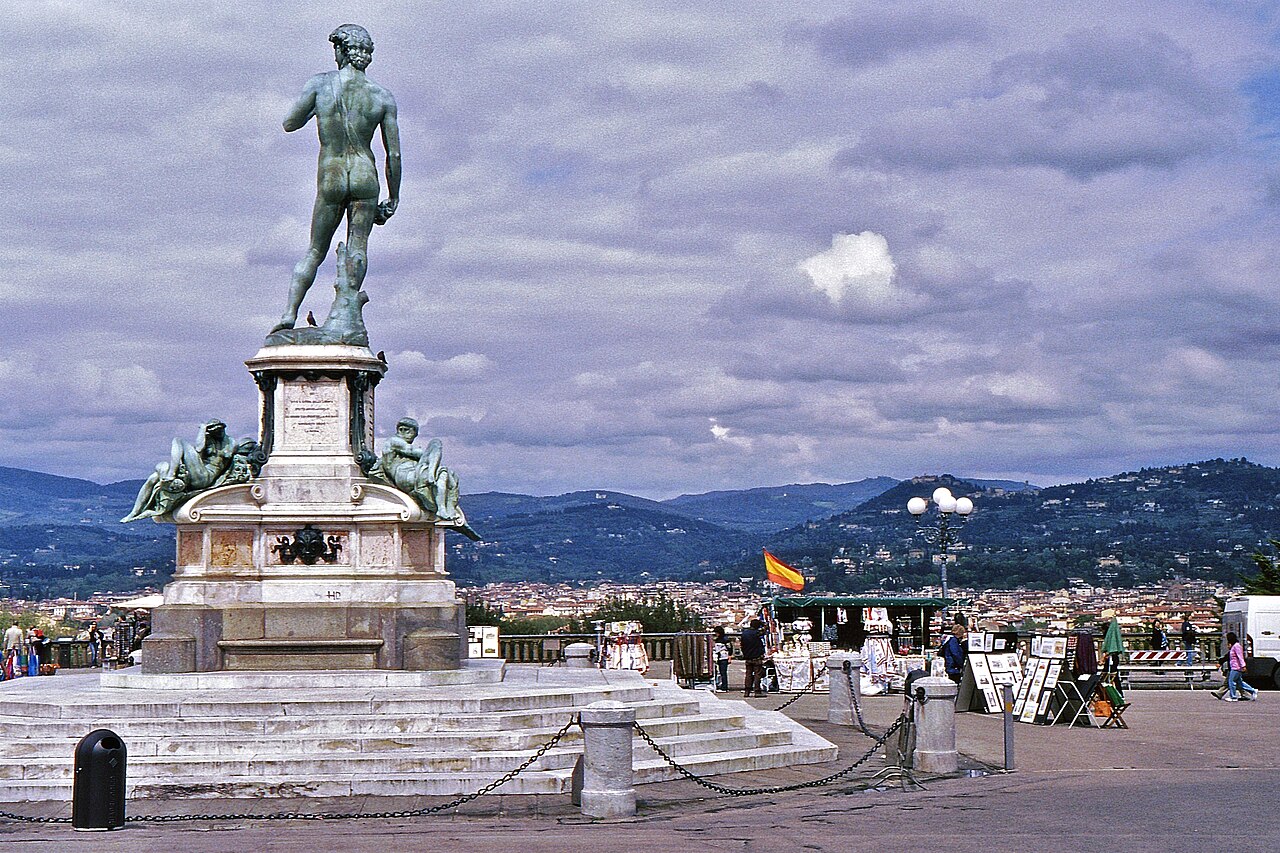
Piazzale Michelangelo is a panoramic square overlooking Florence from the south bank of the Arno River. It was designed by architect Giuseppe Poggi in 1869 as part of Florence's brief period as capital of the Kingdom of Italy. The terrace offers celebrated views of the Duomo, Palazzo Vecchio, Ponte Vecchio, and the surrounding hills of Tuscany. A bronze replica of Michelangelo's David stands at the centre, accompanied by copies of the four allegories from the Medici Chapel. The piazza serves as a major visitor gathering point, particularly at sunset when the city is bathed in golden light.
Checked 2026-08-31 · Source
The square contains a monumental terrace with stone balustrades arranged for viewing the cityscape. The bronze David replica and the four allegorical figures representing Day, Night, Dawn, and Dusk occupy central positions. Below the main terrace, Poggi designed a museum building intended to house Michelangelo's works, though this plan was never realised. The structure now contains a restaurant and café. Several souvenir vendors and refreshment kiosks operate around the perimeter. The Michelangelo Square is surrounded by landscaped areas with cypress and olive trees typical of the Tuscan countryside, creating a transitional space between urban Florence and the hills beyond.
Checked 2026-08-31 · Source
Most visitors spend between thirty minutes and one hour at Piazzale Michelangelo, depending on whether they pause for photographs, refreshments, or simply to absorb the view. Those combining the visit with a meal at the terrace restaurant should allow ninety minutes to two hours. The square is frequently incorporated into longer walking itineraries that include the nearby Rose Garden or San Miniato al Monte basilica. Photographers often return for multiple visits at different times of day. The experience is essentially self-directed; there are no guided tours or structured programmes within the square itself, so duration depends entirely on individual preference and schedule.
Checked 2026-08-31 · Source
Daily: open access; the municipality publishes no visitor timetable for the square. No scheduled closure day is listed. The hours shown for the metropolitan contact centre on the same municipal page are not visitor hours for the square. Sunset draws the largest crowds throughout the year, with summer evenings particularly congested. Dawn visits offer solitude and soft morning light across the city. Spring and autumn typically provide clearer atmospheric conditions for photography than humid summer months. Winter mornings may present misty or foggy conditions that obscure the view entirely. Major religious holidays and festival periods, including Easter and the Feast of San Giovanni in June, attract exceptional numbers of visitors. Checking local event calendars before planning a visit is prudent.
Checked 2026-08-31 · Source
Free access; no admission ticket is required. No admission fee applies to enter Piazzale Michelangelo or its panoramic terrace. The square operates as free public space. Visitors should anticipate standard tourist-area pricing for food and beverages. No advance booking is required or possible for the square itself. Those arriving by private vehicle should be prepared for parking charges, as the surrounding streets are controlled zones. Public bus services to the vicinity operate on standard municipal ticketing. Any claims of mandatory fees or guided access requirements should be treated with appropriate scepticism.
Checked 2026-08-31 · Source
Autolinee Toscane line 13 runs from Stazione Orti Oricellari/Rotonda Barbetti to PIAZZALE IL DAVID, its terminus at Piazzale Michelangiolo. The route also serves Stazione Piazza Adua near Firenze Santa Maria Novella station. The piazza sits on a hill approximately two kilometres southeast of the historic centre. Walking from the Ponte Vecchio area takes roughly twenty to thirty minutes via the ramped route of Via dei Bardi and Via San Niccolò, or the stepped path through the Rose Garden. Multiple bus lines serve stops near the base of the hill, requiring a final ascent on foot. Taxis and ride services can approach the square directly. Cycling is possible though the final climb is steep.
Checked 2026-08-31 · Source
The City of Florence's accessible-city map includes Piazzale Michelangelo. Approach from Viale Galileo or Viale Michelangiolo for step-free arrival; the pedestrian approach from Piazza Poggi follows the monumental Rampe del Poggi stairs. Crowding at sunset can be intense, with pickpocketing reported in dense gatherings. Visitors should secure belongings and maintain awareness of surroundings. The balustrades and low walls at the terrace edge present fall risks, particularly for children or those moving for photographs. The approach roads have limited pedestrian segregation; caution is warranted when walking up or down. The hillside location means surfaces may be slippery after rain. Street vendors operate without official oversight; transactions carry no consumer protection. The restaurant requires reservation for peak times.
Checked 2026-08-31 · Source
The terrace offers the most celebrated photographic vantage of Florence's skyline, with the Duomo dome positioned centrally between Palazzo Vecchio's tower and other landmarks. Morning light illuminates the city facade; sunset creates backlighting that silhouettes structures against coloured sky. Tripods are generally tolerated though extremely crowded periods may draw informal restrictions. The bronze David replica permits close-up shots with the city behind. Wide-angle lenses capture the fullest panorama; telephoto lenses compress the cityscape for dramatic effect. The Rose Garden below provides alternative framing with flowers in season. Night photography reveals the illuminated skyline, though carrying equipment after dark warrants standard urban precautions.
Checked 2026-08-31 · Source
Yes. The City of Florence lists open access, with no admission ticket required.
Architect Giuseppe Poggi designed the square as part of Florence's nineteenth-century urban transformation; construction finished in 1875.
The Monument to Michelangelo combines a bronze copy of David with bronze copies of the four Medici Chapel allegories: Day, Night, Dusk and Dawn.
The panorama includes the Duomo and its dome, Palazzo Vecchio and the Arnolfo Tower, Santa Croce, the Arno, Ponte Vecchio and the hills of Fiesole.
From Piazza Poggi, the route climbs the monumental Rampe del Poggi behind the Torre di San Niccolò; this stair route is not the step-free approach.
On 24 June, Florence's traditional Fochi di San Giovanni fireworks are launched from the Piazzale Michelangelo hillside; the 2026 programme scheduled them for 22:00.
Loading the interactive map…
The interactive map could not be loaded.
Last updated:
Source: OpenStreetMap contributors, Wikidata ·