.jpg)
1 min walk
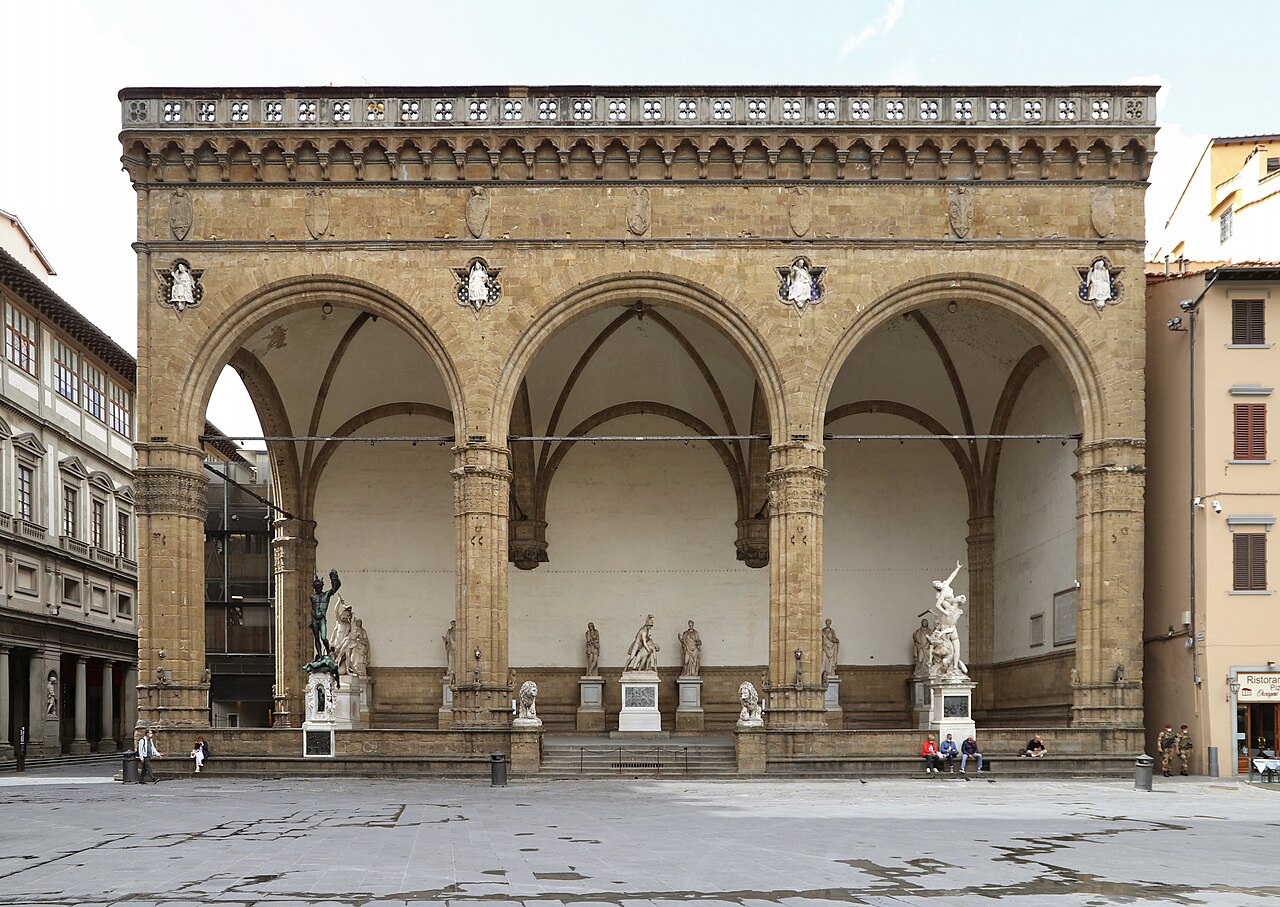
Loggia dei Lanzi
- Must see · Heritage site
- Historic monument
Language · 11 published
Historic monument · Florence
Reviewed by Elena Voss · Roavina Travel Editor
| Monday | 00:00 – 23:59 |
|---|---|
| Tuesday | 00:00 – 23:59 |
| Wednesday | 00:00 – 23:59 |
| Thursday | 00:00 – 23:59 |
| Friday | 00:00 – 23:59 |
| Saturday | 00:00 – 23:59 |
| Sunday | 00:00 – 23:59 |
Checked 2026-08-31 · Source
Read from the OpenStreetMap access tags; anything not listed has no tag recorded.
Set the group type to family in the planner and the day window contracts to about three quarters of a solo day.
This place is a Attraction.
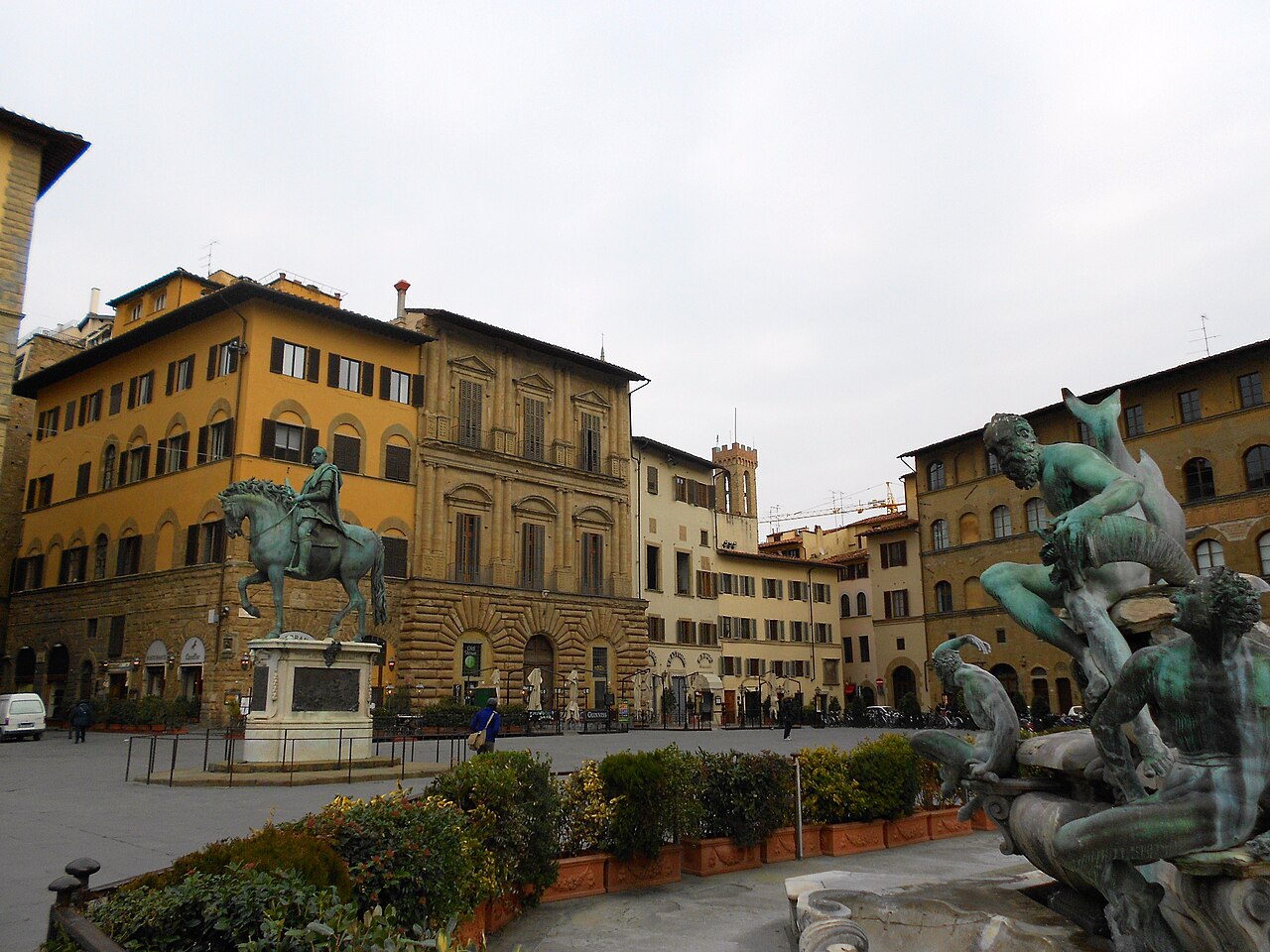
Piazza della Signoria is Florence's principal civic square and the historic heart of the city's political life. The L-shaped piazza has served as the seat of government since the medieval period, dominated by the thirteenth-century Palazzo Vecchio with its distinctive crenellated tower. The square functions as an open-air sculpture gallery and continues to host civic ceremonies. Its proximity to the Arno River and the Uffizi Gallery makes it a natural convergence point for visitors exploring central Florence. The piazza retains its role as a functioning public space rather than a sealed monument.
Checked 2026-08-31 · Source
The square contains significant sculptural works including a copy of Michelangelo's David in its original outdoor position, the Fountain of Neptune by Bartolomeo Ammannati, and the equestrian monument to Cosimo I de' Medici by Giambologna. The Loggia dei Lanzi, an open-air sculpture gallery on the southern edge, houses works including Benvenuto Cellini's Perseus with the Head of Medusa. The Palazzo Vecchio, still Florence's town hall, occupies the entire northern side. Numerous cafes and restaurants line the perimeter, operating within historic premises.
Checked 2026-08-31 · Source
A thorough visit to observe the sculptures and absorb the atmosphere requires approximately thirty to sixty minutes. Extended stays are common as visitors use the piazza as a resting point between nearby attractions. The Loggia dei Lanzi rewards slower examination of its individual sculptures. Many visitors combine the square with entry to Palazzo Vecchio, which requires separate planning. Evening visits offer different atmospheric qualities as the monuments are illuminated. The space accommodates both brief transit stops and prolonged observation without structural constraints on duration.
Checked 2026-08-31 · Source
Open access daily; the City does not set visitor hours for the public square. No regular closure day is listed. This applies to Piazza della Signoria itself, not the surrounding museums, towers or indoor attractions. The piazza is accessible at all hours as an open public square. Early morning visits generally offer reduced crowding and softer light conditions. Midday periods typically experience peak visitor density, particularly in summer months. Evening hours attract both tourists and local residents. Seasonal weather variations affect comfort but not access. Major civic events may temporarily restrict normal circulation patterns. Visitors should anticipate variable conditions and plan accordingly based on personal tolerance for crowds and temperature preferences.
Checked 2026-08-31 · Source
Free access; no ticket is required for the public square. Surrounding museums and attractions have separate admission arrangements. No admission charge applies to the piazza itself as a public thoroughfare. Palazzo Vecchio, which borders the square, operates separate ticketing arrangements. Visitors should verify current conditions independently before travel. Any commercial services operating within the square premises establish their own pricing structures. The open-air sculptures and Loggia dei Lanzi remain freely accessible. Budget-conscious travellers can experience the square's essential qualities without expenditure.
Checked 2026-08-31 · Source
Urban bus C1 serves the named GALLERIA DEGLI UFFIZI stop when travelling from Parterre toward Santa Maria Soprarno/San Giusto della Calza. From there, approach the square through Piazzale degli Uffizi. The City's street register also names Via Vacchereccia, Via dei Calzaiuoli, Via dei Gondi and Via della Ninna among the pedestrian approaches. The piazza sits within Florence's compact historic centre, reachable on foot from most central accommodations. The Santa Maria Novella railway station lies approximately ten to fifteen minutes walk to the northwest. Multiple bus routes serve surrounding streets, though vehicle access is restricted in much of the centro storico. The nearest formal parking is limited and expensive. Walking from the Duomo or Ponte Vecchio involves brief, straightforward routes through pedestrianised streets. Signage throughout the centre directs visitors toward this major landmark. Comfortable footwear is advisable given uneven paving stones.
Checked 2026-08-31 · Source
The City lists unrestricted access to the square, but its official tourism portal rates the adjoining Loggia de' Lanzi as only partially accessible. Wheelchair users can use Florence's four official Passepartour accessible itineraries and road-surface map; these identify routes that can be travelled independently and routes where assistance is advisable. The square's open design provides minimal shade; sun protection and water are prudent in warm conditions. Pigeon activity is substantial and persistent. Cafe seating along the perimeter commands premium prices reflecting location rather than quality. The dense concentration of visitors attracts pickpockets; standard urban vigilance applies. Street performers and costumed figures solicit tips for photographs. The uneven historic paving presents trip hazards, particularly when crowded. Political demonstrations occasionally utilise this civic space. Visitors should maintain awareness of surrounding activity while observing sculptures, as circulation patterns are unpredictable.
Checked 2026-08-31 · Source
The square permits unrestricted photography of its public monuments and architecture. The copy of David and Loggia dei Lanzi sculptures are frequently photographed subjects. Morning and late afternoon light produces favourable conditions for the west-facing Palazzo Vecchio facade. Night photography benefits from monument illumination, though tripod use may attract security attention in crowded conditions. Elevated viewpoints from adjacent buildings or the Palazzo Vecchio tower offer alternative perspectives. The consistent presence of other visitors makes unobstructed compositions challenging during peak periods. No commercial photography permits are required for typical visitor use.
Checked 2026-08-31 · Source
The square developed with the Palazzo dei Priori between the thirteenth and fourteenth centuries and reached roughly its present dimensions during the fourteenth century.
It was established as Florence's civic and political centre and remains overlooked by Palazzo Vecchio, the seat of the Municipality of Florence.
No. The David in the square is a copy; Michelangelo's original is in the Galleria dell'Accademia.
The loggia includes Benvenuto Cellini's Perseus and Giambologna's Rape of the Sabine Women and Hercules and the Centaur Nessus.
It marks the place where Girolamo Savonarola and two disciples were burned on 23 May 1498; Florence commemorates the event annually with the Fiorita ceremony.
Giambologna created the equestrian monument to Cosimo I, Grand Duke of Tuscany, that dominates the square.
Loading the interactive map…
The interactive map could not be loaded.
Last updated:
Source: OpenStreetMap contributors ·