
2 min walk
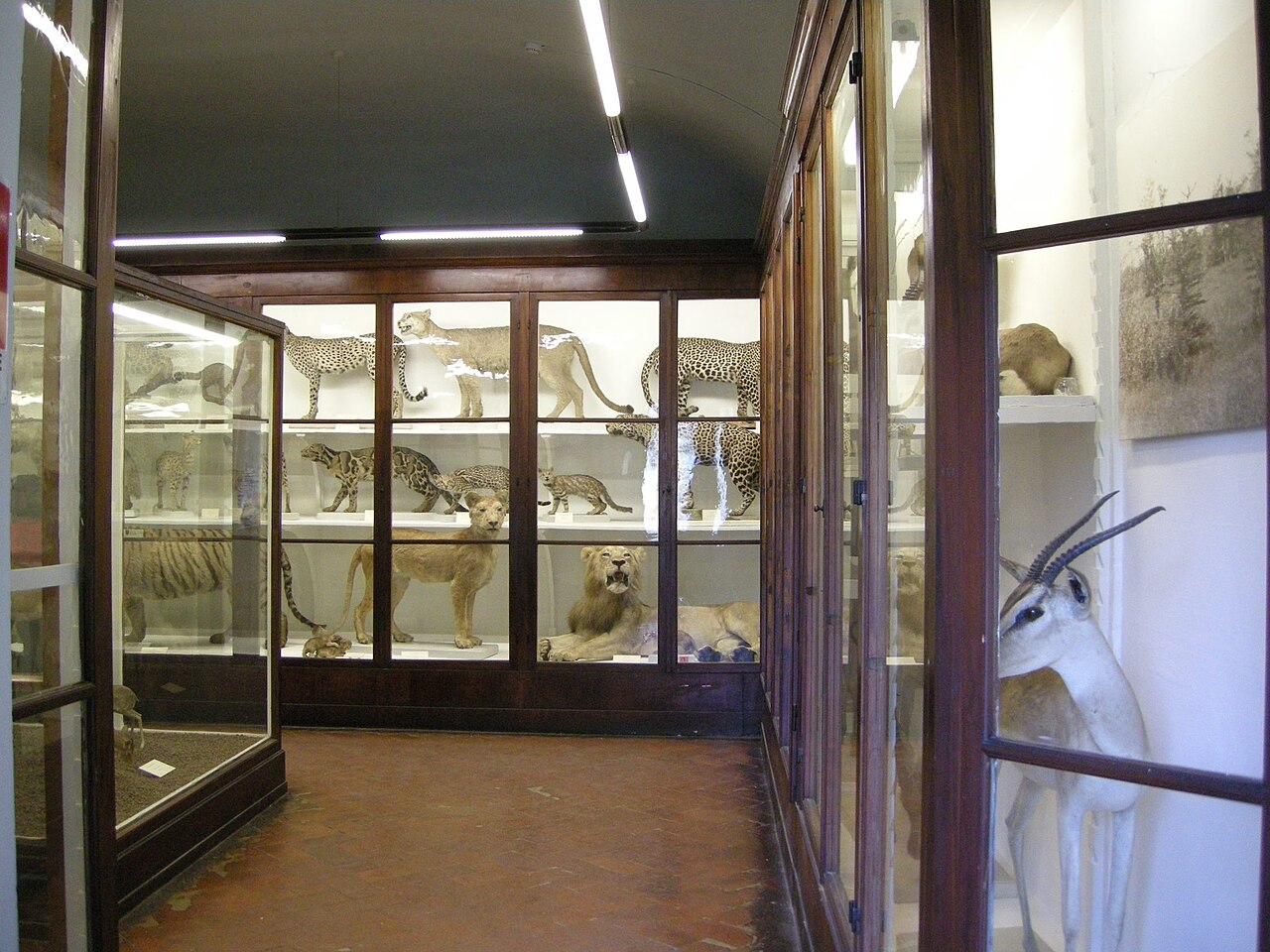
Università di Firenze Museo Zoologico "La Specola"
- High · Heritage site
- Museum
Language · 11 published
Historic monument · Florence
Giardino di Boboli
Reviewed by Elena Voss · Roavina Travel Editor
Read from the OpenStreetMap access tags; anything not listed has no tag recorded.
Set the group type to family in the planner and the day window contracts to about three quarters of a solo day.
It was established in 1766. It carries the part of UNESCO World Heritage Site heritage designation.
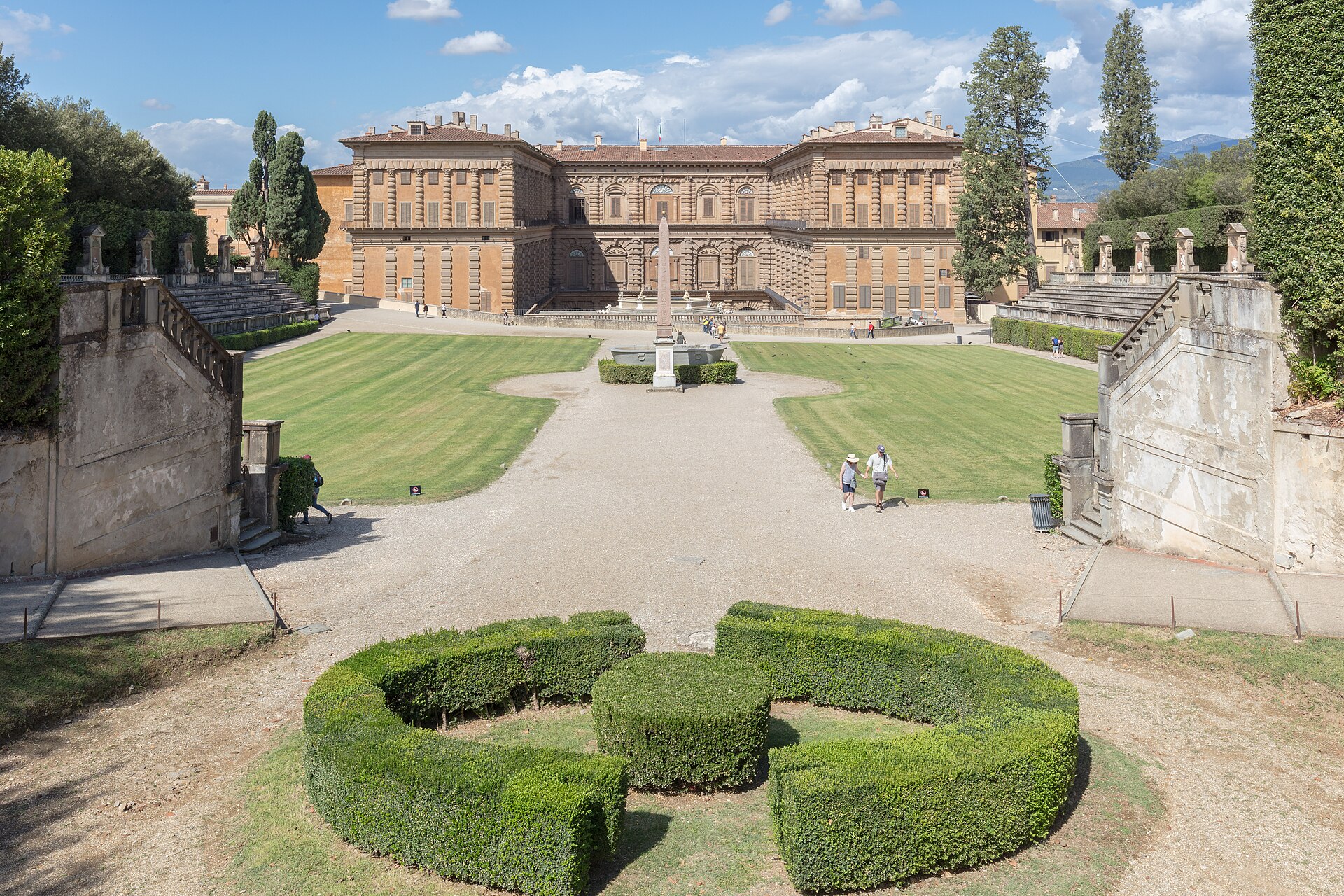
The Boboli Gardens climb the hillside directly behind Pitti Palace and run south along the line of the old city walls as far as Porta Romana. Work began in 1549 to a design by Niccolò Pericoli, known as Tribolo, commissioned by Duchess Eleonora of Toledo; Tribolo died soon afterwards and the work passed first to Bartolomeo Ammannati and then to Bernardo Buontalenti. Later grand dukes kept building. Cosimo II and Ferdinando II de' Medici had Giulio and Alfonso Parigi extend the garden southwards, and in the second half of the eighteenth century Peter Leopold commissioned the Kaffeehaus and the Lemon House from Zanobi del Rosso.
Checked 2026-08-31 · Source
The set pieces are spread along two axes. Behind the palace courtyard the Amphitheatre rises in tiers; Giulio Parigi rebuilt it in masonry in 1631, and the Egyptian obelisk at its centre came from Luxor by way of the Medici collections in Rome, with a basin taken from the Baths of Caracalla. Above it Giambologna's Statue of Abundance, finished by Pietro Tacca, looks down over the whole complex. Two grottoes sit near the palace end: the Grotto of Madama of 1553 to 1555, and the Buontalenti Grotto, built between 1583 and 1593 with limestone stalactites, shells and terracotta reliefs.
Checked 2026-08-31 · Source
Allow two hours. The Uffizi Galleries publish no suggested visit length for the Boboli Gardens, so two hours is this guide's judgement rather than a figure read off the operator's site, and it is built from what the operator does publish. The garden runs from Pitti Palace to Porta Romana, the ground is described by its own accessibility page as clay and gravel and almost completely sloping with climbs and descents, and last admission is always an hour before closing. Two hours covers the Amphitheatre, the terraces above it with the Kaffeehaus, the Viottolone and the Isolotto at the far end, and the walk back, at a pace that allows stopping at the fountains.
Checked 2026-08-31 · Source
Open from 08:15. Closing times: 16:30 in January, February, November and December; 17:30 in March and October during standard time; 18:30 in March and October during daylight-saving time and throughout April, May and September; 19:10 in June, July and August. Closed on the first and last Monday of every month and on 25 December. 31 August 2026 was the last Monday of the month, so the gardens were closed. Last admission is one hour before closing. The Porcelain Museum remains closed for refurbishment until further notice. Weather emergencies can cause temporary garden closures or reduced hours. The garden opens at 8.
Checked 2026-08-31 · Source
Regular adult admission is €10 for a named ticket purchased on the day of entry, or €13 when purchased in advance. A single named ticket for the Boboli Gardens costs 10 euro bought on the day of entry and 13 euro bought before the date of entry, so booking ahead here costs more rather than less. A combined Pitti Palace and Boboli ticket is 22 euro on the day and 25 euro in advance.
Checked 2026-08-31 · Source
Autolinee Toscane bus C1 serves the named stops ROMANA BOBOLI and PITTI. Use ROMANA BOBOLI for the Annalena entrance on Via Romana or PITTI for the Piazza Pitti entrance. The operator also lists gates at Porta Romana and Forte di Belvedere. No car is needed, and this is a place where one is a liability rather than a help: all four gates open onto central Florence streets, and the garden itself is entered on foot. The Uffizi Galleries list entry and exit at Pitti Palace, at the Annalena gate on Via Romana, and at the gates of Forte di Belvedere and Porta Romana. School groups are restricted to Annalena, Porta Romana and Forte di Belvedere.
Checked 2026-08-31 · Source
Step-free entrances are available from Piazza Pitti, using the left side of the Ammannati Courtyard, and from Piazza di Porta Romana. The operator requires visitors using the accessible routes to be accompanied. Most paths are sloping clay or gravel, with substantial climbs and descents. The Porcelain Museum is not accessible. Wheelchairs and walkers can be borrowed free of charge from the Pitti Palace and Boboli Gardens ticket office, subject to availability and presentation of identification. Accessible toilets are available in the Pitti Palace courtyard, the Chestnut Meadow building and at the Annalena entrance. A run of the garden's best-known features is fenced off for restoration, and the operator updates the list as the work moves.
Checked 2026-08-31 · Source
Casual photography is unremarked, but the operator requires specific authorisation for photography and filming that is professional or intended for publication, and drones and similar devices are forbidden outright. Anyone shooting commercially should arrange it before arriving rather than at the gate. For an ordinary camera the garden's problem is light rather than permission. The two obvious frames are the Amphitheatre seen from the terraces above it, with the Luxor obelisk centred and the roofline of Florence behind, and the Isolotto at the foot of the Viottolone, where Giambologna's Ocean stands on its island in the elliptical basin. The Viottolone itself photographs best along its length rather than across it.
Checked 2026-08-31 · Source
Last admission is always one hour before the published closing time.
Visitors can enter or exit through Pitti Palace, Annalena on Via Romana, Forte di Belvedere or Porta Romana.
No. The Porcelain Museum is closed for refurbishment until further notice.
No. Booking is optional; the regular ticket costs €10 when bought on the day or €13 when bought in advance.
Yes. The free cloakroom is on the right side of the Ammannati Courtyard.
Yes. Drinking fountains are located near the Garden of Madama, Knight's Garden, Grotto of Adam and Eve and Meadow of the Columns. Toilets are available at Annalena, near the Amphitheatre, near the Porcelain Museum and near the Garden of the Hair Washer Statue.
Loading the interactive map…
The interactive map could not be loaded.
Last updated:
Source: OpenStreetMap contributors, Wikidata ·