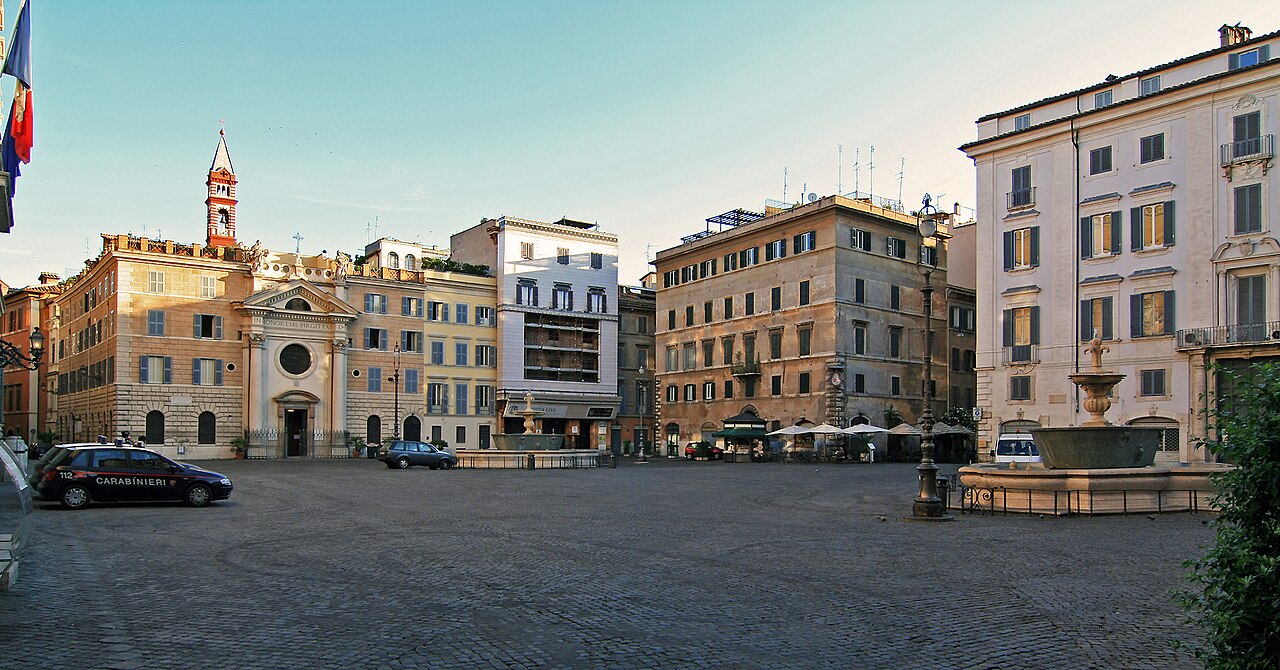
2 min walk
Piazza Farnese
- Must see
- Activity
Market · Rome
| Per person | Free entry |
|---|
Checked 2026-08-31 · Source
Read from the OpenStreetMap access tags; anything not listed has no tag recorded.
Set the group type to family in the planner and the day window contracts to about three quarters of a solo day.
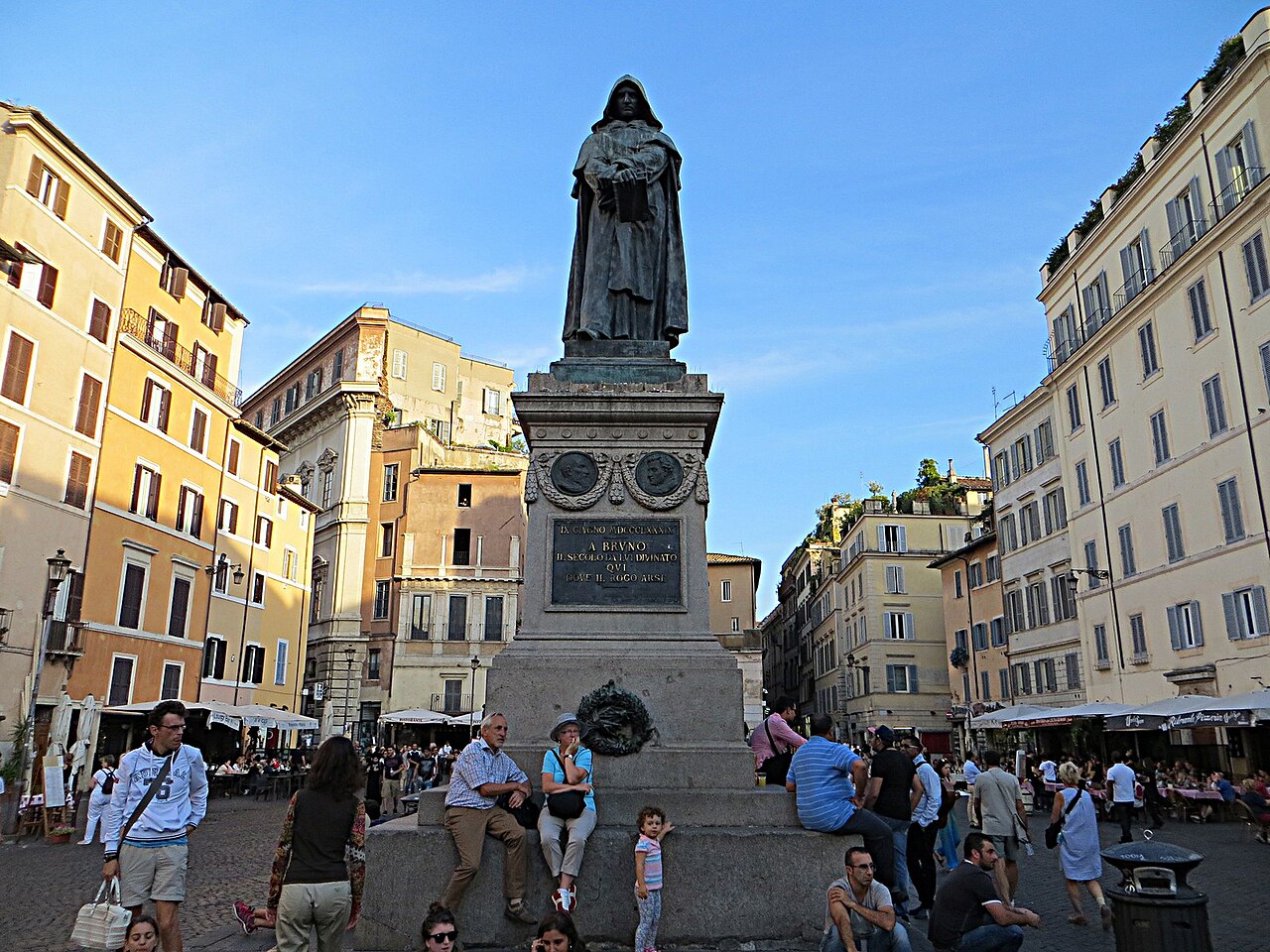
Campo de' Fiori is a rectangular public square in central Rome, south of Piazza Navona. Its name translates to Field of Flowers, reflecting its medieval origins as a meadow before urban development. The square gained notoriety as the site of public executions during the Inquisition, most famously the burning of philosopher Giordano Bruno in 1600. A bronze statue of Bruno, erected in 1889, now dominates the centre as a monument to free thought. Today it functions primarily as a marketplace and social gathering point.
Checked 2026-08-26
The square contains Giordano Bruno's monument, raised on a tall plinth with inscriptions. Surrounding the piazza are historic buildings with ground-floor establishments including cafes, restaurants, and food shops. The morning market features stalls selling produce, spices, flowers, and specialty goods. No churches, museums, or enclosed attractions occupy the square itself. The architectural fabric represents several centuries of Roman construction, though individual building histories are not recorded. Evening brings a different atmosphere as dining and drinking establishments become more prominent. Campo de' Fiori also earns time in a rome itinerary because Exact unique production name match within the declared city scope. Its value becomes clearer when the stop is compared with the surrounding streets and the other ranked places nearby.
Checked 2026-08-26
A brief visit of fifteen to thirty minutes suffices to observe the monument and walk the square's perimeter. Market browsing extends this naturally depending on interest. The square rewards repeated short visits at different times rather than single extended stays. Morning market hours and evening aperitivo periods represent distinct experiences. No queues, entry procedures, or interior circuits consume visitor time. The surrounding streets contain numerous additional points of interest within immediate walking distance, allowing integration into longer itineraries without dedicated allocation.
Checked 2026-08-26
The morning market operates on weekdays and Saturdays, traditionally concluding by early afternoon. Evening activity peaks after working hours. Seasonal variations in daylight and temperature affect comfort. The square lacks shade structures, making midday summer visits potentially strenuous. Rain significantly reduces market operation and open-air appeal. Major religious holidays may suppress commercial activity. The square remains physically accessible at all hours as public thoroughfare, though services and atmosphere vary dramatically by time of day and week. Check the operator's own site for the travel date before relying on a schedule or fare.
Checked 2026-08-26
Campo de' Fiori requires no admission fee as public space. Market purchases are transactional with individual vendors. Prices for goods and refreshments vary by establishment and are subject to negotiation or stated terms. No combined tickets, advance reservations, or guided tour packages pertain to the square itself. Some surrounding businesses may offer fixed-price menus or tourist-targeted offerings that warrant careful examination. Cash remains advisable for market transactions though individual vendor policies differ. A flexible visit lets travellers connect Campo de' Fiori with the rest of the day without treating one room, viewpoint or photograph as the whole experience. The useful pace depends on personal interest and conditions on arrival. Check the operator's own site for the travel date before relying on a schedule or fare.
Checked 2026-08-26
The square sits within Rome's historic centre, walkable from numerous major landmarks. Bus services operate on surrounding streets with stops requiring short walks. The nearest metro station is not immediately adjacent. Walking from Piazza Navona takes approximately five minutes. From the Tiber river embankment, approach via Corso Vittorio Emanuele II or smaller parallel streets. The dense medieval street pattern complicates direct navigation; mapping applications may prove imprecise in this quarter. Evening return journeys should account for reduced public transport frequency.
Checked 2026-08-26
Market prices for tourists may exceed local rates; comparison and polite negotiation are prudent. Pickpocketing occurs in crowded conditions, particularly during peak market and evening hours. Cafe seating in the square itself commands premium pricing over side-street alternatives. The bronze monument attracts climbing attempts that are inappropriate and potentially dangerous. Cobblestone surfaces become slippery when wet. After dark, the square's character shifts substantially with amplified noise and activity; visitors seeking tranquil atmosphere should adjust timing accordingly. No permanent public sanitation facilities are present.
Checked 2026-08-26
The Giordano Bruno monument permits unobstructed photography from all angles. Morning market scenes offer colourful documentary possibilities with vendor permission for close shots. The square's open centre allows wide-angle compositions of surrounding architecture, though utility wires and modern signage intrude in some sightlines. Night photography captures illuminated facades and social activity. Tripod use in crowded conditions may obstruct passage and attract attention. Drone operation would require regulatory compliance not specific to this location. No photography restrictions are posted, though commercial or posed shoots may attract scrutiny.
Checked 2026-08-26
The square itself is public space accessible at all times. The market operates on weekdays and Saturdays, traditionally concluding by early afternoon. Sunday market activity is not recorded.
Walking takes approximately twenty-five to thirty-five minutes through the historic centre. Bus connections exist with transfers or walking segments required. Direct metro connection is not available.
Permanent public sanitation facilities within the square are not recorded. Visitors should utilise facilities at surrounding cafes, restaurants, or other establishments, typically requiring purchase.
The morning market primarily sells produce and goods for preparation elsewhere. Some vendors may offer ready-to-consume items. Surrounding cafes and restaurants provide seated dining options.
The monument was erected in 1889, centuries after Bruno's 1600 execution. It was not contemporary to the events it commemorates.
The square becomes crowded and noisy after dark with amplified social activity. Standard urban precautions regarding valuables and awareness apply. Individual comfort levels with lively nighttime environments vary.
Loading the interactive map…
The interactive map could not be loaded.
Last updated:
Source: OpenStreetMap contributors ·
.jpg)