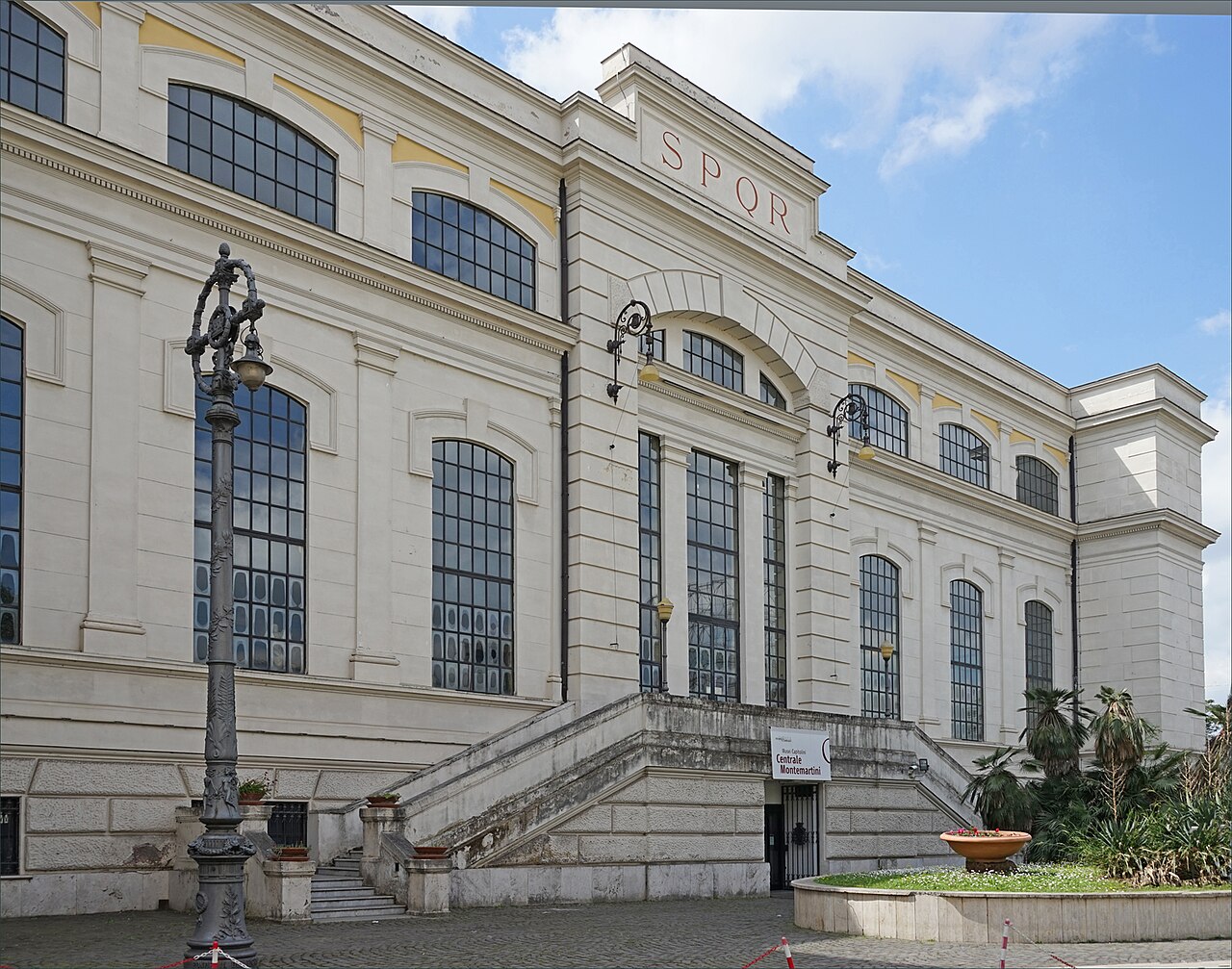
Centrale Montemartini is a museum in Rome housed in a former thermoelectric power plant. The industrial building, with its preserved machinery and turbines, serves as an exhibition space for classical sculpture from the Capitoline Museums collection. Opened in 1997, it represents an unusual pairing of ancient Roman art with early twentieth-century industrial architecture. The museum occupies a distinctive position in Rome's cultural landscape, offering visitors an alternative to more conventional museum settings through its deliberate juxtaposition of historical periods and aesthetic contexts.
The museum displays approximately four hundred ancient sculptures and archaeological objects. These include Roman portrait busts, full-length statues, and decorative reliefs arranged among the plant's original engines, boilers, and turbine equipment. The collection features pieces from excavations across Rome and its territories. Notable groupings include Republican and Imperial portraiture, Greek originals and Roman copies, and architectural fragments. The industrial setting creates striking visual contrasts between polished marble figures and rusted metal machinery, between classical idealism and functional engineering design.
Visitors typically spend between one and two hours exploring the museum's exhibition spaces. The compact, linear layout of the former power station allows efficient circulation through the main galleries. Those with particular interest in either classical archaeology or industrial heritage may extend their visit. The museum's scale is manageable compared to larger Roman institutions, permitting thorough examination without excessive fatigue. Photography enthusiasts and those studying individual works in detail should allocate additional time. The juxtaposition of art and machinery rewards unhurried observation and repeated viewing from different angles.
Visitors should consult official sources before planning their trip. The museum's indoor location provides shelter from Rome's summer heat and winter rain, potentially making it appealing during less comfortable weather periods. Its relative distance from the densest tourist concentrations may offer a more tranquil experience than central attractions during peak seasons. The artificial lighting conditions within the industrial spaces remain consistent regardless of external conditions, eliminating concerns about natural light quality that affect some other museums. Check the operator's own site for the travel date before relying on a schedule or fare.
Visitors should verify current admission costs through official channels before visiting. The museum's status as part of the Capitoline Museums system may affect ticketing arrangements, including potential combined entry options with other municipal museums. Reduced or free admission categories common to Italian state and municipal museums may apply, though specific eligibility requires confirmation. Any available guided tours, audio guides, or special exhibition supplements would need separate verification. Advance booking possibilities and payment methods accepted should be confirmed directly. Check the operator's own site for the travel date before relying on a schedule or fare.
The museum sits in the Ostiense district, south of Rome's historic center. Public transportation access includes regional railway services and metro connections to the Ostiense area. The location is not within comfortable walking distance of major central landmarks. Visitors should consult current transit schedules and routes, as these undergo periodic modification. The industrial zone setting differs markedly from the pedestrian-friendly ancient center, requiring attention to navigation. Signage from nearby transit points may be limited. Taxis or ride services offer alternatives, though traffic conditions in this area can vary considerably throughout the day.
The industrial environment presents specific conditions requiring visitor awareness. Original machinery occupies floor space, creating obstacles and restricting movement patterns. Hard surfaces and metal equipment amplify ambient noise. The dramatic lighting designed to highlight sculptures may leave floor areas in relative shadow, increasing trip hazards. Climate control prioritizes artifact preservation over human comfort, potentially leaving spaces cooler or more humid than expected. The museum's specialized appeal may not suit all travelers, particularly those seeking comprehensive chronological narratives or families with young children requiring interactive engagement. Accessibility limitations inherent to the historic industrial structure should be anticipated.
The exceptional visual contrasts between classical sculpture and industrial machinery make this a compelling subject for photography. The dramatic artificial lighting creates strong shadows and highlights that reward careful composition. Tripod use likely requires permission and may be restricted due to spatial constraints and visitor flow considerations. The reflective surfaces of polished marble against matte rusted metal offer textural variety. Wide-angle lenses help capture the scale relationships between human figures and massive engines. Flash photography may be prohibited to protect light-sensitive materials and preserve the intended atmospheric conditions. Visitors should verify current policies before relying on specific equipment.
Checked 2026-08-26
Place details and sources
Address
Via Ostiense, 106, 00154, RomaOpenStreetMap
· Checked 2026-09-09
Is Centrale Montemartini part of the Capitoline Museums for Centrale Montemartini in Rome?
Yes, it operates as an annex of the Capitoline Museums, displaying works from that collection in the former power plant setting.
What makes this museum different from other Roman museums for Centrale Montemartini in Rome?
The deliberate installation of classical sculpture within a preserved early twentieth-century thermoelectric plant creates an unusual dialogue between ancient art and industrial heritage.
Are there original Greek sculptures or only Roman copies for Centrale Montemartini in Rome?
The collection includes both categories, with Greek originals and Roman copies represented among the displayed works.
Is the museum suitable for children for Centrale Montemartini in Rome?
The specialized, contemplative atmosphere and lack of interactive elements may limit engagement for young visitors compared to more family-oriented institutions.
Can I visit without advance reservation for Centrale Montemartini in Rome?
Current entry procedures are Not recorded pending review; visitors should confirm whether advance booking is required or recommended.
Is the building itself historically significant for Centrale Montemartini in Rome?
Yes, the preserved power plant represents early twentieth-century industrial architecture and engineering, with original turbines, boilers, and control equipment intact.

_(34321364485).jpg)