2 min walk
Crypta Balbi
- Must see · Heritage site
- Historic monument
Activity · Rome
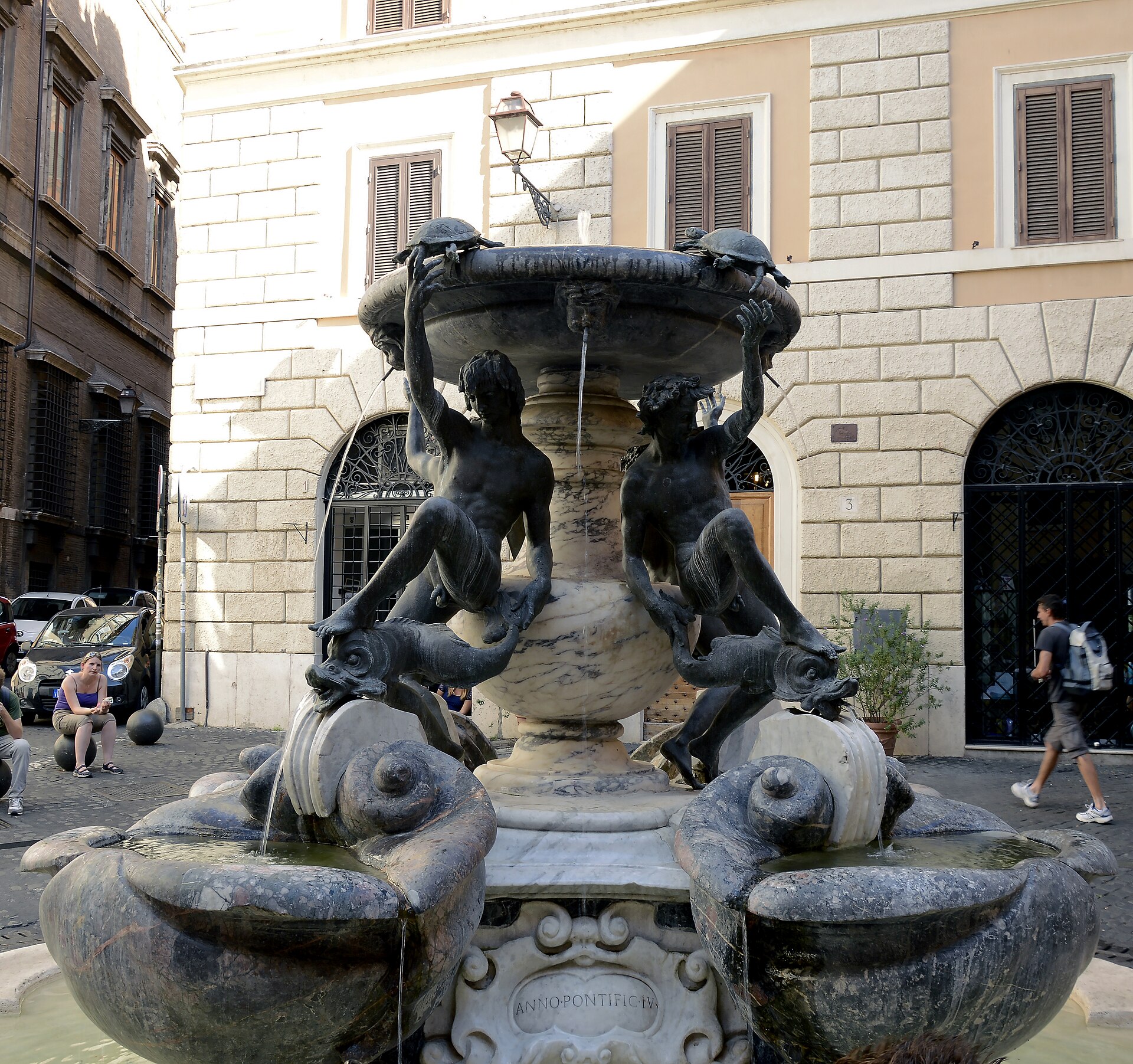
The Fontana delle Tartarughe is a compact late-sixteenth-century fountain in Piazza Mattei, in Rome’s Sant’Angelo district. Four bronze youths lean over a marble basin, with dolphins and turtles creating the fountain’s lively silhouette. Its intimate setting among historic palaces makes it a rewarding pause during a walk through the Jewish Ghetto and central Rome. This is a public square rather than an enclosed attraction, so the experience comes from close observation, the surrounding architecture, and the atmosphere of the piazza. The fountain’s small scale makes its sculptural details easy to appreciate from several sides.
Checked 2026-08-26 · Source
There is no interior to explore. The focus is the fountain itself: a marble basin, four bronze figures, dolphin heads, and the small turtles held above the water. Look closely at the relationship between the human figures and the animals, then step back to see how the sculpture fits within Piazza Mattei. The enclosing palaces give the monument a strong architectural frame, while the square’s compact scale lets you study details without needing a long circuit. Water is concentrated at the centre, so the composition reads clearly even during a brief stop.
Checked 2026-08-26 · Source
Allow around ten to fifteen minutes for the fountain itself. That is enough time to walk around the basin, examine the bronze youths, dolphins, and turtles, and take a few photographs. Add more time if you want to linger in the square or continue exploring the Sant’Angelo and Jewish Ghetto streets at an unhurried pace. The fountain works best as a short, distinctive stop within a walking route rather than as a separate half-day destination. Visitors interested in sculpture may want additional time for close study of the figures and marble details.
Checked 2026-08-26 · Source
Because the fountain stands in a public piazza, it can be approached as part of a day or evening walk. Morning and late-afternoon light can bring out modelling in the bronze and soften the surrounding façades. Midday summer heat is more noticeable in the exposed square. Evening visits offer a different mood as local streets become quieter or more social. Water flow can vary, so the sculptural arrangement remains the reliable reason to stop. The square’s residential setting is most enjoyable when visitors take time to look quietly rather than treating it only as a passing photo point.
Checked 2026-08-26 · Source
The fountain stands in Piazza Mattei, an open public square, and there is no controlled entrance to pass through. A visit therefore requires no museum ticket, reservation, or admission procedure. You can include it freely in a route linking the Jewish Ghetto, Piazza Venezia, Campo de’ Fiori, or the Tiber. Nearby cafés and restaurants are separate businesses, so any spending there is unrelated to seeing the fountain. The absence of a ticketed entrance also means that the fountain is easy to add between larger attractions without changing a day’s booking schedule.
Checked 2026-08-26 · Source
Piazza Mattei lies in Rome’s historic centre, where walking is the clearest way to reach the fountain and to understand its compact medieval street setting. It is practical to approach from Piazza Venezia, the Jewish Ghetto, Campo de’ Fiori, or the Tiber embankment. Buses serve the wider central area, but the final streets are easier on foot. Use the piazza as the destination in your map application, then slow down as you enter the enclosed square. The surrounding lanes are part of the visit because the fountain’s setting among historic buildings explains its intimate character.
Checked 2026-08-26 · Source
Historic paving around Piazza Mattei can be uneven, and wet cobbles deserve extra care. The basin edge is low, so keep a little distance while moving around it. Streets in the surrounding district can carry vehicles, even where the square feels pedestrian-friendly. Keep belongings secure in busy central Rome and avoid blocking residents’ paths or doorways. The fountain is a working urban monument, so water flow or nearby conditions may change during maintenance. The square has a residential character, making quiet behaviour especially considerate in the evening. Children should stay close to adults around the basin and traffic approaches.
Checked 2026-08-26 · Source
The small scale of Piazza Mattei favours detail photographs and carefully framed vertical views. Move around the basin to place the bronze youths, dolphins, and turtles against the surrounding palaces. Morning or late-afternoon light is gentler on the metal and marble than hard midday sun. A wide view can include the whole fountain and square, while a closer frame isolates the turtles. Keep equipment out of the walking line and let other visitors pass. The enclosed piazza limits distant compositions, but that restriction helps create intimate images focused on sculpture, texture, and architectural framing.
Checked 2026-08-26 · Source
It is in Piazza Mattei, in Rome’s Sant’Angelo district, close to the historic streets of the Jewish Ghetto.
Four bronze youths, dolphins, and turtles combine around a marble basin; the turtles give the monument its popular name.
It was created in the late sixteenth century, with the turtles added later to the fountain’s design.
Around ten to fifteen minutes is enough for the fountain and its main sculptural details; the surrounding district can extend the walk.
No. The fountain stands in an open public piazza without a controlled entrance or admission procedure.
Visit it on foot as part of a route through Piazza Mattei, the Jewish Ghetto, Piazza Venezia, Campo de’ Fiori, or the Tiber-side streets.
Loading the interactive map…
The interactive map could not be loaded.
Last updated:
Source: OpenStreetMap contributors, Wikidata ·