
2 min walk · Savski Venac
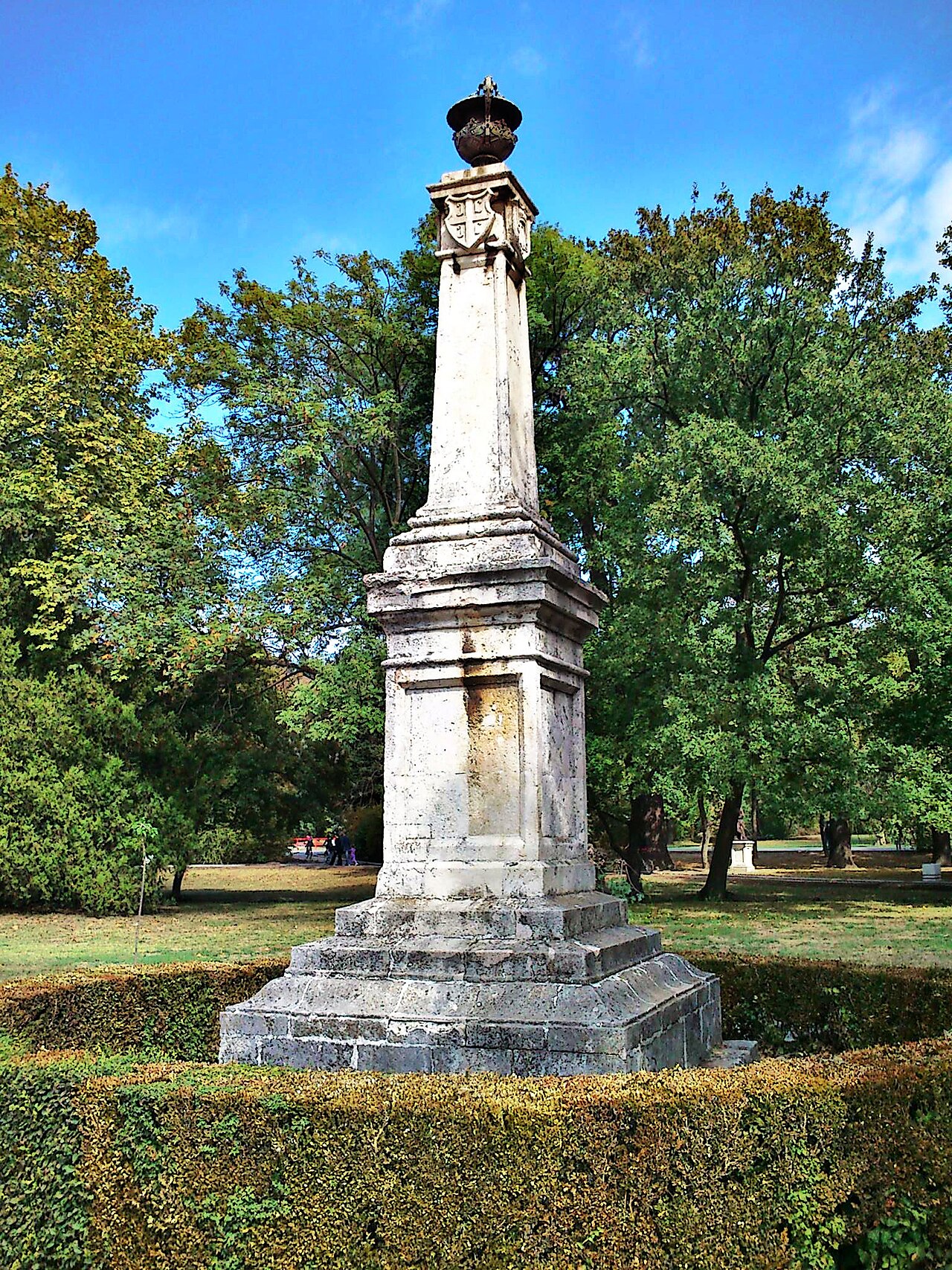
Topčider obelisk
- High · Heritage site
- Historic monument
Historic monument · Savski Venac, Belgrade
Споменик Арчибалду Рајсу
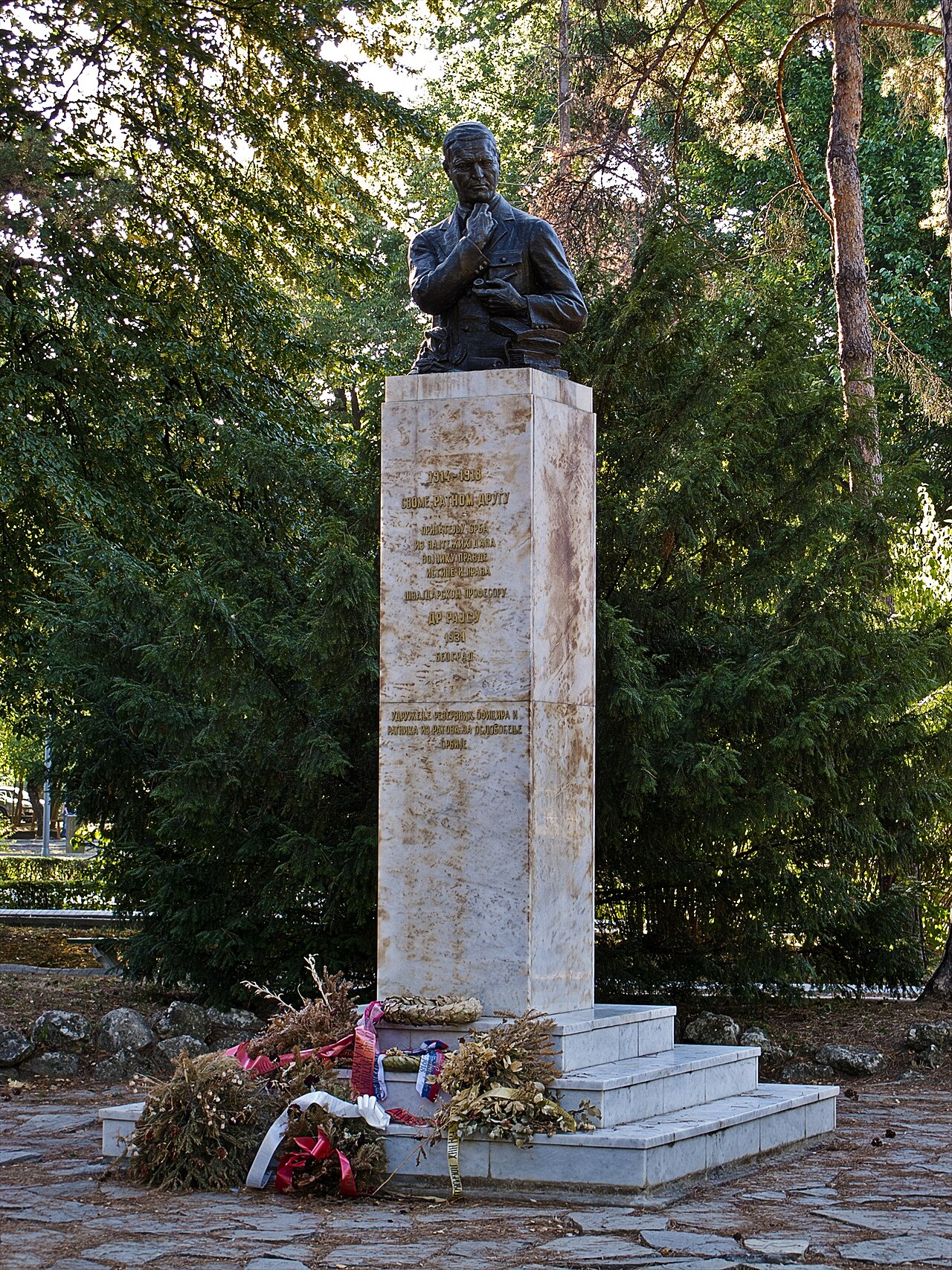
The Monument to Archibald Reiss is a 1931 memorial in Belgrade’s Topčider Park, erected two years after the Swiss forensic scientist died. Its subject was not a monarch or military commander, but a forensic investigator who examined crimes against Serbian civilians during the First World War and became known as a major friend of Serbia. That history gives this small outdoor monument a precise moral focus: remembrance of evidence, justice and solidarity. The monument is also an immovable cultural property protected since 1965, so it carries both personal memory and formal heritage status. Its location within a historic park makes the memorial part of Belgrade’s public landscape rather than an isolated commemorative building.
Checked 2026-09-02 · Source
This is an outdoor memorial rather than a building, gallery or museum room. The visual focus is a sculpture created by Marko Brežanin, set above a high white-stone pedestal. The pedestal’s Serbian and French inscription honours Reiss as a wartime comrade and friend of the Serbs, then broadens the tribute by naming him a soldier of justice, truth and law. The bilingual text is central to understanding the monument: it identifies the relationship being remembered and the principles associated with Reiss. Look at the sculpture, stonework and lettering as one carefully composed commemorative object.
Checked 2026-09-02 · Source
Plan roughly 20 to 40 minutes for a focused visit to the monument. The shorter end is enough to see the sculpture and pedestal; the longer end allows time to read both language versions of the inscription, look at the memorial from several sides and pause with its historical subject in mind. Add time if Topčider Park is part of a longer walk. Since the monument is a single outdoor object rather than a sequence of rooms, the visit has no fixed route or timed programme. Its duration depends mainly on how much context and observation you want to include.
Checked 2026-09-02 · Source
The practical experience is an outdoor walk through Topčider Park to a freestanding memorial. Daylight is the useful choice because it makes the sculpture, white stone and bilingual lettering easier to distinguish. Spring and early autumn suit visitors who want to linger in the park as well as see the monument, while other seasons change the character of the surrounding greenery. After rain, allow for wet or uneven ground on the approach. In warmer weather, a morning or late-afternoon visit can make the park walk more comfortable. The monument’s meaning does not depend on a particular season, but visibility and walking comfort do.
Checked 2026-09-02 · Source
No admission arrangement is recorded from an operator or responsible public body for this monument. The available official descriptions establish what the memorial is and where it stands, but they do not publish a ticket price, free-entry statement or ticketing procedure. Plan this stop as an outdoor memorial within Topčider Park, and keep any admission decision separate from the documented facts: this guide does not assert a price or free access. Any separately ticketed attraction encountered elsewhere in Belgrade would have its own rules and is outside this monument entry. The absence of a recorded tariff is therefore deliberate in this guide; no unsupported admission claim is attached to the memorial.
Checked 2026-09-02 · Source
Reach Topčider Park by Belgrade public transport. The park is bounded by Bulevar vojvode Mišića and Bulevar vojvode Putnika, and tram line 3 runs along its edge. Named nearby stops include Topčiderski park and Topčiderska pozornica. From a suitable stop, continue on foot inside the park to the monument; the final approach is a park walk rather than a documented vehicle drop-off at the memorial itself. Use a current public-transport route planner for the connection from your starting point, then allow time for the internal paths. The exact walking surface may vary, so choose footwear accordingly.
Checked 2026-09-02 · Source
The available access evidence concerns another park facility, not this memorial, so it is not carried into the amenity record. Approach the monument as a park walk and expect that surfaces may not be equally smooth throughout. Visitors who need a fully step-free route should treat accessibility as unresolved for this specific object. Respect the commemorative setting, leave the pedestal untouched and avoid obstructing other people using the park. The memorial should be approached as a heritage object in a shared public space, with ordinary care for the stone, sculpture and surrounding paths.
Checked 2026-09-02 · Source
The monument offers a compact subject with several details worth separating in photographs: Marko Brežanin’s sculpture, the high white-stone pedestal and the Serbian-and-French inscription. Work in daylight so the lettering remains legible, and move around the memorial to find an angle that shows the relationship between figure, stone and surrounding Topčider Park. A wider frame can place the monument in its leafy setting; a closer view can record the bilingual dedication. Keep a respectful distance, do not climb on the pedestal and leave room for other park visitors. Photographs are strongest here when they document both the object and the quiet civic landscape around it.
Checked 2026-09-02 · Source
It was erected in 1931, two years after Archibald Reiss died.
It stands in Topčider Park in Belgrade.
The sculpture was made by the sculptor Marko Brežanin.
It commemorates Archibald Reiss, a Swiss forensic scientist and a major friend of Serbia who investigated crimes against Serbian civilians during the First World War.
The high white-stone pedestal carries an inscription in Serbian and French honouring Reiss as a wartime comrade, friend of the Serbs, and a soldier of justice, truth and law.
Yes. It has been a cultural property since 1965 and is an immovable cultural property.
Loading the interactive map…
The interactive map could not be loaded.
Last updated:
Source: OpenStreetMap contributors, Wikidata ·