
2 min walk · Stari Grad
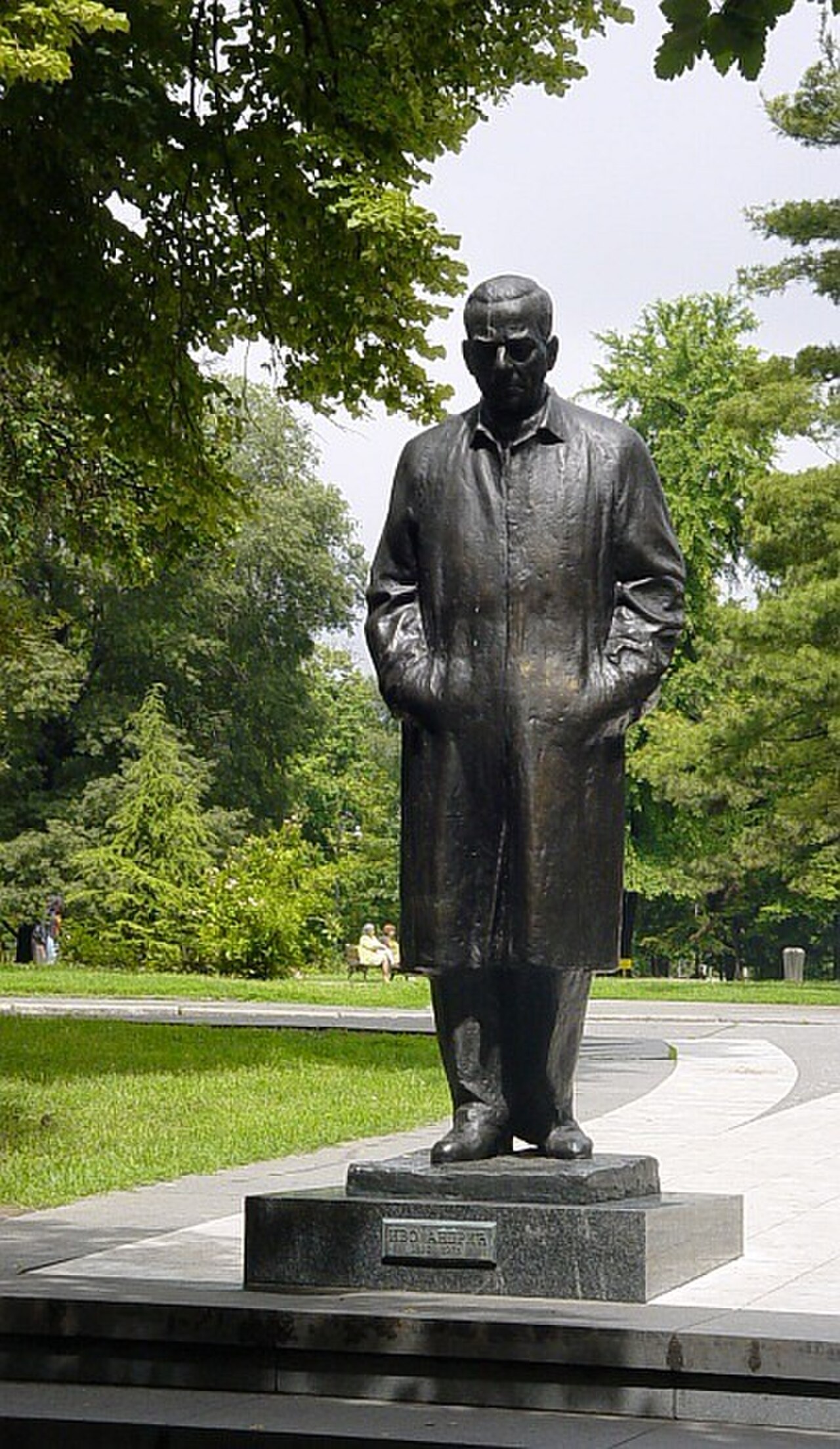
Statue of Ivo Andrić in Belgrade
- High
- Historic monument
Historic monument · Stari Grad, Belgrade
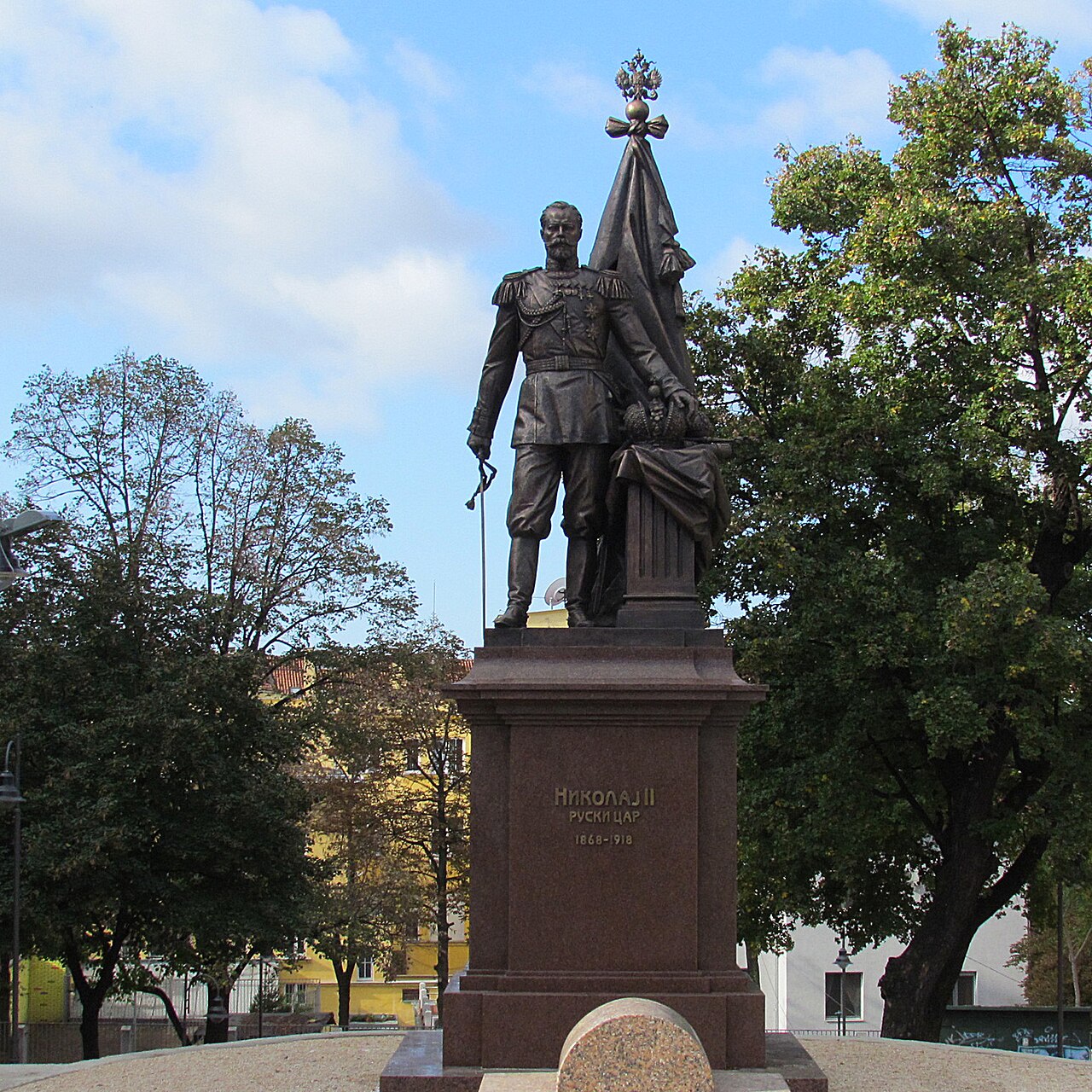
Споменик цару Николају II
| Monday | 00:00 – 23:59 |
|---|---|
| Tuesday | 00:00 – 23:59 |
| Wednesday | 00:00 – 23:59 |
| Thursday | 00:00 – 23:59 |
| Friday | 00:00 – 23:59 |
| Saturday | 00:00 – 23:59 |
| Sunday | 00:00 – 23:59 |
Parsed from OpenStreetMap opening hours on 2026-09-09.
Nicholas II of Russia in sculpture is a bronze memorial to the last Russian emperor in Aleksandrov Park, central Belgrade. Its subject ties the monument to the Serbian-Russian relationship during the First World War, when Nicholas II supported Serbia at a critical moment. Unveiled on 16 November 2014, it belongs to the centenary commemorations of the war’s beginning. Kralja Milana Street gives this modern memorial a civic setting among park paths, trees and everyday central-city movement. The place is particularly useful for understanding how Belgrade presents diplomatic memory through a prominent public monument rather than an enclosed museum display.
Checked 2026-09-02 · Source
The focal point is a standing bronze figure of Nicholas II on a granite pedestal. The sculpture itself is 3.5 metres high, while the complete monument reaches 7.5 metres and weighs about 50 tonnes. An excerpt from Nicholas II’s July 1914 letter to Alexander Karađorđević is engraved in Russian and Serbian, giving the memorial a direct historical voice. There is no interior, exhibition room or collection to enter. Instead, examine the figure, pedestal and bilingual inscription as a single composition, then place it within Aleksandrov Park and the surrounding streetscape. Its material contrast, imposing scale and precise text provide the essential details to notice.
Checked 2026-09-02 · Source
Allow about 15 to 25 minutes for the monument itself. That covers reaching the statue, walking around the granite pedestal, reading the Russian and Serbian inscription, and taking photographs without rushing. Visitors especially interested in Nicholas II, Serbia or the July 1914 letter may pause longer to reflect on the memorial’s historical context and its relationship to the First World War. Because the sculpture is compact and outdoors, it works best as part of a wider walk through central Belgrade and Aleksandrov Park rather than as a separate half-day destination. Add time for a quiet pause among the park paths and trees if the surrounding city pace permits.
Checked 2026-09-02 · Source
This is a permanent outdoor monument in a public city park, and the responsible park information states that no visitor timetable applies and no closure days are published for the site. Daylight is the most practical time for distinguishing the bronze surface, granite pedestal and bilingual inscription. Morning or late afternoon may provide more expressive light for photographs and a comfortable pause in the park. In wet, cold or very dark conditions, the monument remains an outdoor viewing stop, but surface details and the engraved text may be harder to appreciate. Weather and park conditions shape the visit more than an attraction schedule.
Checked 2026-09-02 · Source
The guide therefore records no ticket, fee or reservation detail. Plan the stop as a brief outdoor viewing experience, without assuming a museum-style ticketing arrangement or describing an unsupported price. The practical focus is reaching the sculpture, reading its inscription and viewing its bronze figure and granite pedestal within the park. This keeps the guide aligned with the available evidence while leaving the memorial’s historical and visual qualities at the centre of the visit.
Checked 2026-09-02 · Source
Go to Aleksandrov Park on Kralja Milana Street in central Belgrade. The park is bounded by Kralja Milana, Kosovke devojke and Kraljice Natalije streets, which helps orient the monument within the city centre. Named nearby public-transport stops include London, Terazije and Pionirski park. Consult the City of Belgrade traffic-and-transport information and the current GSP timetable for the route from your starting point, since services and stop arrangements can change. On arrival, enter from the surrounding city streets and look for an outdoor statue rather than a building entrance. The setting is easy to combine with a central walking route.
Checked 2026-09-02 · Source
Nicholas II of Russia in sculpture is a roadside urban memorial within shared public space, not a controlled visitor attraction. Stay alert to traffic and ordinary city movement when approaching from Kralja Milana, Kosovke devojke or Kraljice Natalije streets, and use suitable public paths. Give other park users room while examining the pedestal, and remember that the site is a civic setting rather than a reserved tour area. There is no indoor refuge, visitor desk or dedicated interpretation centre described in the research. The monument is best approached as a short outdoor stop within an active central neighbourhood, where normal street awareness matters.
Checked 2026-09-02 · Source
Photography is worthwhile because the monument brings together a strongly modelled bronze figure, a substantial granite pedestal and a bilingual historical inscription. Start with a full view placing Nicholas II within Aleksandrov Park, then move closer for the Russian and Serbian excerpt from his July 1914 letter to Alexander Karađorđević. A three-quarter angle can show the sculpture’s height against the park and central streets, while a wider frame conveys the memorial’s civic scale. Daylight makes the text easier to read and the bronze easier to distinguish. Keep paths clear and photograph other visitors respectfully in this shared public space.
Checked 2026-09-02 · Source
The monument stands in Aleksandrov Park on Kralja Milana Street in central Belgrade, within the Stari Grad municipality. The park is bounded by Kralja Milana, Kosovke devojke and Kraljice Natalije streets.
It was unveiled on 16 November 2014 during commemorations of the centenary of the beginning of the First World War.
Russian sculptors Andrei Kovalchuk and Gennady Pravotorov created the monument.
The statue is made of bronze and the pedestal is made of granite.
The sculpture is 3.5 metres high; the complete monument reaches 7.5 metres and weighs about 50 tonnes.
An excerpt from Nicholas II’s July 1914 letter to Alexander Karađorđević is engraved on the pedestal in Russian and Serbian.
Loading the interactive map…
The interactive map could not be loaded.
Last updated:
Source: OpenStreetMap contributors, Wikidata ·