
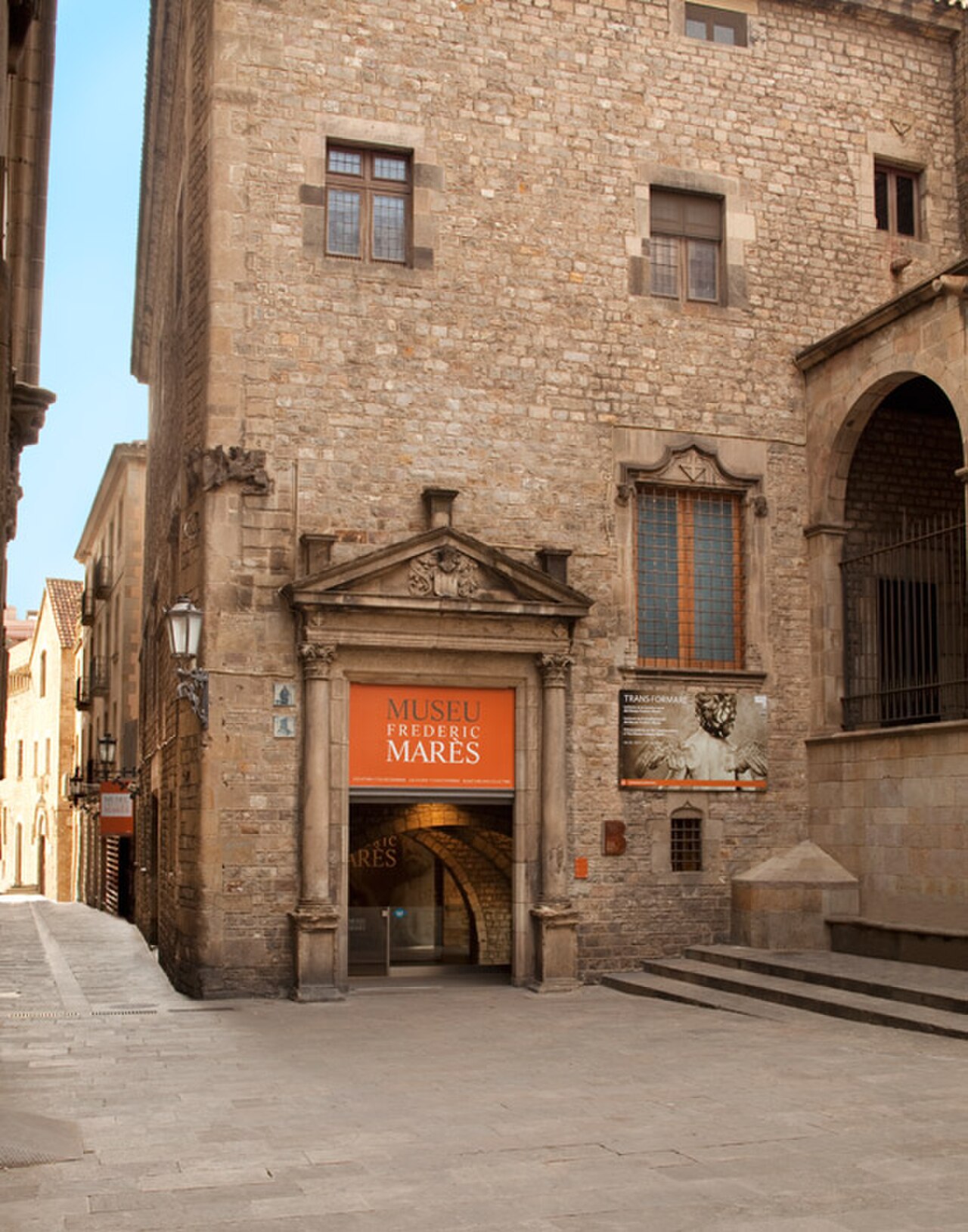
1 min walk
Museu Frederic Marès
- High · Heritage site
- Museum
Language · 11 published
Historic monument · Barcelona
Reviewed by Elena Voss · Roavina Travel Editor
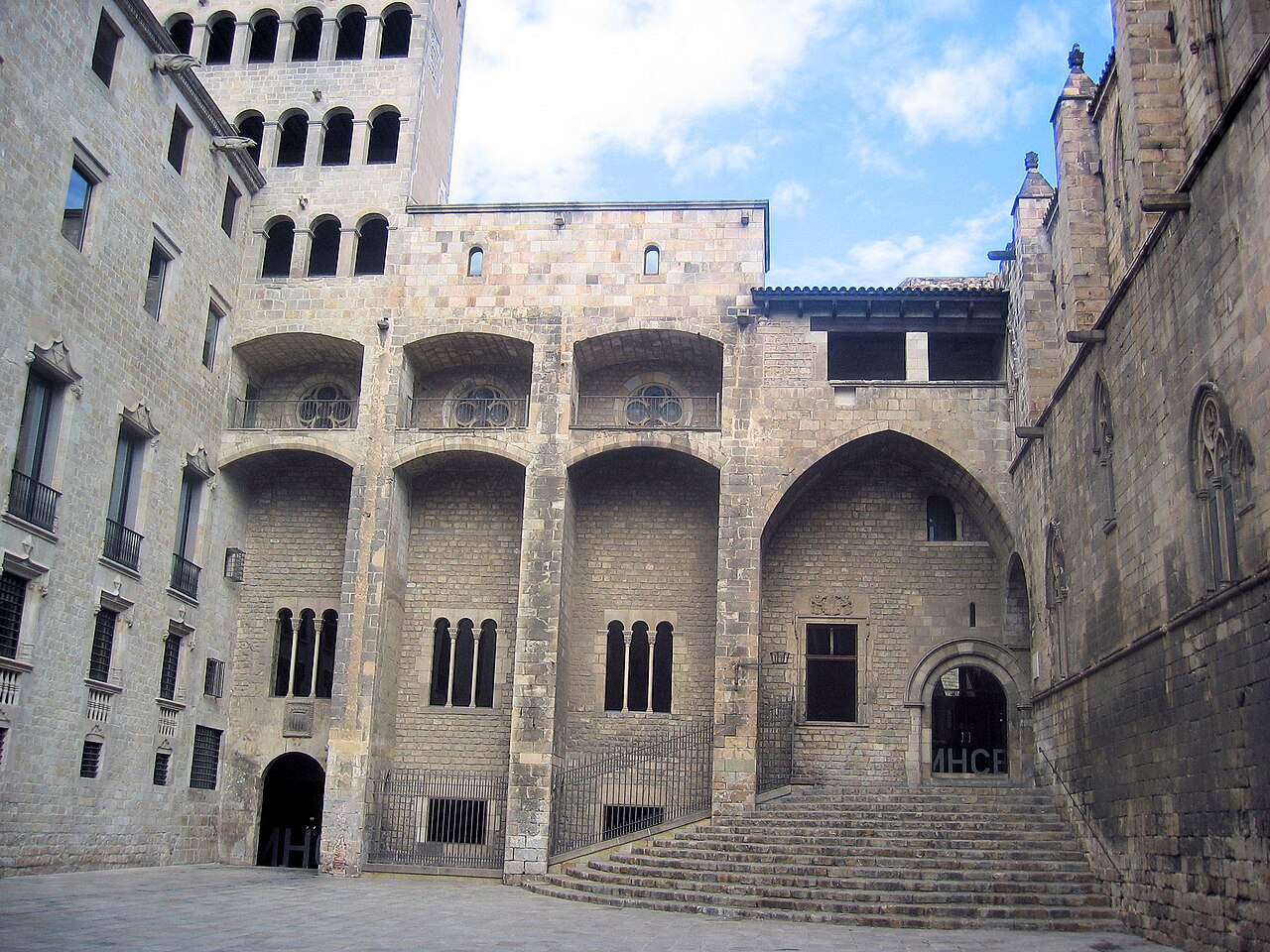
It was built in the Romanesque architecture style. It carries the bien de interés cultural heritage designation.
Palau Reial Major is Barcelona’s medieval royal palace complex on Plaça del Rei in the Gothic Quarter. The site was associated with the Counts of Barcelona and later the Kings of Aragon. Its buildings stand above Roman foundations and preserve several stages of Catalan secular architecture. The complex is most rewarding when you look at the relationship between the square, the palace buildings, and the surrounding medieval streets rather than treating it as a single isolated facade. Palau Reial Major is the historic royal palace complex in Barcelona, located in the Plaça del Rei within the Gothic Quarter. It served as the residence of the Counts of Barcelona and later the Kings of Aragon. The complex encompasses several interconnected medieval buildings constructed across different periods, representing one of the most significant secular architectural ensembles in Catalonia. The site stands on Roman foundations and has been modified throughout centuries of Catalan history. No. These are distinct buildings with different functions and locations. Palau Reial Major is the medieval royal palace in the Gothic Quarter. Palau de la Música Catalana is a modernist concert hall designed by Lluís Domènech i Montaner in a different district.
Checked 2026-08-26 · Source
The Saló del Tinell is the palace’s great ceremonial hall, recognised by its large Gothic arches and broad stone interior. The Chapel of Santa Àgata adds a sacred space with Romanesque elements, while the Watchtower of King Martí rises above the complex. Other reception rooms and palatine spaces reveal how the royal residence was organised. Archaeological layers beneath the site connect the medieval palace with earlier Roman and Visigothic occupation in Barcelona. The palace complex contains multiple notable spaces including the Saló del Tinell, a vast ceremonial hall with Gothic arches. The Chapel of Santa Àgata features Romanesque elements. The Watchtower of King Martí offers elevated views. The Palatine Chapel and various reception rooms display medieval architectural character.
Checked 2026-08-26 · Source
Allow about one hour for a focused visit through the principal palace spaces, with additional time if medieval architecture and Catalan history are central interests. The Saló del Tinell deserves a slow look at its scale and arches, while the chapel and tower change the character of the visit. Palau Reial Major fits naturally beside the Museu d’Història de Barcelona, the cathedral, and other Gothic Quarter landmarks, so it can anchor a longer historical walk.
Checked 2026-08-26 · Source
Morning is the calmest time to explore Plaça del Rei and the narrow streets around the palace. Midday and the main summer season bring heavier pedestrian traffic through the Gothic Quarter, which can make the approach slower and the square busier. Interior rooms remain useful during hot or rainy weather, while daylight helps with exterior details and photography. Local events in Plaça del Rei can alter the atmosphere and movement around the complex.
Checked 2026-08-26 · Source
Palau Reial Major is experienced as a group of historic spaces rather than as one simple open monument. Different palace areas may form part of the wider history-museum experience, so plan the visit around the rooms you want to see. The value of the stop lies in its ceremonial hall, chapel, tower, and archaeological context. Keep enough flexibility in the day to combine the palace with nearby Gothic Quarter sights without rushing through the interiors.
Checked 2026-08-26 · Source
The palace stands directly on Plaça del Rei in Ciutat Vella. Jaume I station on metro line L4 is a practical approach, followed by a walk through the Gothic Quarter. Buses serve the larger roads around the old town, but vehicles cannot reach the medieval square itself. From the cathedral, follow the signs toward Plaça del Rei through pedestrian streets. The dense historic layout makes walking the natural final part of the journey.
Checked 2026-08-26 · Source
Expect uneven paving, steps, narrow doorways, and irregular transitions in this medieval complex. Tower access involves climbing and may not suit every visitor. The stone interiors can be dim, so move carefully between rooms and watch changes in level. The surrounding Gothic Quarter becomes crowded, especially around major landmarks; keep bags secure and leave room for pedestrians. Comfortable shoes make the approach easier, and respectful behaviour suits a historic palace and chapel.
Checked 2026-08-26 · Source
The Saló del Tinell offers the strongest interior composition, with repeating Gothic arches and a dramatic sense of depth. In the chapel, use the available light to capture stone, glass, and architectural detail without dominating the quiet atmosphere. From outside, frame the palace against Plaça del Rei and the surrounding medieval facades. Keep equipment compact in narrow rooms and passageways, and avoid obstructing visitors or guided groups.
Checked 2026-08-26 · Source
No. Palau Reial Major is the medieval royal palace complex on Plaça del Rei in the Gothic Quarter. Palau de la Música Catalana is a separate modernist concert hall elsewhere in Barcelona.
The Saló del Tinell is the principal ceremonial hall, known for its large Gothic arches and expansive medieval interior.
It is the tower associated with the palace complex, providing an elevated architectural feature above the medieval buildings and surrounding Gothic Quarter roofscape.
Palau Reial Major is on Plaça del Rei in the Gothic Quarter of Ciutat Vella, close to Barcelona Cathedral and Jaume I metro station.
Prioritise the Saló del Tinell, the Chapel of Santa Àgata, the Watchtower of King Martí, and the archaeological context beneath the medieval complex.
Yes. Its position on Plaça del Rei makes it easy to combine with Barcelona Cathedral, the Museu d’Història de Barcelona, and a walking route through the Gothic Quarter.
Loading the interactive map…
The interactive map could not be loaded.
Last updated:
Source: OpenStreetMap contributors, Wikidata ·