
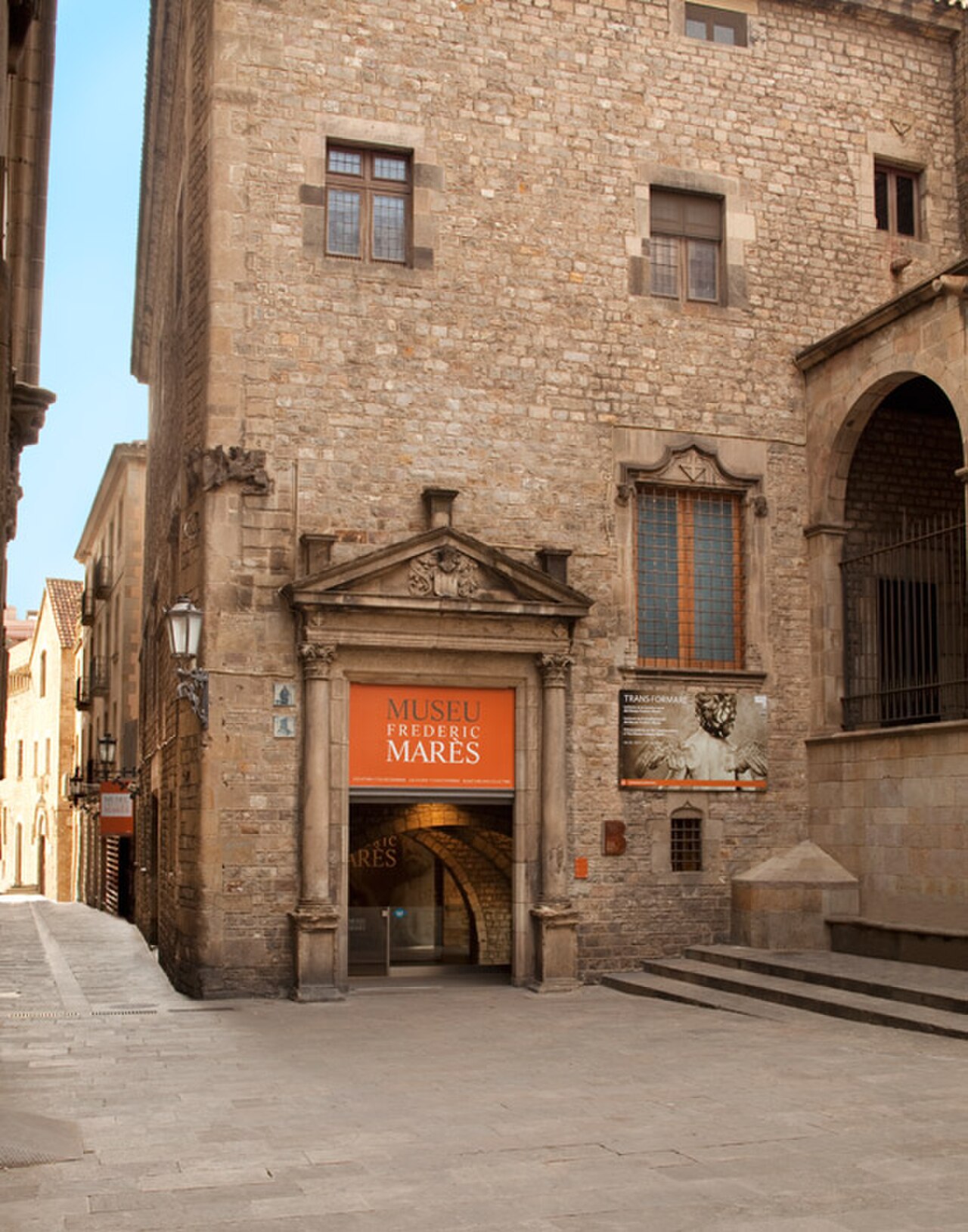
1 min walk
Museu Frederic Marès
- High · Heritage site
- Museum
Language · 11 published
Historic monument · Barcelona
Plaça del Rei
Reviewed by Elena Voss · Roavina Travel Editor
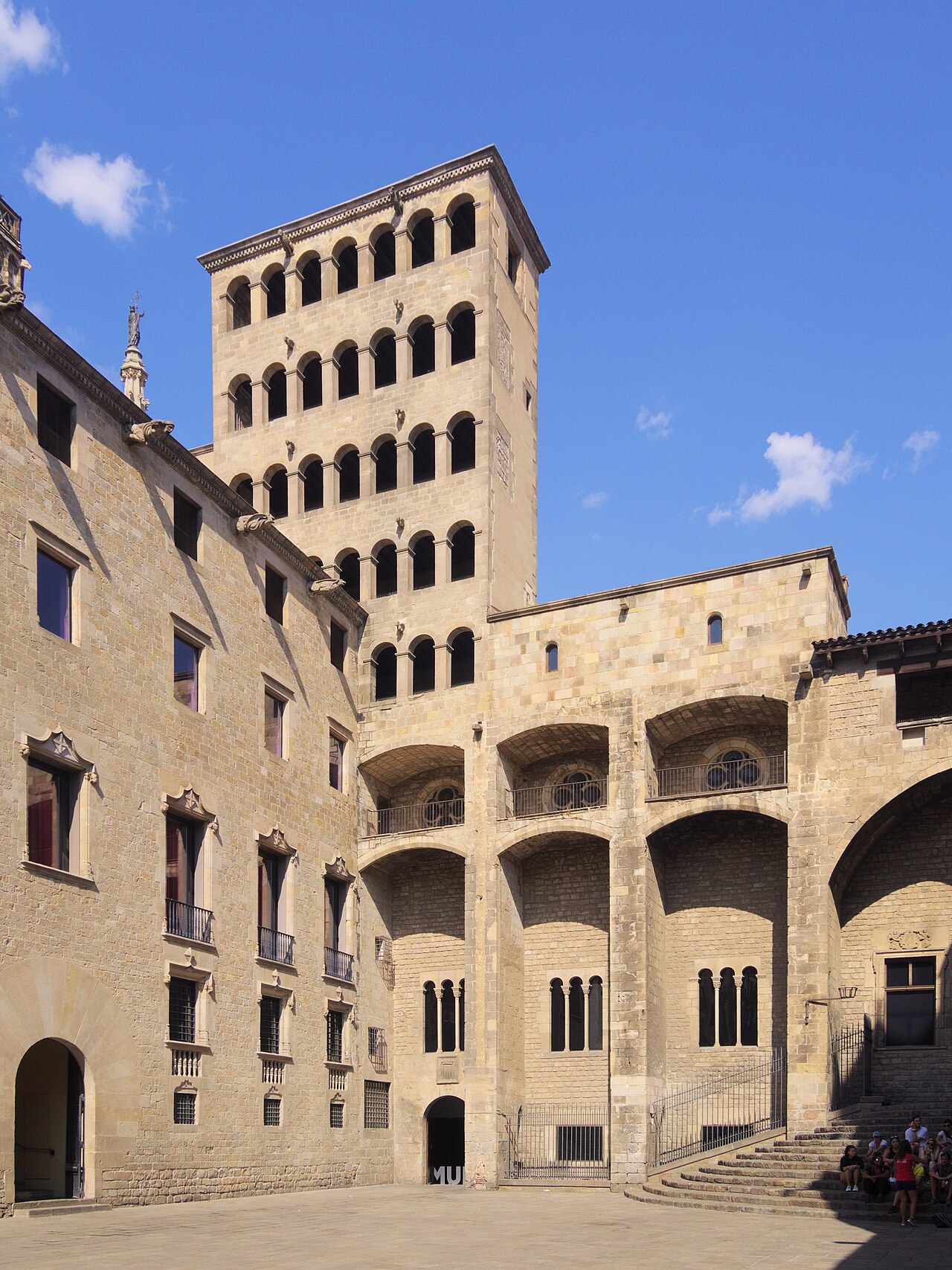
This place is a Attraction. It was built in the Gothic architecture style.
Plaça del Rei is a medieval public square in Barcelona's Gothic Quarter, situated in the historic core of the Ciutat Vella district. The square is enclosed by significant heritage structures including the Royal Palace complex, which served as residence for the Counts of Barcelona and later the Kings of Aragon. The ensemble represents one of the most intact architectural groupings from Barcelona's medieval period, with construction phases spanning Roman, Romanesque, and Gothic periods. The square's name derives from its royal associations rather than from any contemporary ceremonial function.
Checked 2026-08-26
The square contains the Palau Reial Major, the Saló del Tinell with its distinctive Romanesque arches, the Chapel of Santa Àgata, and the Palau del Lloctinent with its Renaissance courtyard. The Museu d'Història de Barcelona has its entrance here, providing access to underground archaeological remains including Roman-era streets and buildings. The Mirador del Rei Martí, a sixteenth-century watchtower, rises above the complex. The square's paving and configuration reflect twentieth-century restorations that sought to recover historical character while accommodating contemporary public use and heritage interpretation.
Checked 2026-08-26
Visitors typically spend between thirty minutes and one hour in the square itself, though combined visits with the Museu d'Història de Barcelona extend duration substantially. The museum's archaeological route beneath the square requires additional time for proper engagement. Photography and architectural observation at ground level suit shorter visits. Those studying the ensemble's construction chronology or attending to details across multiple facades may prefer extended examination. The compact dimensions permit efficient circulation, though crowds in peak periods slow movement through the confined medieval space.
Checked 2026-08-26
The square functions as public space without controlled access, though individual buildings maintain specific schedules. Daylight hours offer optimal conditions for architectural observation and photography. Evening illumination produces atmospheric effects on stone surfaces. Summer brings dense tourist concentrations that impede movement and photography. Winter months permit more contemplative engagement. Morning visits before midday tour groups arrive generally provide calmer conditions. Religious services at Santa Àgata may restrict access periodically. Special events occasionally close portions of the square without advance public notification. Check the operator's own site for the travel date before relying on a schedule or fare.
Checked 2026-08-26
The Plaça del Rei itself requires no admission fee as public urban space. The Museu d'Història de Barcelona and certain interior monuments charge separate entry fees. Combination tickets with other city heritage sites may be available through municipal tourism channels. Free entry periods for museums apply on designated days according to Barcelona's standard cultural policy, though specific schedules require verification. Guided tours of the royal palace complex represent additional cost categories. Visitors should consult official municipal sources for current fee structures before planning. Check the operator's own site for the travel date before relying on a schedule or fare.
Checked 2026-08-26
The square lies within Barcelona's pedestrianized Gothic Quarter, inaccessible to private vehicles. The nearest Barcelona Metro stations are Jaume I on Line 4 and Liceu on Line 3, each requiring several minutes' walk through narrow medieval streets. Multiple bus routes serve adjacent Via Laietana. The Aerobus from El Prat airport connects to Plaça de Catalunya, from which walking or further transit is necessary. Taxis and ride services can approach only to perimeter streets. Cycling through the quarter presents navigation challenges due to pedestrian priority and restricted circulation patterns throughout Ciutat Vella.
Checked 2026-08-26
The cobbled and uneven paving surfaces present trip hazards, particularly in low light or wet conditions. Pickpocketing occurs in this heavily touristed zone; visitors should secure valuables and maintain awareness of surrounding persons. The confined space creates bottlenecks where crowd pressure becomes uncomfortable during peak visitation. Street performers and unofficial guides may approach visitors aggressively. Some adjacent establishments charge elevated prices reflecting tourist location. Emergency vehicle access through surrounding streets occasionally disrupts pedestrian flow. The absence of seating within the square itself limits rest options for those with mobility limitations.
Checked 2026-08-26
The enclosed square offers challenging lighting conditions with significant shadow contrasts between buildings. Morning light illuminates the eastern facades favorably; afternoon conditions reverse this pattern. Tripod use may attract security attention in this heritage zone. The Mirador del Rei Martí provides elevated framing possibilities from accessible points. Night photography benefits from artificial illumination though exposure times extend substantially. Wide-angle lenses accommodate the confined space. The architectural ensemble rewards attention to textural details in stone carving and architectural transitions between periods. Drone operation is prohibited throughout central Barcelona including this historic core.
Checked 2026-08-26
No. These are distinct locations. Plaça del Rei is a medieval square in the Gothic Quarter. Plaça de Catalunya is a large modern square at the junction of Eixample and Ciutat Vella.
The exterior spaces of Plaça del Rei are freely accessible public space. Interior monument access generally requires tickets through the Museu d'Història de Barcelona or specific heritage programs.
Not recorded. The square contains historic monuments and paving. Food and beverage establishments occupy adjacent streets in the Gothic Quarter rather than the square proper.
The medieval quarter presents inherent accessibility challenges including uneven paving and narrow approaches. Specific current accessibility provisions are Not recorded pending review.
This traditional association has been subject to scholarly reassessment. The Saló del Tinell has been identified with this historical event, though precise documentation remains debated among historians.
The Museu d'Història de Barcelona offers programming that may include English-language options. Independent commercial tour operators conduct English-language walks through the Gothic Quarter incorporating this site.
Loading the interactive map…
The interactive map could not be loaded.
Last updated:
Source: OpenStreetMap contributors, Wikidata ·