_Torres_venecianes_-_El_Tibidabo_-_Temple_Expiatori_del_Sagrat_Cor.jpg)
3 min walk
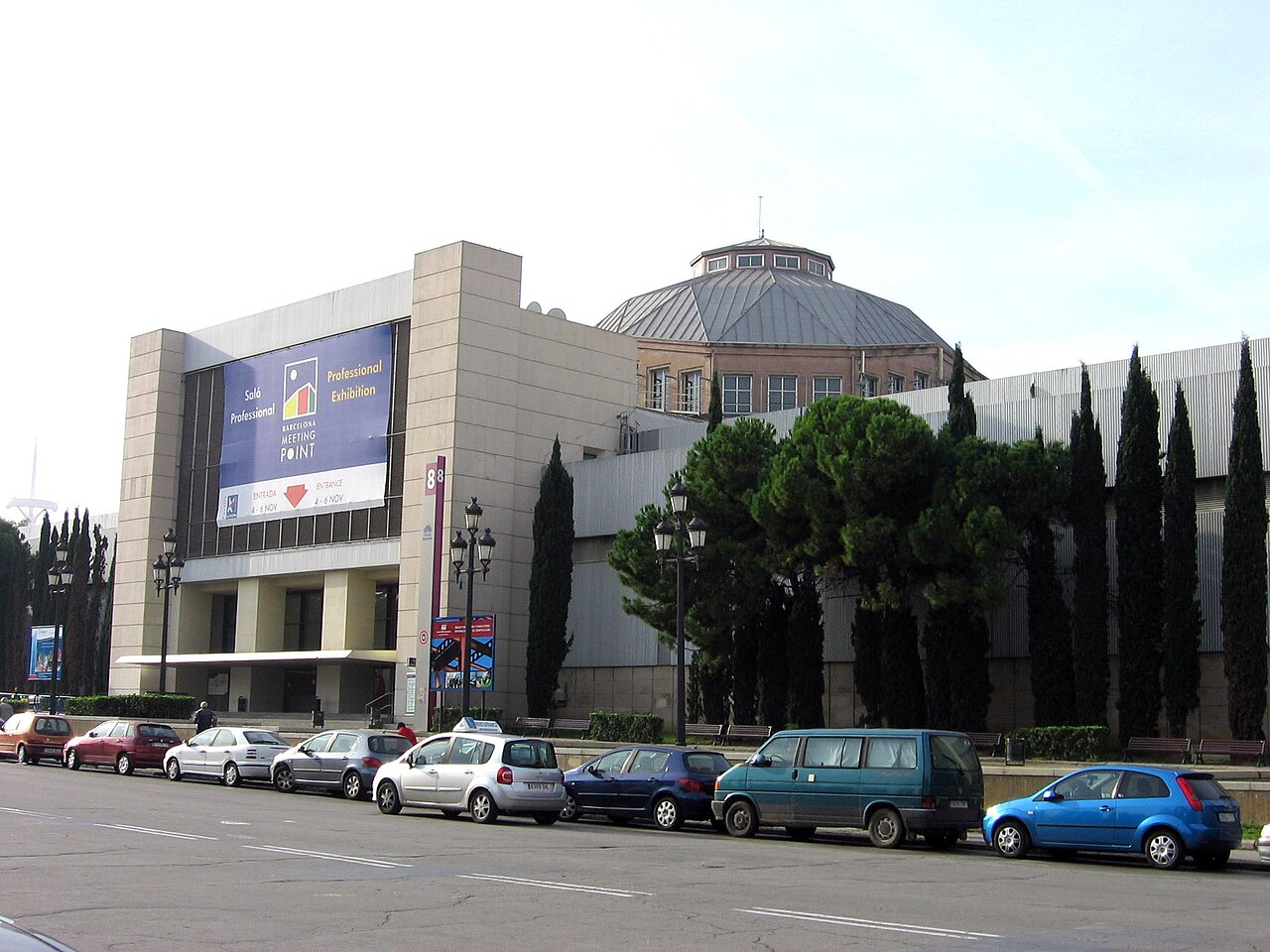
Palau de la Metal·lúrgia
- Notable · Heritage site
- Historic monument
Language · 11 published
Historic monument · Barcelona
Torres Venecianes
Reviewed by Elena Voss · Roavina Travel Editor
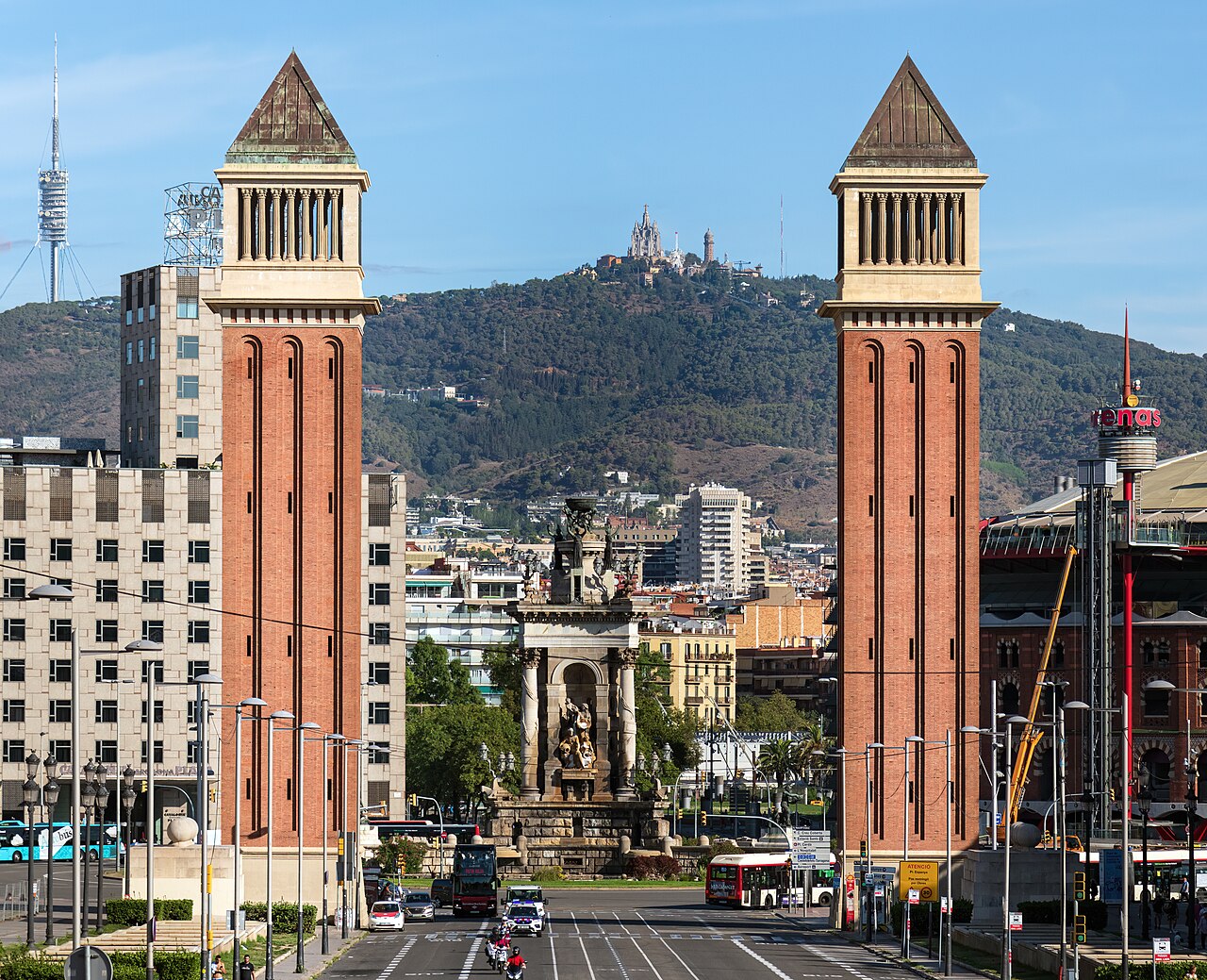
It was built in the historicist architecture style. It was designed by Ramon Reventós i Farrarons. It carries the Cultural Asset of Local Interest heritage designation.
The Venetian Towers, known in Catalan as Torres Venecianes, mark the entrance to Avinguda de la Reina Maria Cristina at Plaça d'Espanya. Built for the 1929 Barcelona International Exposition, the paired towers create a ceremonial gateway toward Montjuïc. Their form recalls the campanile of St Mark's Basilica in Venice, which explains their name. They are best understood as urban landmarks: the towers frame one of Barcelona's grandest approaches and connect the busy plaza with the cultural sites on the hill beyond. The Torres Venecianes, or Venetian Towers, stand at the entrance to Avinguda de la Reina Maria Cristina on Plaça d'Espanya in Barcelona. These twin towers were built for the 1929 Barcelona International Exposition and take their name from their resemblance to the campanile of St. Mark's Basilica in Venice. They serve as monumental landmarks framing the avenue leading to the Magic Fountain and the Palau Nacional on Montjuïc hill. The towers represent a significant example of early 20th-century civic architecture in the city.
Checked 2026-08-26 · Source
The main experience is outdoors, with the two towers standing on either side of the broad avenue leading toward Montjuïc and the Palau Nacional. Their value comes from proportion, repetition and position rather than an exhibition inside. From the plaza, look along the avenue to understand how the towers organise the approach. Nearby attractions, including the Magic Fountain, MNAC and CaixaForum, add museums, architecture and public space to the same outing. Any claims about observation decks, exhibitions, or other interior features would require confirmation from official sources or on-site signage.
Checked 2026-08-26 · Source
Allow fifteen to thirty minutes for the towers themselves. That is enough time to cross the relevant viewpoints, study the paired façades and make photographs from the avenue. The surrounding Plaça d'Espanya and Montjuïc approach deserve longer if you are continuing toward the Magic Fountain, MNAC or CaixaForum. The towers work especially well as the opening or closing point of a half-day route, because they provide a clear visual transition between the city and the hill.
Checked 2026-08-26 · Source
Because the towers are exterior monuments, you can include them whenever your route reaches Plaça d'Espanya. Morning light gives a clear view along Avinguda de la Reina Maria Cristina, while late afternoon and twilight can add depth to the avenue and hill beyond. Summer sun makes the open plaza tiring, so carry water and plan shade breaks elsewhere. If you are combining the towers with nearby evening attractions, allow for changing crowd levels around the transport hub.
Checked 2026-08-26 · Source
Viewing the Venetian Towers from Plaça d'Espanya and the public approach is an exterior landmark experience. It fits naturally into a walk toward Montjuïc without requiring the time commitment of a museum visit. Nearby attractions have their own arrangements, so keep the towers as a free-standing architectural stop within the route rather than treating every site in the area as one attraction. The best reason to pause is the composition of the gateway, avenue, fountain area and hilltop buildings together.
Checked 2026-08-26 · Source
Plaça d'Espanya is one of Barcelona's main transport interchanges. Espanya station serves metro lines L1, L3 and L8, placing the towers directly beside a straightforward rail arrival. Bus routes also converge around the plaza, and Barcelona Sants station is within walking distance. On foot, approach along Gran Via or Avinguda del Paral·lel and use the broad pedestrian routes around the roundabout. The towers are easy to recognise once you reach the square.
Checked 2026-08-26 · Source
Plaça d'Espanya is a major traffic junction, so use crossings and keep attention on vehicle movements while changing viewpoints. The open square offers little shade, particularly in strong summer sun. Crowds increase around the metro entrances and during popular events in the Montjuïc area; keep bags close in busy spaces. The towers are a visual gateway, not a quiet enclosed monument, so expect traffic, pedestrians and changing urban noise during your visit.
Checked 2026-08-26 · Source
Stand on Avinguda de la Reina Maria Cristina for the classic symmetrical view, with one tower on each side and the avenue drawing the eye toward Montjuïc. A wide lens helps include both towers and the Palau Nacional beyond. Twilight can soften the open plaza and produce balanced colour across the scene. Move only within pedestrian areas, keep equipment clear of foot traffic and use the towers' repeated geometry for close architectural studies.
Checked 2026-08-26 · Source
They stand at Plaça d'Espanya, beside the entrance to Avinguda de la Reina Maria Cristina.
Their design recalls the campanile of St Mark's Basilica in Venice.
They were built for the 1929 Barcelona International Exposition.
Take metro lines L1, L3 or L8 to Espanya station beneath Plaça d'Espanya.
Fifteen to thirty minutes is enough for exterior viewing and photographs.
Avinguda de la Reina Maria Cristina provides the strongest symmetrical view toward Montjuïc.
Loading the interactive map…
The interactive map could not be loaded.
Last updated:
Source: OpenStreetMap contributors, Wikidata ·