
,_nau_sud.jpg)
,_angle_sud-oest.jpg)
,_nau_oest.jpg)
,_angle_nord-oest.jpg)
,_columnata_del_p%C3%B2rtic.jpg)

2 min walk
El Retiro Park
- Must see · Heritage site
- Nature site
Language · 11 published
Historic monument · Madrid
Palacio de Cristal
Reviewed by Elena Voss · Roavina Travel Editor
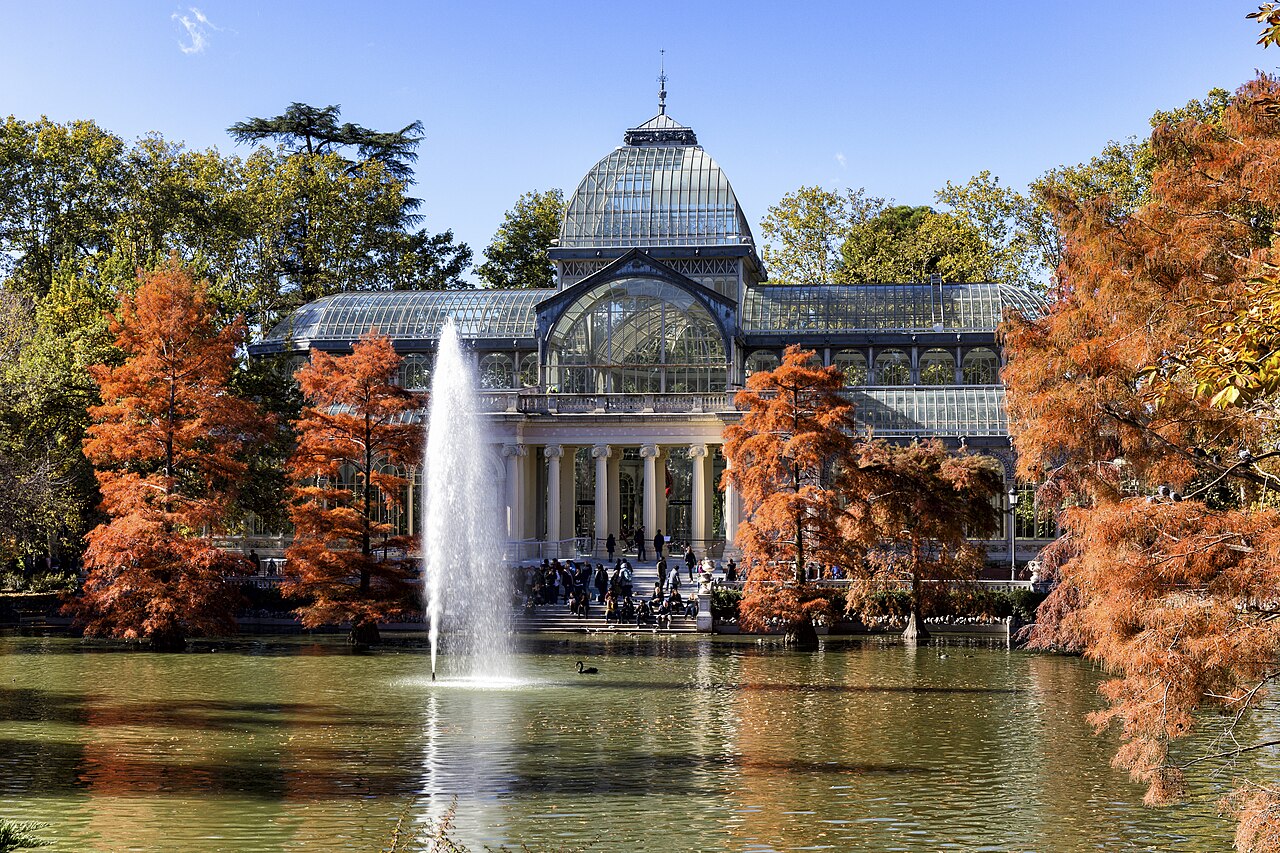
This place is a Attraction. It was established in 1887. It was built in the Victorian architecture style. It was designed by Ricardo Velázquez Bosco. It carries the bien de interés cultural heritage designation.
Crystal Palace, or Palacio de Cristal, is a glass-and-metal pavilion beside a small artificial lake in Madrid’s Buen Retiro Park. Built in 1887 for the Philippines Flora exposition, it belongs to the Museo Reina Sofía and now serves as a setting for temporary contemporary art exhibitions. Its transparent walls, slender metal framework, park greenery and water create an experience that combines architecture, landscape and art. It is a distinct stop from the main Reina Sofía building near Atocha, so plan it as a Retiro visit rather than as an ordinary museum gallery. The Palacio de Cristal is a glass and metal structure located in Madrid's Buen Retiro Park. No. The Palacio de Cristal is an annex exhibition space in Buen Retiro Park, separate from the main Museo Reina Sofía building near Atocha station.
Checked 2026-08-26 · Source
Inside, visitors encounter the temporary contemporary art installation on display at the time of their visit. The exhibition may use the pavilion’s height, daylight, reflections and open sightlines as part of the work. There is no permanent collection arranged as a fixed sequence of rooms. The original greenhouse role connected with the 1887 exposition has ended; the building’s current identity comes from the dialogue between changing art and the historic structure. Outside, the lake, trees and sky frame the pavilion from several directions, making the exterior part of the visit.
Checked 2026-08-26 · Source

Allow around fifteen minutes for a quick architectural stop and exterior photographs. Add time when a temporary installation rewards close attention. The pavilion itself is modest in scale, but the surrounding Buen Retiro Park can easily turn this into a longer outing. Pair it with a walk around the lake, the Palacio de Velázquez and the park’s gardens and monuments. A relaxed visit works best when the pavilion is treated as one carefully chosen highlight within a broader park route rather than as a full-day museum destination.
Checked 2026-08-26 · Source
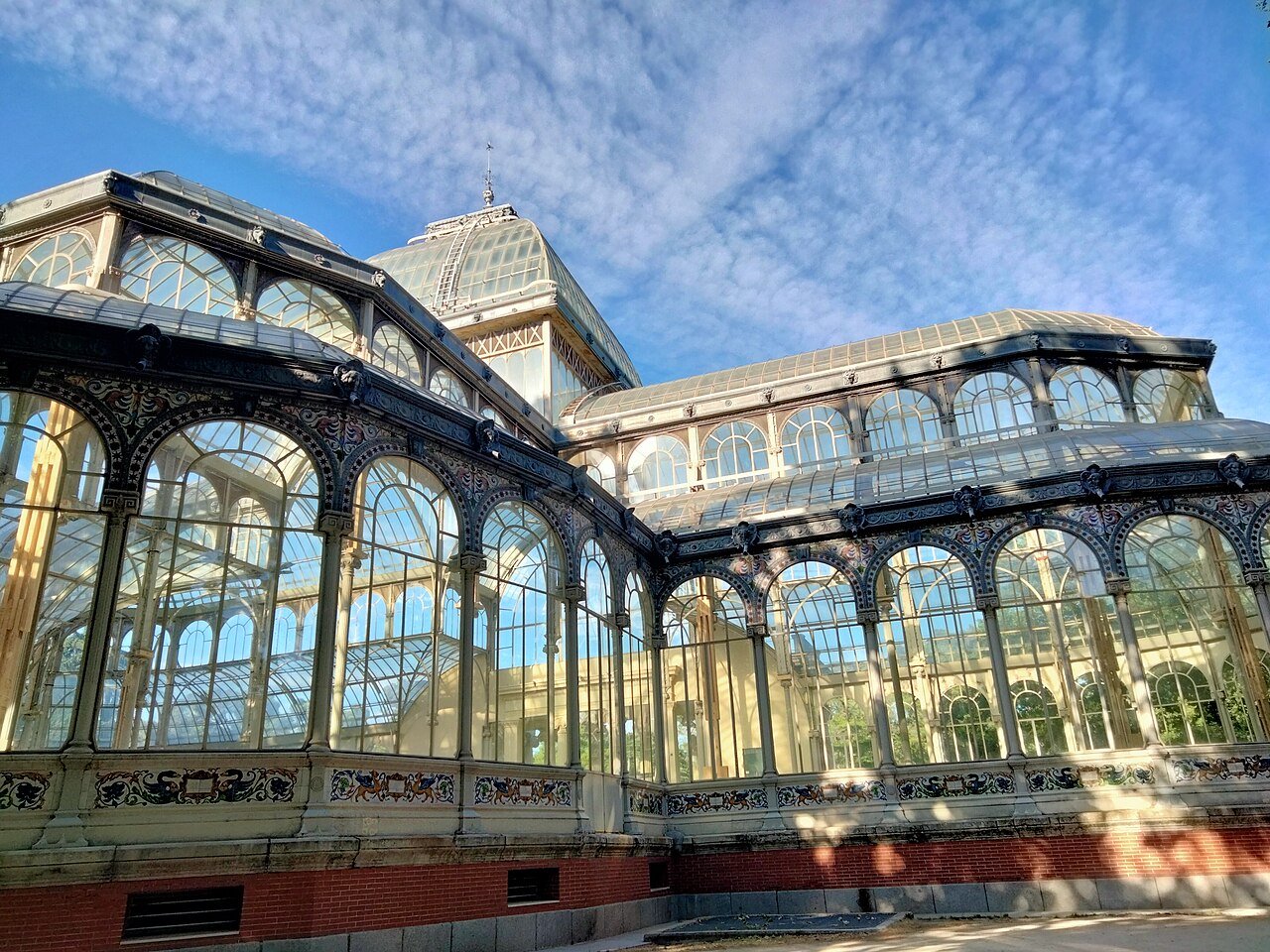
The pavilion is administered by the Museo Reina Sofía and presents changing exhibitions, so the character of a visit depends on the current programme. Daylight is valuable here: it reveals the structure’s transparency, reflections and relationship with the lake. The glass enclosure follows outdoor conditions more closely than a conventional museum, making Madrid’s weather part of the experience. Include it during a Buen Retiro Park walk and leave enough flexibility for the exhibition space and surrounding paths. Crowds are more noticeable when the park is busy in pleasant weather.
Checked 2026-08-26 · Source
Crystal Palace functions as a Museo Reina Sofía exhibition space, separate from the main museum building. Its interior programme is temporary rather than a permanent collection, and admission arrangements belong to the pavilion’s exhibition use rather than to a general tour of the whole museum. Treat the pavilion and the main Reina Sofía as separate itinerary stops. The lake and exterior architecture can still be appreciated as part of the park experience, whether or not your plan includes the interior exhibition.
Checked 2026-08-26 · Source

Crystal Palace stands on the eastern side of the large lake area within Buen Retiro Park. You can enter the park from several surrounding streets and continue on foot along its internal paths. Retiro and Atocha are nearby Metro reference points, while buses serve the park perimeter. Once inside, orient yourself toward the lake and use the pavilion’s distinctive transparent silhouette as a landmark. The central location also makes it practical to continue toward the Paseo del Prado and Madrid’s nearby cultural institutions after leaving the park.
Checked 2026-08-26 · Source
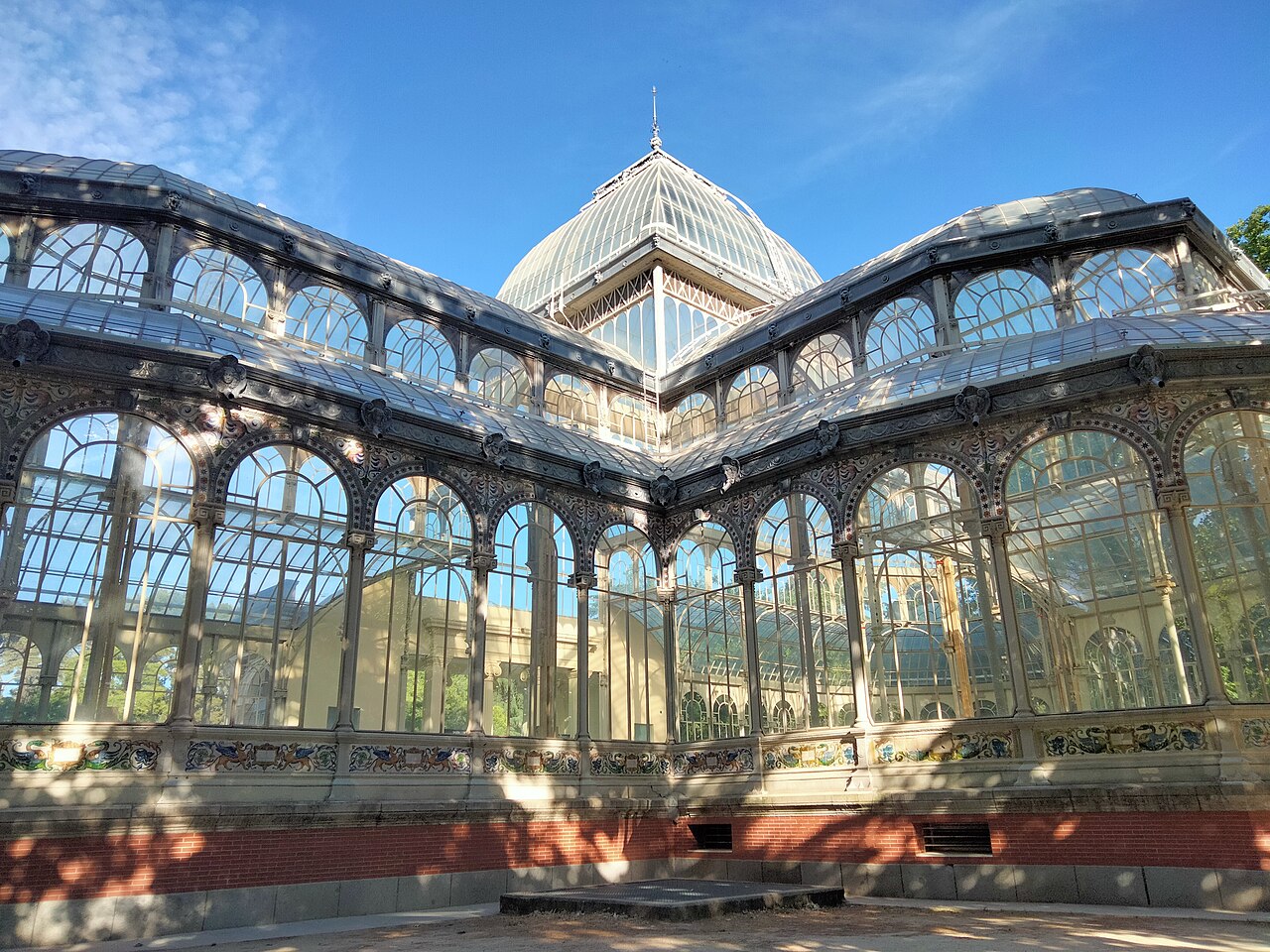
The glass pavilion provides less separation from outdoor temperatures than a conventional masonry museum, so comfortable clothing matters in both hot and cool conditions. Stay attentive beside the artificial lake and keep children close to the water’s edge. The temporary exhibition may include conceptual or challenging contemporary art, and the atmosphere can differ sharply from one programme to another. During busy park periods, the space and its approaches become more crowded. Keep your movements considerate around other visitors and follow any instructions displayed for the current installation.
Checked 2026-08-26 · Source

The pavilion is one of Madrid’s most distinctive architectural subjects. Photograph the full structure from across the lake to capture its relationship with water, trees and sky, then move closer for details of the metal framework and glass reflections. Daylight changes the balance between transparency and mirrored surfaces, while the surrounding foliage adds depth to exterior compositions. The interior exhibition may have its own photography rules, so follow signs and staff directions inside. Avoid letting photography interrupt other visitors or the contemplative quality of the installation.
Checked 2026-08-26 · Source
No. Crystal Palace is a separate Museo Reina Sofía exhibition space inside Buen Retiro Park, distinct from the main museum building near Atocha.
It was built in 1887 as an exhibition hall for the Philippines Flora exposition.
You can see a temporary contemporary art installation presented within the historic glass-and-metal pavilion.
No. Its current role is as a venue for temporary contemporary art exhibitions, with the lake and park landscape forming part of the setting.
It is beside a small artificial lake on the eastern side of the large lake area in Buen Retiro Park.
A quick stop can take about fifteen minutes, while an exhibition-focused visit and a walk through Buen Retiro Park take longer.
Loading the interactive map…
The interactive map could not be loaded.

Last updated:
Source: OpenStreetMap contributors, Wikidata ·