

2 min walk
Villa Belvoir
- Must see · Heritage site
- Nature site
Nature site · Zurich
| Monday | 09:00 – 16:30 |
|---|---|
| Tuesday | 09:00 – 16:30 |
| Wednesday | 09:00 – 16:30 |
| Thursday | 09:00 – 16:30 |
| Friday | 09:00 – 16:30 |
| Saturday | 09:00 – 16:30 |
| Sunday | 09:00 – 16:30 |
Checked 2026-08-31 · Source
| Per person | Free entry |
|---|
Checked 2026-08-31 · Source
Read from the OpenStreetMap access tags; anything not listed has no tag recorded.
Set the group type to family in the planner and the day window contracts to about three quarters of a solo day.
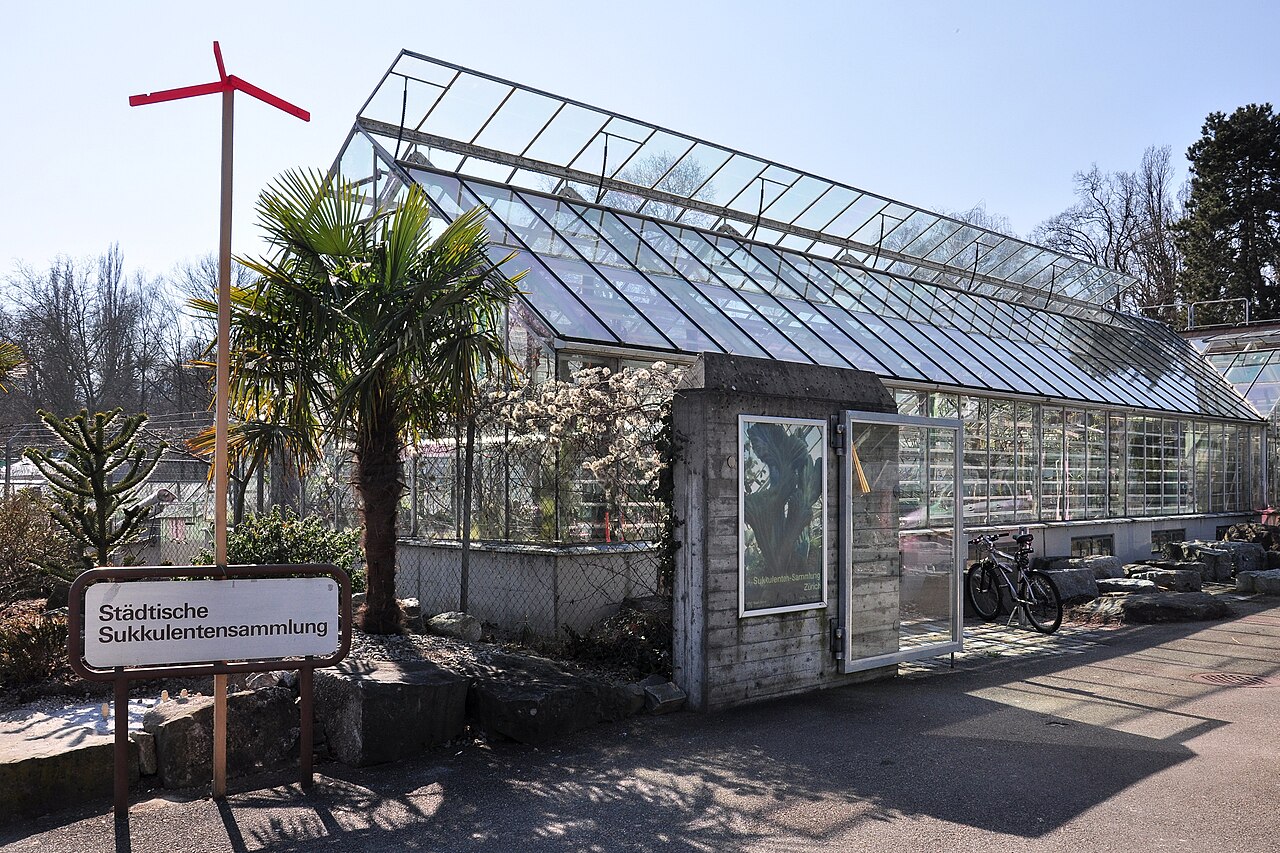
Sukkulenten-Sammlung Zürich is a specialist botanical collection devoted to succulent plants in Zurich. It brings together cacti and other water-storing species from dry regions around the world. The visit suits travelers who enjoy plant diversity, unusual shapes, horticulture, and quiet indoor sightseeing. It offers a focused alternative to Zurich’s larger museums and major landmarks, with the plants themselves providing the central experience. Sukkulenten-Sammlung Zürich is a specialized botanical collection in Zurich dedicated to succulent plants. The facility houses an extensive array of cacti and other water-storing species from arid regions worldwide. As a curated scientific and display collection, it serves both educational and recreational purposes for visitors interested in botany, horticulture, or distinctive natural environments. The collection represents a notable cultural institution within Zurich's broader landscape of museums and specialized attractions, offering a focused alternative to conventional sightseeing. The POI replaces a lower-value mechanical entry in the visitor-priority ranking. Children may find interest in the unusual forms of cacti and succulents, though the specialized nature of the collection may limit engagement duration for younger visitors. Parental supervision is advisable near spiny specimens.
Checked 2026-08-26 · Source
The collection presents several types of succulent growth, including stem succulents, leaf succulents, and caudiciform plants. Cacti and other xerophytic species create a varied display of ribs, spines, rosettes, swollen trunks, and compact leaves. Specimens come from different arid environments, so the visit is also a visual tour of how plants adapt to limited water. Read the labels as you move between displays and compare the different forms. The collection comprises diverse succulent specimens organized by botanical classification or geographic origin. Visitors encounter varied growth forms including stem succulents, leaf succulents, and caudiciform plants. The controlled environment maintains conditions suitable for these xerophytic plants.
Checked 2026-08-26 · Source
Allow about thirty to sixty minutes for a straightforward visit. Travelers who enjoy identifying species, studying plant structures, or photographing details can comfortably stay for around ninety minutes. The collection works well as a compact stop between other Zurich activities because its subject is focused and the displays can be explored at an unhurried pace. Build in extra time only if botanical observation is a main interest for your day. Visitor duration depends on individual interest in botanical collections. Casual observers typically spend thirty to sixty minutes examining the main displays. Enthusiasts with specialized knowledge may require ninety minutes or longer for detailed observation. The compact nature of specialized collections generally permits efficient viewing compared to large museums.
Checked 2026-08-26 · Source
This is a useful Zurich stop when you want an indoor activity away from cold, rain, or intense summer sun. Weekday mornings can offer a calmer setting for close observation, while a visit can also provide a quiet break from busier city sights. The controlled botanical environment keeps the experience centered on the plants in every season. Pair it with nearby neighborhoods or museums to make a balanced half-day.
Checked 2026-08-26 · Source
Plan this as a specialist collection visit rather than a large commercial attraction. The admission arrangement and payment details are not included in the available guide information, so no price should be built into your itinerary. The collection’s main value is the depth and variety of its plants, making it especially worthwhile for travelers with an interest in cacti, botany, gardening, or unusual natural displays.
Checked 2026-08-26 · Source
Use the OpenStreetMap location for the exact position of Sukkulenten-Sammlung Zürich when planning your route. Zurich’s tram, bus, and rail network makes public transport the practical choice for reaching specialist attractions across the city. From the nearest stop, continue on foot and allow time for the final approach. A route planner is useful because the best connection depends on where your Zurich day begins.
Checked 2026-08-26 · Source
Several plants have spines or sharp edges, so children should stay close and visitors should avoid touching the specimens. Move carefully around display areas and keep bags, coats, and camera equipment clear of the plants. The indoor setting may feel warmer and drier than Zurich outside, especially when you have dressed for cool weather. Treat the collection as a visual visit: observe details without leaning into or handling the displays.
Checked 2026-08-26 · Source
Succulents offer strong subjects for close-up photography, with geometric rosettes, textured surfaces, branching shapes, and sculptural silhouettes. Look for repeating patterns and contrasting forms rather than photographing only complete plants. Keep equipment compact so other visitors can pass easily, and avoid touching specimens while framing a shot. Use the collection’s posted visitor rules for flash, tripods, and any photography restrictions in the display areas.
Checked 2026-08-26 · Source
Children can see unusual cacti and succulents with spines, rosettes, swollen stems, and distinctive textures. Close supervision is important around sharp specimens.
The collection includes cacti, stem succulents, leaf succulents, and caudiciform plants from arid regions around the world.
Allow thirty to sixty minutes for the main displays, or around ninety minutes if you want detailed botanical observation and photography.
Yes. The collection provides a focused indoor botanical experience and works well during a rainy, cold, or very sunny day.
It offers a specialist view of plant adaptations, with varied forms, textures, and water-storing structures that differ from ordinary garden displays.
The plants provide detailed subjects for personal photography. Keep equipment clear of the displays and follow posted rules for flash and tripods.
Loading the interactive map…
The interactive map could not be loaded.


Last updated:
Source: OpenStreetMap contributors, Wikidata ·