

1 min walk
Chiang Mai City Art & Cultural Center
- Must see
- Museum
Historic monument · Chiang Mai
อนุสาวรีย์สามกษัตริย์
| Monday | 00:00 – 23:59 |
|---|---|
| Tuesday | 00:00 – 23:59 |
| Wednesday | 00:00 – 23:59 |
| Thursday | 00:00 – 23:59 |
| Friday | 00:00 – 23:59 |
| Saturday | 00:00 – 23:59 |
| Sunday | 00:00 – 23:59 |
Checked 2026-08-31 · Source
| Per person | Free entry |
|---|
Checked 2026-08-31 · Source
Read from the OpenStreetMap access tags; anything not listed has no tag recorded.
Set the group type to family in the planner and the day window contracts to about three quarters of a solo day.
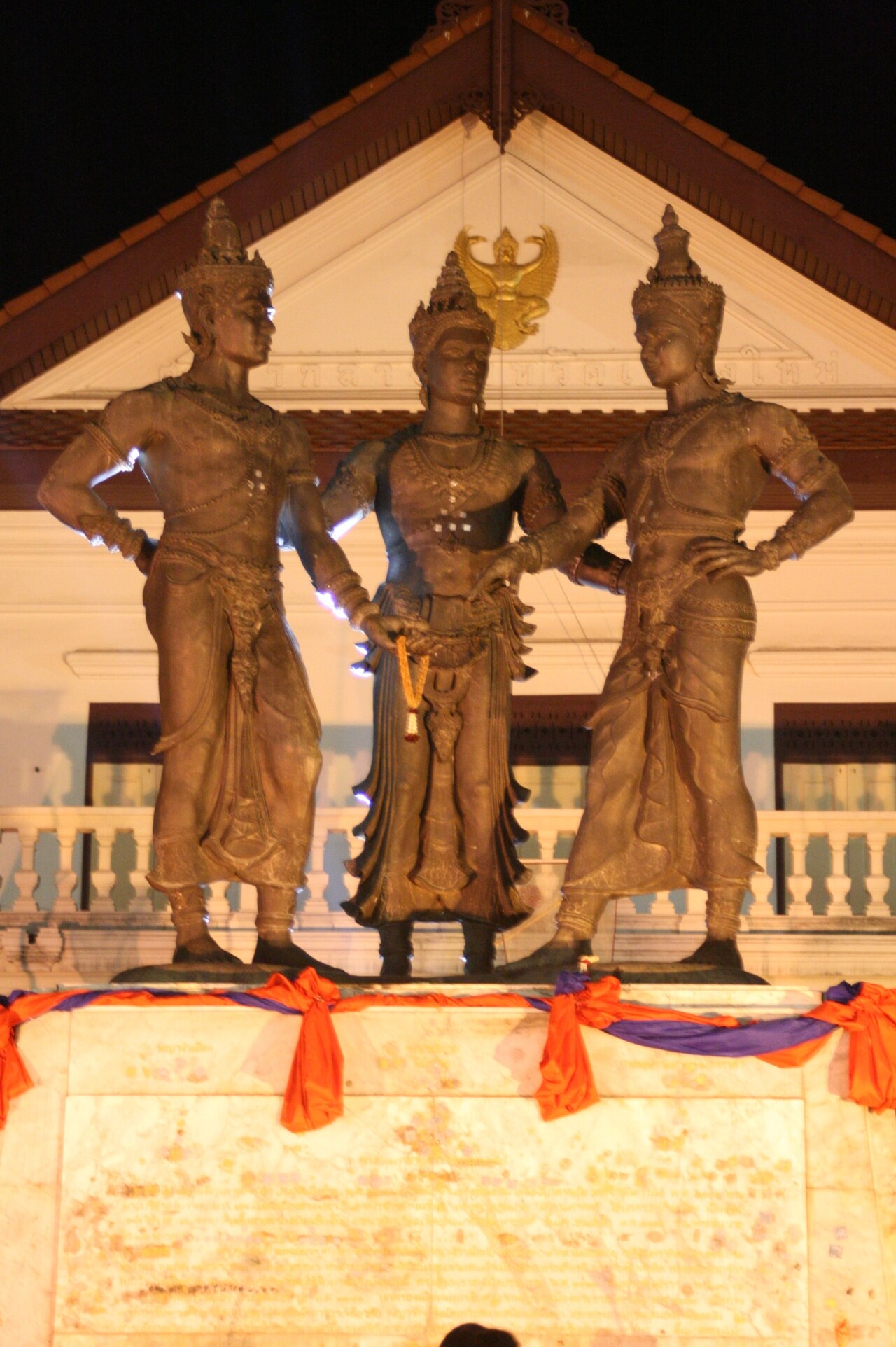
The Three Kings Monument stands as a prominent landmark in central Chiang Mai, commemorating the three kings who were instrumental in the city's founding and historical development. The monument features statues of King Mengrai, founder of Chiang Mai in 1296, King Ramkhamhaeng of Sukhothai, and King Ngam Muang of Phayao. These rulers formed a significant alliance that shaped northern Thai history. It represents an important symbol of Lanna heritage and regional cooperation among ancient Thai kingdoms. Daily, 24 hours. The outdoor monument and plaza have no weekly closure day. The museums surrounding the plaza have separate opening hours and admission arrangements.
Checked 2026-08-31 · Source
The monument itself consists of bronze or metal statues of the three kings positioned on an elevated pedestal. The surrounding plaza provides open space for viewing and contemplation. The immediate area includes paved walkways and some landscaping typical of urban memorial spaces. Visitors will find the monument situated in a public square without enclosed structures or exhibition halls. The site focuses entirely on the sculptural commemoration rather than interior displays or museums. The outdoor monument and plaza have no weekly closure day. The museums surrounding the plaza have separate opening hours and admission arrangements.
Checked 2026-08-31 · Source
A visit to the Three Kings Monument typically requires a brief stop rather than an extended stay. Most visitors spend approximately fifteen to thirty minutes observing the statues, reading any available informational plaques, and photographing the monument. The open-air nature of the site means there are no queues or entry procedures to navigate. Travelers often incorporate this stop into broader walking tours of the old city, combining it with visits to nearby temples, markets, or historical streets. Free admission to the monument and its outdoor plaza. Admission to the surrounding museums is separate.
Checked 2026-08-31 · Source
Early morning and late afternoon typically offer more comfortable temperatures for outdoor viewing in Chiang Mai's tropical climate. Midday visits may coincide with stronger sun exposure. Evening hours can provide atmospheric lighting conditions for photography. Visitors should note that any special access restrictions or official operating hours for the immediate monument area remain unverified. Daily, 24 hours. The monument's OpenStreetMap record explicitly carries wheelchair=yes. The attraction is an outdoor monument on a public plaza rather than an interior exhibition space. A free public drinking-water dispenser is installed at the monument.
Checked 2026-08-31 · Source
No ticket booths or entry gates are evident at this open-air site. Visitors should not expect to encounter formal payment requirements for viewing the monument from the surrounding square. Any donations, guided services, or associated cultural programs would constitute separate transactions not tied to basic monument access. Free admission to the monument and its outdoor plaza. Admission to the surrounding museums is separate. The monument's OpenStreetMap record explicitly carries wheelchair=yes. The attraction is an outdoor monument on a public plaza rather than an interior exhibition space. A free public drinking-water dispenser is installed at the monument.
Checked 2026-08-31 · Source
The Three Kings Monument sits within Chiang Mai's old city moat area, making it accessible by multiple transport modes. Walking proves practical for visitors already staying in or near the old city. Songthaews, the red shared pickup trucks common in Chiang Mai, serve this central area. RTC Chiang Mai City Bus R3 Yellow Line serves a named Three Kings Monument stop. From Chiang Mai International Airport, take the R3 Yellow Line in the direction that continues through Suan Dok, Nimmanhaemin, Kad Suan Kaew and Chang Phuak Gate before reaching the monument. The airport authority lists a flat fare of THB 30 per trip.
Checked 2026-08-31 · Source
Visitors should exercise standard urban awareness in the plaza and surrounding streets. Traffic in the old city area includes motorcycles and vehicles that may move quickly despite narrow roads. Sun exposure at this open site necessitates appropriate protection during midday hours. The monument's popularity means occasional crowds, particularly during festivals or peak tourist seasons. The monument's OpenStreetMap record explicitly carries wheelchair=yes. A free public drinking-water dispenser is installed at the monument. The figures are King Mangrai of Lanna in the centre, King Ramkhamhaeng of Sukhothai on the right and King Ngam Mueang of Phayao on the left.
Checked 2026-08-31 · Source
The Three Kings Monument offers straightforward photography opportunities from multiple angles around the plaza. Morning and late afternoon light typically produces favorable conditions for capturing the statues against the sky. Wide-angle lenses accommodate the monument's scale and surrounding context. The open plaza permits unobstructed views without restrictive barriers, though visitors should remain mindful of other people in the frame. Night photography may be possible given apparent illumination, though specific lighting schedules are unverified. Tripod use in public spaces should respect pedestrian flow.
Checked 2026-08-31 · Source
The figures are King Mangrai of Lanna in the centre, King Ramkhamhaeng of Sukhothai on the right and King Ngam Mueang of Phayao on the left.
It commemorates the three rulers associated with planning Chiang Mai and presents their alliance as a symbol of inter-regional harmony.
The monument was erected in 1983 and formally opened by King Bhumibol Adulyadej and Queen Sirikit on 30 January 1984.
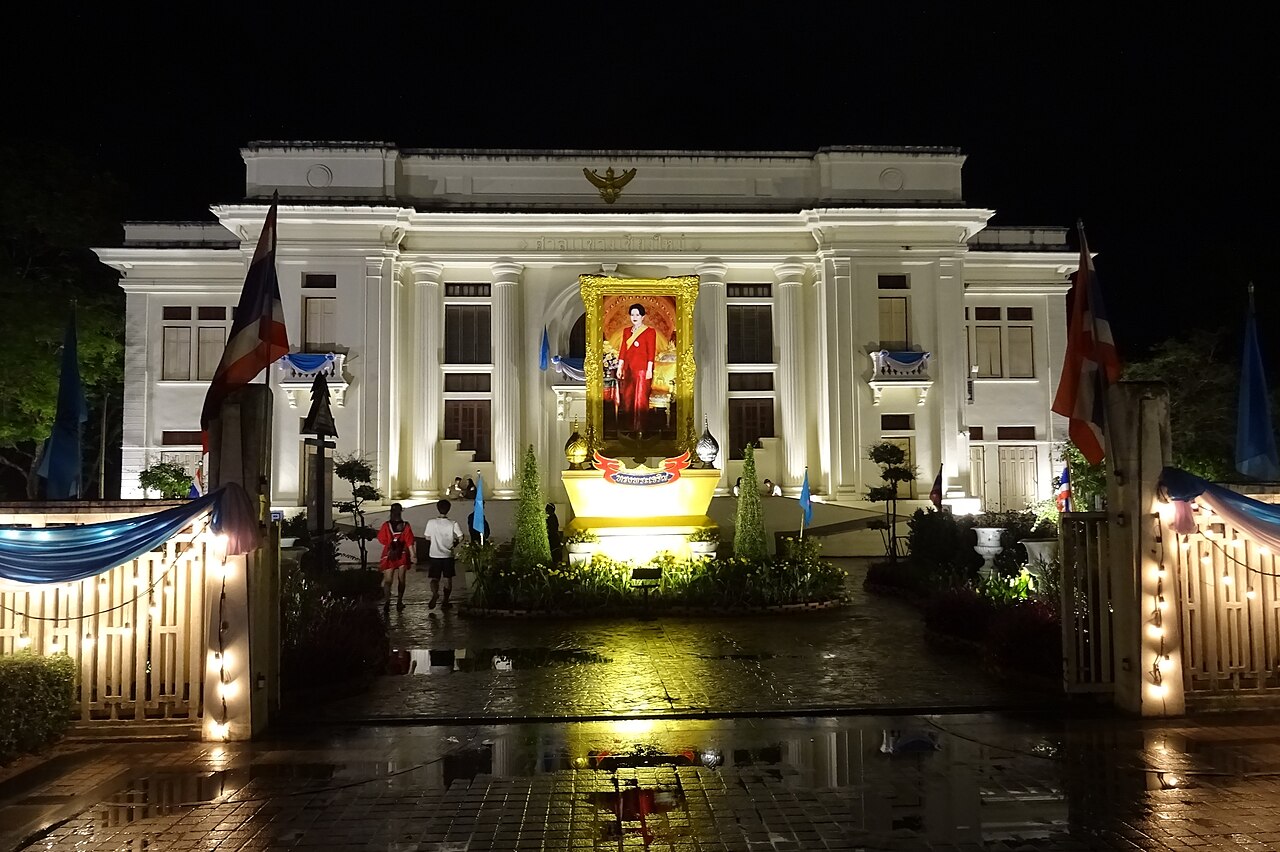
It stands on Phra Pokklao Road in Chiang Mai's Old City, in front of the former Provincial Hall that now houses the Chiang Mai City Arts and Cultural Centre.
Before Chiang Mai became a Thai province, the site formed part of the local king's palace; nearby buildings later served as a law court and provincial government offices.
Yes. Chiang Mai Provincial authorities list the Three Kings Monument as one of six locations equipped with a free public drinking-water dispenser.
Loading the interactive map…
The interactive map could not be loaded.
Last updated:
Source: OpenStreetMap contributors, Wikidata ·