_%E0%B8%A7%E0%B8%B1%E0%B8%94%E0%B8%AD%E0%B8%B4%E0%B8%99%E0%B8%97%E0%B8%82%E0%B8%B5%E0%B8%A5%E0%B8%AA%E0%B8%B0%E0%B8%94%E0%B8%B7%E0%B8%AD%E0%B9%80%E0%B8%A1%E0%B8%B7%E0%B8%AD%E0%B8%87_%E0%B8%AD.%E0%B9%80%E0%B8%A1%E0%B8%B7%E0%B8%AD%E0%B8%87_%E0%B8%88.%E0%B9%80%E0%B8%8A%E0%B8%B5%E0%B8%A2%E0%B8%87%E0%B9%83%E0%B8%AB%E0%B8%A1%E0%B9%88_(1).jpg)

1 min walk
Chiang Mai City Art & Cultural Center
- Must see
- Museum
Place of worship · Chiang Mai
วัดอินทขีลสะดือเมือง
| Monday | 06:00 – 18:00 |
|---|---|
| Tuesday | 06:00 – 18:00 |
| Wednesday | 06:00 – 18:00 |
| Thursday | 06:00 – 18:00 |
| Friday | 06:00 – 18:00 |
| Saturday | 06:00 – 18:00 |
| Sunday | 06:00 – 18:00 |
Checked 2026-08-31 · Source
| Per person | Free entry |
|---|
Checked 2026-08-31 · Source
Read from the OpenStreetMap access tags; anything not listed has no tag recorded.
Set the group type to family in the planner and the day window contracts to about three quarters of a solo day.
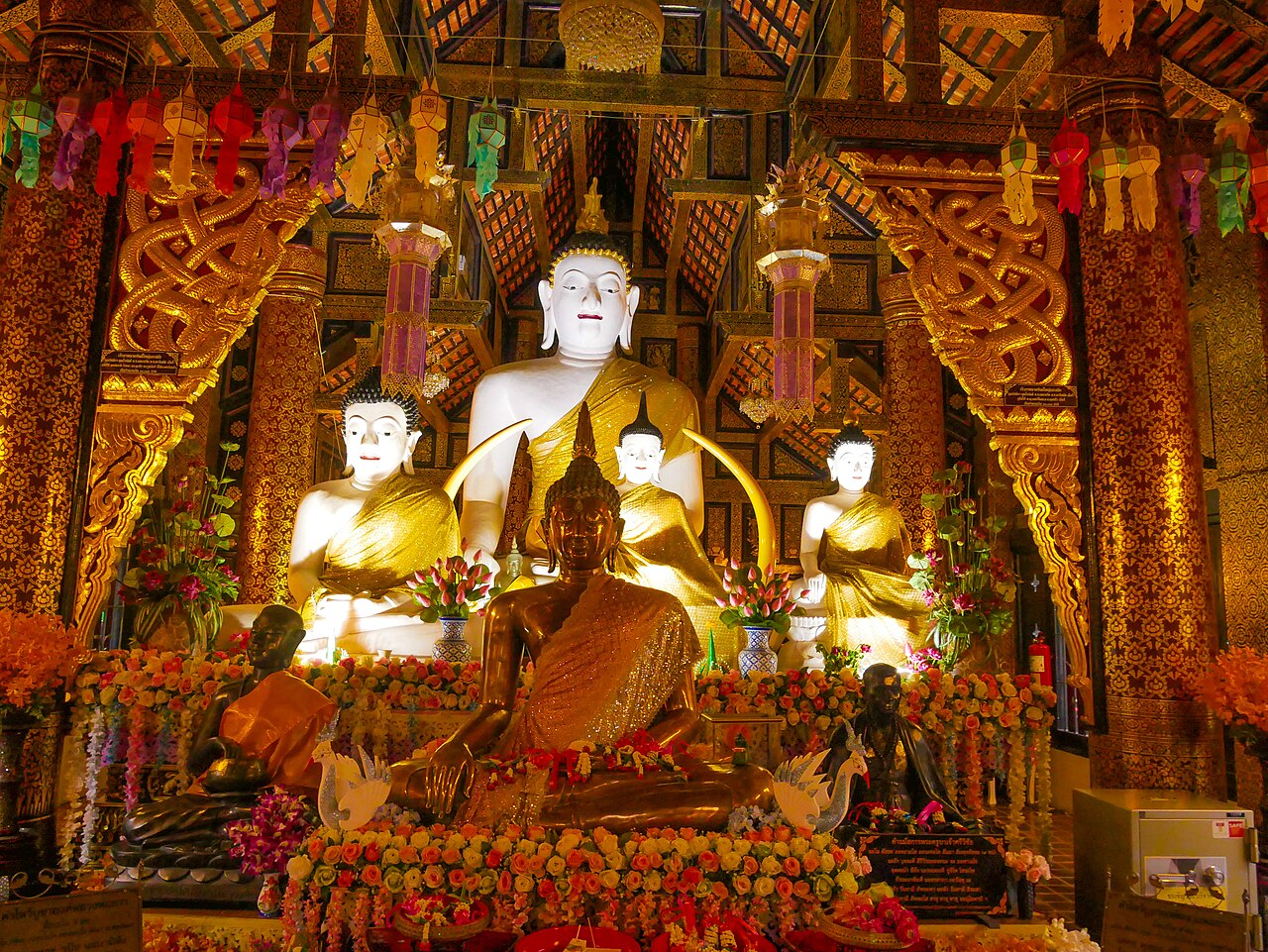
Wat Inthakhin Sadue Mueang is a Buddhist temple in Chiang Mai, northern Thailand. Its name references the city pillar, indicating historical significance in local urban foundation traditions. The temple occupies a position within the old city area, contributing to Chiang Mai's dense concentration of religious sites. As a visitor landmark, it represents the layered spiritual and civic heritage that characterizes the former Lanna capital. The temple functions as an active place of worship alongside its role in the tourist landscape. Daily 06:00–18:00. Open every day; no regular weekly closure day is listed.
Checked 2026-08-31 · Source
The temple compound contains structures typical of northern Thai Buddhist architecture, including the main ordination hall and subsidiary buildings. Religious imagery and decorative elements reflect regional artistic conventions. The city pillar association suggests the presence of a sacred post or shrine element of civic importance. Visitors will observe monk residences, prayer spaces, and offerings left by devotees. Respectful observation of ongoing religious practice is expected throughout the grounds. Open every day; no regular weekly closure day is listed. Free general admission.
Checked 2026-08-31 · Source
A visit to Wat Inthakhin Sadue Mueang typically requires thirty to sixty minutes for adequate exterior and interior observation. This duration allows for circumambulation of the main structures, brief contemplation in appropriate areas, and appreciation of architectural details without disrupting worshippers. Those with particular interest in Buddhist iconography or northern Thai building techniques may extend their stay. The compact nature of old city temples permits efficient combination with nearby religious sites in a single walking itinerary through central Chiang Mai. Free general admission.
Checked 2026-08-31 · Source
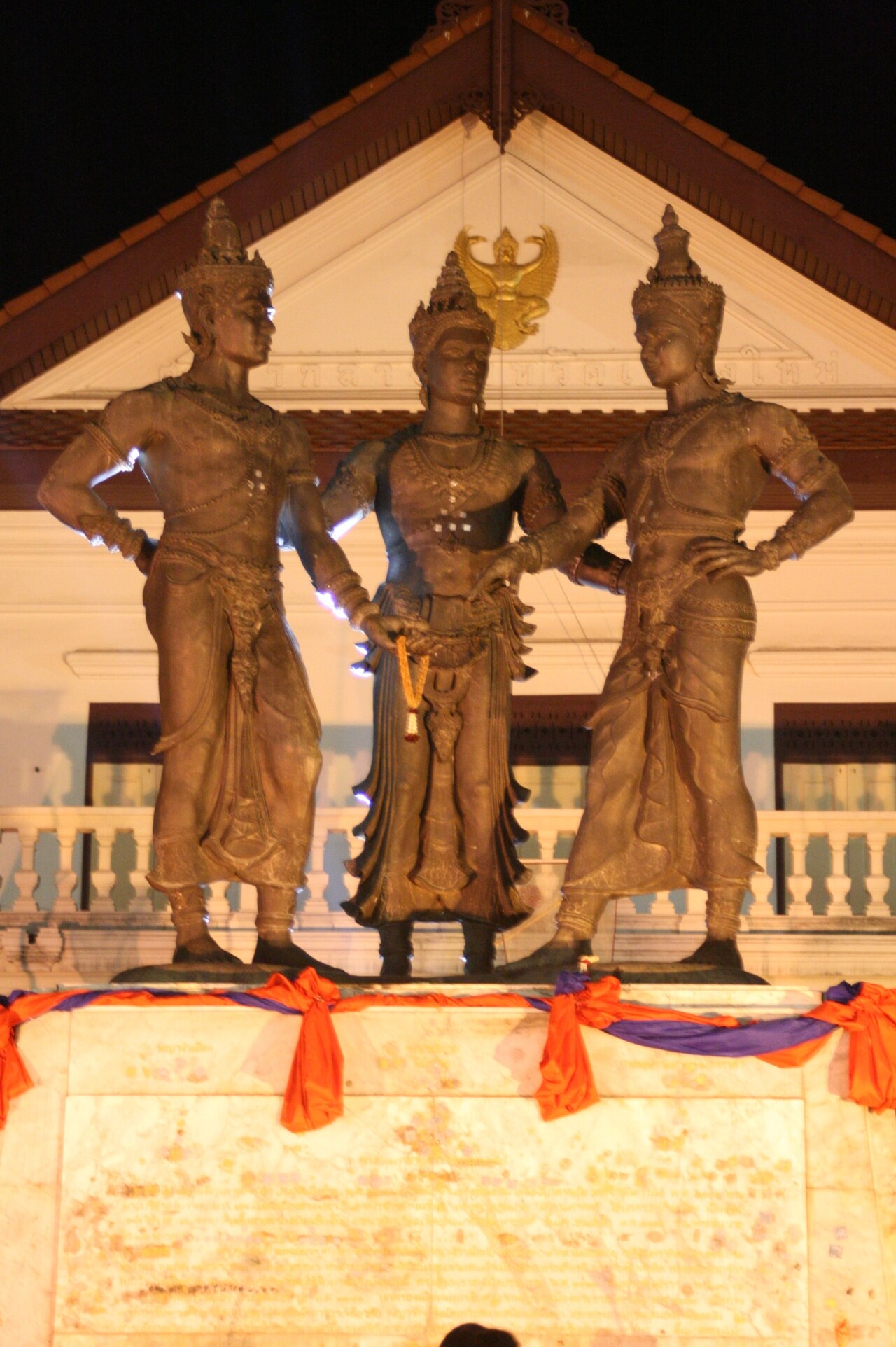
Visitors should verify current opening arrangements before planning their visit. The dry season from November to February provides more comfortable conditions for walking temple tours in Chiang Mai generally. Buddhist holidays may affect accessibility or increase visitor numbers. Rainy season months can impede unhurried outdoor exploration of temple compounds. Daily 06:00–18:00. From Chiang Mai International Airport, take the RTC R3 Yellow Line to the named Three Kings Monument stop. Wat Inthakhin Sadue Mueang is a short walk from the monument on Inthawarorot Road. The street-level grounds and exterior archaeological remains are accessible without entering a building.
Checked 2026-08-31 · Source
Many Chiang Mai temples operate without formal admission charges, relying instead on voluntary donations for maintenance and religious activities. Visitors should carry small denomination cash for contribution boxes if encountered. Some temples may request modest fees for foreign visitors without standardized rates. Free general admission. The street-level grounds and exterior archaeological remains are accessible without entering a building. The raised Luang Pho Khao viharn is approached by steps, limiting step-free access to its interior. It means “navel of the city,” referring to the temple’s position near the historic centre of Chiang Mai.
Checked 2026-08-31 · Source
Wat Inthakhin Sadue Mueang lies within Chiang Mai's old city moat boundaries, accessible by foot from numerous central accommodations. The old city's grid layout permits straightforward navigation between temples. Songthaew shared trucks and tuk-tuk three-wheeled vehicles serve the broader area for those arriving from outside the moat. From Chiang Mai International Airport, take the RTC R3 Yellow Line to the named Three Kings Monument stop. Wat Inthakhin Sadue Mueang is a short walk from the monument on Inthawarorot Road. The raised Luang Pho Khao viharn is approached by steps, limiting step-free access to its interior.
Checked 2026-08-31 · Source
Active temple etiquette requires covered shoulders and knees for all visitors regardless of gender. Shoes must be removed before entering any building containing Buddha images. Monks maintain strict protocols; women should avoid physical contact or direct hand-to-hand object transfer. Photography restrictions may apply in interior spaces without explicit signage. Free-roaming dogs occasionally inhabit temple grounds across Chiang Mai. The street-level grounds and exterior archaeological remains are accessible without entering a building. It means “navel of the city,” referring to the temple’s position near the historic centre of Chiang Mai.
Checked 2026-08-31 · Source
Exterior photography of temple architecture and compound layout is generally permissible during daylight hours. Flash usage is typically discouraged near religious objects and worshippers. Monks and worshippers should not be photographed without clear consent. Tripod and professional equipment may attract scrutiny. Visitors should observe posted signage or request guidance from temple staff where present. No. The Inthakhin city pillar was moved from this site to Wat Chedi Luang during the restoration of Chiang Mai under King Kawila. The registered site includes the main bell-shaped chedi, the Luang Pho Khao viharn and an octagonal satellite chedi within the neighbouring Chiang Mai City Arts and Cultural Centre grounds.
Checked 2026-08-31 · Source
It means “navel of the city,” referring to the temple’s position near the historic centre of Chiang Mai.
No. The Inthakhin city pillar was moved from this site to Wat Chedi Luang during the restoration of Chiang Mai under King Kawila.
The registered site includes the main bell-shaped chedi, the Luang Pho Khao viharn and an octagonal satellite chedi within the neighbouring Chiang Mai City Arts and Cultural Centre grounds.
Thailand’s Fine Arts Department dates its architectural form to approximately the 20th Buddhist century, corresponding broadly to the 14th–15th centuries CE.
The Fine Arts Department identifies Hariphunchai influence, including a connection between the octagonal chedi and the architectural tradition represented by Wat Ku Kut.
Yes. The Fine Arts Department records that the formerly abandoned temple has been restored to active-monastery status and has resident monks.
Loading the interactive map…
The interactive map could not be loaded.

Last updated:
Source: OpenStreetMap contributors, Wikidata ·