_%E0%B8%A7%E0%B8%B1%E0%B8%94%E0%B8%9A%E0%B8%B8%E0%B8%9E%E0%B8%9E%E0%B8%B2%E0%B8%A3%E0%B8%B2%E0%B8%A1_%E0%B8%AD.%E0%B9%80%E0%B8%A1%E0%B8%B7%E0%B8%AD%E0%B8%87_%E0%B8%88.%E0%B9%80%E0%B8%8A%E0%B8%B5%E0%B8%A2%E0%B8%87%E0%B9%83%E0%B8%AB%E0%B8%A1%E0%B9%88,Wat_Buppharam,Chiangmai_(6).jpg)

2 min walk
Wat Saen Fang
- Must see
- Place of worship
Place of worship · Chiang Mai
วัดบุพพาราม
Read from the OpenStreetMap access tags; anything not listed has no tag recorded.
Set the group type to family in the planner and the day window contracts to about three quarters of a solo day.
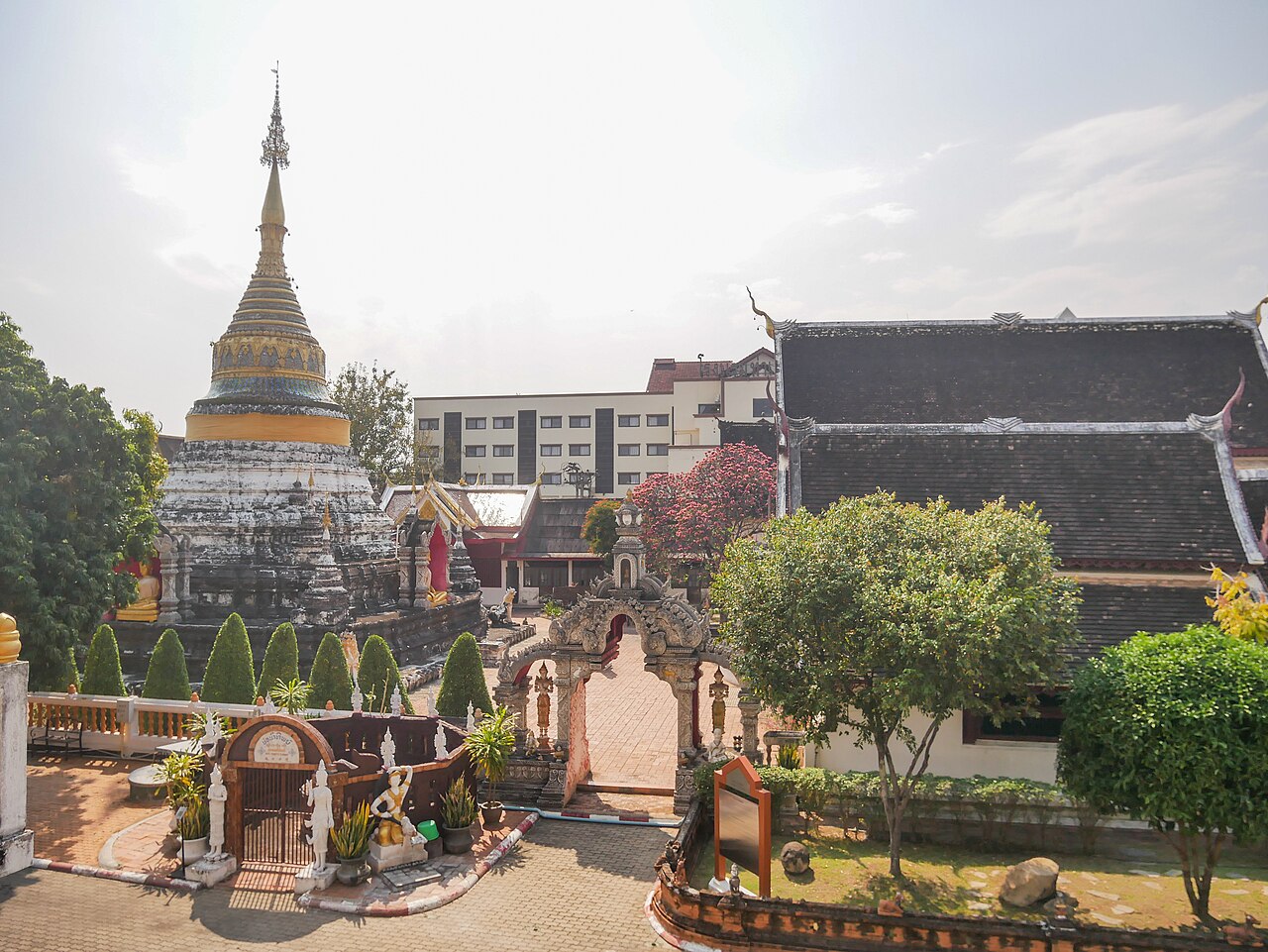
Wat Buppharam is a Buddhist temple in Chiang Mai, northern Thailand. It sits within the historic city area, reflecting the region's deep Theravada Buddhist heritage. The temple contributes to Chiang Mai's reputation as a city of numerous wats, with over one hundred temples across the urban area. Wat Buppharam represents the traditional Lanna architectural style that characterizes many northern Thai religious buildings. Visitors encounter it as part of the broader temple landscape that draws cultural and spiritual interest to Chiang Mai. The Tourism Authority of Thailand lists Wat Buppharam as a current attraction but publishes no visitor hours or weekly closure day.
Checked 2026-08-31 · Source
The temple grounds contain structures typical of northern Thai Buddhist temples, including a viharn and chedi. Buddha images would be expected within the main prayer hall. The compound may include subsidiary shrines and monk residences. Architectural details such as roof finials, naga serpent guardians, and carved wooden elements are characteristic of the region's temple craftsmanship. Visitors should observe respectfully, as active religious practice occurs at the site. No operator or responsible public-body source publishes fixed visitor hours, seasonal hours, last admission, or scheduled closure days. Neither the Tourism Authority of Thailand nor DASTA publishes a base adult/general-admission tariff or states that general entry is free.
Checked 2026-08-31 · Source
A visit to Wat Buppharam typically requires thirty to sixty minutes for casual observation of the exterior and main structures. Devotees or those with strong interest in Buddhist architecture may spend longer examining details. The temple can be incorporated into a broader walking tour of Chiang Mai's old city temples, where multiple wats lie within compact proximity. Combining several temples in one excursion provides efficient use of time. Neither the Tourism Authority of Thailand nor DASTA publishes a base adult/general-admission tariff or states that general entry is free.
Checked 2026-08-31 · Source
Visitors should verify current opening times before planning their visit. Chiang Mai's cool season from November to February offers the most comfortable climate for temple exploration, with lower humidity and milder temperatures. The hot season from March to May brings intense heat that may reduce walking comfort. The Tourism Authority of Thailand lists Wat Buppharam as a current attraction but publishes no visitor hours or weekly closure day. Ground-level areas provide the step-free portion of a visit. A Tourism Authority of Thailand publication places the ancient Chiang Mai map and other highlighted content upstairs in Hor Monthian Tham.
Checked 2026-08-31 · Source
Many Chiang Mai temples do not charge entry fees, though some major sites request donations or have nominal charges for foreign visitors. Visitors should carry small cash amounts for voluntary contributions. Some temples may charge separately for entry to specific structures such as museums or elevated chedis. Removing shoes before entering buildings is universally required. Neither the Tourism Authority of Thailand nor DASTA publishes a base adult/general-admission tariff or states that general entry is free. Ground-level areas provide the step-free portion of a visit. A Tourism Authority of Thailand publication places the ancient Chiang Mai map and other highlighted content upstairs in Hor Monthian Tham.
Checked 2026-08-31 · Source
Wat Buppharam lies within Chiang Mai's old city area, accessible by walking from other central temples and accommodations. Songthaew red trucks operate as shared taxis throughout the city and can be flagged down. Tuk-tuks and motorbike taxis offer negotiated point-to-point service. Bicycle rental provides flexible independent movement. Wat Buppharam is at 143 Tha Phae Road, opposite Wat Saen Fang. DASTA’s named road approach is via the Lampang–Chiang Mai Superhighway: turn left at Poi Luang intersection, cross Nawarat Bridge, continue straight for about 800 metres, and find the temple on the left.
Checked 2026-08-31 · Source
Visitors must dress modestly with covered shoulders and knees; temple staff may deny entry to inappropriately dressed individuals. Shoes must be removed before entering any building. Maintain quiet demeanor near worshippers and during prayer times. Do not point feet toward Buddha images or monks. Photography restrictions may apply in certain areas; observe posted signs. Verify authenticity before making donations to individuals. Ground-level areas provide the step-free portion of a visit. The responsible public-body sources document no lift, wheelchair route, ramp, accessible toilet, or reserved accessible parking. King Mueang Kaeo, the twelfth ruler of the Mangrai dynasty, ordered its construction in 1496.
Checked 2026-08-31 · Source
Exterior photography of temple architecture is generally permitted and captures characteristic Lanna rooflines and decorative elements. Interior photography may be restricted or require discretion; observe any signage or guidance from temple personnel. Flash photography is typically prohibited near Buddha images to prevent damage and distraction. Tripods may attract restrictions in confined spaces. Early morning and late afternoon provide optimal natural lighting for architectural photography. Respectful distance from worshippers is essential. King Mueang Kaeo, the twelfth ruler of the Mangrai dynasty, ordered its construction in 1496. Chao Luang Thammalangka restored it in 1819 and commissioned the small timber viharn.
Checked 2026-08-31 · Source
King Mueang Kaeo, the twelfth ruler of the Mangrai dynasty, ordered its construction in 1496.
Chao Luang Thammalangka restored it in 1819 and commissioned the small timber viharn.
It is a Lanna timber building with carved wood and a stucco-and-glass-mosaic gable.
Its gable carries Burmese-style wood carving, and the hall contains a large copper Buddha accompanied by a pair of bronze Chiang Saen Buddha images.
Hor Monthian Tham contains a teak Buddha image with a lap span exceeding one wa; the responsible public-body description dates it to about 400 years old.
Wat Buppharam formerly served as the residence of Supreme Patriarch Pussadeva and enshrines Buddha relics; their annual bathing ceremony is held around the full moon of the northern sixth lunar month, usually around February.
Loading the interactive map…
The interactive map could not be loaded.
Last updated:
Source: OpenStreetMap contributors, Wikidata ·