3 min walk
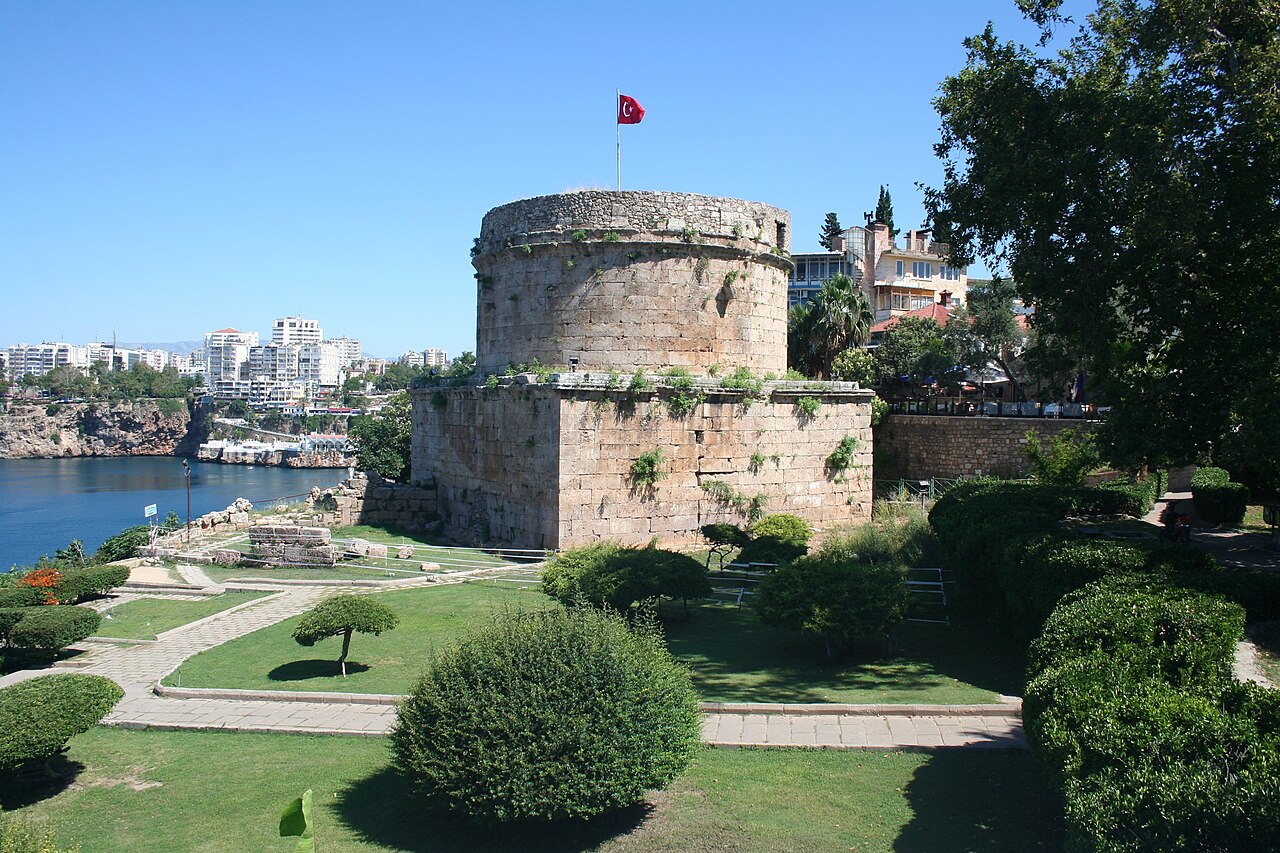
Hidirlik Tower
- Must see
- Historic monument
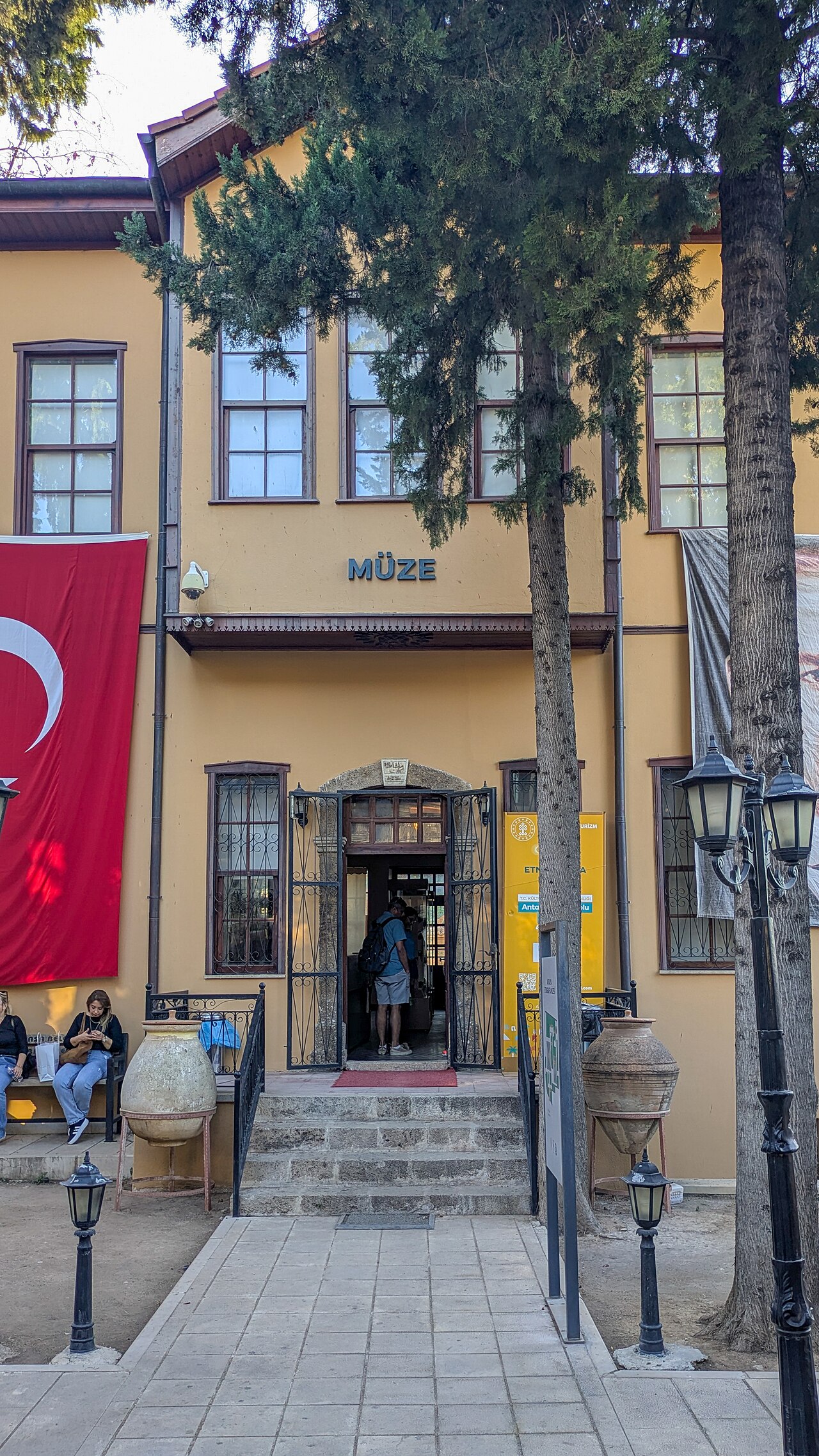
Museum · Antalya
Antalya Etnografya Müzesi
Closed today, Sunday. Next open Monday at 08:30 — the planner will not place a stop here on a Sunday.
Plan around it| Monday | 08:30 – 17:30 |
|---|---|
| Tuesday | 08:30 – 17:30 |
| Wednesday | 08:30 – 17:30 |
| Thursday | 08:30 – 17:30 |
| Friday | 08:30 – 17:30 |
| Saturday | 08:30 – 17:30 |
| Sunday | Closed |
Parsed from OpenStreetMap opening hours on 2026-09-09.
Antalya Etnografya Museum, locally called Antalya Etnografya Müzesi, is an ethnographic museum in Antalya devoted to regional material culture. Its subject is everyday heritage: the objects people used at home, in agriculture and in craft production, together with the customs and skills those objects represent. That focus makes the museum a useful complement to Antalya’s archaeological attractions. Instead of concentrating on ancient monuments, it helps visitors consider the more recent domestic and working life of the Antalya region through tangible objects and traditional practices. The museum is therefore suited to travelers who want cultural context beyond monumental ruins, beaches and panoramic viewpoints.
Checked 2026-08-26 · Source
The collection is described through traditional clothing, textiles, household utensils, agricultural tools and handicrafts. Together, these categories show how clothing communicated local identity, how woven materials supported household life, and how tools connected families with cultivation and skilled work. Displays of utensils and implements are especially valuable for understanding function: they turn broad ideas such as regional tradition into evidence of cooking, making, storing and working. The museum building also forms part of the experience, placing these objects within Antalya’s historic urban setting. Look for relationships between materials and uses: textiles, tools and domestic objects become most meaningful when considered as parts of ordinary routines.
Checked 2026-08-26 · Source
Allow about one to two hours for a considered visit. That is enough time to move through the collection without rushing, examine the main groups of objects and read the labels that are available. Visitors who enjoy textiles, costume, domestic history or traditional crafts may want longer, particularly if they compare how several objects served practical rather than decorative purposes. The museum is best treated as a focused cultural stop: substantial enough to reward attention, but compact enough to combine with other sights in central Antalya. Families and mixed-interest groups can use it as a manageable indoor visit between longer walks.
Checked 2026-08-26 · Source
The museum fits naturally into a culture-focused day in central Antalya, especially when you want time away from the city’s outdoor heat. A morning visit can leave the rest of the day open for Kaleiçi, the harbour or other museums, while a later visit works well as a quieter indoor pause between walks. Build the museum into the part of your day when you can read and look closely rather than treating it as a quick photograph stop. No operator-published schedule or seasonal opening pattern is recorded here. Because no confirmed timetable is available, the museum should not be the fixed first or last appointment of a tightly timed day.
Checked 2026-08-26 · Source
No operator- or responsible-public-body admission price is recorded for Antalya Etnografya Museum. Consequently, no ticket amount, free-entry claim, museum-pass entitlement or payment method is stated here. Treat admission as an unresolved practical detail when planning the visit and rely only on the museum or responsible public body for any current visitor charge. The museum’s cultural value can still be understood independently of a price: its role is to interpret regional domestic life, clothing, tools and craft traditions. Do not budget from prices published for other Antalya museums, because nearby institutions may have different policies or responsible bodies.
Checked 2026-08-26 · Source
The museum is in Antalya’s urban environment and can be approached through the city’s public-transport network, by taxi or on foot from nearby central accommodation. Kaleiçi and the surrounding historic centre are pedestrian-oriented, so the museum can be paired with a walking route through the old city rather than planned as an isolated suburban excursion. Visitors arriving from coastal resort areas should allow for a longer cross-city journey and a connection into central Antalya. The supplied map record does not provide a street address or named nearest stop. Check the route from your accommodation on the day, since resort-area journeys and central walking connections can take substantially different amounts of time.
Checked 2026-08-26 · Source
Plan for an object-led museum experience rather than a large, theatrical attraction. The collection’s value lies in close attention to clothing, textiles, utensils, tools and handicrafts, so visitors interested in everyday history will gain more from taking time with the displays. A historic building may include architectural features that require care while moving between rooms. The visit rewards patience with small details, so avoid scheduling it between rushed transfers or fixed departures.
Checked 2026-08-26 · Source
Visitors should follow signs and staff instructions inside the galleries, especially around textiles, costumes and other sensitive material. If photography is permitted, keep the camera from obstructing other visitors and avoid using flash unless it is expressly allowed. The strongest photographs will usually come from details of craft, pattern and construction, but the museum is also rewarding when viewed without a camera as a record of lived regional culture. Do not infer permission from rules at another museum, and avoid treating personal photography as permission for commercial use or live streaming.
Checked 2026-08-26 · Source
Its local name is Antalya Etnografya Müzesi.
It is a visitor-relevant point of interest in Antalya, Turkey, within the city’s urban cultural area.
No operator-published opening hours are recorded, so no schedule is stated.
No operator- or responsible-public-body admission price is recorded, so no amount or free-entry claim is stated.
It is an ethnographic museum focused on regional material culture, including clothing, textiles, household objects, agricultural tools and handicrafts.
The OSM identity is way/1452438262.
Loading the interactive map…
The interactive map could not be loaded.
Last updated:
Source: OpenStreetMap contributors, Wikidata ·