10 min walk
Alanya Castle
- Must see
- Museum
Language · 11 published
Museum · Antalya
Reviewed by Elena Voss · Roavina Travel Editor
Read from the OpenStreetMap access tags; anything not listed has no tag recorded.
Set the group type to family in the planner and the day window contracts to about three quarters of a solo day.
This place is a Museum. It was built in the Razi style style.
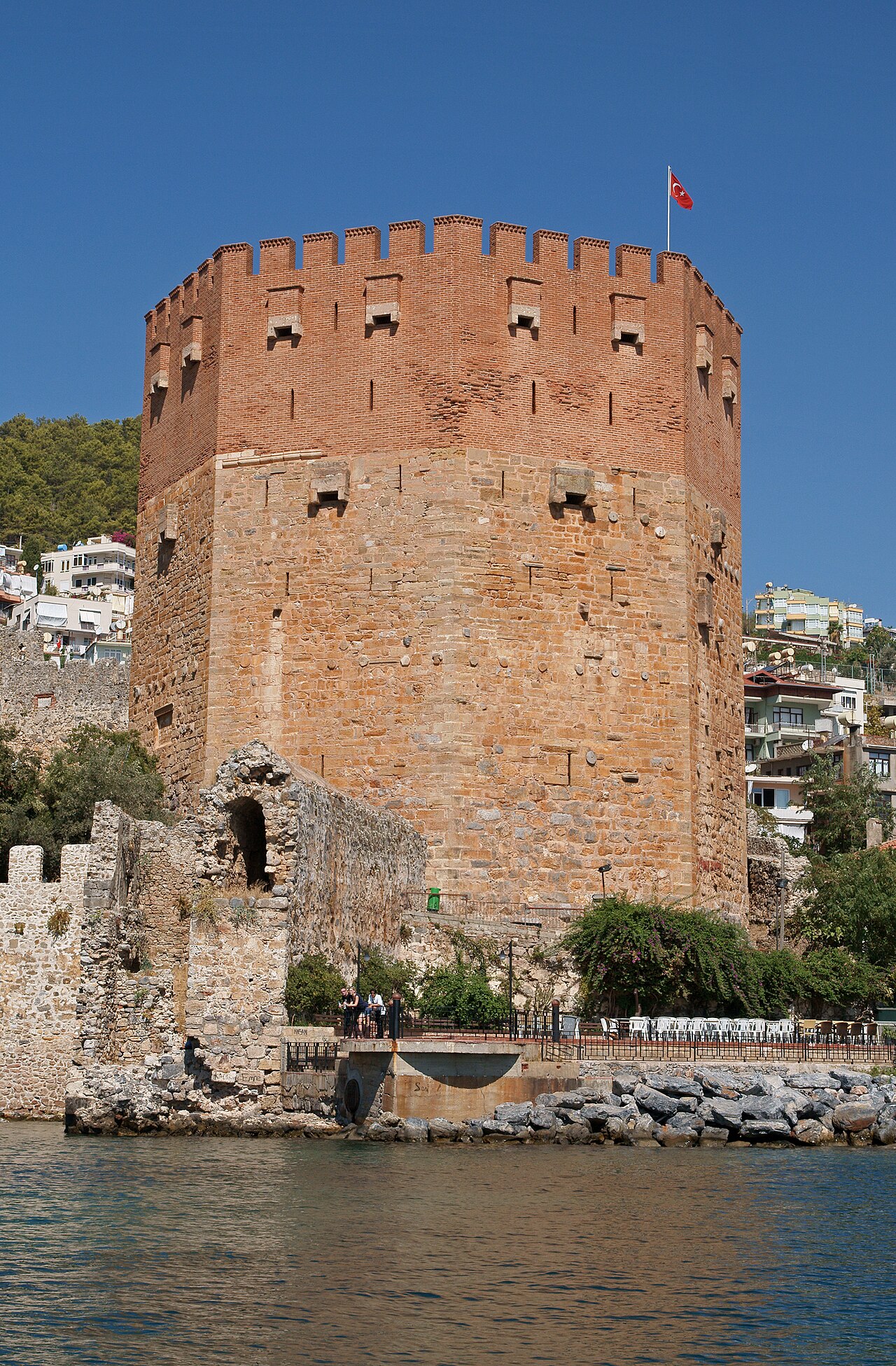
Kızıl Kule, known in English as the Red Tower, stands as a prominent historic landmark in Alanya, a district within the Antalya province. This distinctive octagonal defensive tower was constructed by the Seljuk Sultanate of Rum in the early 13th century. Its name derives from the reddish hue of the building stone used in its construction. The tower forms a critical component of the larger Alanya fortress complex and harbor defenses. The structure exemplifies Seljuk military architecture and engineering capabilities. Daily 09:00–19:00. Open seven days a week; no weekly closure day or midday break is listed.
Checked 2026-08-31 · Source
The interior of Kızıl Kule contains multiple floors connected by a stone staircase, with exhibition spaces that present historical and cultural materials related to the tower and Alanya's maritime heritage. Visitors can ascend to upper levels to access viewing platforms. These elevated positions offer panoramic vistas across Alanya harbor, the Mediterranean Sea, and the surrounding Taurus Mountains. The tower also houses the Ethnography Museum, which displays artifacts illustrating local traditional life. The cistern system within demonstrates historical water management techniques. Open seven days a week; no weekly closure day or midday break is listed.
Checked 2026-08-31 · Source
A typical visit to Kızıl Kule requires approximately forty-five minutes to one hour for visitors who wish to examine the exhibitions and ascend to the viewing levels. Those with particular interest in historical architecture, Seljuk period construction techniques, or photographic documentation may extend their stay accordingly. The compact nature of the tower means that the physical space is limited, so circulation through interior areas occurs at a measured pace, particularly during periods of higher visitor numbers. General adult admission: 100 TRY, including VAT.
Checked 2026-08-31 · Source
The Mediterranean climate of Antalya province delivers hot, dry summers and mild, wet winters. Summer months bring intense sun exposure with minimal cloud cover, which affects comfort during outdoor approaches to the tower. Spring and autumn generally offer more temperate conditions for exploration. Winter visits may encounter rainfall and reduced daylight hours. Daily 09:00–19:00. City transport serves Kızıl Kule Etnografya Müzesi at İskele Mevkii, Tersane Sokak, Çarşı. For a named arrival landmark, the tower is beside İskele Meydanı and the Atatürk Monument; approach through the harbour-side İskele area. The entrance is small and leads through a narrow corridor to the ground floor.
Checked 2026-08-31 · Source
Visitors must verify current admission costs through official channels prior to arrival. The tower operates as a cultural heritage site within the Turkish museum and monument system, which may involve standard ticketing structures applicable to historic properties. Group visit arrangements, if available, would require direct inquiry with site administration or regional tourism authorities. General adult admission: 100 TRY, including VAT. The entrance is small and leads through a narrow corridor to the ground floor. Upper visitor areas are reached by high stone steps; the tower has five levels, including an open terrace.
Checked 2026-08-31 · Source
Kızıl Kule occupies a prominent position at Alanya harbor, making it readily identifiable within the district's coastal layout. The tower stands at the harbor's eastern edge, adjacent to the historic shipyard area. Within Alanya itself, the harbor area is walkable from many accommodation concentrations in the central district. City transport serves Kızıl Kule Etnografya Müzesi at İskele Mevkii, Tersane Sokak, Çarşı. For a named arrival landmark, the tower is beside İskele Meydanı and the Atatürk Monument; approach through the harbour-side İskele area. Upper visitor areas are reached by high stone steps; the tower has five levels, including an open terrace.
Checked 2026-08-31 · Source
The stone staircase within Kızıl Kule is narrow and steep, requiring careful foot placement and presenting challenges for visitors with mobility limitations or those uncomfortable with confined vertical circulation. Interior lighting levels vary across different floors. Upper viewing platforms lack substantial protective barriers in all areas, necessitating awareness of edge positions, particularly for children. Appropriate footwear with reliable grip is strongly advisable. The entrance is small and leads through a narrow corridor to the ground floor. Its construction inscription dates the tower to April 1226. Seljuk ruler Alaeddin Keykubad I commissioned it, and the named builder was Ebu Ali Reha el Kettani of Aleppo.
Checked 2026-08-31 · Source
The distinctive octagonal form and red stone coloring of Kızıl Kule provide strong visual subjects from multiple exterior angles, particularly when photographed against Mediterranean blue waters or sunset skies. The upper viewing platforms offer elevated perspectives across harbor activity, the coastline, and distant mountain silhouettes. Interior architectural details including stonework, vaulting, and the central cistern present documentary opportunities. Natural lighting conditions shift substantially throughout the day, with morning and late afternoon generally producing more favorable illumination. Seljuk ruler Alaeddin Keykubad I commissioned it, and the named builder was Ebu Ali Reha el Kettani of Aleppo.
Checked 2026-08-31 · Source
Its construction inscription dates the tower to April 1226.
Seljuk ruler Alaeddin Keykubad I commissioned it, and the named builder was Ebu Ali Reha el Kettani of Aleppo.
It was built to protect Alanya’s harbour, shipyard and castle from attacks arriving by sea.
The octagonal tower is 33 metres high on its eastern side, about three metres lower on the west because it stands on sloping bedrock; each side is 12.5 metres wide.
It has five levels: ground floor, first floor, mezzanine, open floor and open terrace.
The ground and first floors contain exhibition areas; the first-floor core incorporates a large working cistern, and the terrace contains its opening and 16 ventilation shafts.
Loading the interactive map…
The interactive map could not be loaded.
Last updated:
Source: OpenStreetMap contributors, Wikidata ·