244 min walk
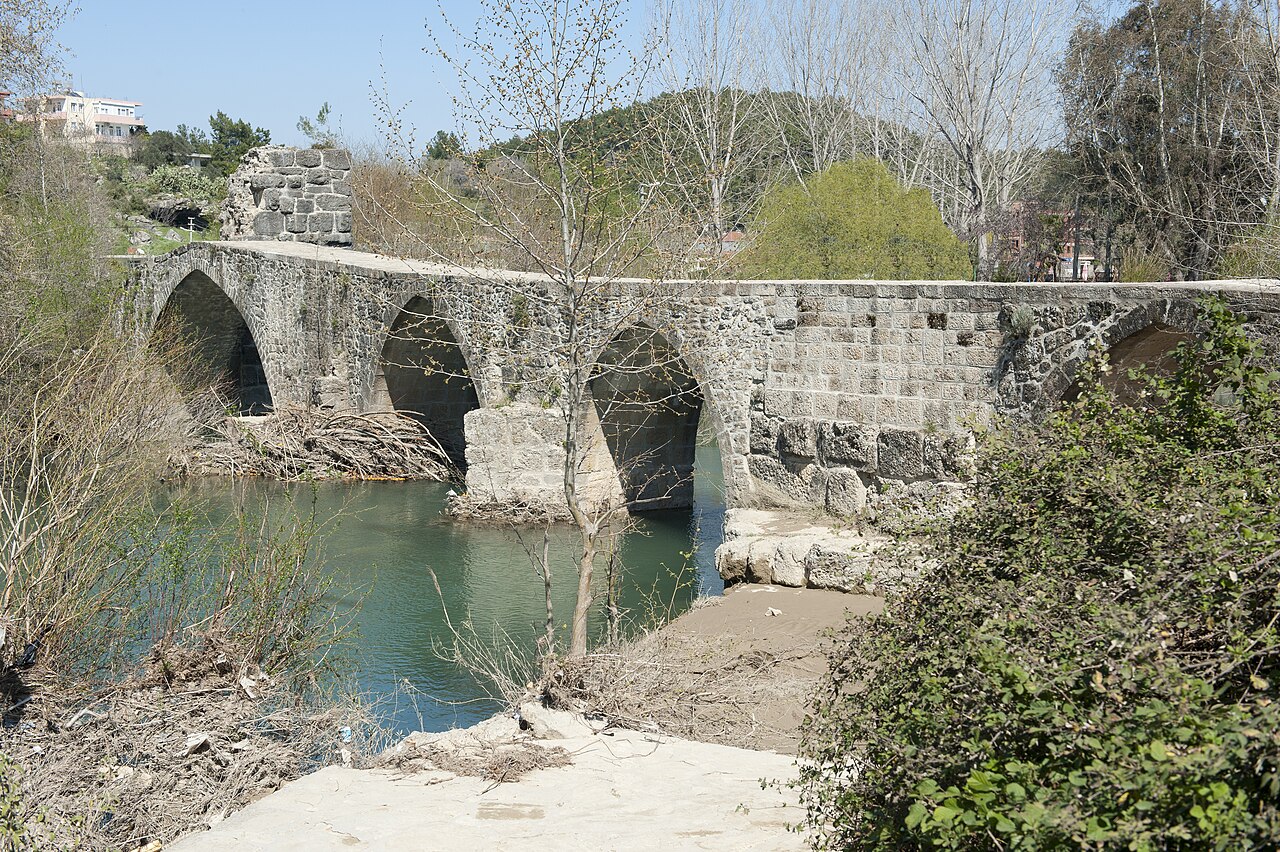
Naras Bridge
- Must see
- Historic monument
Language · 11 published
Historic monument · Antalya
Reviewed by Elena Voss · Roavina Travel Editor
Etenna is a remote ancient settlement in the mountainous interior north of Antalya’s coastal plain. Its character comes from the combination of archaeological remains and rugged natural surroundings, rather than from a managed museum-style visit. Stone foundations, wall fragments and scattered architectural elements appear among Mediterranean vegetation. The site is suited to travellers interested in quiet, undeveloped heritage places and willing to accept a demanding approach. There are no reconstructed buildings or interpretation facilities described for Etenna. Visitors should treat the remains carefully: do not climb, move or collect archaeological material, and leave the landscape as found. The uneven terrain, absence of facilities, and remote location make Etenna challenging for young children and visitors with limited mobility. Careful assessment of individual capabilities is essential.
Checked 2026-08-26 · Source
Visible remains at Etenna include structural foundations, sections of ancient walling and scattered stone architectural elements associated with former buildings and public spaces. The mountainous setting may reveal terraces, cisterns or defensive arrangements typical of elevated ancient settlements. Vegetation grows around and between the remains, so the site does not present itself as a clearly marked sequence of exhibits. Expect an archaeological landscape that requires slow observation, with some features potentially difficult to distinguish from the surrounding terrain.
Checked 2026-08-26 · Source
Allow roughly one to two hours at Etenna for a first exploration of the visible remains. This includes walking between scattered features, examining the terrain and taking photographs rather than following a timed circuit. Uneven ground and the absence of formal paths can make short distances slow. Visitors with a strong archaeological interest may stay longer, but should reserve enough daylight and energy for the return journey. Travel from Antalya is a substantial part of the excursion, so Etenna works best as a planned day outing rather than a brief stop between city attractions.
Checked 2026-08-26 · Source
Spring and autumn are generally the most comfortable seasons for walking through Etenna’s exposed archaeological landscape in the Antalya region. Summer heat makes an early start sensible, with drinking water and sun protection carried from the outset. Winter rain can make rural approach tracks and uneven ground harder to negotiate. Plan around daylight because the site is remote and the return may be slow. Weather can alter access conditions, particularly on mountain roads, so assess the route before departure. No visitor schedule or ticketing timetable is recorded for Etenna.
Checked 2026-08-26 · Source
No admission price or formal ticket arrangement is recorded for Etenna. Visitors should not plan around a staffed entrance, card-payment point or change facilities. The site’s undeveloped character makes advance preparation important: carry what is needed for the outing and follow any instructions encountered locally. Archaeological remains should be protected regardless of whether an entrance charge applies; do not remove stones, disturb features or climb unstable walls. The confirmed practical information is therefore limited to the absence of a recorded fare, not a claim that entry is definitively free.
Checked 2026-08-26 · Source
Practical access to Etenna is by private vehicle into the mountainous area north of Antalya’s coastal plain. Final approach sections may be narrow, steep or unpaved, so choose a suitable vehicle and drive cautiously. Reliable offline mapping is useful because signage may be minimal or absent. Parking is informal. Fuel stations are sparse in the surrounding rural area, so refuel before leaving settled places. Tell someone your intended route and expected return, and do not depend on uninterrupted mobile telephone coverage in mountainous terrain.
Checked 2026-08-26 · Source
The principal challenge at Etenna is uneven mountainous terrain, including loose stones, steep sections and ancient masonry that may be unstable. Wear sturdy closed-toe footwear with ankle support and move carefully around walls, vegetation and informal paths. Carry sufficient food and water for the entire outing. Wildlife may shelter in Mediterranean scrub, so keep a safe distance and avoid reaching into concealed spaces. Do not remove archaeological material or climb on ruins. Because the location is isolated, daylight, weather awareness, route planning and telling someone outside the group about the visit are important safety measures.
Checked 2026-08-26 · Source
Etenna offers photographs of weathered stone remains set against mountainous Mediterranean terrain. Morning and late-afternoon light can emphasise wall textures and ground contours, while atmospheric conditions may change views across valleys or towards the distant coast. There are no documented dedicated viewpoints or cleared photography areas, so stable footing is important when composing or using a tripod. Drone use should be checked against Turkish aviation and heritage rules before travel. Photograph respectfully by avoiding fragile masonry, moving stones for composition and disturbing vegetation around the remains.
Checked 2026-08-26 · Source
Etenna can be difficult for young children and visitors with limited mobility because the setting is remote and the ground is uneven. Assess the route and each traveller’s physical ability before going.
Visitors should plan for independent exploration unless they arrange a private guide through an Antalya-based operator and confirm that the service covers this remote site.
Wear sturdy closed-toe footwear with ankle support and long trousers for uneven ground and Mediterranean vegetation. A hat, sunglasses and light layers are useful in exposed mountain terrain.
Bring food, drinking water and other supplies from Antalya or a settled place on the route, and refuel before entering the rural area.
The isolated setting and lack of recorded visitor facilities make an overnight stay unsuitable without specific local knowledge and careful preparation.
Etenna offers a raw, undeveloped archaeological experience rather than the infrastructure and interpretation associated with major sites such as Perge or Aspendos. It suits prepared explorers more than visitors seeking a managed attraction.
Loading the interactive map…
The interactive map could not be loaded.
Last updated:
Source: OpenStreetMap contributors, Wikidata ·