
171 min walk
Arycanda
- Must see
- Historic monument
Language · 11 published
Historic monument · Antalya
Reviewed by Elena Voss · Roavina Travel Editor
This place is a Archaeological site.
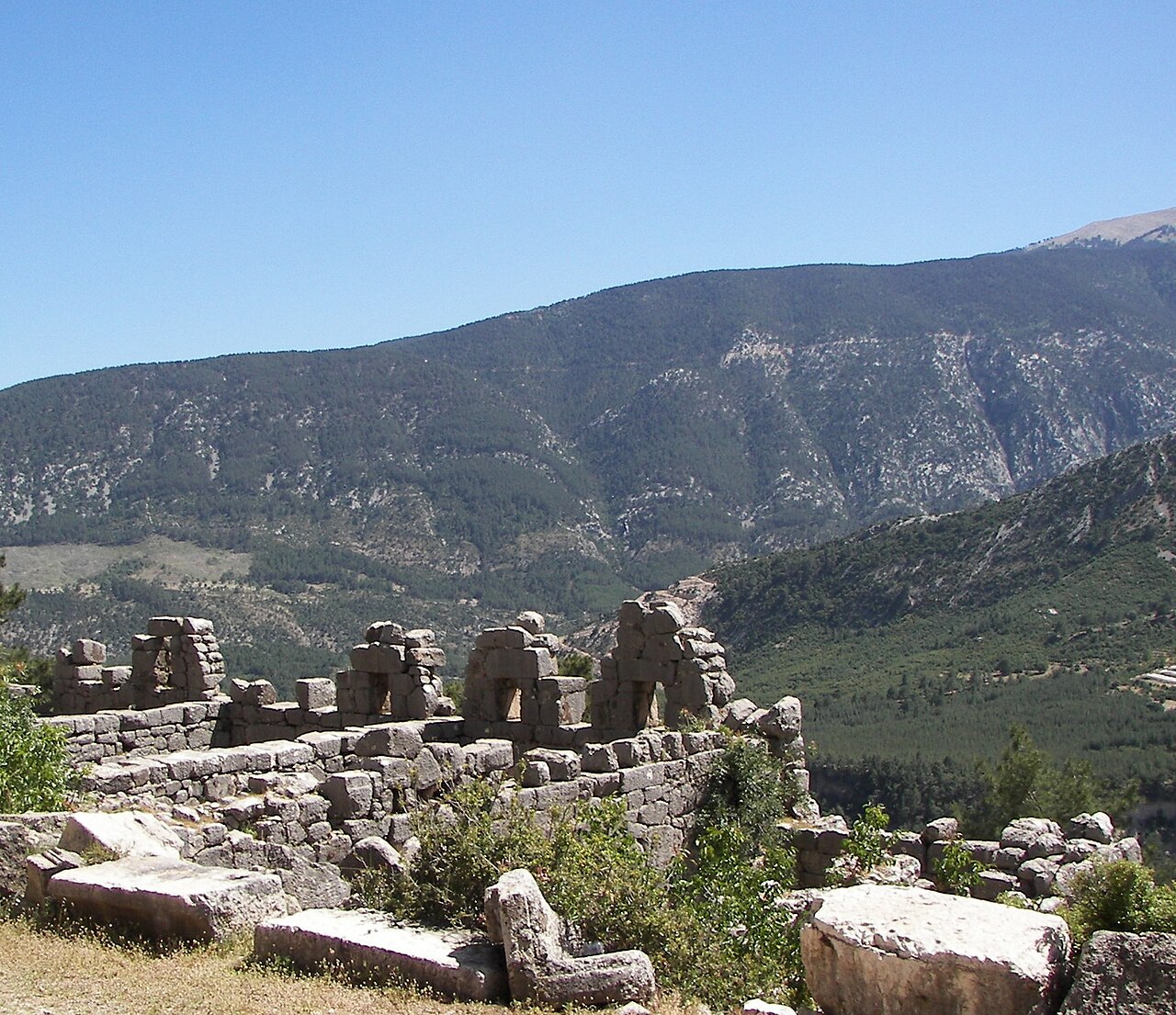
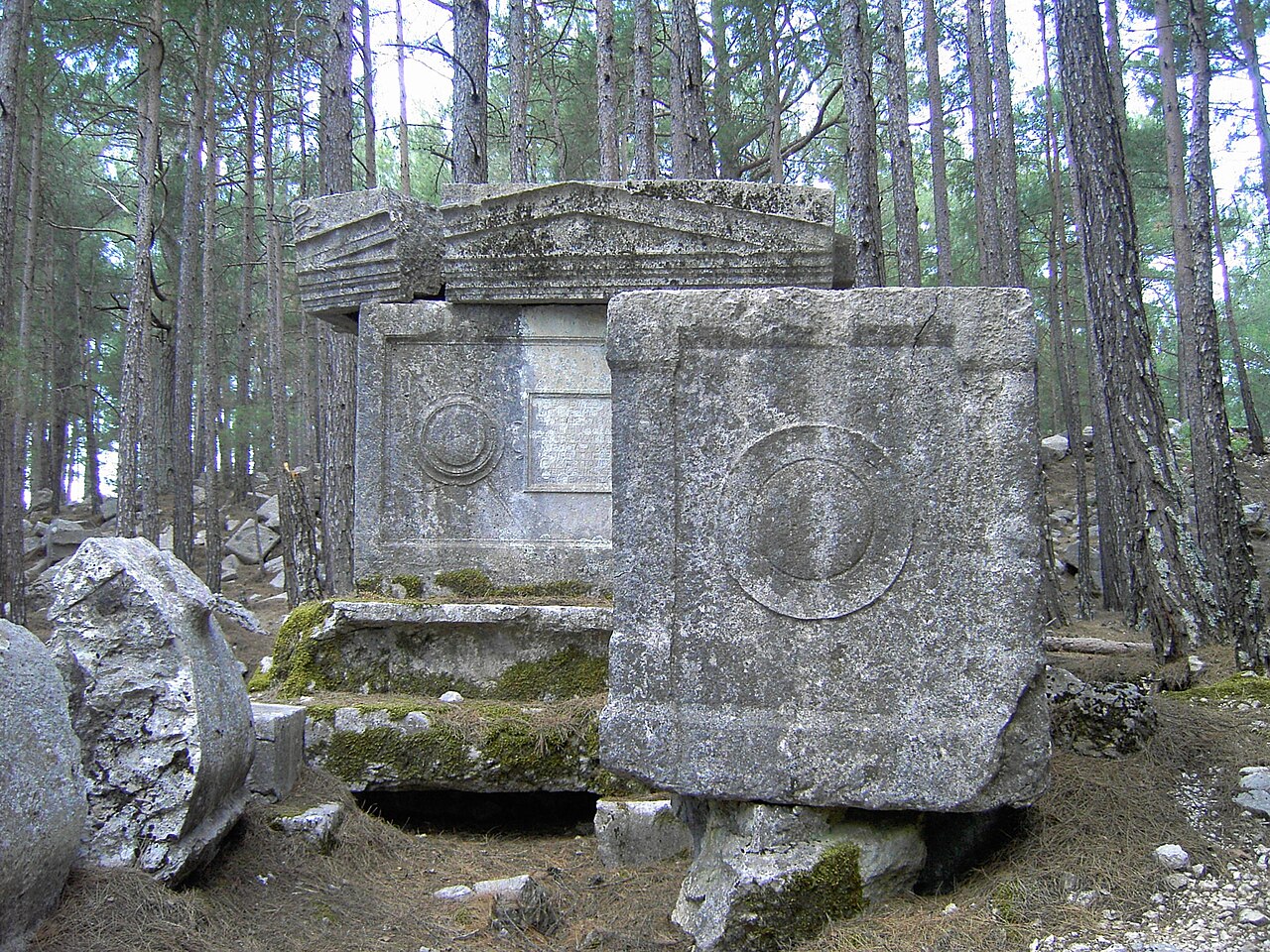
Idebessos is an ancient settlement in Antalya Province, within the wider Lycian landscape of southwestern Türkiye. Its identity is defined by surviving physical traces of an older settlement and by the relationship between those remains and the surrounding mountainous terrain. This is a place for visitors who value quiet archaeological observation and landscape context. The available record does not describe a developed visitor complex, reconstructed monuments, or extensive interpretation, so the experience centres on encountering the remains in their natural setting. Idebessos is best approached as a low-profile archaeological location rather than as a conventional, fully serviced attraction.
Checked 2026-08-26 · Source
The visible remains at Idebessos include structural foundations and building traces that indicate the settlement’s former extent. These fragments provide the main focus of exploration: visitors can examine surviving construction evidence, follow how the remains occupy the ground, and consider the settlement’s connection with its landscape. The available record does not identify individual monuments, inscriptions, excavated objects, defensive works, houses, or public buildings, so those features should not be presented as confirmed parts of the visit. Expect an archaeological landscape rather than a fully interpreted museum-style site, with the character of the place coming from its surviving traces and setting.
Checked 2026-08-26 · Source
Allow enough time to walk carefully among the visible remains, orient yourself within the settlement, and pause to examine how the ruins relate to the terrain. A brief stop may suit visitors seeking only an overview, while people with a strong interest in archaeology or landscape photography may prefer a slower exploration. The time required also depends on access conditions and individual mobility. Because no formal visitor route or site layout is recorded, plan the visit flexibly and avoid building a tightly timed schedule around the location. Leave additional time for finding the site and for a careful return journey.
Checked 2026-08-26 · Source
Spring and autumn are generally the most comfortable seasons for outdoor exploration in Antalya Province, with milder conditions than the height of summer. Summer visits can be hot and exposed, while winter rain may make access paths less comfortable. Earlier or later daylight can make stonework easier to examine and photograph and can reduce the discomfort of walking in strong midday sun. No operator-published opening schedule or seasonal visitor restriction is recorded for Idebessos, so no fixed visiting hour should be assumed from the available information. Weather conditions may affect the ground and the practicality of the approach.
Checked 2026-08-26 · Source
No admission price or ticketing arrangement is recorded from an operator or responsible public body for Idebessos. The practical cost of visiting therefore cannot be stated as a verified fare. This guide does not claim that entry is free, nor does it promise a ticket desk, payment method, official entrance service, or standard archaeological-site tariff. Treat the absence of a recorded price as an information limit rather than evidence of a particular admission policy, and do not make a journey based on an assumed cost. No verified paid or free admission category can be entered in the practical facts.
Checked 2026-08-26 · Source
Idebessos is in Antalya Province and requires travel from Antalya or another regional base. The supplied location record does not establish a complete public-transport route, road surface, or final approach. Use the exact mapped location when planning, allow contingency for a remote or less-developed access road, and avoid depending on GPS alone in mountainous country. A physical map and local route knowledge are useful supplements. Treat the journey as an outing requiring preparation rather than as a straightforward urban attraction transfer, and leave enough flexibility for an uncertain final approach. Confirm the route locally before setting out.
Checked 2026-08-26 · Source
Treat Idebessos as an archaeological landscape with uneven ground and loose stones. Sturdy footwear, drinking water, and protection from strong sun are sensible preparations for outdoor exploration. Move carefully around foundations and building traces, do not climb on walls, and do not disturb masonry or the ground around the remains. The available record does not confirm toilets, drinking-water points, staffed assistance, or other visitor amenities, so bring what you need for a self-sufficient outing and keep valuables secure.
Checked 2026-08-26 · Source
Idebessos lends itself to photographs that place surviving stonework within its wider landscape. Morning and late-afternoon light can reveal texture and relief, while wider compositions show the relationship between the settlement traces and the terrain. Detail views of foundations and building remnants reward patient observation, but work carefully around loose stones and uneven ground. Do not stand on fragile remains for a better viewpoint or move stones to improve a composition. A respectful, landscape-led approach records the site without damaging the archaeological evidence. Keep equipment compact if the approach is rough, and prioritise safe footing over a difficult angle.
Checked 2026-08-26 · Source
The available record does not describe a developed visitor complex or established facilities. Plan for a self-sufficient visit focused on the surviving remains and their landscape setting.
The available record does not confirm guided-tour availability. Do not plan on a guided service unless a current responsible provider confirms one separately.
Wear sturdy walking shoes and comfortable clothing suitable for uneven archaeological ground. A hat, sun protection, and covering layers are useful for exposed outdoor conditions, especially during warm weather.
It may be possible, but the supplied location record does not establish journey times or a dependable final approach.
Suitability depends on each visitor’s mobility and confidence on uneven ground. The available record does not establish accessible paths or visitor facilities, so assess the group’s ability to manage an archaeological landscape before setting out.
The available record does not document the extent of excavation or restoration. Do not expect reconstructed monuments on the basis of this information; the visit centres on surviving remains in the landscape.
Loading the interactive map…
The interactive map could not be loaded.

Last updated:
Source: OpenStreetMap contributors, Wikidata ·