

189 min walk
Alakilise
- High
- Historic monument
Language · 11 published
Historic monument · Antalya
Reviewed by Elena Voss · Roavina Travel Editor
This place is a Attraction.
Limyra is an ancient Lycian city in the Finike district of Antalya Province. Its open-air ruins introduce visitors to a settlement shaped by several periods of Anatolian history. The visit is especially rewarding for travellers interested in Lycian heritage, funerary monuments, and archaeological landscapes where stone remains sit among Mediterranean vegetation. Expect a dispersed site rather than a reconstructed museum, with the atmosphere of a rural historic place. Limyra is an ancient Lycian city situated in the Finike district of Antalya Province, Turkey. The site represents a significant archaeological settlement with remains spanning multiple historical periods. As a visitor-relevant point of interest matched to Antalya's production city pool, Limyra offers exposure to Lycian civilization heritage. The location preserves structural remnants that testify to its former importance in regional antiquity. Visitors encounter an open-air archaeological environment rather than a fully reconstructed museum setting. The uneven archaeological terrain presents mobility challenges. Cautious judgement suggests assessing individual physical capability against rough ground conditions.
Checked 2026-08-26 · Source
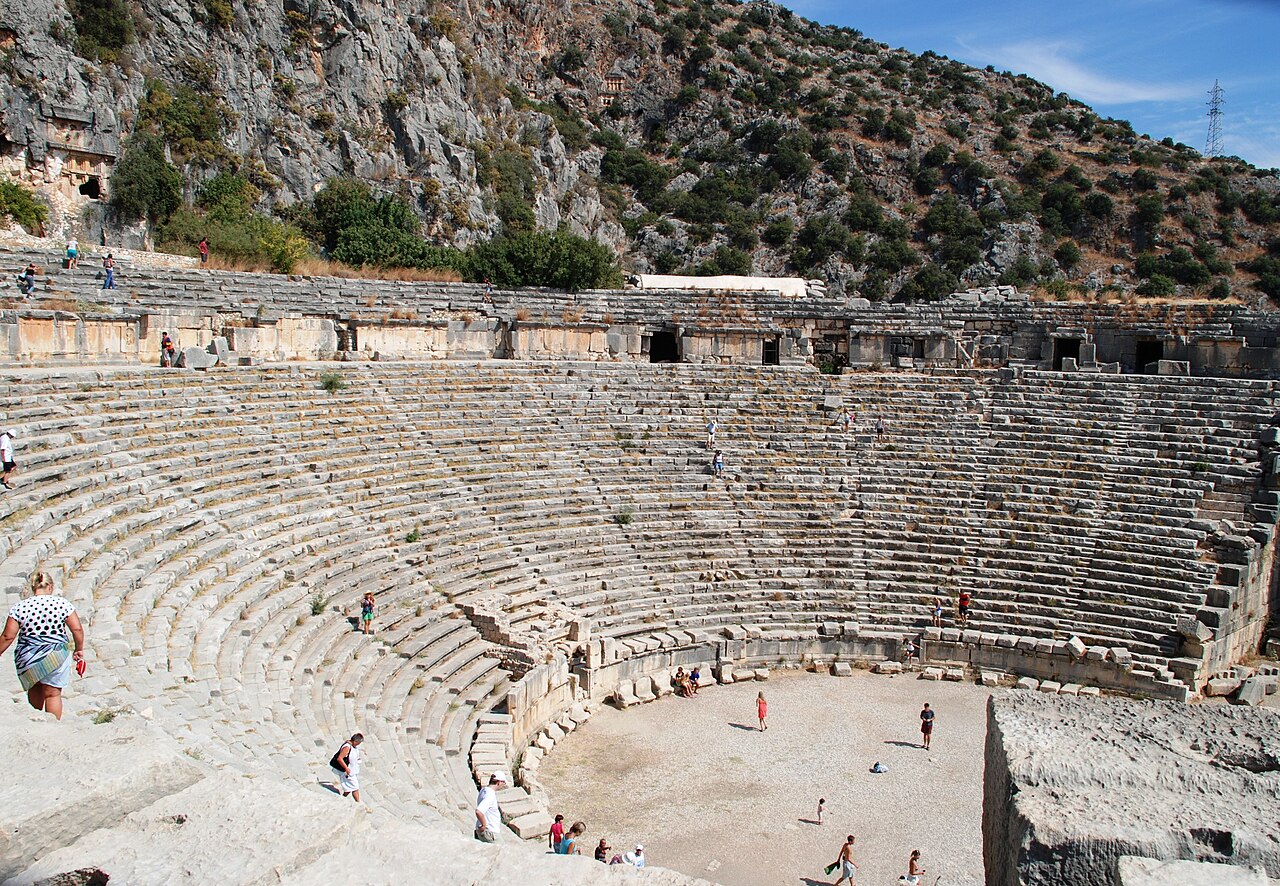
The archaeological area includes Lycian rock-cut tombs, monumental tombs, a theatre, scattered architectural fragments, and traces of an ancient settlement layout. The remains are distributed through an outdoor landscape, so the experience comes from moving between individual features and reading the relationship between buildings, tombs, stones, and vegetation. Visitors should picture partial ruins and exposed masonry, not complete interiors or a polished museum display. The archaeological zone contains various ancient remains including rock-cut tombs characteristic of Lycian funerary architecture. A theatre structure is present among the ruins. Monumental tombs and scattered architectural fragments are distributed across the site. The settlement layout reveals urban planning elements from classical antiquity. Vegetation intersperses with stone remains throughout the terrain. Visitors should expect partial ruins rather than intact buildings.
Checked 2026-08-26 · Source
Allow roughly one to two hours for a considered visit. The time suits a relaxed walk among the dispersed remains, with pauses at the theatre, tombs, and architectural fragments. Travellers who enjoy close observation or photography may stay longer. Limyra also works as one stop within a wider half-day outing around the Finike area, rather than as a compact attraction requiring a full day. A thorough visit to Limyra typically requires approximately one to two hours depending on individual pace and interest depth. The dispersed nature of ruins across uneven terrain influences circulation time. Photography enthusiasts and those examining architectural details closely may extend their stay. No guided tour duration or structured visitor program timing is documented.
Checked 2026-08-26 · Source
Spring and autumn are comfortable seasons for walking through Antalya’s outdoor archaeological landscapes. Summer brings hot, dry conditions, and the limited shade around exposed ruins can make the middle of the day tiring. Early or later visits offer gentler light and temperatures. Winter is milder but wetter, so rain can make uneven ground harder to cross. Plan Limyra as part of a flexible day in the Finike region.
Checked 2026-08-26 · Source
Limyra is best understood as an outdoor archaeological stop whose visit centres on the ruins themselves. Build the stop around the tombs, theatre, and settlement remains, and carry the practical supplies needed for a rural outdoor visit. Admission details are intentionally omitted here rather than presented as a guess.
Checked 2026-08-26 · Source
Limyra lies near modern Finike in Antalya Province and is reached by road from the Antalya region. A private vehicle or organised tour is the most practical travel style for a rural archaeological excursion. Use the mapped location as the destination and allow time for the final approach. The site pairs naturally with other historic places around Finike when you want to make the drive worthwhile.
Checked 2026-08-26 · Source
The ruins occupy uneven outdoor ground with scattered stones and irregular walking surfaces. Wear sturdy shoes, bring water, and protect yourself from strong Mediterranean sun. Keep clear of fragile masonry and do not climb on tombs, walls, or theatre remains. The dispersed layout rewards an unhurried pace, but it also means travellers should remain attentive while moving between features. Limyra is better suited to visitors comfortable with a rural archaeological setting.
Checked 2026-08-26 · Source
Limyra offers strong subjects for architectural and landscape photography. Frame the rock-cut tombs against the surrounding vegetation, use the theatre to show the scale of the settlement, and look for close details in weathered stone. Morning and late-afternoon light can bring out surface texture while reducing harsh contrast. Walk around each feature before composing, because the open setting offers changing viewpoints and a sense of archaeological depth.
Checked 2026-08-26 · Source
The site includes Lycian rock-cut and monumental tombs, a theatre, architectural fragments, and the remains of an ancient settlement spread through an open-air landscape.
Allow about one to two hours for a thoughtful walk among the tombs, theatre, and scattered remains. Photography and close study can extend the visit.
No. Limyra is an open-air archaeological environment, with partial ruins and exposed stone remains set among Mediterranean vegetation.
Sturdy footwear is appropriate because the archaeological area includes uneven ground, scattered stones, and irregular paths between the remains.
Spring and autumn generally provide comfortable walking conditions. Early or late visits are gentler in summer, when exposed ruins can become hot.
Limyra is in the Finike district of Antalya Province, near the modern settlement of Finike, and forms part of the region’s Lycian heritage landscape.
Loading the interactive map…
The interactive map could not be loaded.
Last updated:
Source: OpenStreetMap contributors, Wikidata ·