.jpg)
2 min walk
Temple of Mén (Side)
- Must see
- Historic monument
Historic monument · Antalya
Apollon ve Athena Tapınağı
| Monday | 08:00 – 22:00 |
|---|---|
| Tuesday | 08:00 – 22:00 |
| Wednesday | 08:00 – 22:00 |
| Thursday | 08:00 – 22:00 |
| Friday | 08:00 – 22:00 |
| Saturday | 08:00 – 22:00 |
| Sunday | 08:00 – 22:00 |
Closed to visitors between 18:45 – 19:00
Checked 2026-08-31 · Source
| Per person | €7.00 |
|---|
Checked 2026-08-31 · Source
Read from the OpenStreetMap access tags; anything not listed has no tag recorded.
Set the group type to family in the planner and the day window contracts to about three quarters of a solo day.
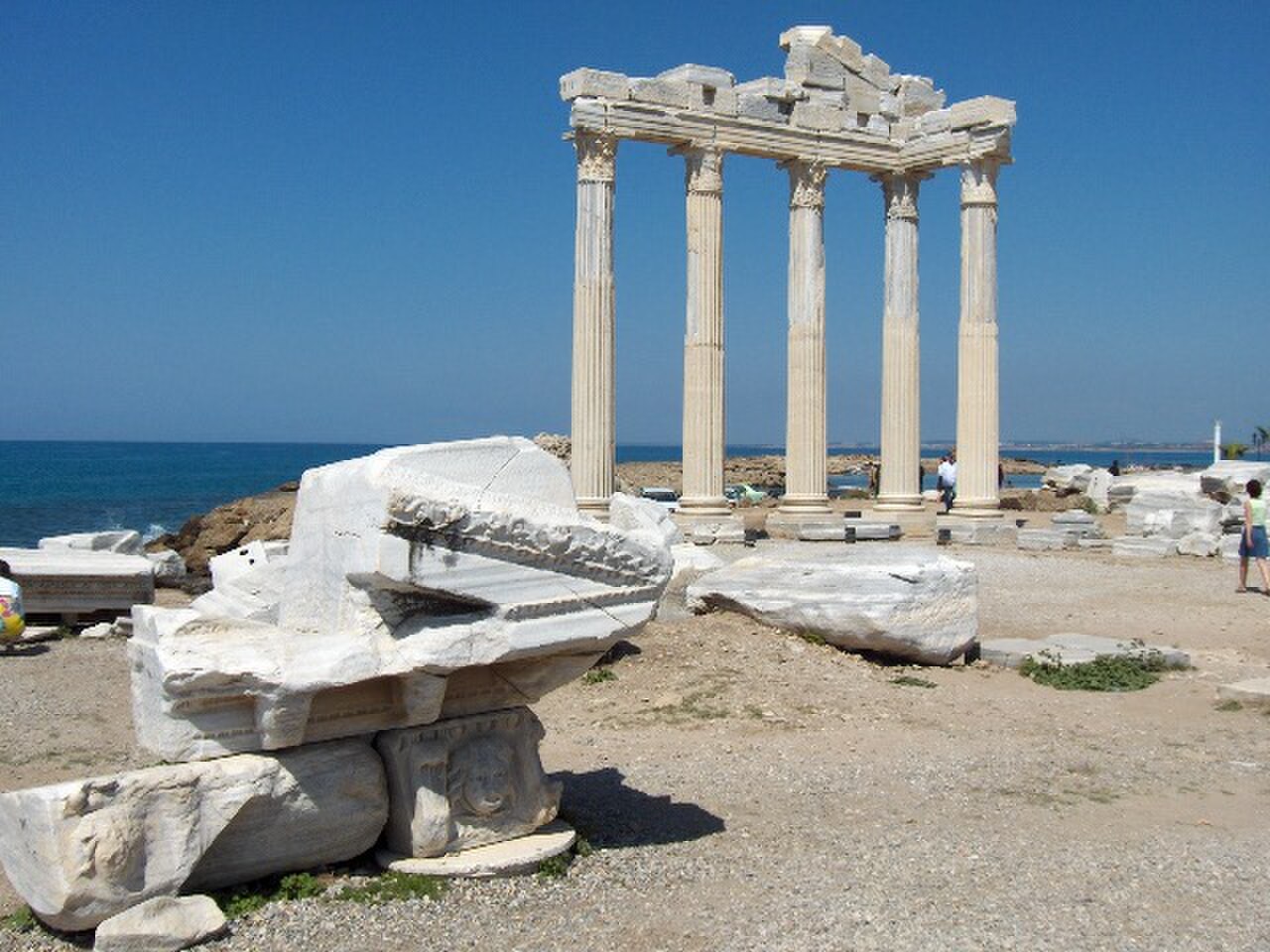
The Temple of Apollo, locally known as Apollon ve Athena Tapınağı, is an ancient religious site in Antalya, Turkey. It stands as a significant archaeological landmark within the region's rich classical heritage. The structure represents the enduring cultural importance of Apollo and Athena in ancient Anatolian civilization. Visitors encounter remnants of a once-grand sanctuary that attracted pilgrims and worshippers from across the Mediterranean world. The site's preservation allows modern travellers to connect with millennia of human history. Daily 08:00–18:45 and 19:00–22:00.
Checked 2026-08-31 · Source
The temple precinct contains surviving architectural elements including standing columns, foundation platforms, and scattered stonework that suggest the original monumental scale. Decorative fragments and structural remains indicate sophisticated ancient craftsmanship. Visitors can examine the layout of the sacred enclosure, tracing the arrangement of cult buildings and auxiliary structures. Archaeological evidence points to multiple phases of construction and renovation across centuries of active use. The site preserves material testimony to religious practices, civic ceremonies, and the economic significance of sanctuary-based pilgrimage.
Checked 2026-08-31 · Source
A thorough visit to the Temple of Apollo typically requires between forty-five minutes and ninety minutes, depending on individual interest levels and physical exploration pace. Casual observers may complete a circuit in less time, while those examining architectural details or photographing extensively will benefit from extended duration. The compact nature of the archaeological zone prevents overwhelming temporal commitment. Visitors often combine this site with nearby attractions in Antalya's historical itinerary, making efficient scheduling practical. The surrounding archaeological area includes ramped or wide approaches, but cobbles, gravel, pronounced slopes and uneven historic ground limit independent wheelchair movement.
Checked 2026-08-31 · Source
Optimal visiting conditions at the Temple of Apollo correlate with Antalya's milder seasons, generally spring and autumn, when temperatures moderate and tourist congestion diminishes. Summer months bring intense heat that may discomfort exposed archaeological exploration. Winter offers solitude though occasional rainfall affects comfort and accessibility. Daily 08:00–18:45 and 19:00–22:00. Public Side buses serve Side. Manavgat Municipality’s named Side Ring connects Side Garajı with Antik Side. From the ancient-city approach, continue through the historic centre to the end of the colonnaded street; the temple stands beside the entrance to the ancient harbour.
Checked 2026-08-31 · Source
Admission requirements for the Temple of Apollo remain subject to official determination. The site may operate under Turkish Ministry of Culture and Tourism jurisdiction, potentially affecting ticketing policies and available concessions. International visitors should prepare appropriate identification and payment methods. Combined tickets covering multiple Antalya archaeological sites may offer economic advantage if available. General admission to Side Archaeological Site is €7 for foreign visitors. Müzekart is valid for eligible Turkish citizens; during the 2026 night-museum programme, Turkish-ID Müzekart holders pay an additional 200 TRY for entry from 19:00.
Checked 2026-08-31 · Source
The Temple of Apollo occupies a position within Antalya's accessible territory, though precise routing requires local verification. Public transportation options including municipal buses and dolmuş shared taxis serve general regional movement, with specific stop proximity requiring confirmation. Parking availability and associated regulations demand on-site assessment. Public Side buses serve Side. Manavgat Municipality’s named Side Ring connects Side Garajı with Antik Side. From the ancient-city approach, continue through the historic centre to the end of the colonnaded street; the temple stands beside the entrance to the ancient harbour. Close access among the temple ruins is not wheelchair accessible; a companion may be needed on the uneven approach.
Checked 2026-08-31 · Source
Uneven ancient surfaces present trip hazards throughout the temple precinct; sturdy footwear with grip soles constitutes essential preparation. Exposed archaeological zones lack modern shade infrastructure, creating sun exposure risks during extended visitation. Hydration maintenance proves critical, particularly in warmer months when dehydration develops rapidly. Unstable stone elements and eroded edges demand cautious movement and respectful distance from fragile remains. The surrounding archaeological area includes ramped or wide approaches, but cobbles, gravel, pronounced slopes and uneven historic ground limit independent wheelchair movement. The official Side Archaeological Site page lists an audio-guide service.
Checked 2026-08-31 · Source
The Temple of Apollo offers substantial photographic interest through its classical architectural vocabulary and atmospheric decay. Morning and evening golden hours produce optimal natural lighting for column studies and wide compositions. Overcast conditions reduce harsh shadows and reveal stone surface textures advantageously. Tripod deployment policies require on-site verification; archaeological protections may restrict equipment types. Drone operation falls under strict Turkish aviation and cultural heritage regulations demanding advance authorization. Flash photography potentially damages sensitive surfaces and may be restricted. It stands at the end of Side’s colonnaded street, immediately beside the entrance to the ancient harbour.
Checked 2026-08-31 · Source
It stands at the end of Side’s colonnaded street, immediately beside the entrance to the ancient harbour.
The Temple of Apollo was built during the Roman Peace, in the mid-2nd century CE.
It was dedicated to Apollo, one of Side’s principal deities; the neighbouring temple was dedicated to Athena.
The Ministry’s visitor information specifically points out the Medusa reliefs among the temple’s architectural remains.
Yes. On 31 August 2026, Side Archaeological Site participates in night museum hours from 19:00 to 22:00, with last admission at 21:30.
Yes. The official Side Archaeological Site page lists an audio-guide service.
Loading the interactive map…
The interactive map could not be loaded.
Last updated:
Source: OpenStreetMap contributors, Wikidata ·