Dubai Aquarium and Underwater Zoo
دبي أكواريوم وحديقة الحيوانات المائية
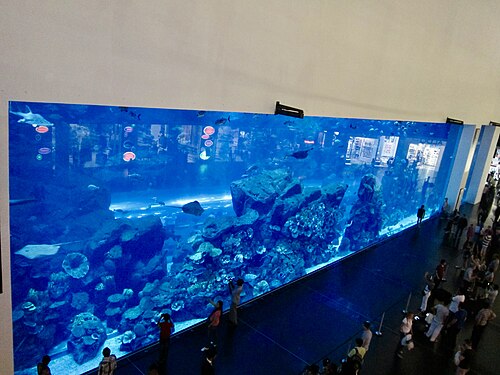
Dubai Aquarium & Underwater Zoo is a two-level attraction built into The Dubai Mall and run by Emaar Entertainment, the mall's own leisure arm.
- Must see
- Family attraction
City guide · United Arab Emirates
Dubai is a long coastal city rather than a compact centre. Historic districts cluster around Dubai Creek, the modern business and visitor core follows Sheikh Za...
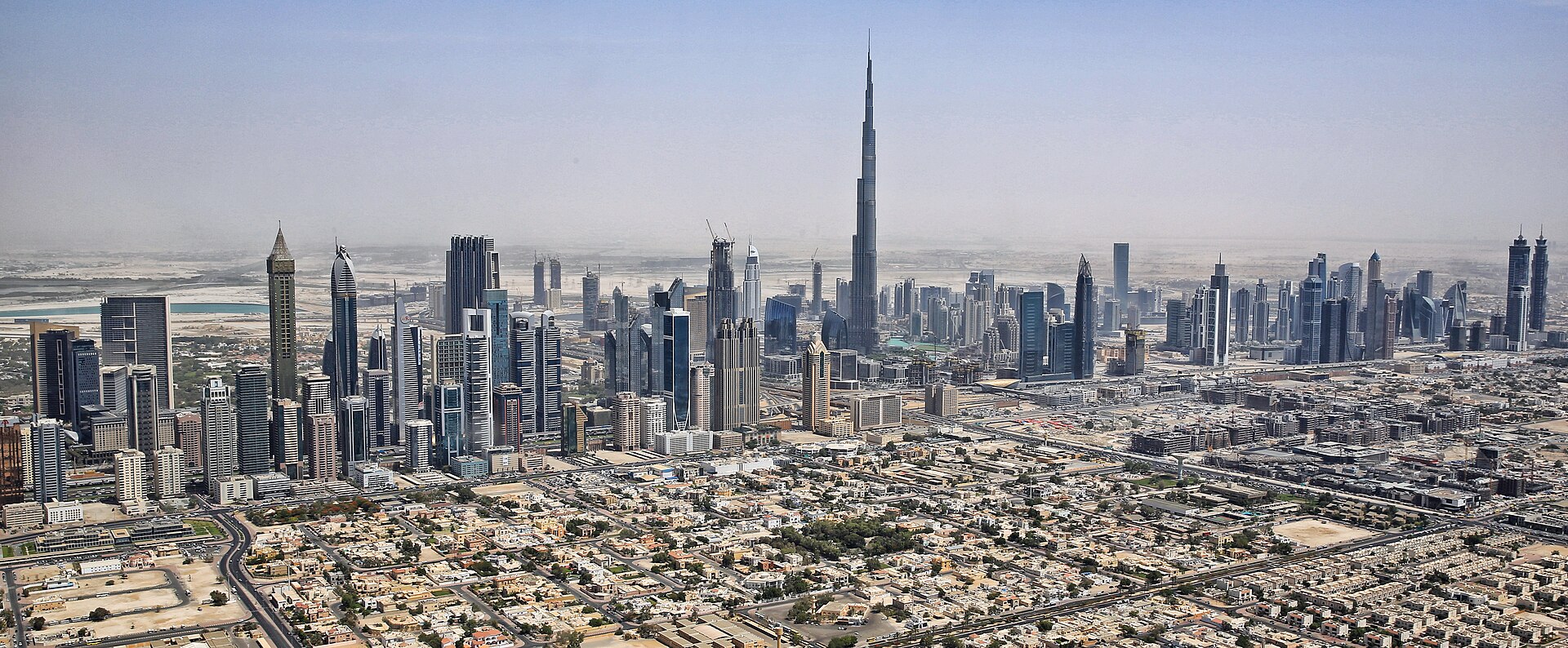
Photograph · Tim Reckmann from Hamm, Deutschland · CC BY-SA 3.0
Set your days, your pace and the hours you actually want to be out. The planner works around closing days and travel time, and leaves room to eat.
Reviewed by Elena Voss · Roavina Travel Editor
Dubai is a long coastal city rather than a compact centre. Historic districts cluster around Dubai Creek, the modern business and visitor core follows Sheikh Zayed Road, and resort districts continue southwest through Dubai Marina and Palm Jumeirah. A practical visit groups sights by corridor because crossing between old Dubai, Downtown and the marina repeatedly wastes time. The metro handles the main north-south spine, while taxis and buses cover the final connection to places away from it.
Checked 2026-08-26
September · September's 38.7°C mean high and 26.3°C mean low create recurring severe heat for extended outdoor visits in Dubai.
Ranked by importance — sitelinks, pageviews and heritage status, not editor preference.
38 places match
Category
Typical visit duration
Interests
دبي أكواريوم وحديقة الحيوانات المائية
Dubai Aquarium & Underwater Zoo is a two-level attraction built into The Dubai Mall and run by Emaar Entertainment, the mall's own leisure arm.
متحف الاتحاد
Etihad Museum, known locally as متحف الاتحاد, is a cultural institution in Dubai dedicated to preserving and presenting the history of the United Arab Emirates.
Al Shindagha Museum is a cultural institution situated in the historic Al Shindagha district along Dubai Creek.
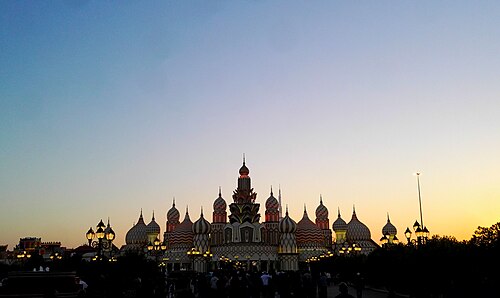
القرية العالمية
Global Village is a seasonal cultural and entertainment destination in Dubai. It brings together pavilions representing numerous countries, each showcasing traditional crafts, merchandise, and culinary specialties from their respective regions.
Jumeirah Beach is a public coastal stretch along the Persian Gulf in Dubai, United Arab Emirates. The local name is شاطئ الجميرة. The beach lies in the Jumeirah district, a well-established residential and hospitality area.
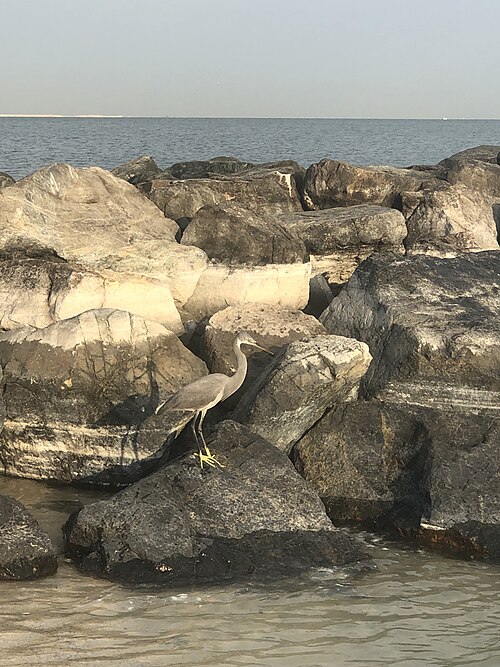
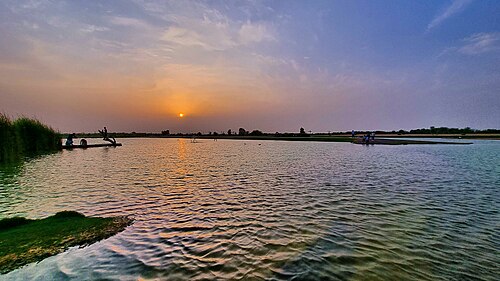
Ras Al Khor Wildlife Sanctuary is a protected wetland area in Dubai, United Arab Emirates. The local name is محمية رأس الخور للحياة البرية. It is recognized as an important habitat for migratory birds and indigenous wildlife.
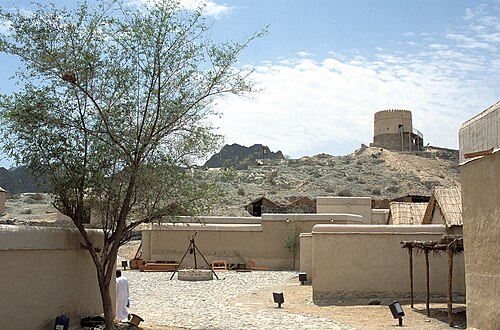
Hatta Heritage Village is a reconstructed traditional mountain settlement located in the Hatta enclave of Dubai, within the Hajar Mountains.
الحديقة المائية وايلد وادي
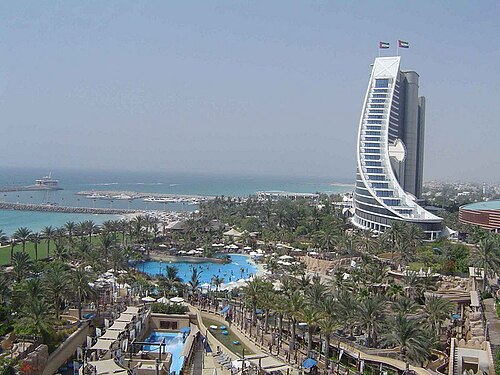
Wild Wadi Water Park is a family water park in Dubai’s Jumeirah district, beside the Burj Al Arab.
موشنجيت دبي
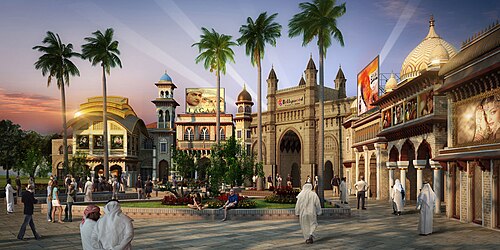
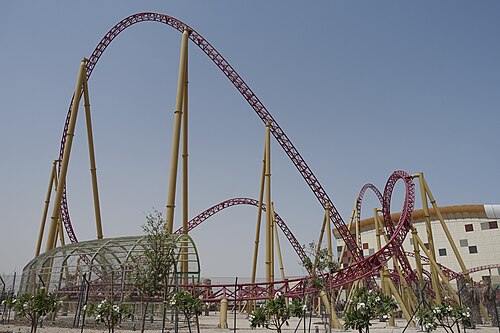
Motiongate Dubai is a film-themed amusement park at Dubai Parks and Resorts, bringing together lands inspired by major Hollywood studios. The attraction combines rides, shows and character-led experiences around stories from DreamWorks Animation, Columbia Pictures and Lionsgate.
ليجولاند دبي
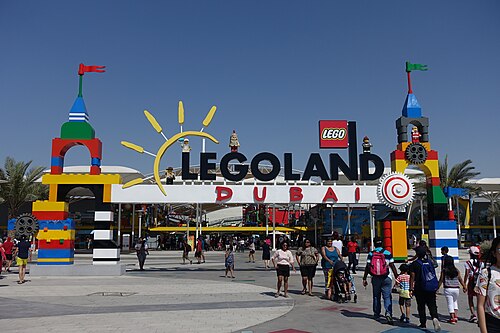
Legoland Dubai is a family theme park at Dubai Parks and Resorts, designed around the Lego construction system and aimed especially at children aged 2–12 with their families.
بوليوود باركس دبي
Real Madrid World is a football-themed entertainment destination in Dubai associated with the Spanish football club Real Madrid.
آي إم جي عالم من المغامرات
IMG Worlds of Adventure is an indoor theme park in Dubai. The local name is آي إم جي عالم من المغامرات. It is marketed as one of the largest indoor theme parks globally.
Jameel Arts Centre is a contemporary art institution on Dubai’s Jaddaf Waterfront. It is a place for exhibitions, commissions, research and public programmes, with a quieter atmosphere than the city’s large entertainment venues.
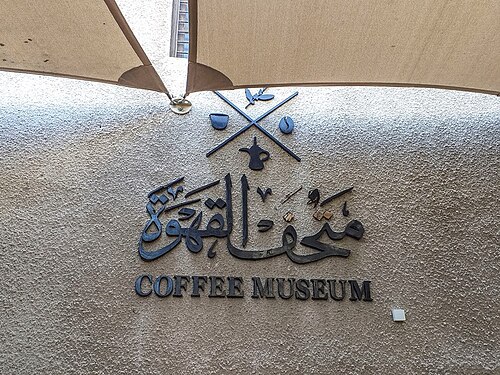
Coffee Museum
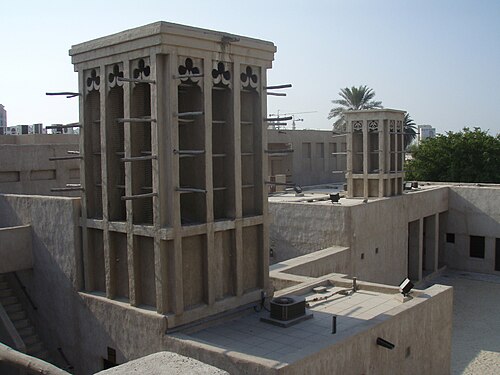
Dubai Coffee Museum is a compact cultural museum in the Al Fahidi Historical Neighbourhood, housed in a traditional wind-tower building.
Saeed Al Maktoum House is a historic Dubai residence associated with the Al Maktoum ruling family. The house offers a direct connection with the emirate’s pre-oil past and with the traditional architecture of the Gulf.
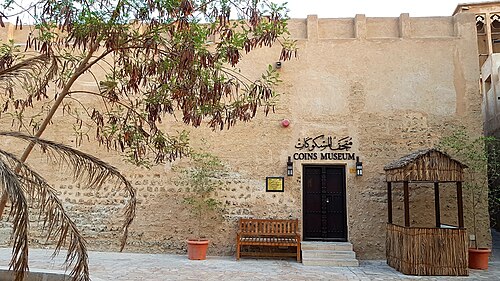
Coins Museum
Dubai Coins Museum is a specialised numismatic museum focused on the history of currency. Its displays connect coins with trade, political authority, economic life and cultural exchange.
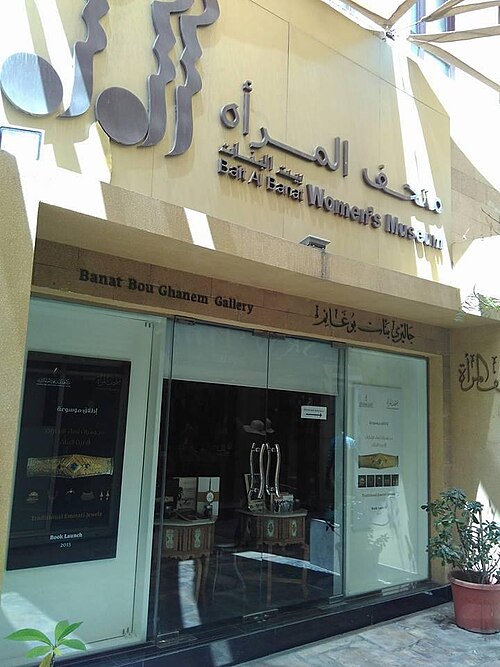
Women's museum
The Women's Museum in Dubai is a cultural institution dedicated to documenting and celebrating the contributions of women to the United Arab Emirates. Located in the historic Al Fahidi district, it occupies a renovated traditional house.
Dubai Municipality Museum is a cultural institution operated by Dubai Municipality, the government body responsible for city services and urban planning.
Dubai Crocodile Museum is a specialist attraction devoted to crocodiles and wildlife education. The museum offers a focused alternative to Dubai’s better-known skyscrapers, shopping centres and entertainment complexes.
دبي دولفيناريوم
Dubai Dolphinarium is an indoor marine entertainment venue in Dubai, United Arab Emirates. Its central experience is a live performance featuring bottlenose dolphins and seals in a purpose-built arena.
متحف الغموض
The Museum of Illusions in Dubai is an attraction dedicated to optical illusions, visual tricks, and perceptual phenomena. It presents interactive exhibits that challenge visitors' understanding of reality through carefully constructed rooms, installations, and displays.
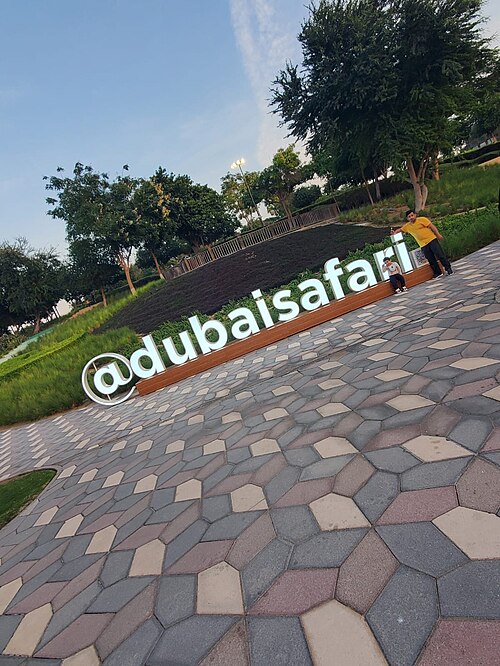
حديقة سفاري دبي
Dubai Safari Park is a wildlife attraction in Dubai, United Arab Emirates. The park serves as a zoological facility housing diverse animal species across themed zones.
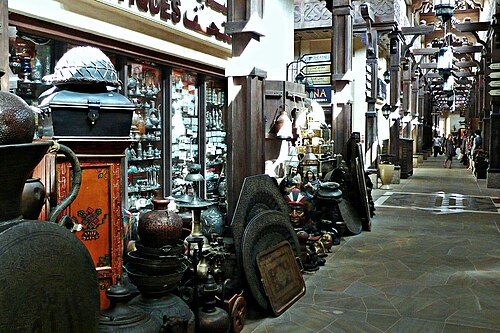
سوق مدينة جميرا
Souk Madinat Jumeirah is a purpose-built covered marketplace inside the Madinat Jumeirah resort, in the Jumeirah district a short way south of the Burj Al Arab.
Love Lake is a man-made lake attraction in Dubai’s Al Qudra desert area. Its signature design consists of two interlocking hearts, a shape best understood from above and a memorable subject even from ground level.
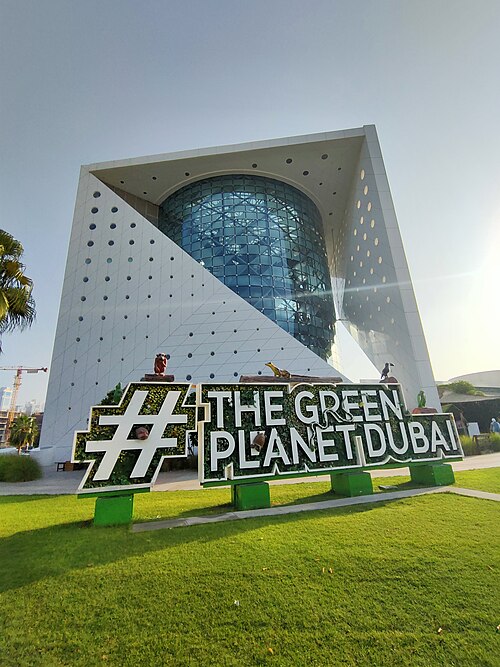
The Green Planet is an indoor tropical rainforest biodome in City Walk, Dubai. Its cylindrical glass structure encloses a multi-level environment built around a large artificial tree.
District boundaries come from OSM administrative relations, so a district page holds exactly the places inside it — plus, for the islands and the coast, the nearest district by proximity.
Dubai Creek divides the older quarters of Deira and Bur Dubai, where souks, abra crossings and the Al Fahidi district sit close together. Downtown Dubai and Business Bay form a separate cluster around Burj Khalifa and Dubai Mall. Farther southwest, the coast becomes the main organising line: Jumeirah, Madinat Jumeirah, Palm Jumeirah and Dubai Marina are successive districts, not one walkable resort zone. Desert attractions and Hatta require separate trips and should not be combined with a dense central sightseeing day.
Checked 2026-08-26
Use the Dubai Metro for the airport, old-city connections and the Sheikh Zayed Road corridor, then switch to tram, bus or taxi for districts beyond easy walking distance. The Red and Green lines connect the main urban spine and the creek-side districts, while the Dubai Tram serves Marina and links with the Palm monorail area. Stations can still be a long outdoor walk from a destination, especially in hot weather, so route planning should include the final kilometre rather than treating every metro label as doorstep access.
Checked 2026-08-26
Three to four days cover the main visitor corridors without crossing the city repeatedly. Use one day for the creek and old Dubai, one for Downtown, and one for the Jumeirah-Marina coast. Add a fourth only for a separate desert or Hatta trip.
November through March is the practical outdoor season. Summer heat makes long walks and exposed transfers difficult, so a warm-season itinerary needs shorter outdoor blocks and more time for air-conditioned transport and indoor attractions.
The metro is the best backbone for the airport, creek-side interchange points, Downtown and Sheikh Zayed Road. It does not place every attraction within a short walk, so tram, bus or taxi connections remain part of most days.
Keep Deira, Bur Dubai and Al Fahidi together; combine Burj Khalifa and Dubai Mall in a Downtown day; and treat Palm Jumeirah, Madinat Jumeirah and Dubai Marina as the coastal corridor. This avoids long backtracking.
The creek-side sights are the most walkable cluster, especially Al Fahidi, the souks and the abra crossings. The wider city is not compact, and distances between named districts are often too large for sightseeing on foot.