
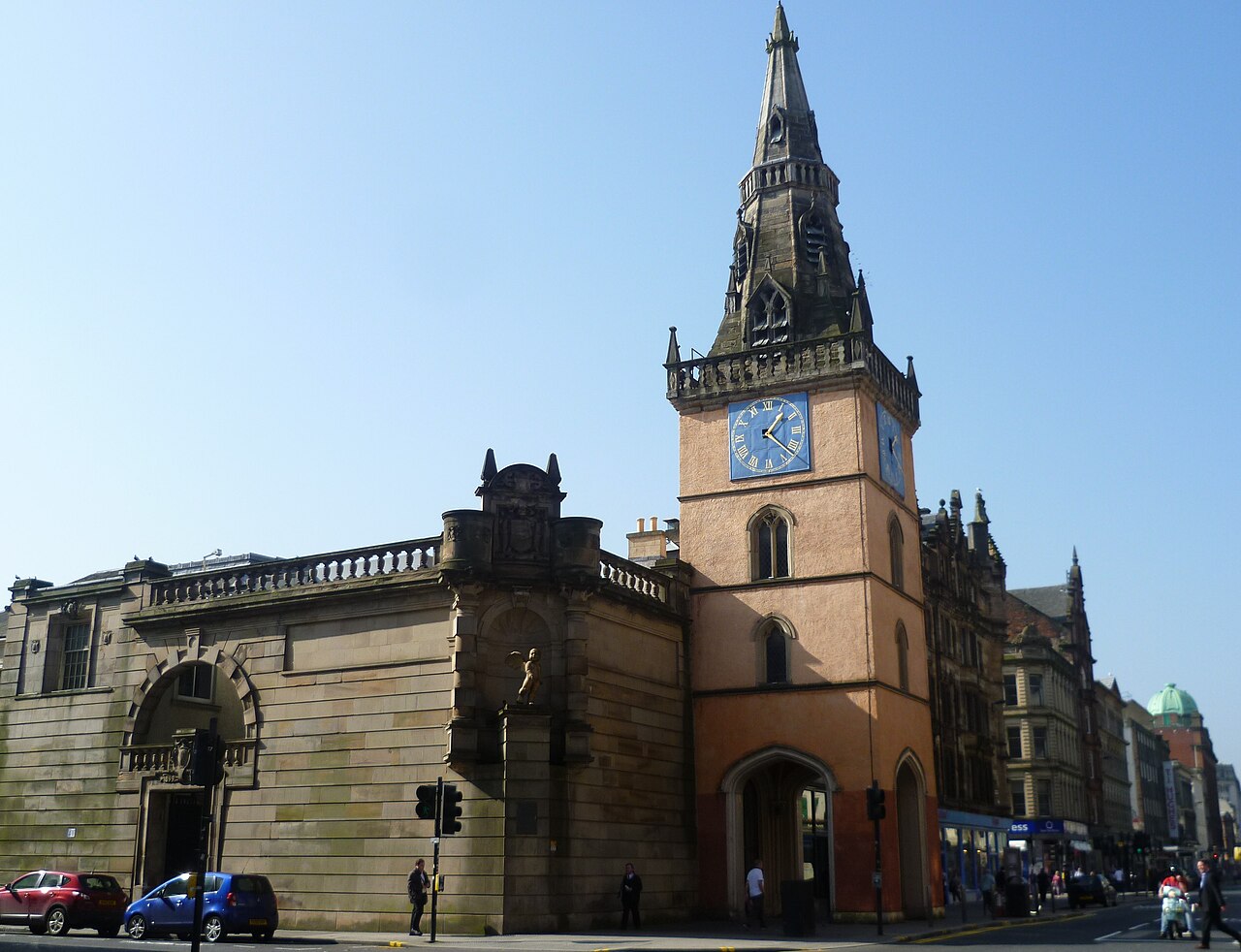
2 min walk
Tron Theatre
- Must see · Heritage site
- Art and culture venue
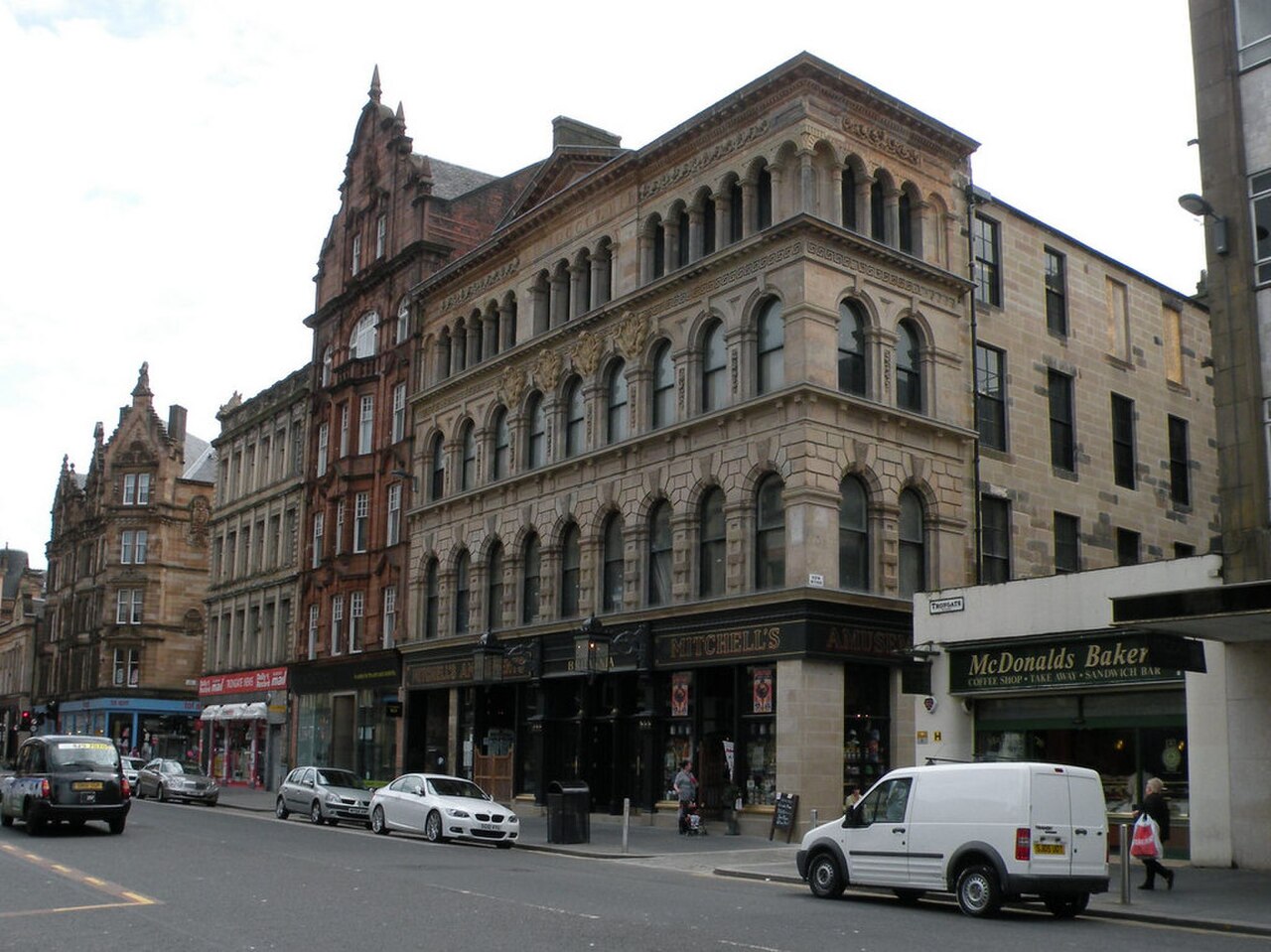
Art and culture venue · Glasgow
Britannia Panopticon
Closed today, Sunday. Next open Thursday at 12:00 — the planner will not place a stop here on a Sunday.
Plan around it| Monday | Closed |
|---|---|
| Tuesday | Closed |
| Wednesday | Closed |
| Thursday | 12:00 – 16:30 |
| Friday | 12:00 – 16:30 |
| Saturday | 12:00 – 16:30 |
| Sunday | Closed |
Parsed from OpenStreetMap opening hours on 2026-09-09.
Britannia Music Hall, locally known as Britannia Panopticon, stands as a historic entertainment venue in Glasgow. Dating to the 1850s, it claims distinction as one of Britain's oldest surviving music halls. The building operated for decades as a venue for variety performances, attracting working-class audiences seeking affordable amusement. After periods of decline and alternative use, preservation efforts have sought to restore recognition of its cultural significance. The site represents an important strand of Glasgow's popular entertainment heritage, connecting to broader traditions of British music hall and working-class leisure history that shaped urban Victorian and Edwardian culture.
Checked 2026-08-26
The interior retains characteristic features of nineteenth-century music hall architecture, including the original stage and auditorium arrangement. Visitors encounter the atmospheric space where performers once entertained Glasgow audiences, with structural elements reflecting its original function as a venue for variety acts, from singers and comedians to speciality turns. The building's physical fabric preserves evidence of its layered history, including modifications made during subsequent periods of use. Interpretive displays and preservation work have aimed to make the site's historical significance accessible, though the constrained urban site presents ongoing challenges for full public presentation and visitor facilities.
Checked 2026-08-26
A visit to Britannia Panopticon typically requires between forty-five minutes and one and a half hours, depending on individual interest in historical detail and any scheduled activities. The compact nature of the building means that the physical space can be experienced relatively quickly, though enthusiasts of music hall history or Victorian social history may wish to spend additional time examining architectural features and contextual information. Special events, performances, or guided tours, when offered, would extend the duration accordingly. Visitors should verify current access arrangements in advance, as operational patterns may vary.
Checked 2026-08-26
The venue does not operate as a conventional daily attraction with standard opening schedules. Access is typically tied to specific events, pre-arranged tours, or heritage open days rather than continuous public admission. Prospective visitors must consult current official communications or contact operators directly to establish available visiting opportunities. Seasonal programming, including potential Christmas or summer events, may create concentrated periods of accessibility. The unpredictable Scottish weather suggests indoor venues offer particular appeal during Glasgow's frequent rainy periods, though this practical consideration does not override the need to confirm actual operational status beforehand. Check the operator's own site for the travel date before relying on a schedule or fare.
Checked 2026-08-26
Admission structures appear to vary considerably based on the nature of access: heritage open days may offer free entry, while ticketed performances, special events, or private tours would involve charged admission at rates set for specific occasions. No standard adult, concession, or family pricing framework is consistently applicable across all visiting modes. Visitors seeking to understand costs must identify their preferred access method and consult current official sources. Donation-based support mechanisms may supplement formal ticketing for certain activities, reflecting the volunteer-dependent and preservation-focused character of the organisation managing this historic site. Check the operator's own site for the travel date before relying on a schedule or fare.
Checked 2026-08-26
Britannia Panopticon occupies a location in Glasgow's city centre, specifically on Trongate in the historic Merchant City area. The site benefits from proximity to multiple public transport options characteristic of central Glasgow. Argyle Street and St Enoch subway stations on the Glasgow Subway system provide nearby access, with the circular route serving key city destinations. Numerous bus routes traverse surrounding streets. Glasgow Central and Glasgow Queen Street railway stations are within reasonable walking distance for those arriving by mainline train. On-foot exploration of the compact city centre represents a viable approach for visitors already situated nearby, with street signage and urban grain assisting navigation.
Checked 2026-08-26
The building's age and constrained site present accessibility limitations that visitors with mobility requirements should investigate in advance. Stepped access and historic fabric may complicate navigation for wheelchair users or those with significant walking difficulties. The venue's non-standard operating pattern demands proactive confirmation of actual opening rather than assumption of walk-up availability. Surrounding Trongate area experiences typical urban centre characteristics including variable foot traffic and occasional anti-social behaviour. Interior conditions reflect historic building status rather than modern comfort standards, with potential for cold temperatures and limited facilities. Visitors should dress appropriately and maintain realistic expectations regarding amenities comparable to purpose-built contemporary attractions.
Checked 2026-08-26
Photography policies are Not recorded pending review. Historic venues of this character typically permit non-flash photography for personal use while restricting commercial or professional imaging without prior arrangement. The atmospheric interior, with its surviving nineteenth-century architectural elements and evocative stage space, offers distinctive photographic subjects for those interested in heritage documentation or atmospheric urban imagery. Lighting conditions likely favour cameras with manual control or good low-light performance. Visitors should respect any posted guidance, recognise that performance events may impose additional restrictions, and remain considerate of other attendees where group access occurs. Drone use would be inappropriate given the enclosed urban setting.
Checked 2026-08-26
No. The venue does not operate as a conventional daily attraction. Access is typically tied to specific events, pre-arranged tours, or heritage open days rather than continuous public admission.
Dating to the 1850s, it is considered one of Britain's oldest surviving music halls, representing an important strand of Glasgow's popular entertainment heritage and broader British working-class leisure history.
Admission structures vary based on access method, with some events potentially free and others ticketed at occasion-specific rates. Check the operator's own site for the travel date before relying on a schedule or fare.
The historic building presents likely accessibility limitations including stepped access. Visitors with mobility requirements should investigate specific conditions directly with operators before visiting.
Photography policies are Not recorded pending review. Visitors should follow any posted guidance and expect that performance events may impose additional restrictions beyond any general policy.
The Trongate location offers proximity to Argyle Street and St Enoch subway stations, numerous bus routes, and walking distance from Glasgow Central and Queen Street railway stations.
Loading the interactive map…
The interactive map could not be loaded.
Last updated:
Source: OpenStreetMap contributors, Wikidata ·