
3 min walk
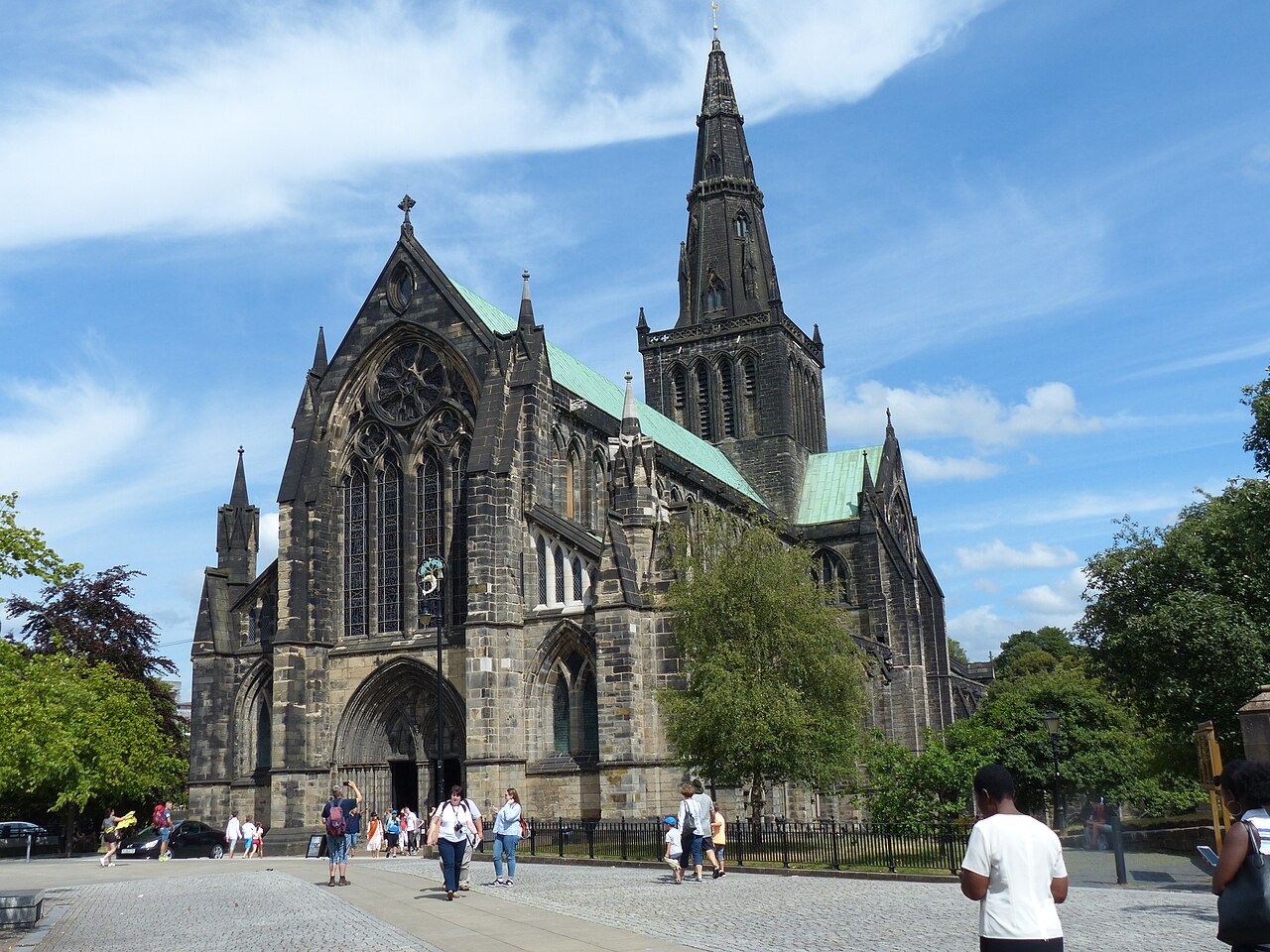
Glasgow Cathedral
- Must see · Heritage site
- Place of worship
Language · 11 published
Place of worship · Glasgow
Reviewed by Elena Voss · Roavina Travel Editor
| Monday | 07:00 – 16:30 |
|---|---|
| Tuesday | 07:00 – 16:30 |
| Wednesday | 07:00 – 16:30 |
| Thursday | 07:00 – 16:30 |
| Friday | 07:00 – 16:30 |
| Saturday | 07:00 – 16:30 |
| Sunday | 07:00 – 16:30 |
Checked 2026-08-31 · Source
Read from the OpenStreetMap access tags; anything not listed has no tag recorded.
Set the group type to family in the planner and the day window contracts to about three quarters of a solo day.
It was established in 1832. It carries the category A listed building heritage designation.
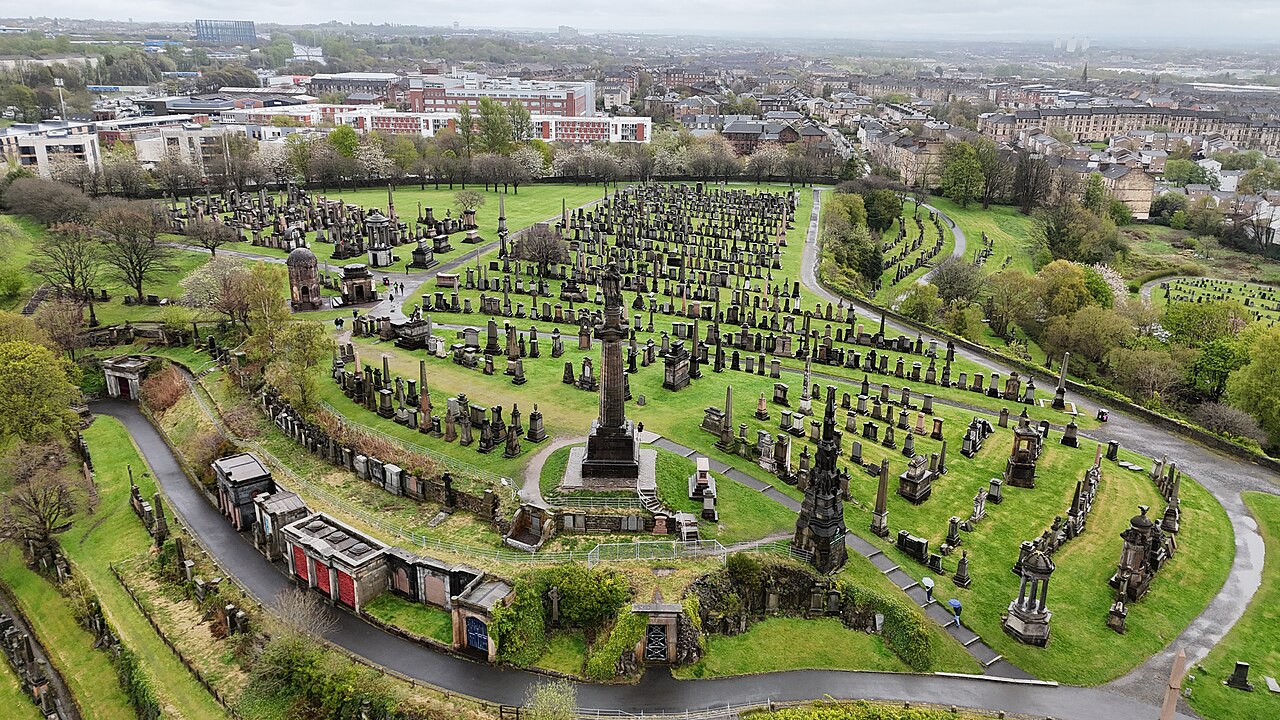
The Glasgow Necropolis is a Victorian cemetery of 37 acres, roughly 15 hectares, on the hill immediately east of Glasgow Cathedral, and it works as a piece of designed landscape rather than as a churchyard. The Merchants' House bought the ground in 1650 as part of the estate of Wester Craigs. The foundation stone of the John Knox monument was laid there in 1825, before any burials. Daily 07:00–16:30. Free general admission. Visit Glasgow identifies the attractions in the Cathedral Precinct, including Glasgow Necropolis, as free to enter. The Friends’ general guided tours are also free, with optional donations.
Checked 2026-08-31 · Source
About 50,000 burials have taken place here and most of the roughly 3,500 tombs were built up to fourteen feet deep, walled in stone with brick partitions; on the crown of the hill they were blasted out of the rockface. The ground was interdenominational from the start, which was unusual for 1832: the first burial was Joseph Levi, a Jewish jeweller, and the first Christian burial, in 1833, was Elizabeth Miles, stepmother of the Superintendent George Mylne. T.
Checked 2026-08-31 · Source
Allow two hours. That is the length the Friends of Glasgow Necropolis give for their general walking tours, and it is a fair figure for an unguided visit too, because the constraint is the hill rather than the number of things to read. Ninety minutes is enough for the ridge, the Monteath Mausoleum and the views back over the Cathedral. Anyone reading inscriptions, photographing monuments or looking for a particular grave should plan on three hours and check the closing time first.
Checked 2026-08-31 · Source
The gate closes at 4.30pm every day of the year, and that single fact should shape the visit. Late morning to early afternoon is the reliable window in any season. Weekdays are quieter than weekends. Guided tour dates cluster around September, when the Doors Open Festival fills the programme. Daily 07:00–16:30. Most paths are wide and smooth, but some areas have cobblestones. The cemetery occupies a steep hill. Visit Glasgow reports that a powered-wheelchair user found it manageable, while manual-wheelchair users may find it challenging.
Checked 2026-08-31 · Source
No admission price is published for the Glasgow Necropolis. The one price the site does publish is for the guided tours, and it is nothing: the Friends state that their general walking tours are undertaken for free, run by volunteer guides, with donations gratefully received and put towards conservation and restoration work in the cemetery. Free general admission. Visit Glasgow identifies the attractions in the Cathedral Precinct, including Glasgow Necropolis, as free to enter. The Friends’ general guided tours are also free, with optional donations. Most paths are wide and smooth, but some areas have cobblestones.
Checked 2026-08-31 · Source
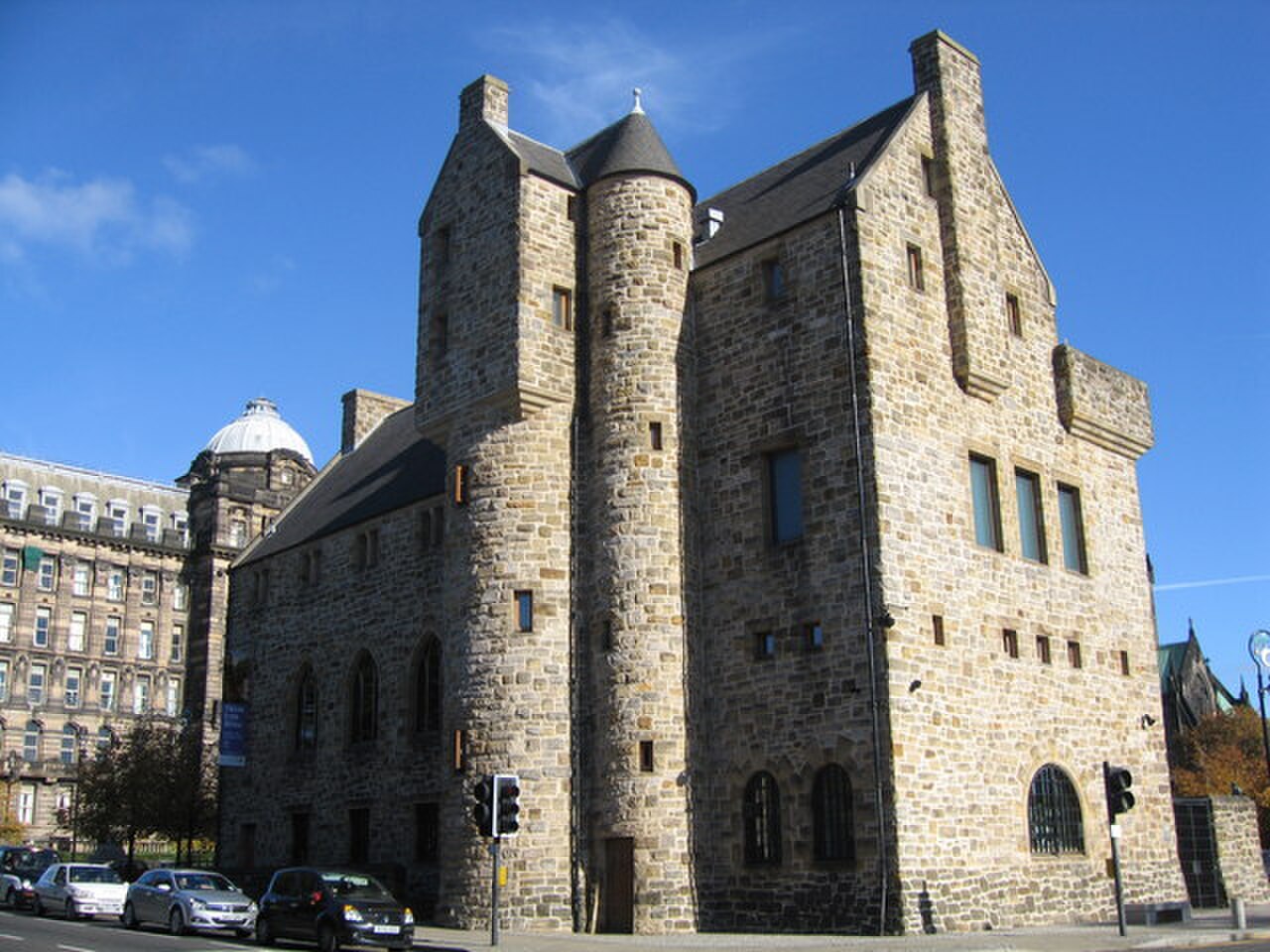
The postcode is G4 0UZ and the Necropolis sits on the eastern edge of Glasgow city centre, directly behind Glasgow Cathedral and next to St Mungo's Museum of Religious Life and Art. No car is needed. The route is signposted for the Cathedral throughout. The main approach is through the Cathedral Precinct beside Glasgow Cathedral and St Mungo’s Museum. High Street railway station is about a 5-minute walk away; Glasgow Queen Street is about 15 minutes away. Buchanan Street is the nearest subway station. First Bus, Stagecoach and Midland Bluebird services stop nearby. Drivers can leave the M8 at junction 15, follow signs for Glasgow Cathedral and use nearby pay-and-display parking.
Checked 2026-08-31 · Source
The 4.30pm closing is the thing that catches people out. The Necropolis opens at 7am and shuts at 4.30pm daily, which is early for an outdoor site and much earlier than the summer evenings suggest, so a visit begun after three o'clock is a short one. The second thing is the ground. The monuments themselves are not all stable. Most paths are wide and smooth, but some areas have cobblestones. The Friends state that the topography restricts wheelchair access to the eastern portion; steep gradients prevent a step-free through-route across the western portion.
Checked 2026-08-31 · Source
The picture almost everyone comes for is the one looking back west from the hill: the tiered monuments in the foreground, the Cathedral below and the city behind it. That view faces into the afternoon sun, so it works best in the middle of the day in winter and in the morning in summer, when the light is behind the camera rather than in it. The opening hours remove the option most photographers would want. The other subjects reward a closer lens. The cemetery covers 37 acres (15 hectares). About 50,000 burials have taken place there, and the site has approximately 3,500 tombs.
Checked 2026-08-31 · Source
The cemetery covers 37 acres (15 hectares).
About 50,000 burials have taken place there, and the site has approximately 3,500 tombs.
The Merchants’ House transferred the Necropolis to Glasgow City Council in 1966; the council now administers and maintains it.
The first burial was Joseph Levi, a Jewish jeweller, in 1832. The first Christian burial was Elizabeth Miles in 1833.
The Friends of Glasgow Necropolis offer general walking tours lasting about two hours. Advance booking is essential; tours are free, with optional donations supporting conservation and restoration.
The monuments include work by Alexander ‘Greek’ Thomson, Charles Rennie Mackintosh and John Thomas Rochead.
Loading the interactive map…
The interactive map could not be loaded.

Last updated:
Source: OpenStreetMap contributors, Wikidata ·