
4 min walk
SEC Armadillo
- Notable
- Art and culture venue
Language · 11 published
Historic monument · Glasgow
Reviewed by Elena Voss · Roavina Travel Editor
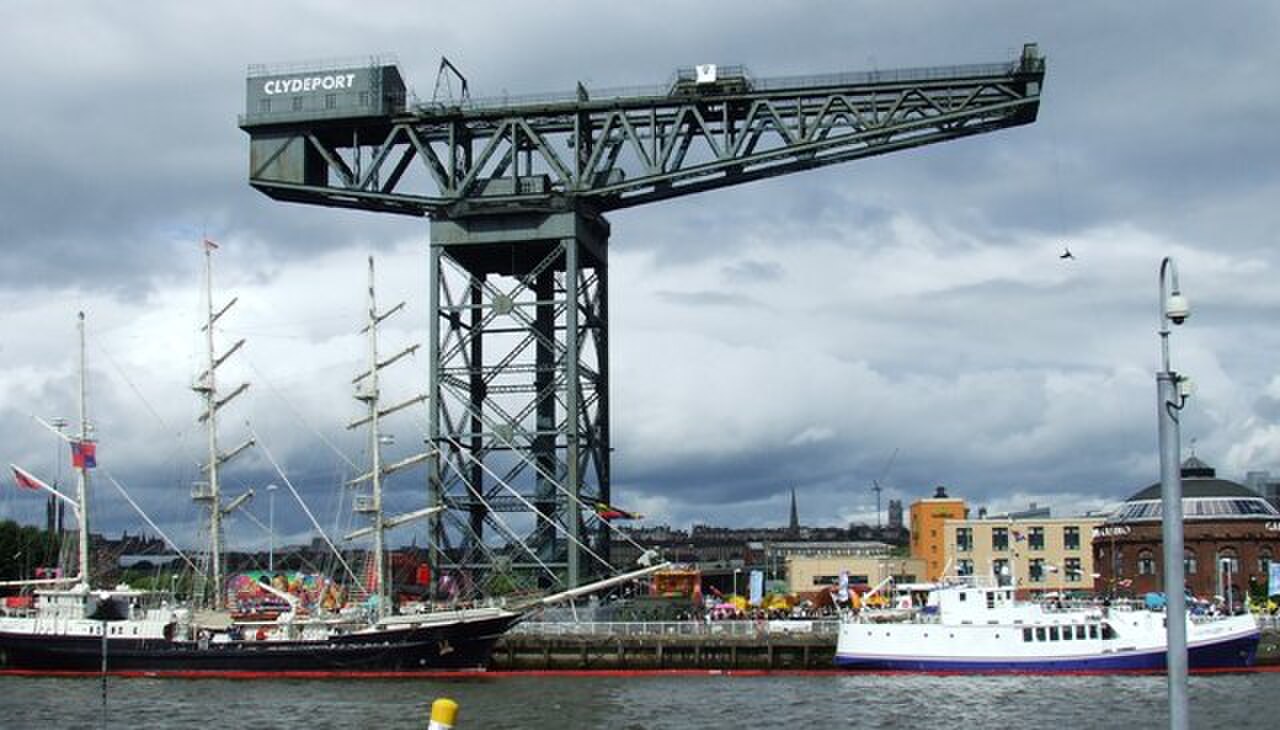
This place is a Attraction. It is built of steel. It carries the category A listed building heritage designation.
The Finnieston Crane is a disused giant cantilever crane standing on the north bank of the River Clyde in Glasgow, Scotland. It is one of four remaining cranes on the Clyde, a remnant of the once-dominant shipbuilding industry that defined this waterfront. Erected in the 1930s, it served the Fairfield Shipbuilding and Engineering Company. Today it stands as a preserved landmark and symbol of Glasgow's industrial heritage, though it no longer operates. The crane is not open for public climbing or internal visits. It remains visible from surrounding streets and paths.
Checked 2026-08-26
There is no interior accessible to visitors. The Finnieston Crane is a fixed external structure with no public entrance, exhibition spaces, facilities, or visitor amenities. Its significance lies entirely in its external form and historical context as viewed from outside. The crane's machinery, cabin, and jib are not available for inspection. Visitors should expect only to observe and photograph the structure from publicly accessible surrounding areas. Nearby developments include restaurants and bars in the Finnieston district, but these are separate commercial premises unconnected to the crane itself.
Checked 2026-08-26
A visit to view the Finnieston Crane requires minimal time, typically fifteen to thirty minutes for observation and photography from surrounding streets. It is not a destination that demands extended engagement. Many visitors incorporate it into a broader walk along the Clyde waterfront or combine it with exploring the Finnieston area's dining and drinking venues. There are no queues, entry procedures, or timed experiences. The crane suits brief stops rather than dedicated half-day or full-day excursions. Plan accordingly as part of a wider Glasgow itinerary rather than as a standalone prolonged visit.
Checked 2026-08-26
The Finnieston Crane can be viewed externally at any time as it stands in open space. There are no opening hours, seasonal closures, or access restrictions to the surrounding area. Daylight hours offer best visibility for photography and appreciation of structural details. Evening viewing may include illumination from surrounding street lighting and nearby developments. Weather conditions affect comfort rather than access. Glasgow's climate is typically variable; visitors should prepare for rain and wind regardless of season. No special events or timed programming at the crane itself are documented. Check the operator's own site for the travel date before relying on a schedule or fare.
Checked 2026-08-26
No tickets are required to view the Finnieston Crane from public areas. There is no admission charge, booking system, or capacity control. The crane is not operated as a visitor attraction with entry fees. No guided tours, premium experiences, or merchandise sales are associated with the structure itself. Visitors should be aware that nearby businesses operate independently and any expenditure would be at those separate establishments. The crane represents free public heritage observation, consistent with many industrial monuments repurposed as urban landmarks without commercial visitor infrastructure. Check the operator's own site for the travel date before relying on a schedule or fare.
Checked 2026-08-26
The Finnieston Crane stands near the junction of Finnieston Street and Argyle Street, west of Glasgow city centre. It is walkable from central Glasgow in approximately twenty to thirty minutes. Local bus services operate along Argyle Street and surrounding roads. The nearest railway station is Exhibition Centre, formerly Finnieston, on the Argyle Line. Subway access is available at Kelvinhall or St Enoch with onward walking. The area is served by taxi and ride-hail services. Cycling is feasible via Clyde-side paths. Visitors should consult current public transport timetables independently as routes and frequencies change. No dedicated parking at the crane itself is documented.
Checked 2026-08-26
The Finnieston Crane is located amid active traffic and developing urban areas. Visitors should exercise standard caution near roads, particularly along busy Argyle Street. The surrounding area has transformed significantly with new construction and nightlife venues; the industrial character is diminished. Do not attempt to climb or enter the crane; it is not maintained for public access and would present serious hazards. Weather can change rapidly. The Clyde waterfront paths may be slippery. There are no staff, security, or visitor services attached to the crane. Personal belongings should be secured as in any urban environment. Night-time visibility of the structure itself is limited without dedicated illumination.
Checked 2026-08-26
The Finnieston Crane offers strong photographic subjects for industrial heritage and urban landscape enthusiasts. Best angles are typically from the south side across the river, capturing reflection possibilities, or from surrounding streets emphasizing scale against newer buildings. Wide-angle lenses accommodate the structure's height. The crane's red paint provides colour contrast against sky and water. Early morning and late afternoon light may enhance texture. Tripod use in public spaces should respect pedestrian flow. Drone operation requires compliance with UK aviation regulations and local restrictions; no designated drone zones are recorded. Interior or elevated shots are impossible without unauthorised access. Combine with Clyde Arc bridge views for contextual Glasgow imagery.
Checked 2026-08-26
No. The Finnieston Crane is not open for public climbing or internal access. It is a preserved external structure only.
No. The crane can be viewed free of charge from surrounding public areas. There is no admission system.
The crane can be viewed externally at any time. Check the operator's own site for the travel date before relying on a schedule or fare.
The nearest railway station is Exhibition Centre. Buses serve Argyle Street. Walking from Glasgow city centre takes approximately twenty to thirty minutes.
No. The crane is disused and preserved as a heritage landmark. Shipbuilding on this scale no longer occurs at this location.
No guided tours of the crane itself are recorded. It is an unsupervised external monument without visitor infrastructure.
Loading the interactive map…
The interactive map could not be loaded.
Last updated:
Source: OpenStreetMap contributors, Wikidata ·