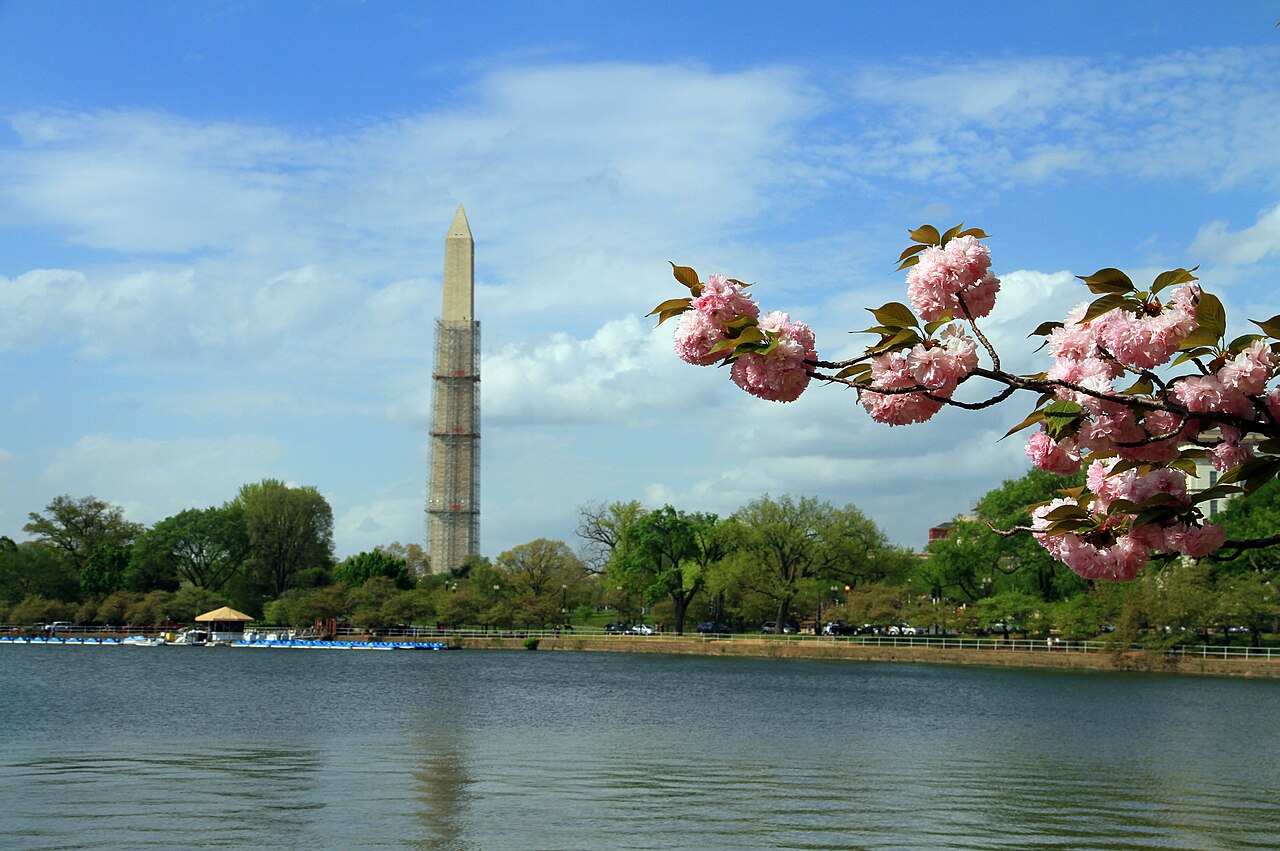
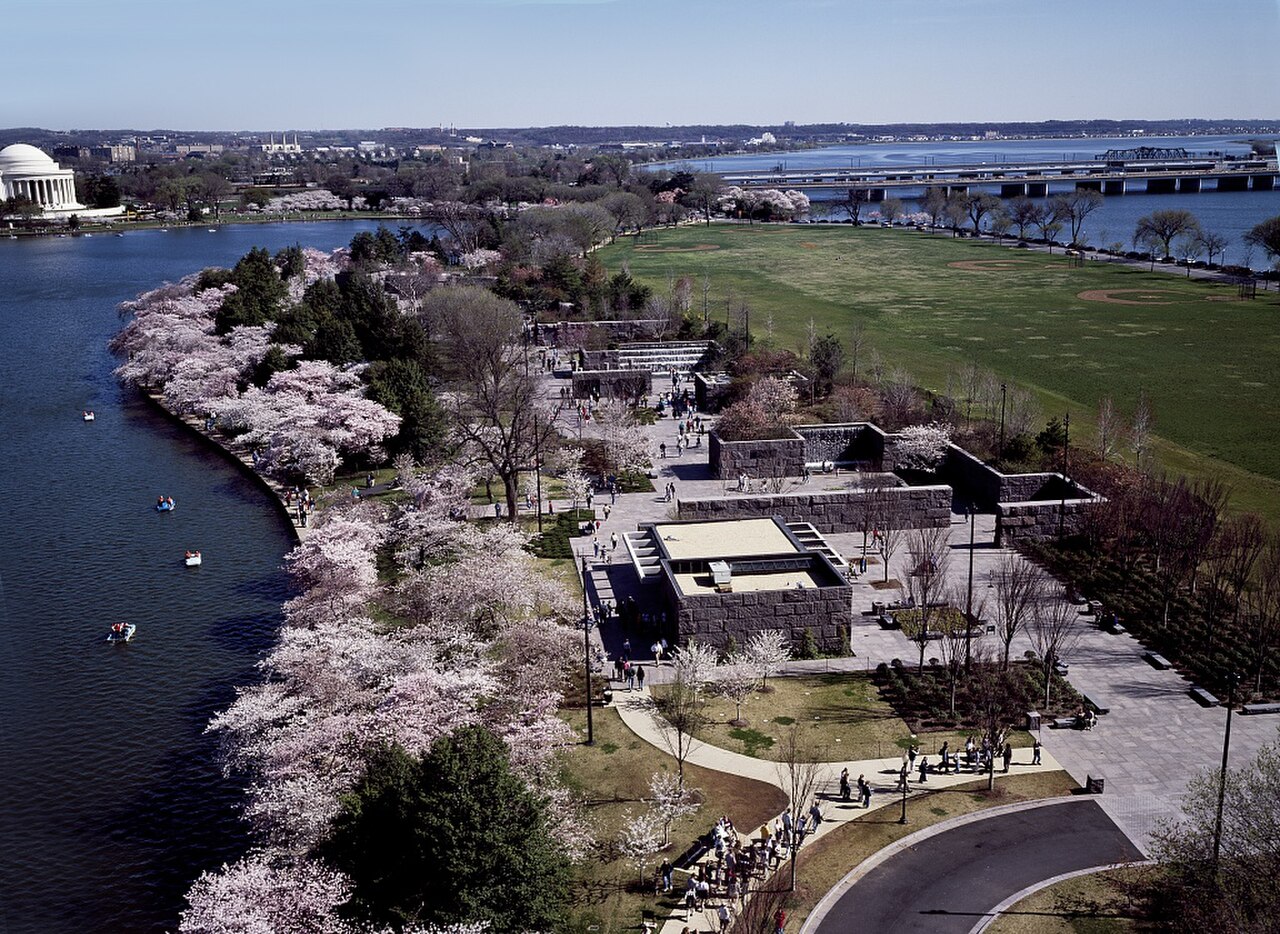
The Tidal Basin is a man-made reservoir in Washington, D.C., created in the early twentieth century as part of the Potomac River reclamation project. It functions as a tidal reservoir, with water levels rising and falling with the Potomac River tides. The basin covers approximately 107 acres and forms a distinctive landscape element on the National Mall's southwestern edge. Its engineered shoreline creates a defined perimeter that has become one of the most visited and photographed locations in the United States capital.
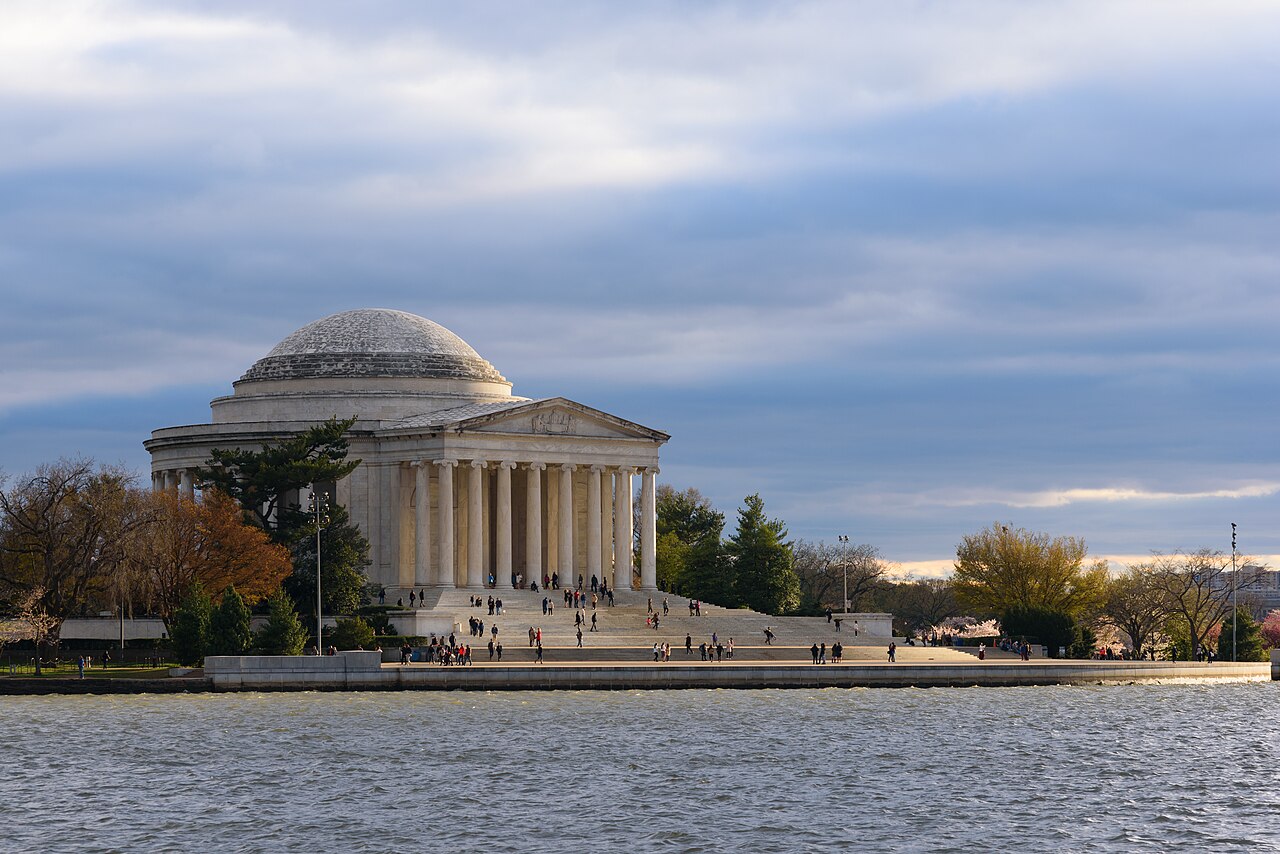
The Tidal Basin is encircled by major memorials that constitute significant components of the National Mall complex. These include the Jefferson Memorial, the Martin Luther King Jr. Memorial, the Franklin Delano Roosevelt Memorial, and the George Mason Memorial. The basin's perimeter also features approximately 3,800 cherry trees, gifts from Japan in 1912, which define the landscape character. Pedestrian pathways follow the shoreline, connecting these memorials and providing visitor circulation around the water's edge throughout the year. Tidal Basin also earns time in a washington dc itinerary because WIKIDATA_EDITORIAL reconciliation for the ranked entry; identity and coordinates were verified without a nearby fallback. Its value becomes clearer when the stop is compared with the surrounding streets and the other ranked places nearby.
A complete circumnavigation of the Tidal Basin on foot requires approximately 1.5 to 2 hours at a moderate pace without extended stops. Visitors typically allocate half a day when incorporating memorial visits and photography. During cherry blossom peak bloom, congestion significantly extends transit times around the basin. The memorial interiors add additional duration depending on individual interest. Many visitors combine the Tidal Basin with adjacent National Mall attractions, making it one component of a full-day itinerary in this concentrated monument zone.
The Tidal Basin operates as an outdoor public space accessible year-round. Cherry blossom season in late March through early April represents the highest visitation period, with crowds peaking during bloom. Summer brings heat and humidity typical of the Chesapeake region. Fall offers reduced crowds and autumn foliage. Winter provides the least congested experience. Visitors should consult official National Park Service communications for any access restrictions, construction impacts, or special event closures before planning their visit. Check the operator's own site for the travel date before relying on a schedule or fare.
The Tidal Basin and its surrounding memorials are publicly accessible without admission fees. No tickets are required for entry to the outdoor basin area or the memorial structures. The National Park Service administers these sites as components of the National Mall and Memorial Parks unit. Commercial tour operators may charge for guided services, but independent visitation incurs no direct cost. Visitors should verify current conditions through official channels, as special events or security circumstances may occasionally modify standard access protocols. Check the operator's own site for the travel date before relying on a schedule or fare.
The Tidal Basin is accessible via multiple transit modes. The Washington Metro system serves the area through the Smithsonian and L'Enfant Plaza stations, requiring subsequent walking. Metrobus routes operate on surrounding streets. Bicycle sharing stations and dedicated lanes support cycling access. Driving presents parking constraints; limited street parking and paid lots exist but fill rapidly during peak periods. The basin connects to the broader National Mall pedestrian network. Visitors should anticipate significant walking regardless of initial arrival method, as the memorial ring encircles the water body.
Visitor safety considerations include the absence of protective barriers along significant portions of the shoreline, creating fall risk into the water. Tidal action produces water level changes that affect shoreline accessibility. Crowd density during cherry blossom season creates pedestrian congestion and delayed emergency access. Summer heat exposure demands hydration and sun protection. The basin perimeter lacks comprehensive shade. After-dark visitation requires awareness of variable lighting conditions between memorials. Visitors should remain on designated paths, as shoreline vegetation areas may be unstable or subject to restoration activity.
The Tidal Basin offers established photographic subjects including memorial architecture reflected in water, cherry blossoms with memorial backdrops, and sunrise or sunset illumination. Morning light favors the Jefferson Memorial eastern exposure. The eastern shore provides western-facing sunset compositions. Peak bloom crowds complicate tripod placement and clean sightlines. The Franklin Delano Roosevelt Memorial contains water features and sculptures with distinct photographic character. Night photography is supported by memorial illumination, though lighting quality varies. Drone operation is prohibited throughout National Park Service-administered areas without specific authorization.
Checked 2026-08-26
Common questions
Is the Tidal Basin accessible for wheelchair users for Tidal Basin in Washington Dc?
Paved pathways encircle the basin, but some sections have inclines and surface irregularities. Memorial interiors generally provide accessible entry. Visitors with mobility considerations should consult current National Park Service accessibility resources.
Can visitors swim or boat in the Tidal Basin for Tidal Basin in Washington Dc?
Swimming is prohibited. Boating restrictions apply; the basin is not operated as a recreational watercraft area. Water access is limited to visual engagement from the perimeter.
Are restroom facilities available around the Tidal Basin for Tidal Basin in Washington Dc?
Restroom facilities are located at certain memorial sites and visitor contact points. Availability and maintenance schedules are subject to National Park Service operations.
Does the Tidal Basin ever drain or empty for Tidal Basin in Washington Dc?
The basin functions as a tidal reservoir with regular water level fluctuation. Complete draining occurs only for maintenance or infrastructure purposes on schedules determined by operational authorities.
Are food and beverage vendors present at the Tidal Basin for Tidal Basin in Washington Dc?
Permanent food service is not integrated into the basin landscape. Vendors may operate seasonally or during special events. Visitors typically carry provisions or utilize services in adjacent areas.
What happens to cherry blossoms after peak bloom for Tidal Basin in Washington Dc?
Blossom petals fall and natural decomposition occurs. The trees remain as landscape elements throughout the year. Subsequent seasons follow standard deciduous cycles.
Nothing non-essential is set before you choose, in regions where consent is required. If you decline, ads still appear and analytics is switched off entirely.