.jpg)
3 min walk
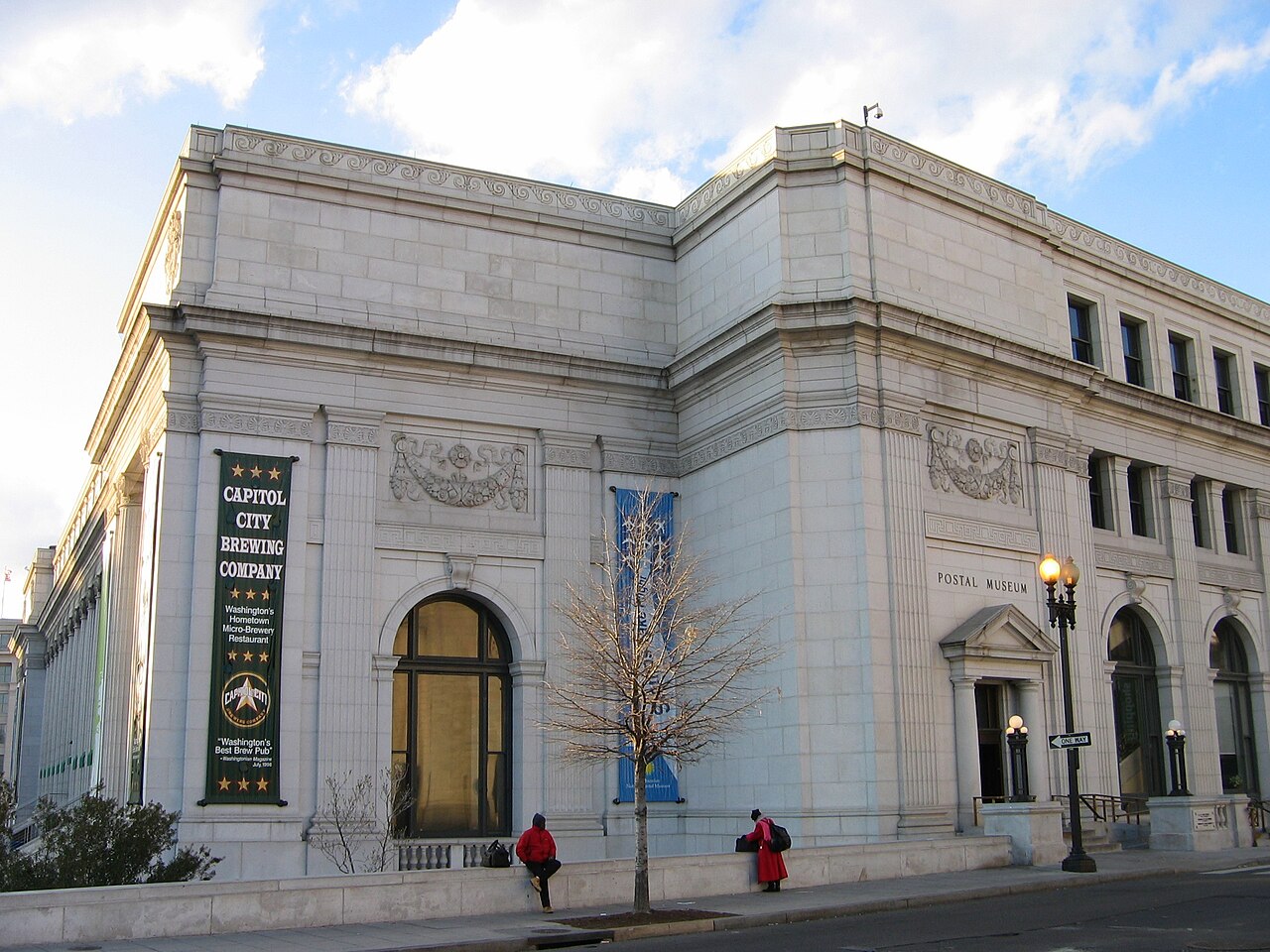
National Postal Museum
- Must see
- Museum
Language · 11 published
Historic monument · Washington
Reviewed by Elena Voss · Roavina Travel Editor
| Monday | 05:00 – 23:00 |
|---|---|
| Tuesday | 05:00 – 23:00 |
| Wednesday | 05:00 – 23:00 |
| Thursday | 05:00 – 23:00 |
| Friday | 05:00 – 23:00 |
| Saturday | 05:00 – 23:00 |
| Sunday | 05:00 – 23:00 |
Checked 2026-08-31 · Source
Read from the OpenStreetMap access tags; anything not listed has no tag recorded.
Set the group type to family in the planner and the day window contracts to about three quarters of a solo day.
This place is a Attraction. It opened in 1908. It was built in the classical architecture style. It was designed by Daniel Burnham. It carries the National Register of Historic Places listed place heritage designation. It is run by Jones Lang LaSalle.
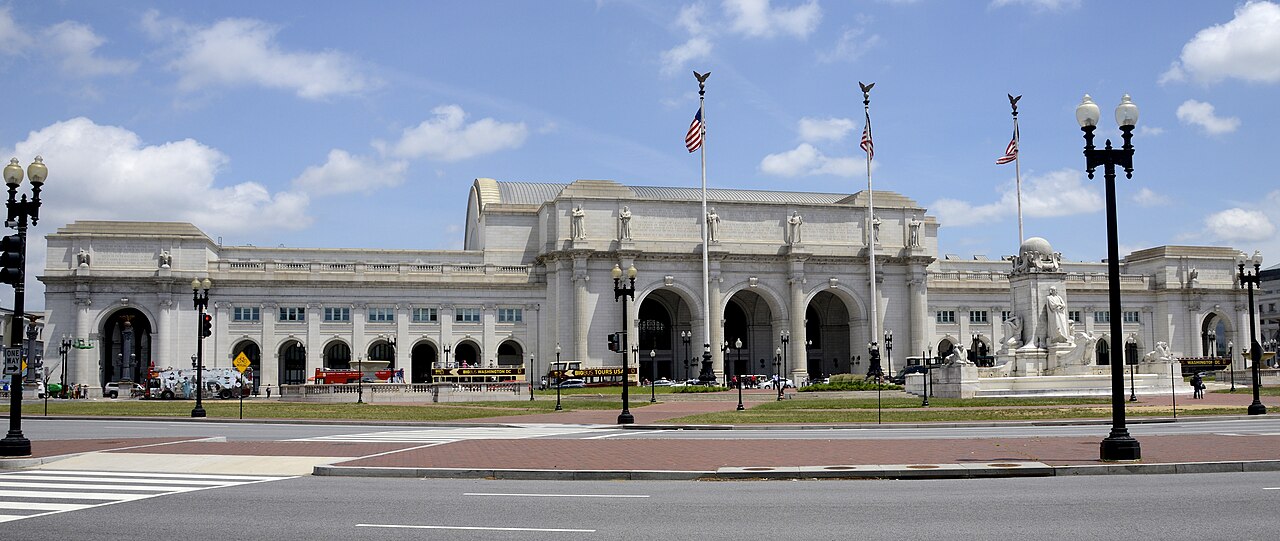
Washington Union Station is a working Beaux-Arts rail terminal and one of the capital’s most useful arrival points. Its grand architecture gives a routine journey a strong sense of place: high ceilings, classical details, and a monumental concourse welcome travelers before they continue into Washington. Amtrak, regional rail, and Washington Metro services meet here, so the station functions both as transport infrastructure and as a civic landmark. Treat it as a place to observe briefly, orient yourself, and connect with the city rather than as a museum detached from everyday travel.
Checked 2026-08-26 · Source
The main concourse is the station’s visual centre, with a high vaulted roof and classical Beaux-Arts decoration. Passenger facilities, ticketing areas, retail, and food services occupy the wider building, while the Washington Metro runs below the station. Amtrak provides intercity rail, and regional commuter services connect the capital with its metropolitan area. The building’s scale is easiest to appreciate from the central hall, but remember that passengers are moving toward platforms, counters, and exits. Look upward for the architecture, then step aside before stopping so the station continues to work for people catching trains.
Checked 2026-08-26 · Source
Allow around thirty minutes to two hours depending on whether you are transferring, meeting someone, eating, shopping, or simply viewing the architecture. A traveler with a tight connection should treat the station as a navigation task first and a sightseeing stop second. If you have a comfortable gap, spend a few minutes in the main hall to appreciate its scale and decorative details. Longer stays make sense when you combine the concourse with food or retail, but the station’s greatest visual reward arrives quickly once you reach the central interior.
Checked 2026-08-26 · Source
The station is active throughout the day, with the heaviest movement during morning and evening commuter periods and around busy intercity departures. Midday can be easier for architectural observation, although passenger flow never disappears because this remains a functioning transport hub. Build any visit around your train schedule and arrive with enough time to locate the correct service and platform. Holidays, major events, and construction can increase congestion. If you are sightseeing between journeys, protect your connection first and use the main concourse as the reliable centre of your short visit.
Checked 2026-08-26 · Source
Entering the station building does not require an admission ticket. Rail travel does: Amtrak and regional commuter services use their own fares, while Washington Metro travel is paid separately according to the journey. If you are visiting only to see the architecture, you can focus on the public concourse without buying a train ticket. When traveling, keep the correct rail or Metro fare ready and allow time for ticketing and platform directions. The distinction matters because Union Station is both a public landmark and a controlled point of departure for several transport systems.
Checked 2026-08-26 · Source
Washington Union Station is directly served by the Red Line through the Metro station beneath the building, and local buses stop on the surrounding streets. Rail travelers arrive at the station itself, while visitors can use the central location as a starting point for the Capitol and the National Mall. Walking onward is practical when you have enough time and comfortable conditions, but the route continues through central city streets rather than directly from one indoor attraction to another. By car, use the surrounding road network and allow for the cost and limited convenience of central-city parking.
Checked 2026-08-26 · Source
Crowds and complicated pedestrian flows are the main practical difficulties at Union Station. Commuters, intercity passengers, shoppers, and tourists share the same broad interior, especially near ticket counters, train information, and platform approaches. Keep valuables close and leave extra time when changing between rail systems or finding an unfamiliar exit. Construction and renovation can alter circulation. Watch overhead information, follow signs for your carrier or Metro, and avoid stopping in the middle of the concourse. A few minutes of orientation at the edge of the main hall can prevent a rushed search when your departure time is close.
Checked 2026-08-26 · Source
The main concourse offers strong photographs through its vaulted scale, classical details, and high windows that bring changing daylight into the hall. Work around the station’s function: keep equipment compact, stay clear of ticket lines and passenger routes, and avoid blocking views near entrances or information displays. A quiet midday period can make architectural details easier to frame, while a busy moment can show the building’s role as a living transport hub. Use only the areas open to you and follow any posted direction from station staff or security while taking personal photographs.
Checked 2026-08-26 · Source
Yes. The station building includes public retail, dining, and concourse areas, so you can visit the architecture without traveling by rail.
It serves Amtrak intercity trains, regional commuter rail, Washington Metro, buses, retail, and food services in one central transport complex.
Allow about thirty minutes to two hours, depending on whether you are transferring, eating, shopping, meeting someone, or viewing the architecture.
Yes. The station building has no admission fee, although rail and Metro journeys require their own fares.
Yes. Its central position makes walking to the Capitol and National Mall practical when you have enough time and comfortable walking conditions.
The Washington Metro Red Line serves Union Station through the station beneath the building.
Loading the interactive map…
The interactive map could not be loaded.

Last updated:
Source: OpenStreetMap contributors, Wikidata ·