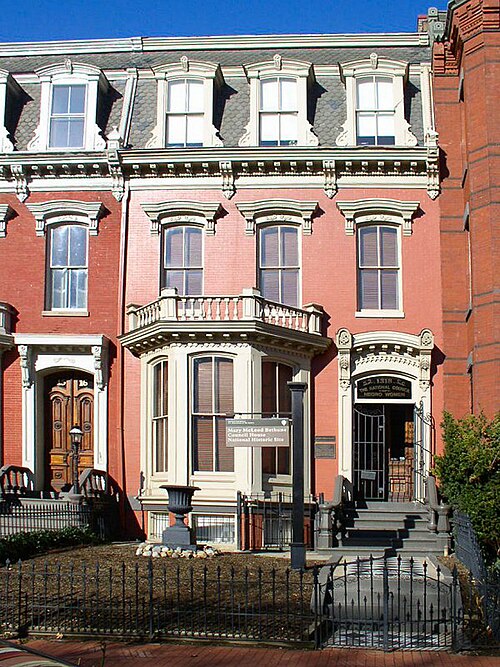
Mary McLeod Bethune Council House National Historic Site
The Mary McLeod Bethune Council House National Historic Site preserves the final residence of educator and civil rights leader Mary McLeod Bethune.
- High
- Historic monument
City guide · United States
Washington is organised around the National Mall, but the city is much more than its monumental core. The Mall links the Capitol, Smithsonian museums and wester...
Photograph · Carol M. Highsmith · Public domain
Set your days, your pace and the hours you actually want to be out. The planner works around closing days and travel time, and leaves room to eat.
Reviewed by Elena Voss · Roavina Travel Editor
Washington is organised around the National Mall, but the city is much more than its monumental core. The Mall links the Capitol, Smithsonian museums and western memorials; Downtown and Penn Quarter sit north, Capitol Hill and Navy Yard lie east and southeast, and Dupont Circle, Georgetown, Shaw and The Wharf form separate neighbourhood destinations. Plan the Mall on foot and use Metro for movement between neighbourhood clusters.
Checked 2026-08-26
September · September cools Washington to a 26.3°C mean high, though 99.6 mm of rain is normal.
Ranked by importance — sitelinks, pageviews and heritage status, not editor preference.
56 places match
Category
Typical visit duration
Interests
The Mary McLeod Bethune Council House National Historic Site preserves the final residence of educator and civil rights leader Mary McLeod Bethune.
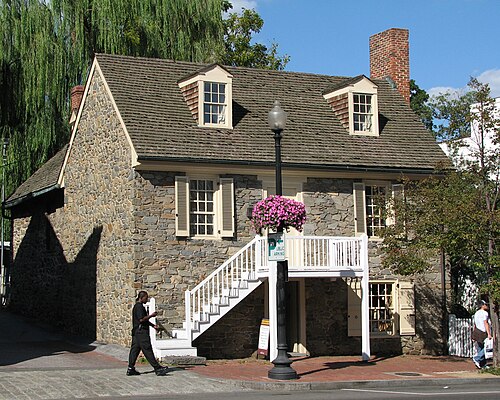
The Old Stone House is Georgetown's oldest unchanged building and a National Park Service historic house museum. Located in Washington, D.C.'s Georgetown neighborhood, this preserved structure represents pre-Revolutionary architecture in the capital.
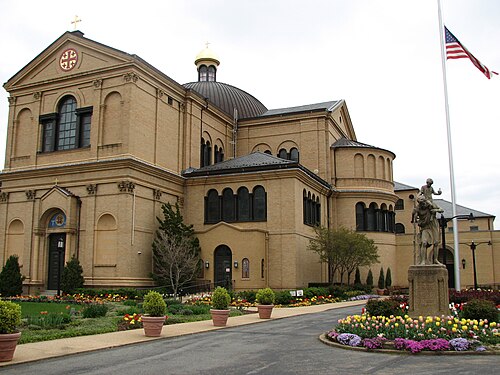
Franciscan Monastery and Memorial
Mount St. Sepulchre Franciscan Monastery, commonly called the Franciscan Monastery, is a Romanesque religious complex in Washington, D.C.
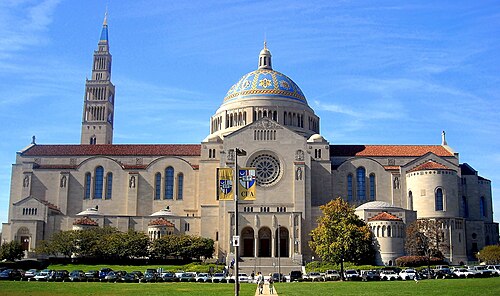
The Basilica of the National Shrine of the Immaculate Conception is a Roman Catholic basilica in Washington, D.C.
The Old Post Office Tower rises above Pennsylvania Avenue in downtown Washington, D.C. Its Romanesque Revival form belongs to the historic federal building that once served as the city's main post office.
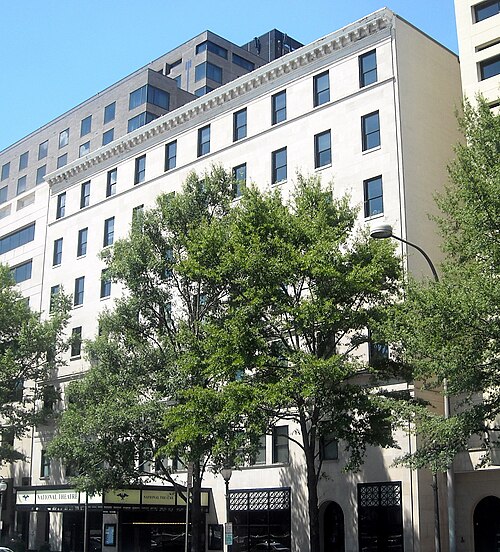
The National Theatre is a historic performing arts venue located in downtown Washington, D.C. Established in 1835, it is one of the oldest continuously operating theatres in the United States.
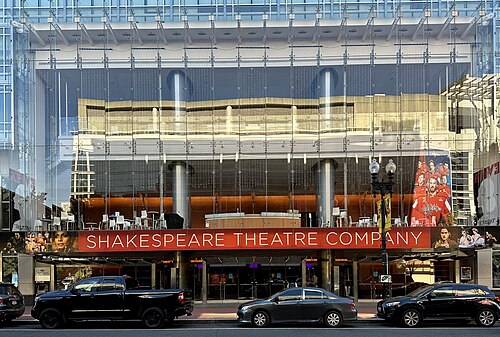
The Shakespeare Theatre Company is a prominent classical theatre company based in Washington, D.C. Founded in 1986, it has established itself as one of the leading American theatres dedicated to the works of William Shakespeare and other classical dramatists.
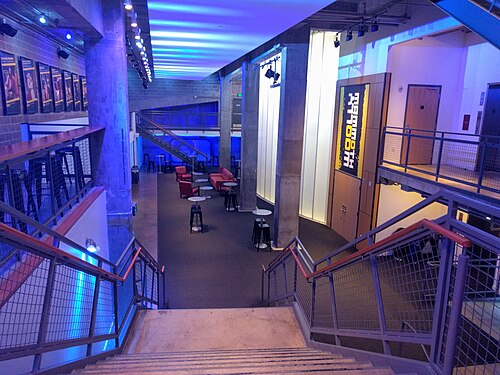
Woolly Mammoth Theatre Company is a prominent contemporary theatre company located in Washington, D.C.'s Penn Quarter neighborhood. Founded in 1980, it has established itself as an influential force in American theatre, dedicated to developing and producing new plays.
Studio Theater
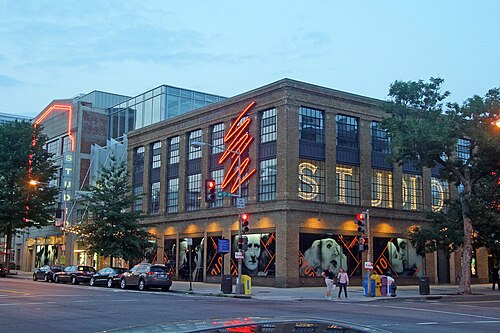
Studio Theatre is a contemporary theatre in Washington, D.C.'s Logan Circle neighbourhood. It is known for presenting modern dramatic works and has become an established part of the capital's cultural life.
The Anthem is a large modern concert venue located at The Wharf, a redeveloped waterfront district in Washington, D.C. It serves as a major performance space for live music and entertainment events.
The Yards Park
Yards Park is a public waterfront park situated in Washington DC's Capitol Riverfront neighborhood, within the broader Yards district.
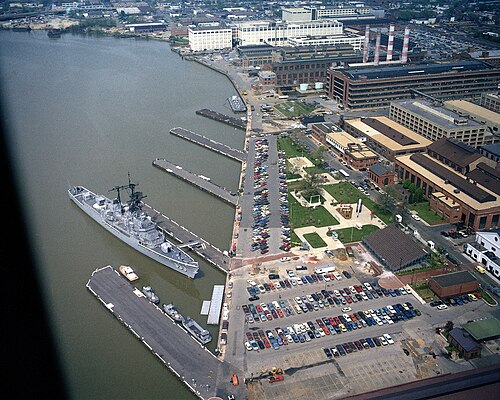
The Washington Navy Yard is the oldest shore establishment of the United States Navy, founded in 1799 along the Anacostia River. It functions as an administrative center and ceremonial headquarters rather than an active shipbuilding facility.
Anacostia Park is a large riverside park in Washington, D.C., situated along the Anacostia River. The park provides public access to the river and contains various recreation areas for visitors.
Kenilworth Park & Aquatic Gardens
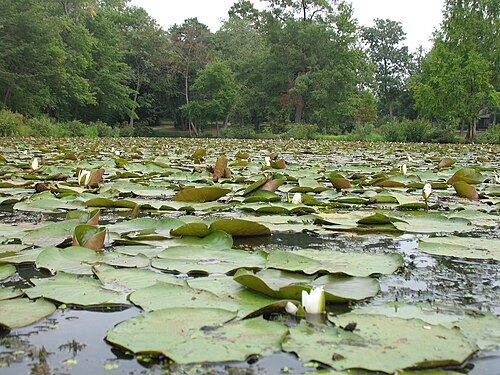
Kenilworth Park and Aquatic Gardens is a National Park Service site in Washington, D.C. It preserves marsh, pond, and aquatic garden habitats along the Anacostia River.
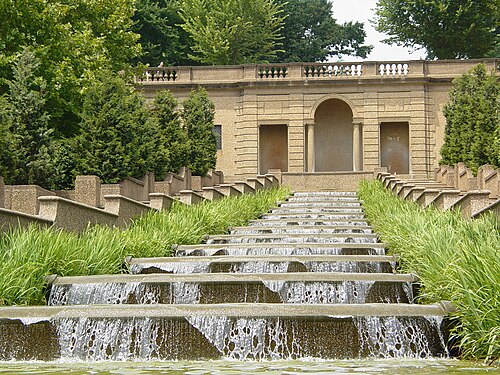
Meridian Hill Park, also called Malcolm X Park, is a formal terraced public park in Washington, D.C. Set on a hillside, it is known for landscape architecture, layered gardens, and a strong neighborhood identity.
Lincoln Park is a public green space on Capitol Hill in Washington, D.C. It is one of the city's oldest parks and carries the name of President Abraham Lincoln.
Constitution Gardens is a landscape area on the National Mall in Washington, D.C. It occupies a 50-acre site between the Lincoln Memorial and the Washington Monument.
Lafayette Square is a historic public square in Washington, D.C., located directly north of the White House. The seven-acre park forms part of President's Park and has served as a prominent civic space since the early nineteenth century.
The White House and President's Park
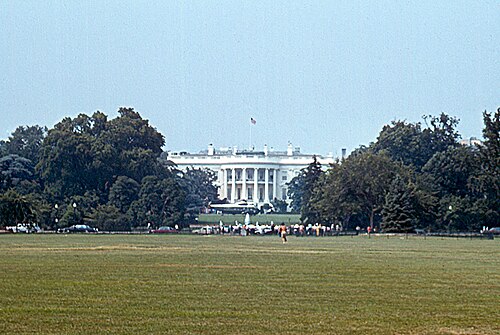
President's Park is a National Park Service landscape in Washington, D.C. encompassing the White House grounds and adjacent public spaces.
West Potomac Park is a large public park in Washington, D.C., situated along the Potomac River. It forms part of the broader National Mall and Memorial Parks area.
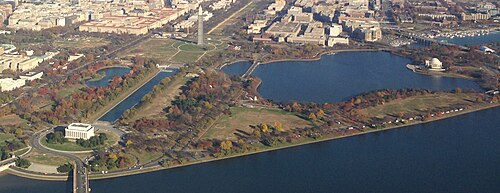
East Potomac Park is a peninsula park in Washington, D.C., extending into the Potomac River south of the Tidal Basin and the National Mall. Water surrounds several sides of the park, giving the landscape a distinctly open waterfront character.
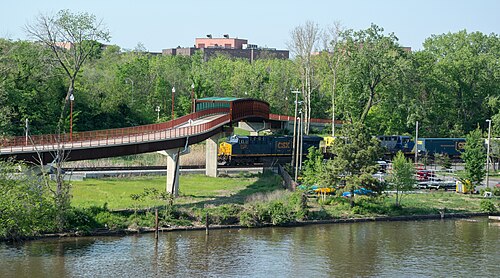
Theodore Roosevelt Island is a wooded island memorial in the Potomac River, accessible by footbridge from Virginia. It honors the twenty-sixth President of the United States, known for conservation and progressive reform.
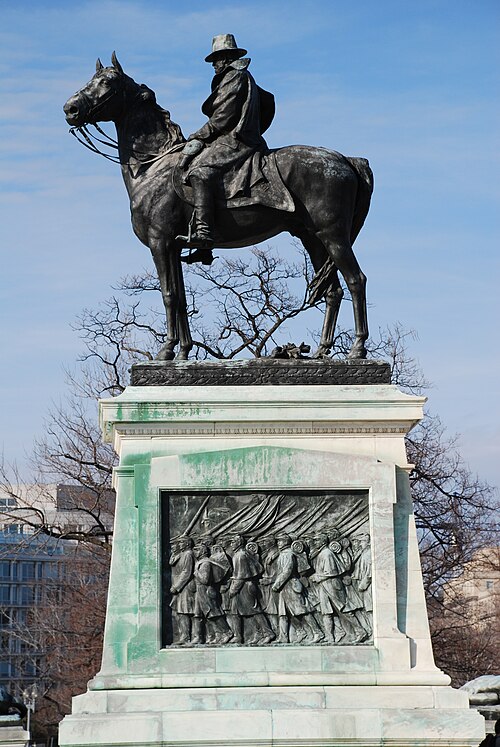
The Ulysses S. Grant Memorial is a monumental sculpture ensemble located on the United States Capitol grounds in Washington, D.C. It honors Ulysses S.
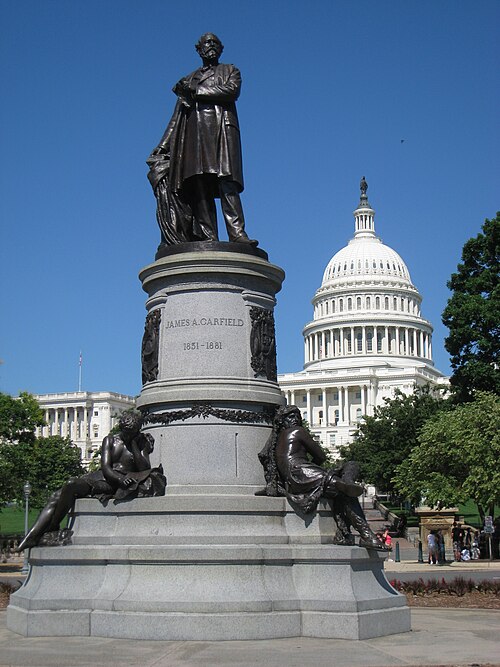
The James A. Garfield Monument is a large memorial on the grounds of the United States Capitol honoring James A. Garfield, the twentieth president of the United States.
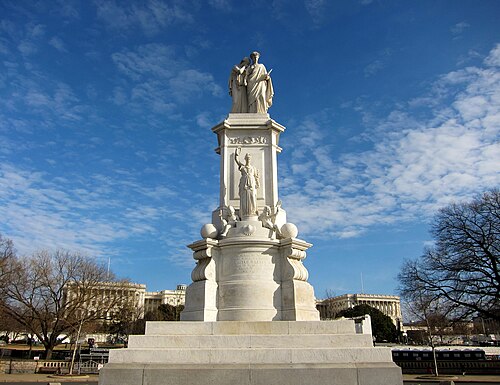
The Peace Monument is an outdoor Civil War naval memorial at the foot of Capitol Hill in Washington, D.C. It commemorates naval deaths during the American Civil War and stands within one of the capital's most prominent civic corridors.
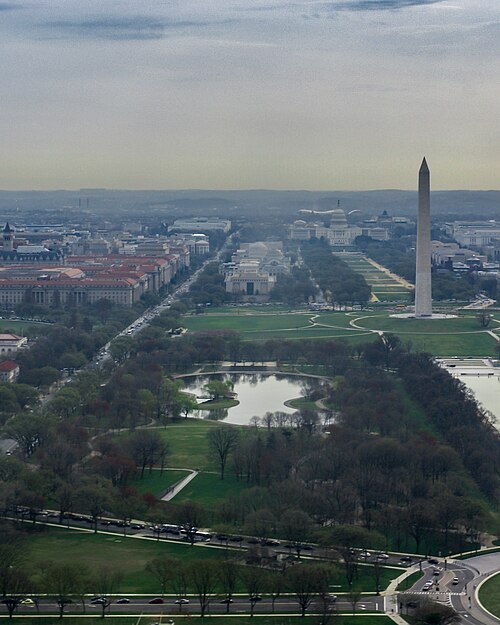
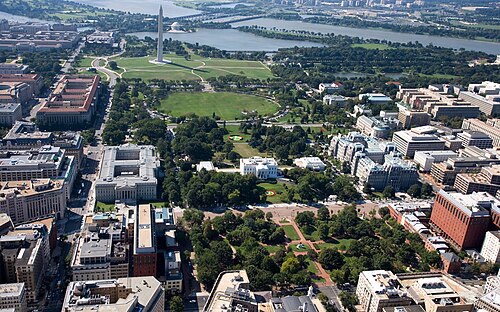
The National Mall is the main east-west axis, with the Capitol at its eastern end and the Lincoln Memorial toward the Potomac. Downtown and Penn Quarter are north of the Mall; Capitol Hill continues east; The Wharf and Navy Yard occupy separate waterfronts to the south. Dupont Circle and Adams Morgan are northwest, while Georgetown sits west without a Metrorail station. Distances across the Mall are longer than they appear on a diagram.
Checked 2026-08-26
Walk within the National Mall and use Metrorail for longer connections between central districts. Metrobus fills gaps, particularly where rail does not reach directly, and Capital Bikeshare provides another option for waterfronts and broad avenues. Most visitors do not need a car because parking and traffic complicate central trips. Use WMATA's current trip planner and service notices for station access, closures and transfers.
Checked 2026-08-26
A fixed stay length is not recorded. Plan the National Mall and its museums first, then add Capitol Hill, Georgetown or another neighbourhood according to your priorities.
Yes, but it is longer than it looks on a map. Divide the Capitol and museum end from the western memorials if you want time inside institutions.
Most visitors do not. Walking, Metrorail and Metrobus cover the principal visitor districts, while a car adds traffic and parking constraints in the centre.
No. Georgetown has no Metrorail station, so reach it by bus, walking, cycling or a connection from a nearby rail station.
Combine the Mall with Downtown or Penn Quarter, Capitol Hill with Navy Yard, and The Wharf with the southern waterfront. Use Metro between these clusters.