
2 min walk
Ho Chi Minh Mausoleum
- Must see
- Historic monument
Language · 11 published
Historic monument · Hanoi
Quảng trường Ba Đình
Reviewed by Elena Voss · Roavina Travel Editor

Read from the OpenStreetMap access tags; anything not listed has no tag recorded.
Set the group type to family in the planner and the day window contracts to about three quarters of a solo day.
This place is a Attraction.
Ba Dinh Square is a large open square in central Hanoi, widely recognised as the political and historical heart of Vietnam. The square occupies a significant place in national memory as the site where Ho Chi Minh declared independence in 1945. It is surrounded by important government buildings and monuments. The area functions as a ceremonial space rather than a conventional tourist attraction, with a solemn atmosphere that reflects its national importance. Visitors should approach with appropriate respect for its ongoing official functions.
Checked 2026-08-31 · Source
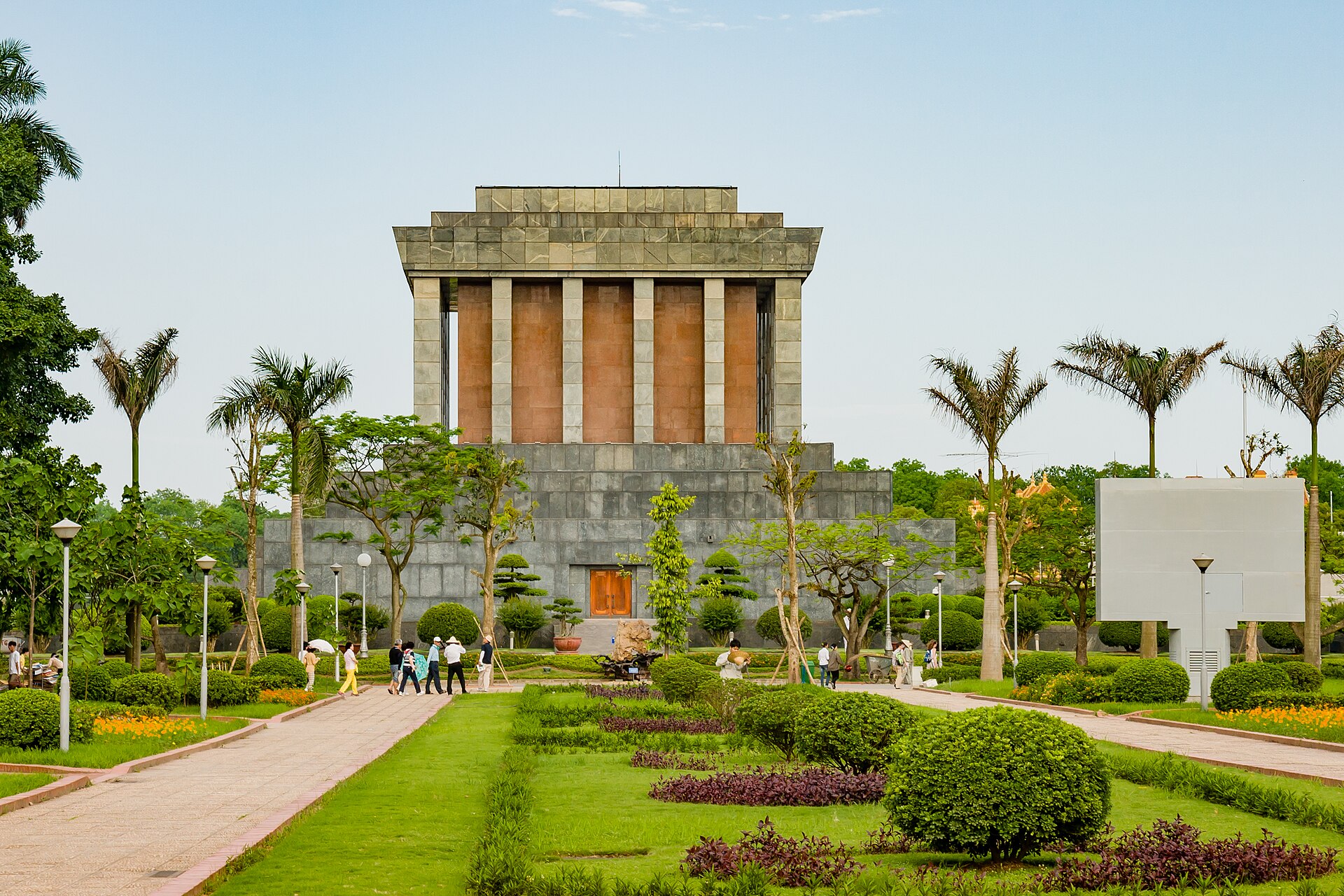
The square contains Ho Chi Minh's Mausoleum at its western edge, though this is technically a separate managed site. The vast paved expanse itself offers little in terms of physical amenities or diversions. Flagpoles and ceremonial markers punctuate the space. The surrounding perimeter includes the Presidential Palace, Ministry of Foreign Affairs, and Party Central Committee headquarters, though these are not open to casual visitation. The architecture blends French colonial and Vietnamese socialist styles. Trees and limited seating are present at the margins.
Checked 2026-08-31 · Source
A respectful circuit of the square requires approximately twenty to thirty minutes, though many visitors combine this with the mausoleum and adjacent botanical gardens. The experience is brief unless attending a formal ceremony or flag-raising event. Early morning visits before heat and crowds are common. Those with limited time in Hanoi may find the square warrants a shorter stop than the surrounding complex of Ho Chi Minh-related sites. The spatial scale demands walking but not extensive exploration.
Checked 2026-08-31 · Source
The square hosts the daily flag raising at 06:00 from 1 April to 31 October and 06:30 from 1 November to 31 March; flag lowering is at 21:00 year-round. Tourist access to the square is suspended during mausoleum visitation: Tuesday–Thursday 07:30–10:30 and Saturday–Sunday 07:30–11:00 in the April–October season current on the checked date. Monday and Friday have no regular mausoleum visitation. The access suspension applies specifically while the mausoleum visitation ceremony is operating. The square is generally accessible during daylight hours, though formal ceremonies and state occasions may restrict access unpredictably. Early morning offers cooler temperatures and fewer visitors. The dry season from October to April provides more comfortable conditions for standing in the exposed plaza. Vietnamese national holidays bring heightened security and possible closures. Visitors should verify accessibility immediately before travel, as the square's official functions take precedence over tourism at all times. A flexible visit lets travellers connect Ba Dinh Square with the rest of the day without treating one room, viewpoint or photograph as the whole experience. The useful pace depends on personal interest and conditions on arrival.
Checked 2026-08-31 · Source
Free entry to the outdoor square; no admission ticket or visitor fee is required. Surrounding museums and monuments are separate attractions. The adjacent Ho Chi Minh Mausoleum operates under separate regulations and may have distinct arrangements. Any requested payments should be scrutinised carefully. Official documentation or authorised guides remain the most reliable sources for current financial requirements. Budget travellers may find this one of Hanoi's more economical sites if only the square is visited.
Checked 2026-08-31 · Source
The square is on Hùng Vương Street. Hanoi public-body guidance names bus 09A via Điện Biên Phủ–Kim Mã, bus 22A via Trần Phú–Kim Mã, bus 32 via Lê Duẩn–Trần Hưng Đạo–Kim Mã, and E09 via Nguyễn Thái Học–Hoàng Diệu–Quán Thánh. From the Cát Linh–Hà Đông metro, use Cát Linh station and continue toward Nguyễn Thái Học and the Ba Đình area on foot. The square sits northwest of Hanoi's Old Quarter in the Ba Dinh district. Multiple bus routes serve the area, though specific numbers require local verification. Taxis and ride-hailing applications provide direct access, with drivers universally recognising the destination. Walking from the French Quarter or West Lake area is feasible for those comfortable with Hanoi's traffic conditions. Cycling presents challenges due to security cordons and one-way systems.
Checked 2026-08-31 · Source
The managing authority accommodates wheelchair users on the Ho Chi Minh Mausoleum visitor route and can arrange staff assistance from Hùng Vương Street. The complex received 30 wheelchairs for visitor support. Access follows controlled security routes, and assistance is therefore relevant for wheelchair users rather than unrestricted independent movement across every part of the ceremonial square. Dress codes are strictly enforced; shoulders and knees must be covered. Photography of certain buildings and personnel is prohibited and may attract intervention from guards. The square's vast exposed surface intensifies sun exposure with minimal shade. Political sensitivity demands restrained behaviour—no sitting on ceremonial steps, no disrespectful gestures. Security screening is probable at access points. Scams involving unofficial guides or false closure information circulate in the vicinity. Visitors should follow marked paths and comply promptly with instructions from uniformed personnel.
Checked 2026-08-31 · Source
Photography of the open square is generally tolerated, though tripods and professional equipment may draw scrutiny. The mausoleum exterior is photographable from designated positions; the interior is strictly forbidden. Military guards and certain government facades should not be photographed. The best vantage points face west toward the mausoleum, particularly during morning light. Evening illumination alters character but may be restricted. Drone usage is inadvisable given the high-security environment. Visitors should observe others' behaviour and cease immediately if challenged by officials.
Checked 2026-08-31 · Source
Flag raising is daily at 06:00 from April through October and 06:30 from November through March; flag lowering is daily at 21:00.
The managing authority suspends tourist access during mausoleum visitation. In the April–October season, this means Tuesday–Thursday 07:30–10:30 and Saturday–Sunday 07:30–11:00.
The official national tourism database gives the address as Hùng Vương Street, Ba Đình, Hanoi.
Ho Chi Minh read the Declaration of Independence here, proclaiming the Democratic Republic of Vietnam.
Personal photographs around the square are allowed when taken respectfully and in accordance with guards’ directions; professional filming, photography or drawing within the protected area requires written permission.
The managing authority describes 210 green lawn panels in front of the Ho Chi Minh Mausoleum, separated within the square’s ceremonial layout.
Loading the interactive map…
The interactive map could not be loaded.
Last updated:
Source: OpenStreetMap contributors, Wikidata ·