

2 min walk
The Blues Bar
- Notable
- Nightlife venue
Language · 11 published
Place of worship · Hanoi
Đền Bạch Mã
Reviewed by Elena Voss · Roavina Travel Editor
| Monday | 08:00 – 17:30 |
|---|---|
| Tuesday | 08:00 – 17:30 |
| Wednesday | 08:00 – 17:30 |
| Thursday | 08:00 – 17:30 |
| Friday | 08:00 – 17:30 |
| Saturday | 08:00 – 17:30 |
| Sunday | 08:00 – 17:30 |
Checked 2026-08-31 · Source
Read from the OpenStreetMap access tags; anything not listed has no tag recorded.
Set the group type to family in the planner and the day window contracts to about three quarters of a solo day.
This place is a Place of worship.
Bach Ma Temple, known locally as Đền Bạch Mã, stands as one of Hanoi's most ancient spiritual sites. The temple occupies a significant position in the city's historical fabric, representing early religious architecture that predates many of the capital's better-known landmarks. Its name references the White Horse, tied to foundational legends of Hanoi's establishment. The structure embodies layers of Vietnamese spiritual practice, blending indigenous beliefs with later religious influences. Visitors encounter a place where local devotion continues alongside tourist interest. The temple's modest scale belies its cultural weight, offering insight into how sacred spaces have shaped urban identity across centuries of Hanoi's development.
Checked 2026-08-31 · Source
The interior of Bach Ma Temple preserves traditional architectural elements characteristic of historic Vietnamese places of worship. Visitors will find altars bearing offerings, incense burners with accumulated residue of continuous devotion, and carved wooden details showing craft traditions. Decorative motifs may include guardian figures and symbolic animals relevant to the temple's founding mythology. The main worship hall concentrates spiritual focus, with arrangements directing attention toward venerated representations. Secondary spaces support ritual preparation and community gathering. Fabric hangings and ceremonial objects contribute to atmospheric density. The accumulated patina of age and use creates authentic character distinct from restored or reconstructed heritage sites elsewhere in the capital's tourist circuit.
Checked 2026-08-31 · Source
A complete visit to Bach Ma Temple typically requires between twenty and forty minutes for most travelers. This duration accommodates circumambulation of the main structures, observation of architectural details, and brief contemplation of the spiritual atmosphere. Devotees engaging in prayer or offering rituals may extend their stay according to personal practice. Photography enthusiasts should allocate additional time for capturing interior lighting conditions and decorative elements. The compact nature of the temple precinct means physical exploration is quickly accomplished; meaningful engagement depends on individual interest in historical context and religious significance. Combining this site with nearby attractions in the Old Quarter optimizes broader itinerary efficiency.
Checked 2026-08-31 · Source
Daily 08:00–12:00 and 13:30–17:30; additional evening opening Friday–Sunday 19:00–21:30. Open every day; no weekly closure. Closed daily between 12:00 and 13:30. Visitors should verify current opening arrangements through direct contact with temple management or official tourism channels before planning their approach. Religious sites in Hanoi often maintain variable schedules influenced by lunar calendar observances, festival periods, and daily worship routines. Early morning hours frequently coincide with active devotional practice, offering atmospheric experience but potentially restricting visitor movement. Midday periods may present reduced ceremonial activity. Seasonal considerations include Vietnamese New Year celebrations when temple traffic intensifies substantially.
Checked 2026-08-31 · Source
General admission is VND 20,000 per person per visit. Admission is free for visitors under 16 and people classified as having an exceptionally severe disability. No fee is charged on Vietnamese Cultural Heritage Day (23 November), the final day of the lunar year, or the first two days of Lunar New Year. Eligible visitors including people with severe disabilities, Vietnamese residents aged 60 or older, and students aged 16 or older receive a 50% reduction. Many historic temples in Hanoi operate without formal admission charges, relying instead on voluntary donations to support maintenance and religious activities. Visitors should carry small denomination currency for contribution boxes typically positioned near main altars.
Checked 2026-08-31 · Source
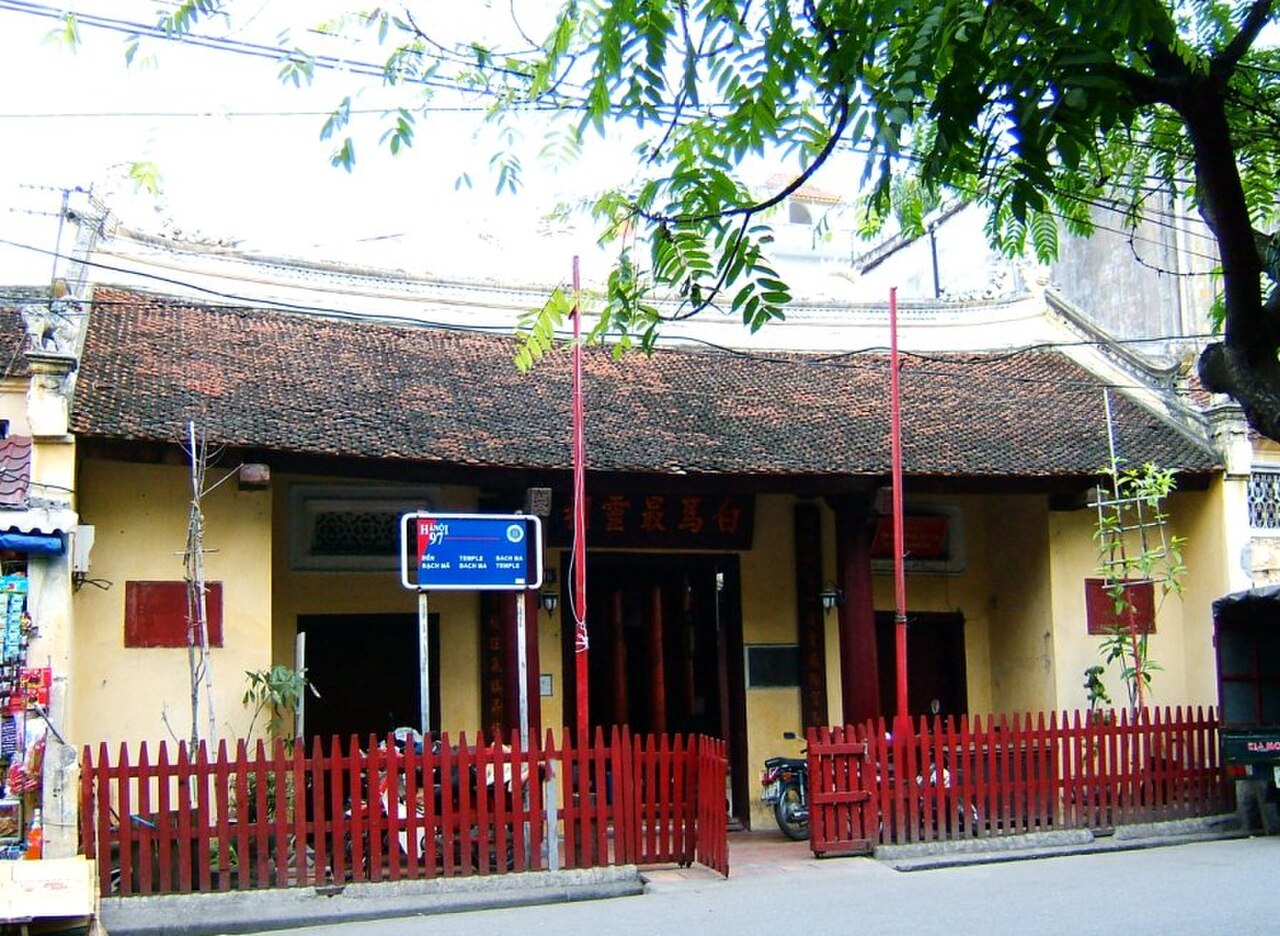
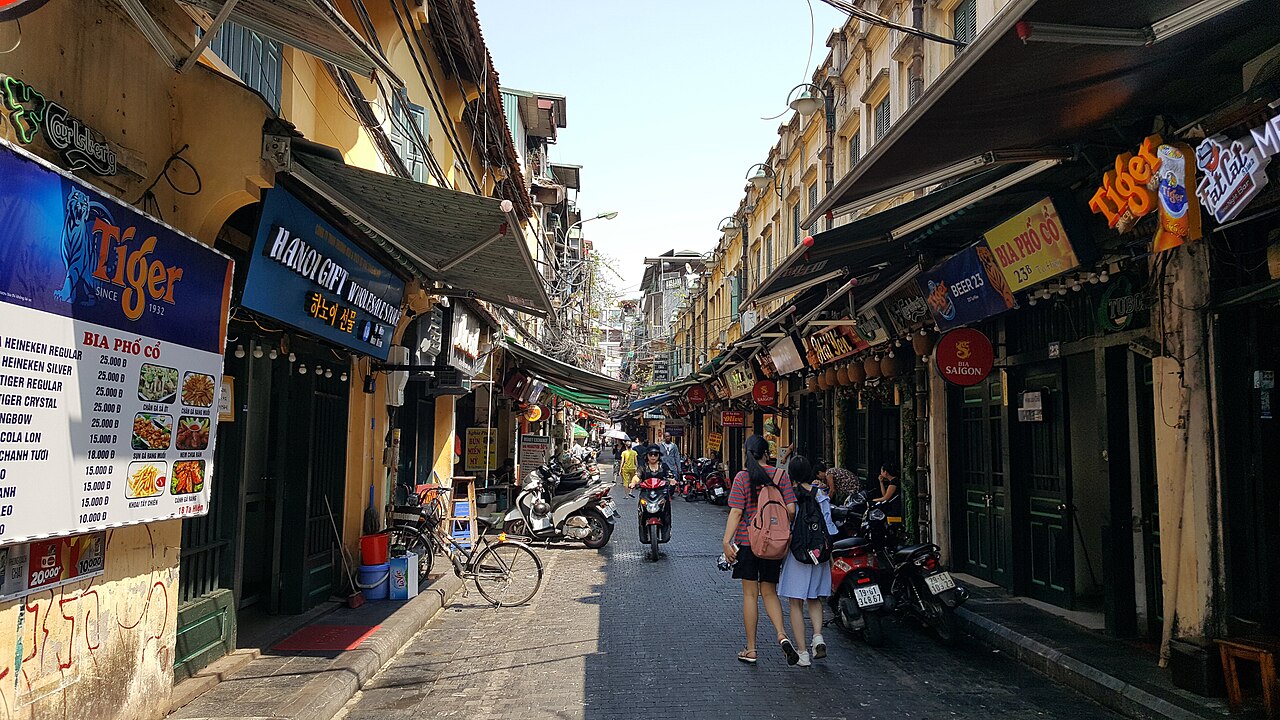
The entrance is at 76 Hang Buom Street, at the Hang Buom–Hang Giay junction. The 80 Tran Nhat Duat bus stop is served by routes 01, 03A, 03B, 10B, 11, 14, 17, 18, 22A, 23, 34, 40A, 40B, 47A, 47B and 54. From the stop, walk through Ô Quan Chưởng, continue along Hang Chieu, then turn south onto Hang Giay and continue to Hang Buom. Long Bien bus interchange is another nearby named arrival point. Bach Ma Temple sits within Hanoi's Old Quarter, accessible through the dense network of streets characteristic of this historic district. Walking from Hoan Kiem Lake provides an approach of approximately fifteen minutes through commercially active thoroughfares.
Checked 2026-08-31 · Source
The main courtyard is level. Traditional raised thresholds obstruct wheelchair access to the inner worship areas. The entrance threshold and narrow interior passages may require assistance; the whole visitor route is not independently step-free. Visitor conduct at Bach Ma Temple demands awareness of active religious function superseding tourist interest. Appropriate dress covering shoulders and knees shows respect for sacred space conventions. Photography restrictions may apply in specific interior zones; observation of posted guidance and local behavioral cues prevents inadvertent offense. Incense smoke concentration can irritate respiratory sensitivities. Floor surfaces may prove uneven or slippery from accumulated offerings and weather exposure. Personal belongings require attention in crowded devotional periods.
Checked 2026-08-31 · Source
Photographic opportunities at Bach Ma Temple reward patient observation of light conditions and human activity. Interior spaces present challenging exposure situations balancing window illumination with shadowed altar areas; higher ISO capabilities assist capture without disruptive flash deployment. Morning light filtering through smoke creates atmospheric effects prized by documentarians. Respectful distance from worshippers remains essential; telephoto focal lengths enable detail isolation without intrusion. Architectural features including rooflines, ceramic decorations, and weathered wood textures offer rich subject matter. External street approaches yield contextual environmental portraits situating the temple within its enduring neighborhood setting.
Checked 2026-08-31 · Source
Bach Ma Temple is at 76 Hang Buom Street in Hoan Kiem ward, Hanoi, near the junction with Hang Giay.
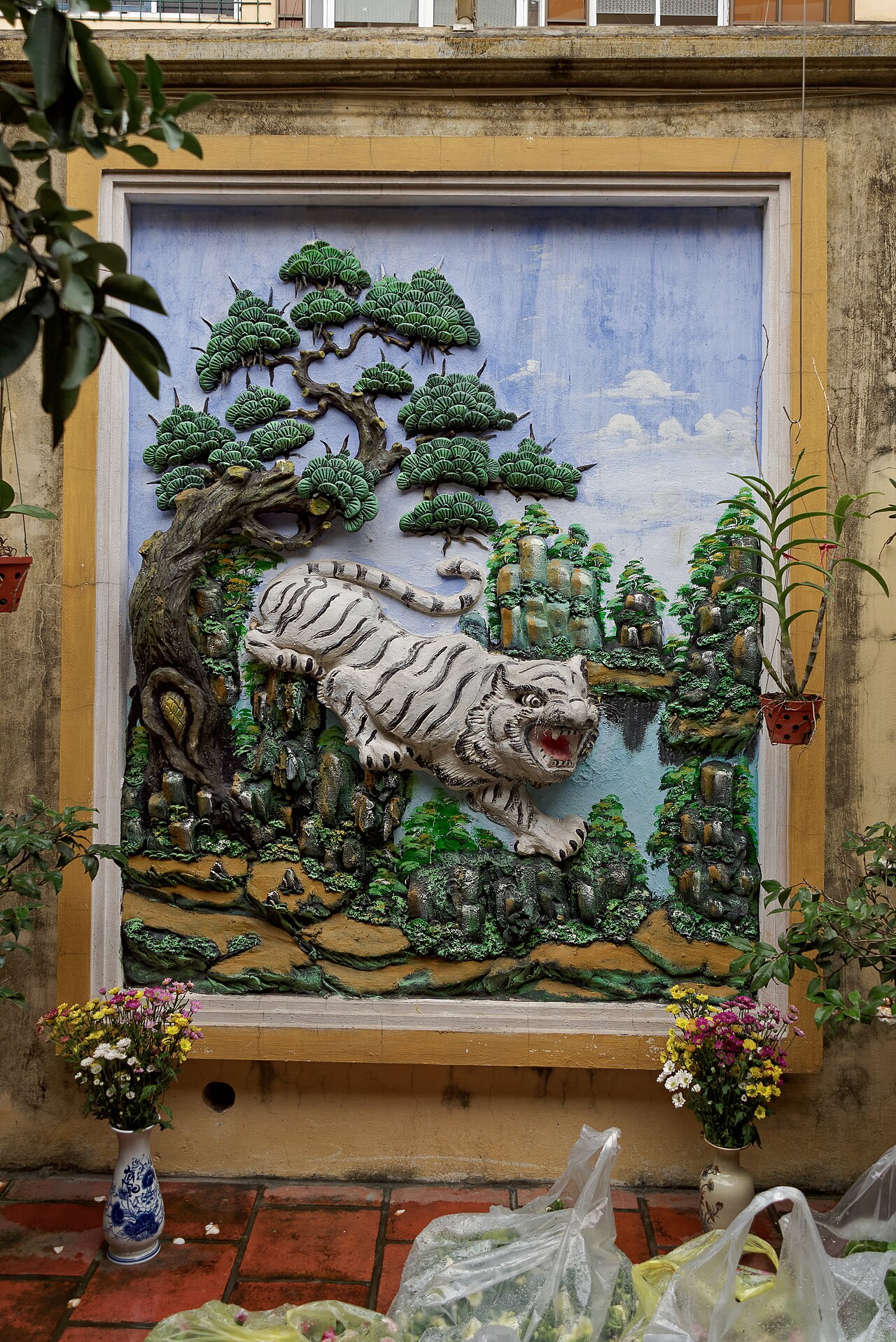
The temple is dedicated to Long Do, the guardian deity associated with the eastern side of the former Thang Long citadel.
It is the eastern guardian temple and is described by Hanoi's responsible cultural bodies as the oldest of the four guardian temples.
The temple's foundation is traditionally dated to the ninth century, although the surviving complex reflects later restorations and Nguyễn-period architectural work.
The complex contains a white-horse figure and 15 stone steles, with principal spaces including the entrance gate, pavilion, main worship hall, incense chamber and inner sanctuary.
The annual festival is held on the 12th and 13th days of the second lunar month; the 2026 festival took place on 30–31 March.
Loading the interactive map…
The interactive map could not be loaded.

Last updated:
Source: OpenStreetMap contributors, Wikidata ·