



2 min walk
Rose
- Notable
- Art and culture venue
Art and culture venue · Hanoi
Nhà hát Lớn
Not recorded
Source · Checked 2026-08-31

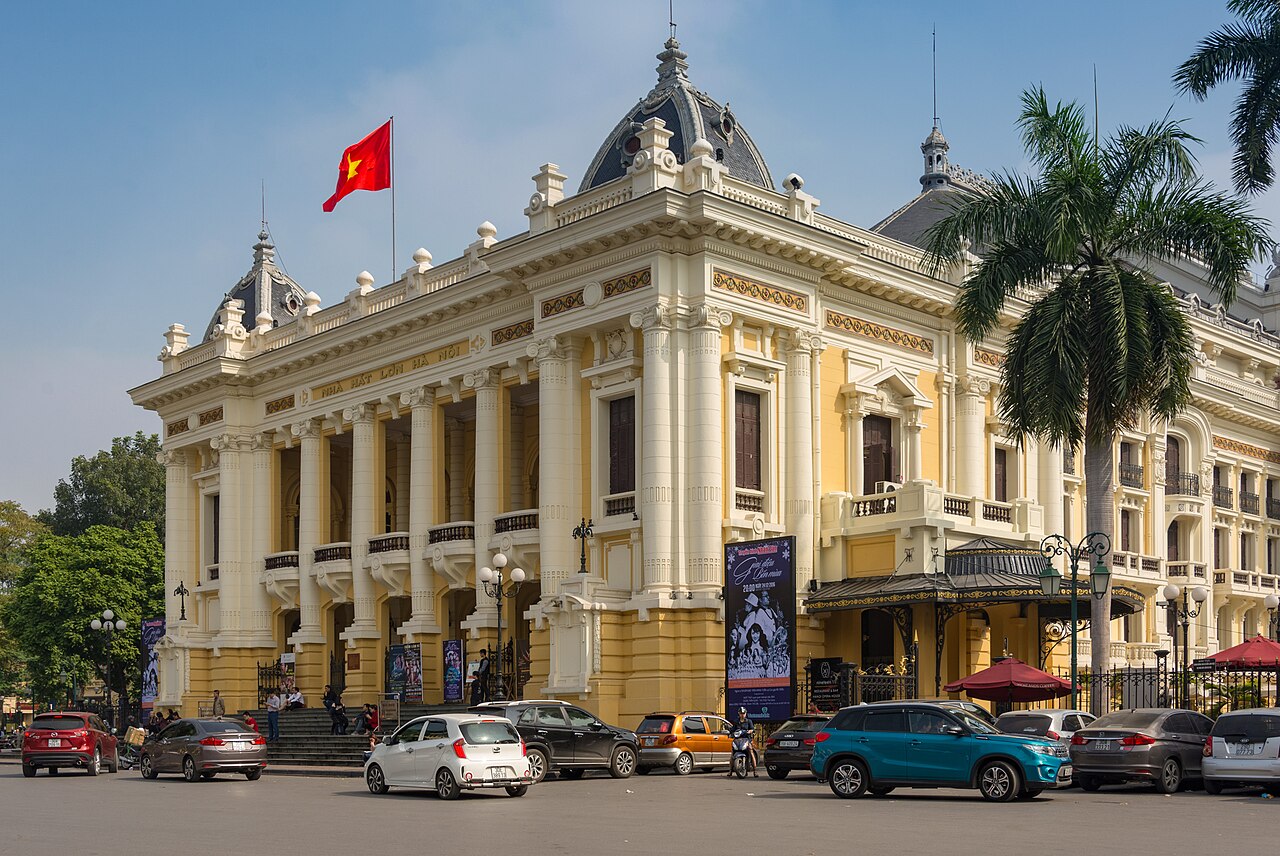
Hanoi Opera House faces August Revolution Square at the eastern edge of the French Quarter. Vietnam’s National Archives dates construction to 1901–1911 and identifies Broyer, V. Harlay and F. Lagisquet among the French architects. The theatre is a historic stage and architectural landmark, but a description of its past programme should not be mistaken for a current performance calendar. The Ministry of Culture lists its management board as the responsible public cultural unit. The archive holds façade plans dated 1905 and 1909 and a staircase drawing from 1910, evidence for its design rather than for present visitor access.
Checked 2026-10-07 · Source
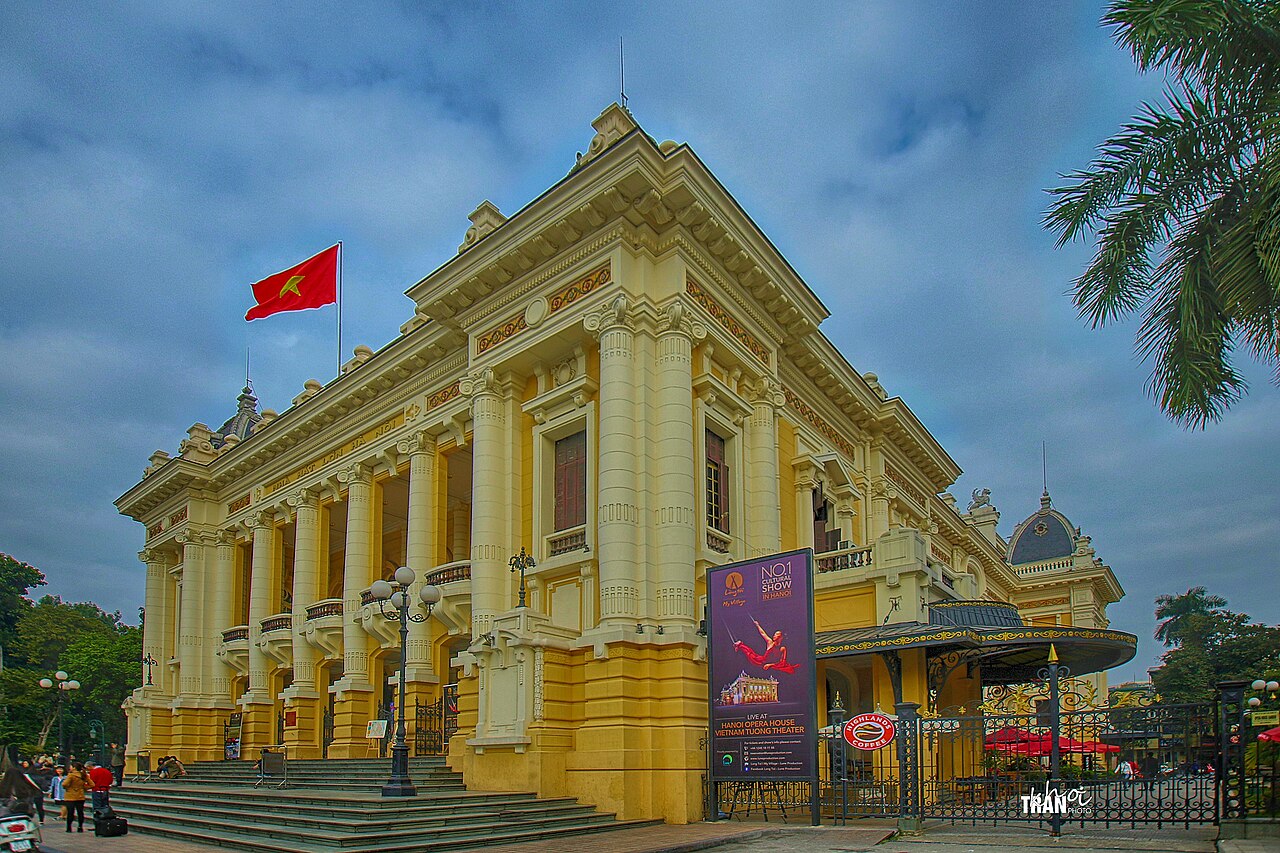
The interior contains a main auditorium with multiple tiers of seating, including stalls and balconies. Decorative elements include chandeliers, gilded details, and painted ceilings reflecting European theatrical design traditions. The stage facilities support opera, ballet, and orchestral performances. Backstage areas accommodate performers and technical equipment. Public spaces include a grand foyer and reception areas. Those details describe the theatre’s architecture, not a promise that visitors can enter each space. If the interior matters to your trip, seek a dated programme or direct confirmation from the management board before making a special journey.
Checked 2026-10-07 · Source
Allow roughly 20–30 minutes for an exterior stop at August Revolution Square if the façade is your main interest. This is an editorial planning allowance, not a published tour duration. A performance or guided visit would need its own time block, but no current operator programme was verified for this guide. Do not reserve several hours on the strength of an old show listing. If you are already walking through the French Quarter, the building works best as one short stop between other independently verified places.
Checked 2026-10-07 · Source
After 31 January 2026 the Hanoi Opera House closed temporarily for restoration, conservation and overall upgrading, expected to last two years, so visitors cannot tour the building during this period. Plan only an exterior look until you have direct confirmation of interior access. No current opening or performance schedule could be verified from the theatre operator for this guide. Daylight makes the façade and square easier to read, but works may alter the view. Contact the venue management before planning a performance, tour or accessible interior route, and do not use old event pages as proof of reopening.
Checked 2026-11-04 · Source
No current admission price, performance ticket or public-tour tariff was verified from the theatre operator for this guide. The façade can be seen from the public square without a theatre ticket, but that does not imply entry to the auditorium. Older tourism listings quote show prices that should not be treated as today’s admission. If no current operator offer can be confirmed, leave the interior out of a fixed itinerary.
Checked 2026-10-07 · Source
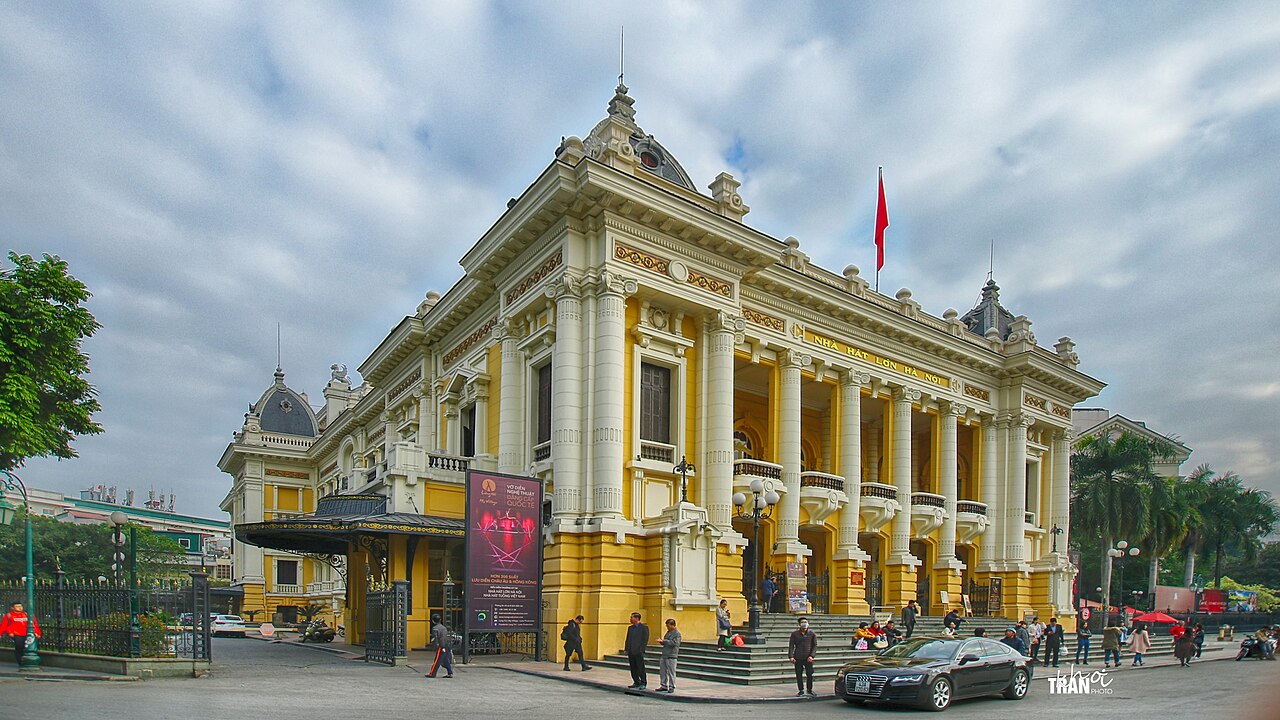
The address is 1 Tràng Tiền, Cửa Nam ward, beside August Revolution Square. The theatre faces August Revolution Square at the eastern edge of Hanoi’s French Quarter. Set your route to the square rather than assuming that a building entrance is open. The ministry’s management listing gives the Tràng Tiền address, while the National Archives also locates the building at the square. A short exterior look can be combined with a walk in the surrounding central streets; the distance from your starting point depends on your route. Local bus and ride-hailing routes can change, so verify a current transport operator map instead of relying on an old numbered bus recommendation.
Checked 2026-10-07 · Source
The theatre operator has not confirmed current interior access for this guide; dated archival material is not a live entry notice. Treat the exterior as the dependable part of this stop and do not assume a tour, performance, foyer visit or step-free interior route is available. An old printed price or event page is not proof of a current ticket. If access or mobility arrangements decide your trip, ask the management board directly. The square and nearby roads carry ordinary city traffic; use designated crossings and keep photography on public space unless staff direct otherwise.
Checked 2026-10-07 · Source
The broad public side of August Revolution Square is the straightforward place to frame the full façade; Tràng Tiền offers a more oblique view. This is an exterior photography plan, not permission to enter the auditorium or any work area. Restoration equipment or temporary barriers can change a familiar postcard angle. Give pedestrians room, stay out of traffic and follow any on-site restrictions. No current operator policy for photography inside was verified, so do not assume that a historic interior image indicates public access today.
Checked 2026-10-07 · Source
No current programme or tour ticket was verified from the theatre operator for this guide. Ask the management board directly before planning an interior visit.
Current interior access and tour tickets were not verified from the operator. Do not plan an auditorium visit without direct confirmation; the exterior can be viewed from the public square.
It stands at 1 Tràng Tiền, Cửa Nam ward, Hanoi, facing August Revolution Square.
Its management board is a public cultural unit under Vietnam’s Ministry of Culture, Sports and Tourism.
Construction began in 1901 and the theatre entered service in 1911; French architects Harlay and Broyer designed it with inspiration from Paris’s Palais Garnier.
Hanoi Opera House and August Revolution Square were designated a national historical and architectural monument in 2011.
No. After 31 January 2026 the theatre closed temporarily for restoration, conservation and overall upgrading, expected to last two years, so visitors cannot tour the building during this period.
Loading the interactive map…
The interactive map could not be loaded.
Last updated:
Source: OpenStreetMap contributors, Wikidata ·