
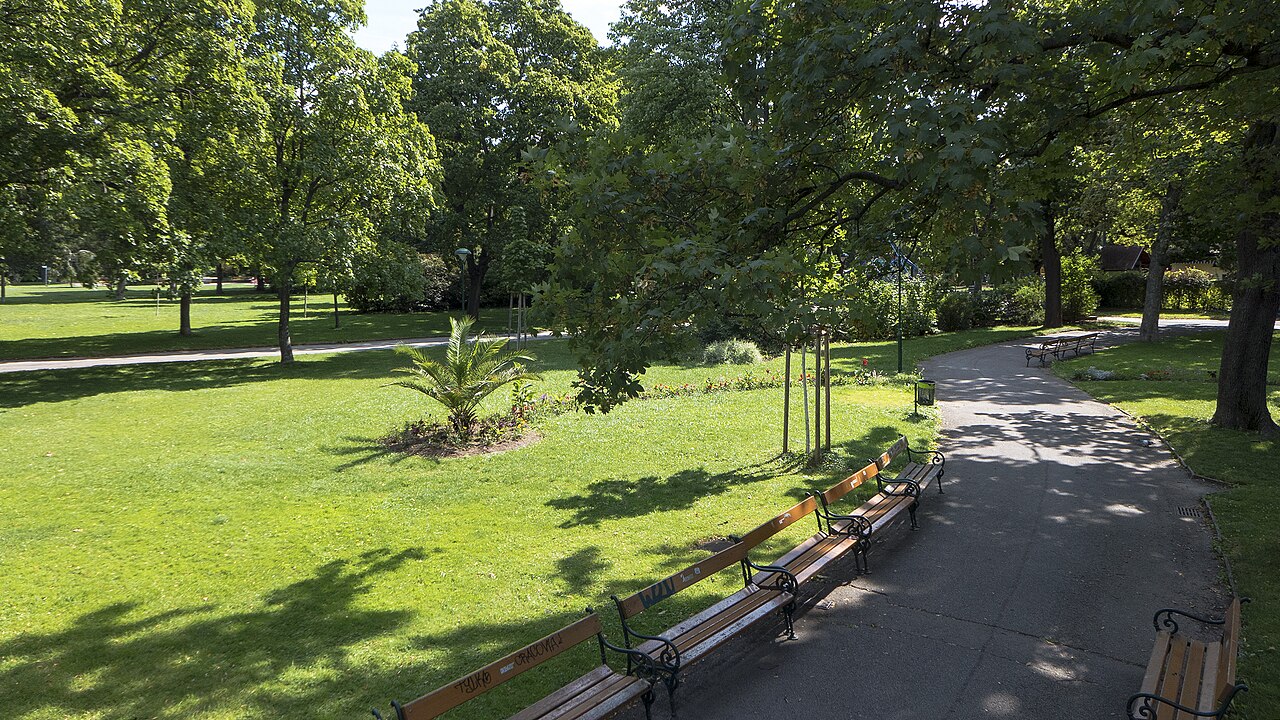
3 min walk · Landstraße
Schweizergarten
- High
- Nature site
Language · 11 published
Museum · Landstraße, Vienna
Reviewed by Elena Voss · Roavina Travel Editor
| Monday | 09:00 – 17:00 |
|---|---|
| Tuesday | 09:00 – 17:00 |
| Wednesday | 09:00 – 17:00 |
| Thursday | 09:00 – 17:00 |
| Friday | 09:00 – 17:00 |
| Saturday | 09:00 – 17:00 |
| Sunday | 09:00 – 17:00 |
Parsed from OpenStreetMap opening hours on 2026-09-09.
This place is a Museum. It opened in 1869. It was designed by Theophil Hansen. It is run by Federal Ministry of Defence.
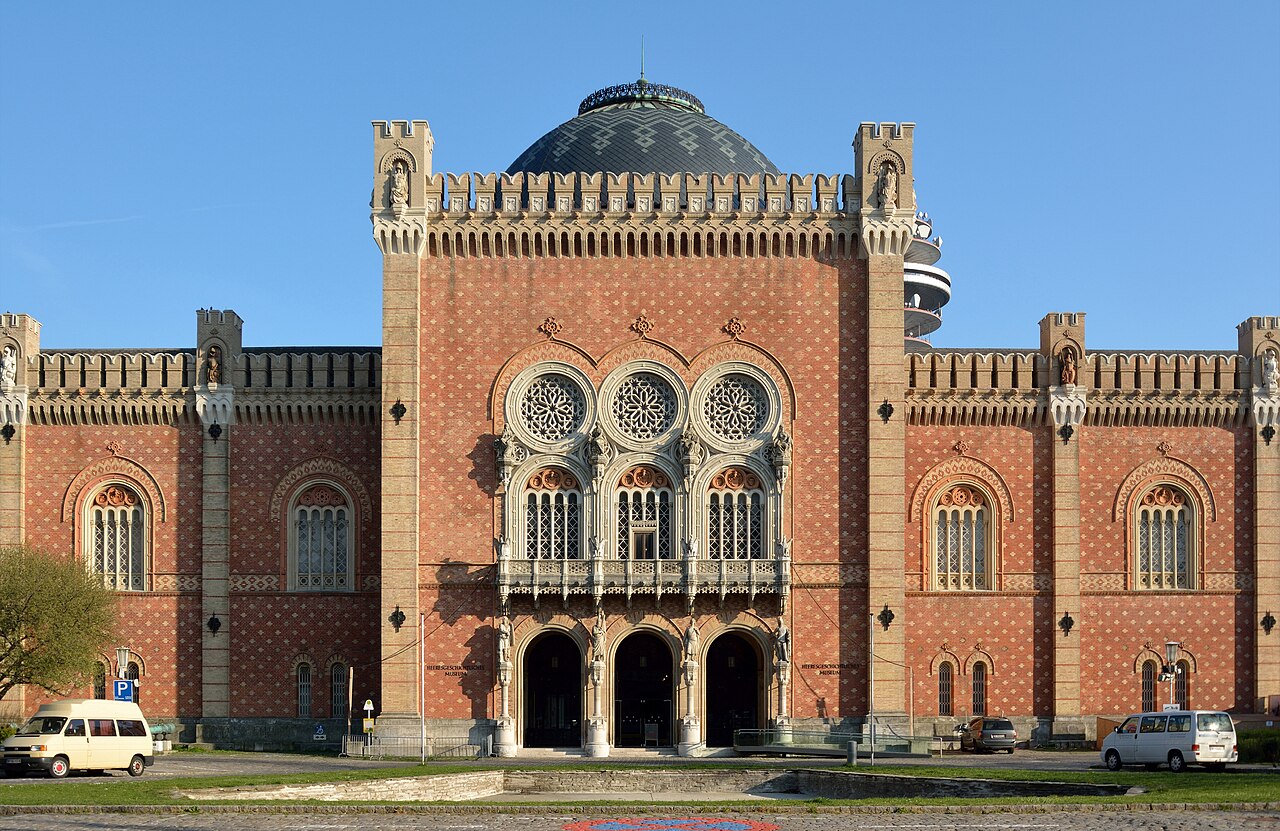
The Heeresgeschichtliches Museum, the Museum of Military History, is Austria's oldest purpose-built museum structure, opened in 1891 inside the Arsenal complex as the k.k. Hofwaffenmuseum and renamed to its current form in 1955.
The building itself is part of the exhibit: a Byzantine-Moorish revival hall commissioned by Franz Joseph I as both an armoury and a monument to the Habsburg military, with a domed Hall of Fame at its centre lined with statues of Austrian commanders.
Its best-known holding is the open Gräf & Stift double phaeton in which Archduke Franz Ferdinand was riding in Sarajevo on 28 June 1914, displayed alongside the blood-stained tunic he was wearing, the event that triggered the July Crisis and the First World War.
Checked 2026-08-24 · Source
The collection runs chronologically from the Thirty Years' War through the Habsburg era to the First and Second World Wars and Austria's postwar army.
The Sarajevo Room holds the assassination car and uniform. The naval hall displays relics from the cruiser SMS Novara, including the flag it flew at the 1917 Battle of the Otranto Strait. A separate hall covers the First World War, with uniforms, artillery pieces and trench material; another covers the Second World War and the Wehrmacht period in Austria.
Outside, a tank garden holds armoured vehicles from the postwar Austrian army in the open air, and the building's exterior itself, with its arcaded loggia and mosaic tympanum, is part of the walk between halls.
Checked 2026-08-24 · Source
Two to three hours covers the main halls at a normal pace; a visitor focused only on the Sarajevo Room and the Hall of Fame can be through in under an hour.
The tank garden adds another 20-30 minutes for anyone interested in the postwar vehicles, and it is outdoors, so weather affects how long a visitor lingers there.
Checked 2026-08-24
The museum has historically closed one weekday, commonly Friday, alongside its regular opening days; current opening days and hours are Not recorded here and should be confirmed on the museum's own site before a visit, since a federal museum's schedule can change between seasons.
Weekday mornings are quieter than weekend afternoons, when the Sarajevo Room in particular draws a queue, and the outdoor tank garden is more comfortable to walk in spring and autumn than in the height of summer.
Checked 2026-08-24
Entry is ticketed at the door; current adult pricing and any reduced or free categories are Not recorded here.
The tank garden is included in the general admission and does not need a separate ticket, and temporary exhibitions inside the museum have historically been covered by the same entry ticket rather than sold on top of it.
A visitor planning around a specific reduced-price day or free-entry window should check the museum's own site, since those offers change and an aggregator listing is not a reliable source for them.
Checked 2026-08-24
The museum sits inside the Arsenal complex south of the city centre. Tram line O runs to the Arsenal stop close to the entrance, and the museum is a 10-15 minute walk from Wien Hauptbahnhof, Vienna's main railway station, which also connects to several bus and tram lines.
There is street parking near the Arsenal, though it is limited on weekdays when the surrounding complex is in office use.
Checked 2026-08-24 · Source
The First and Second World War halls contain graphic material — combat photography, weapons designed to maim, uniforms recovered from casualties — and are not curated with content warnings the way some Western European war museums now do.
The Sarajevo Room is small relative to its popularity, so it can be genuinely crowded at midday even when the rest of the museum is not.
Large bags and backpacks are typically required to go through a cloakroom or bag check at the entrance, and strollers can be awkward to manoeuvre through the narrower halls devoted to the world wars.
Checked 2026-08-24
General photography without flash is normally permitted through the permanent collection; flash and photography rules can differ for temporary exhibitions, so it is worth checking signage hall by hall rather than assuming one rule covers the whole building.
The domed Hall of Fame, with its ring of marble commander statues under natural light from above, is the strongest interior shot in the building; the Byzantine-Moorish exterior loggia photographs well from the Arsenal's open forecourt in the late afternoon.
Checked 2026-08-24
The Gräf & Stift double phaeton Archduke Franz Ferdinand was riding in Sarajevo on 28 June 1914, displayed with the uniform he was wearing when he was shot.
Yes, it opened in 1891 as the purpose-built k.k. Hofwaffenmuseum and is described as the country's oldest structure built specifically as a museum.
Yes, the outdoor tank garden with postwar Austrian armoured vehicles is part of general admission.
The war halls include graphic combat material without content warnings, so it is worth judging suitability by the child rather than assuming a family-friendly presentation.
Tram line O stops close to the entrance, and it is a 10-15 minute walk from Wien Hauptbahnhof.
Items from the Austro-Hungarian cruiser SMS Novara, including the flag it flew at the 1917 Battle of the Otranto Strait, held in the museum's naval hall.
Loading the interactive map…
The interactive map could not be loaded.
Last updated:
Source: OpenStreetMap contributors, Wikidata ·