
1 min walk · Innere Stadt
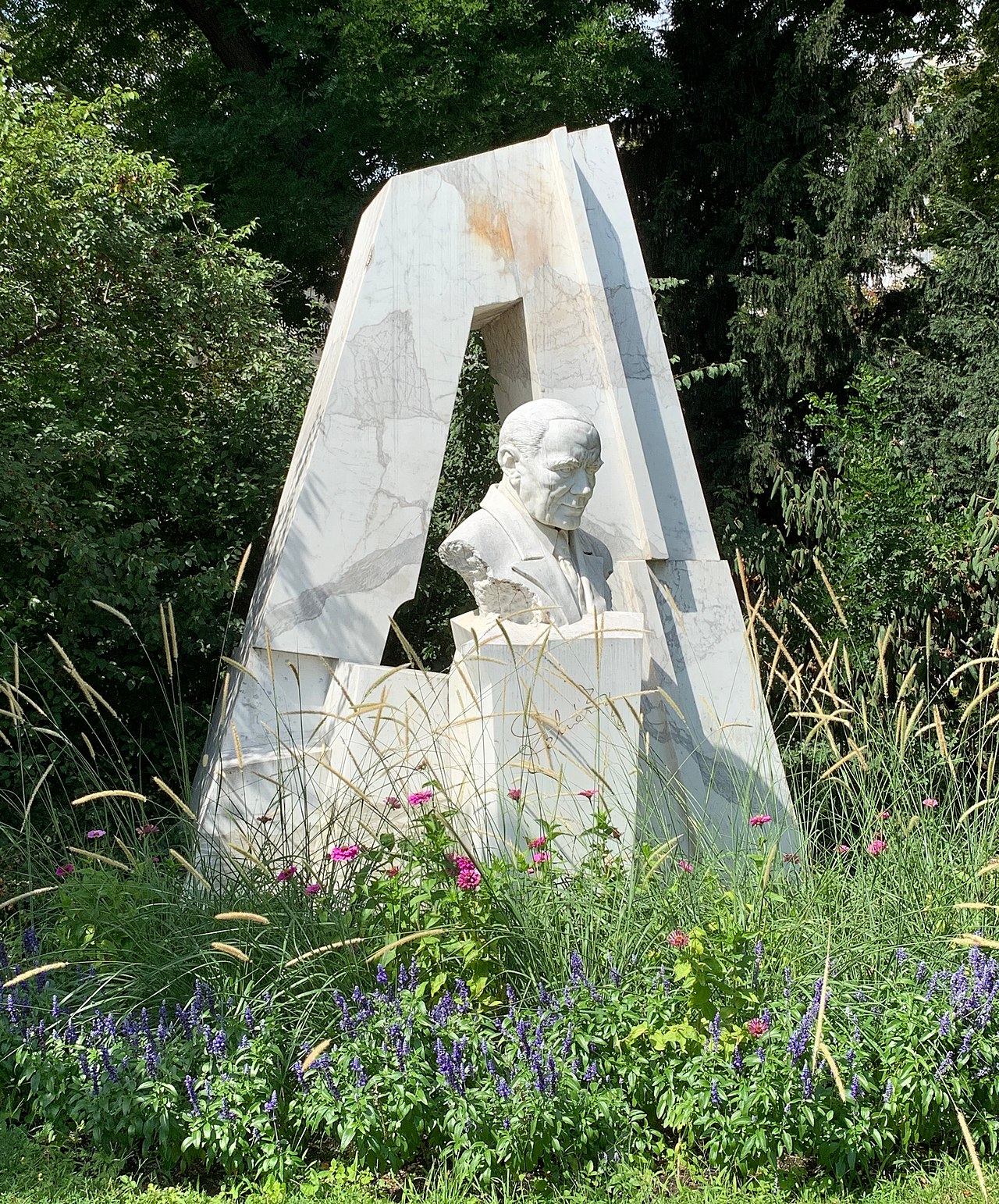
Franz Lehár Monument
- High
- Historic monument
Language · 11 published
Historic monument · Innere Stadt, Vienna
Kursalon Hübner
Reviewed by Elena Voss · Roavina Travel Editor
It carries the Listed objects in Austria heritage designation.
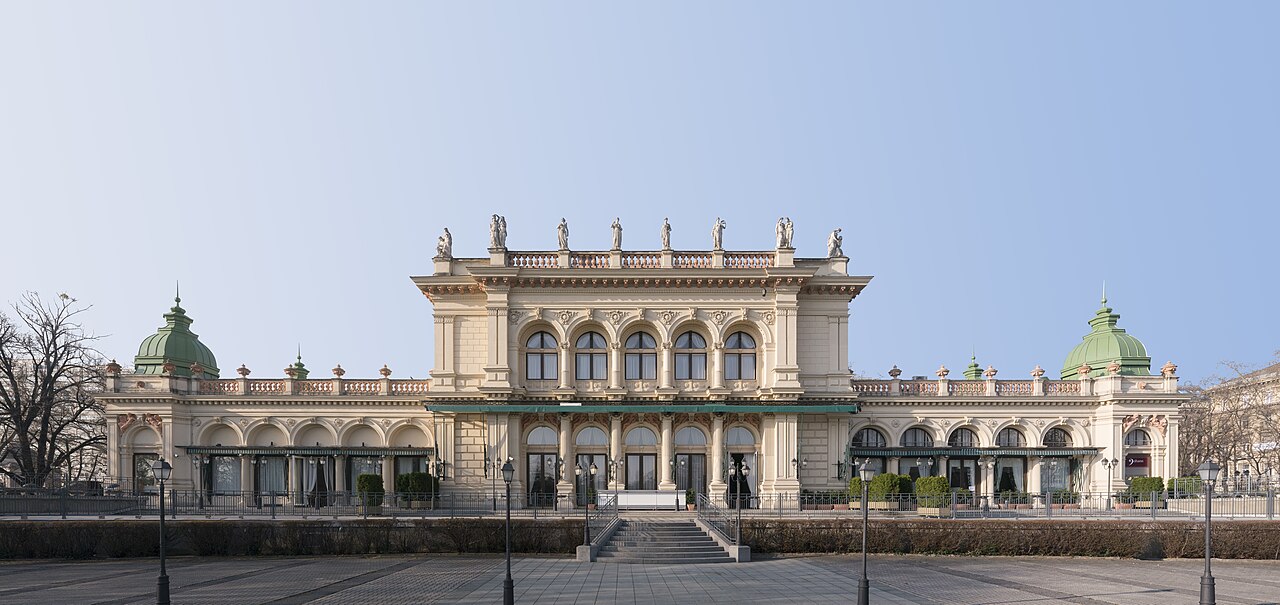
Kursalon Vienna is an Italian Renaissance Revival building standing at the edge of the Stadtpark in Vienna's Innere Stadt district, built in 1865-67 by architect Johann Garben as a public 'cure hall', a cafe and gathering pavilion meant to draw visitors into the newly opened park rather than a private commission. It became closely associated with Johann Strauss II, the 'Waltz King', who conducted concerts there in the building's early decades, a connection the venue still trades on through the concert programme described below; the building itself, not a statue, is the historical Strauss link on this site, while the well-known golden Johann Strauss statue stands separately inside the Stadtpark nearby. The building's original 'cure hall' purpose reflected a nineteenth-century fashion for landscaped parks with an attached pavilion offering mineral water, refreshment and music, a format Vienna borrowed from spa towns of the period. The building sits at the edge of the Stadtpark rather than at its centre, and the golden Strauss statue that most visitors photograph stands further into the park along the Wien river channel that runs through it, a separate stop rather than part of the Kursalon building itself. The building's connection to Strauss is often assumed to extend to a permanent Strauss museum on site, but no such museum exists inside Kursalon; the closest dedicated Strauss memorial is his former apartment elsewhere in the city.
Checked 2026-08-23 · Source
The building holds several halls used for the ticketed evening concert programme, a restaurant and cafe open independently of the concerts, and terraces facing the Stadtpark. The concert halls carry period decoration in keeping with the building's nineteenth-century origin, restored rather than original in most fittings, and are set up for orchestral seating rather than for a walk-through visit. A separate smaller hall within the same building is sometimes hired for private functions independently of the evening concert programme, on its own booking and its own schedule, and neither hall is set up for a self-guided daytime walk-through the way a museum room would be.
Checked 2026-08-23 · Source
A ticketed evening concert runs about two hours including an interval. A cafe or restaurant visit on its own, independent of any concert, can be as short as thirty minutes or extend over a full meal depending on the order.
Checked 2026-08-23 · Source
Concerts run on a year-round schedule, typically nightly through the main tourist season with a reduced number of dates in the depths of winter; Not recorded: the exact current weekly concert count, which is set season by season by the resident promoter rather than fixed. The cafe and terrace are pleasantest in the warmer months, when outdoor seating facing the park is open.
Checked 2026-08-23 · Source
Concert tickets are sold by the resident orchestra's own box office and site, at several seating tiers; the cafe and restaurant require no ticket and are priced as an ordinary meal or coffee rather than an attraction admission of any kind.
Checked 2026-08-23 · Source
Kursalon Vienna sits at the western edge of the Stadtpark, a five-minute walk from Stadtpark U-Bahn station on line U4, and a similar distance from Wien Mitte station on U3 and U4. Tram lines 1 and 2 stop on the Ring nearby, and the walk from either station passes directly through the Stadtpark rather than along the busier Ring pavement.
Checked 2026-08-23 · Source
Ticket sellers advertising 'Strauss concerts' operate around the wider Ring and Innere Stadt for venues other than Kursalon itself; buying directly from the resident orchestra's own channel is the way to be certain the ticket is for this building rather than for a similarly marketed concert elsewhere. The concert programme, aimed squarely at visitors rather than at a mixed local-and-visitor audience, plays a fixed repertoire of Strauss and Mozart favourites rather than a changing classical season, which is worth knowing before buying a ticket expecting a broader programme.
Checked 2026-08-23 · Source
The building's Ring-facing facade, with its arcaded terrace, photographs well from across the Stadtpark's paths in the late afternoon, when the light comes from behind the viewer rather than behind the building. Photography inside the concert halls during a performance is generally restricted; the cafe terrace, open to anyone, has no such restriction, making it the more reliable option for anyone hoping to photograph the building's period interior decoration rather than only its Ring-facing exterior facade.
Checked 2026-08-23 · Source
No. The statue stands separately inside the Stadtpark; Kursalon is the nearby building where Strauss conducted concerts in the nineteenth century and where concerts are still staged today.
Evening programmes of Strauss and Mozart favourites aimed at visitors, performed by a resident orchestra, on a fixed rather than changing repertoire.
Yes, through its cafe and restaurant, which are independent of the concert programme and need no ticket.
Architect Johann Garben, in 1865-67, as a public cure hall and cafe for the newly opened Stadtpark.
About two hours, including an interval.
From the resident orchestra's own box office or site, rather than a street ticket seller advertising 'Strauss concerts' for other venues.
Loading the interactive map…
The interactive map could not be loaded.
Last updated:
Source: OpenStreetMap contributors, Wikidata ·