
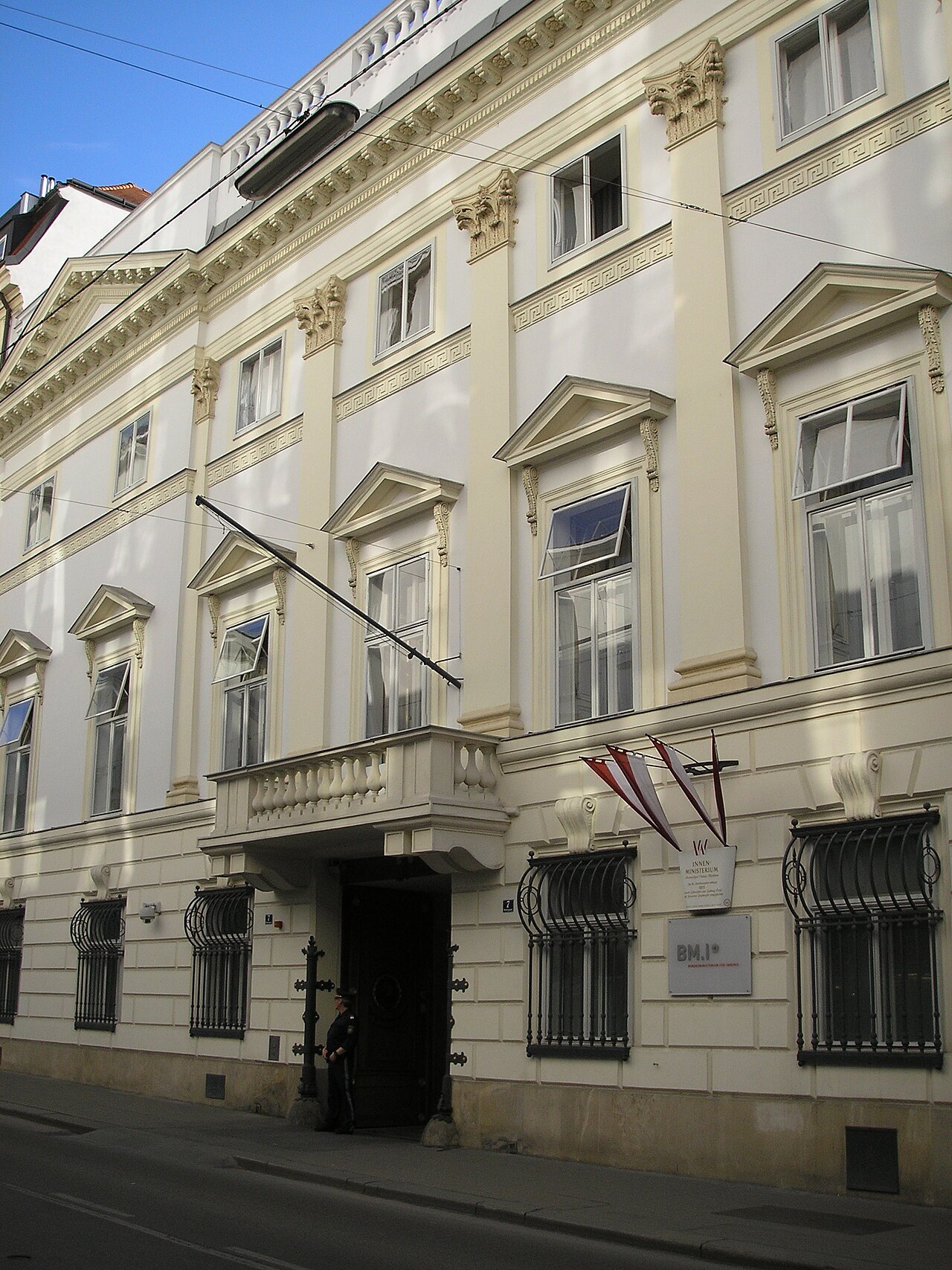
1 min walk · Innere Stadt
Palais Modena
- Must see · Heritage site
- Historic monument
Language · 11 published
Historic monument · Innere Stadt, Vienna
Reviewed by Elena Voss · Roavina Travel Editor
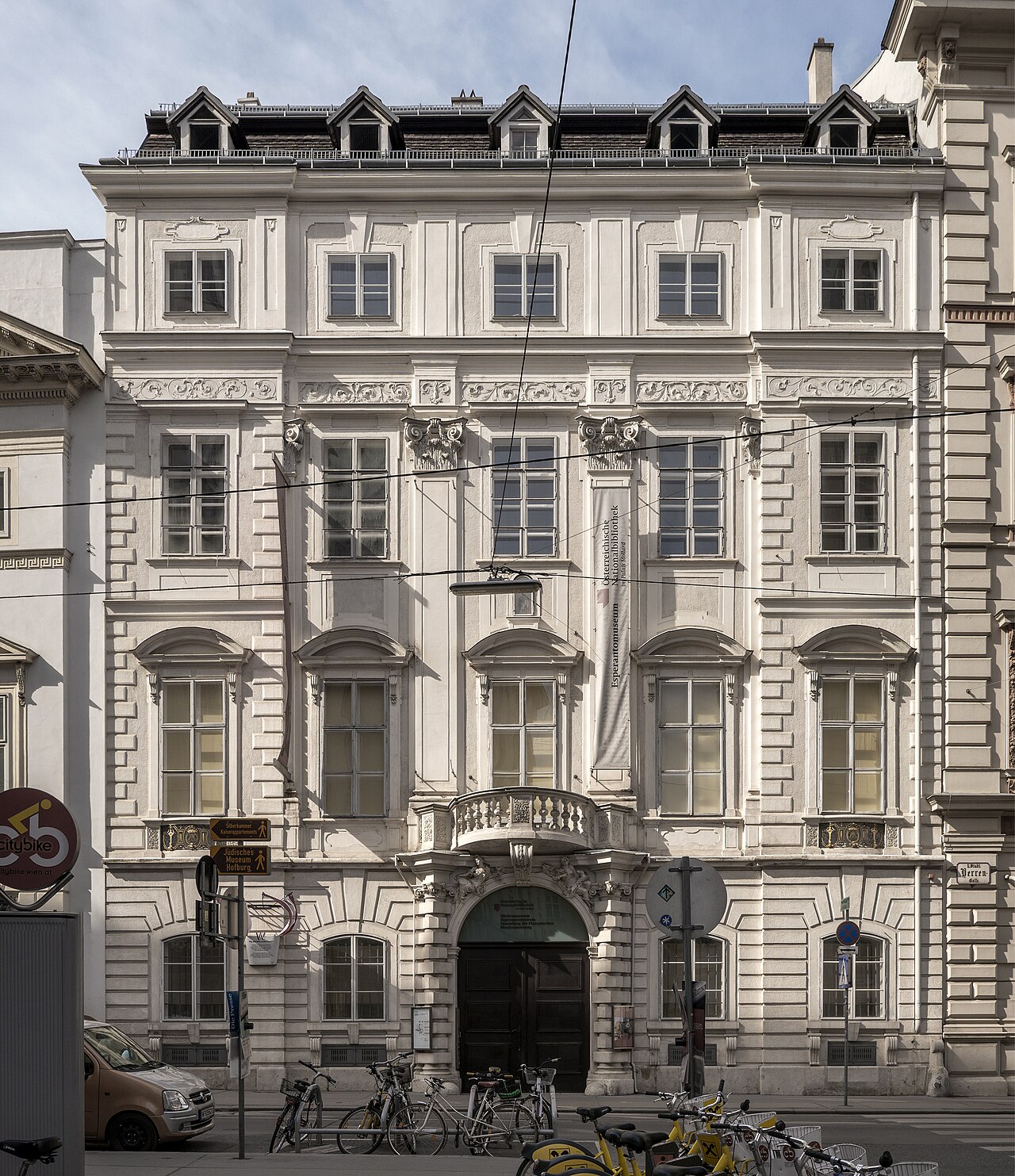
It was built in the baroque architecture style. It was designed by Domenico Martinelli. It carries the Listed objects in Austria heritage designation.
Palais Mollard-Clary is a pair of joined Baroque town palaces at Herrengasse 9 in Vienna's first district: the older southern building was raised around 1698 under Domenico Martinelli for Count Franz Anton von Coloredo-Waldsee and later passed to the Clary-Aldringen family, while a matching northern building was added in the early 19th century for the Mollard family, giving the combined palace its double name.
Unlike most of Vienna's aristocratic town palaces, which remain private, in commercial use or are opened only occasionally, Palais Mollard-Clary was acquired by the Austrian National Library (Österreichische Nationalbibliothek) and converted into public museum space — it is one of the very few Herrengasse-district palaces a visitor can walk into on an ordinary day with a ticket.
It now houses two of the National Library's specialist collections: the Globe Museum (Globenmuseum), the only museum in the world dedicated solely to globes, and the Esperanto Museum (Esperantomuseum), covering the constructed language and the wider field of planned languages.
Checked 2026-08-24 · Source
The Globe Museum displays terrestrial and celestial globes spanning roughly five centuries, including Renaissance and early modern examples, alongside globe-making tools and a collection of planetaria — the museum grew from the Habsburg court's own globe collection, which the National Library inherited.
The Esperanto Museum, sharing the building, holds material on Esperanto and other constructed languages: books, journals, correspondence and objects documenting the planned-language movement since the late 19th century, drawn from the National Library's dedicated collection on the subject.
Both museums occupy restored period rooms of the palace, so the Baroque interior itself — stuccoed ceilings and the original room proportions — is part of what is on display, not just a backdrop to the cases.
Checked 2026-08-24 · Source
Both museums together are usually seen in 60 to 90 minutes, since they occupy a compact set of rooms rather than a sprawling floor plan; a visitor focused only on the Globe Museum can do it in closer to 30 to 45 minutes.
Checked 2026-08-24 · Source
As an indoor museum, Palais Mollard-Clary has no seasonal advantage either way and is a reliable wet-weather option in Vienna's first district. It draws a specialist rather than a mass-tourism crowd, so queueing is not a practical concern at any time of day; the exact current weekly closing day and opening hours are not recorded here — confirm on the Austrian National Library's own site (onb.ac.at) before visiting.
Checked 2026-08-24 · Source
Entry is by paid ticket, sold at the museum and covering both the Globe Museum and the Esperanto Museum together, as they share the one admission. The current ticket price and any combination-ticket options with the National Library's other sites are not recorded here — confirm the current figure directly on onb.ac.at, the National Library's own site, rather than a travel-listing aggregator, since ticket prices at Austrian state cultural institutions are revised periodically.
Checked 2026-08-24 · Source
Herrengasse 9 sits on the Herrengasse itself, directly served by Herrengasse U-Bahn station on the U3 line, a one-minute walk from the station exit. Tram lines 1, 2, 37, 38, 40, 41 and 42 stop nearby at Rathausplatz/Burgtheater or Schottentor, both under ten minutes on foot. The Hofburg and Michaelerplatz are a short walk south.
Checked 2026-08-24 · Source
Because the two museums share one small palace, they are easy to underrate on a first glance at the entrance — the collection is dense rather than large, so allowing too little time is the more common mistake than arriving to find it closed.
As with the National Library's other sites, bags larger than a small daypack are typically required to be checked or carried in a locker before entering the display rooms, to protect the historic room surfaces and the cases.
The palace's main entrance is one flight up from street level and does not have a step-free approach from Herrengasse in every part of the route between the two joined buildings, so a visitor who needs level access should check current arrangements with the National Library directly before arriving.
Checked 2026-08-24 · Source
Photography without flash is generally permitted in the Globe Museum's display rooms, in keeping with National Library practice elsewhere in its collections, though tripods and professional equipment typically require prior arrangement. The Baroque stuccoed ceilings above the globe cases are themselves a frequently photographed detail, since the room and the collection are shown together rather than the globes being isolated in a plain gallery.
Checked 2026-08-24 · Source
Yes — unlike most of Vienna's private aristocratic palaces, it is a public museum with a standing paid admission, housing the Globe Museum and the Esperanto Museum.
The world's only museum dedicated solely to globes, displaying terrestrial and celestial globes spanning roughly five centuries, grown from the Habsburg court's own collection.
A museum documenting Esperanto and other constructed languages, drawn from the Austrian National Library's dedicated collection on the subject.
Domenico Martinelli raised the older southern building around 1698 for Count Franz Anton von Coloredo-Waldsee; a matching northern building was added in the early 19th century for the Mollard family.
Yes, the Globe Museum and the Esperanto Museum share the palace and are covered by one admission ticket.
Yes, the palace was acquired by the Österreichische Nationalbibliothek, which operates both museums inside it.
Loading the interactive map…
The interactive map could not be loaded.
Last updated:
Source: OpenStreetMap contributors, Wikidata ·