
1 min walk · Innere Stadt
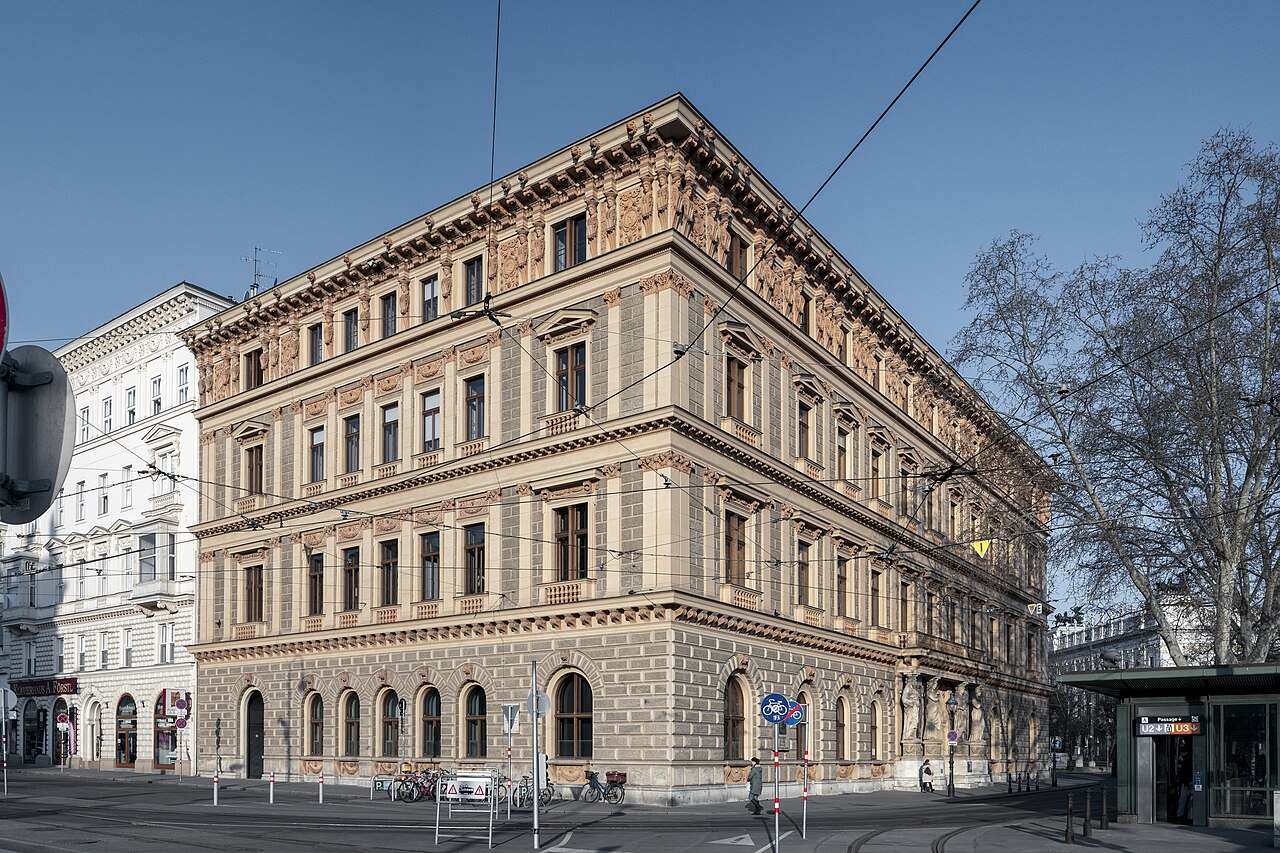
Palais Epstein
- High · Heritage site
- Historic monument
Language · 11 published
Historic monument · Innere Stadt, Vienna
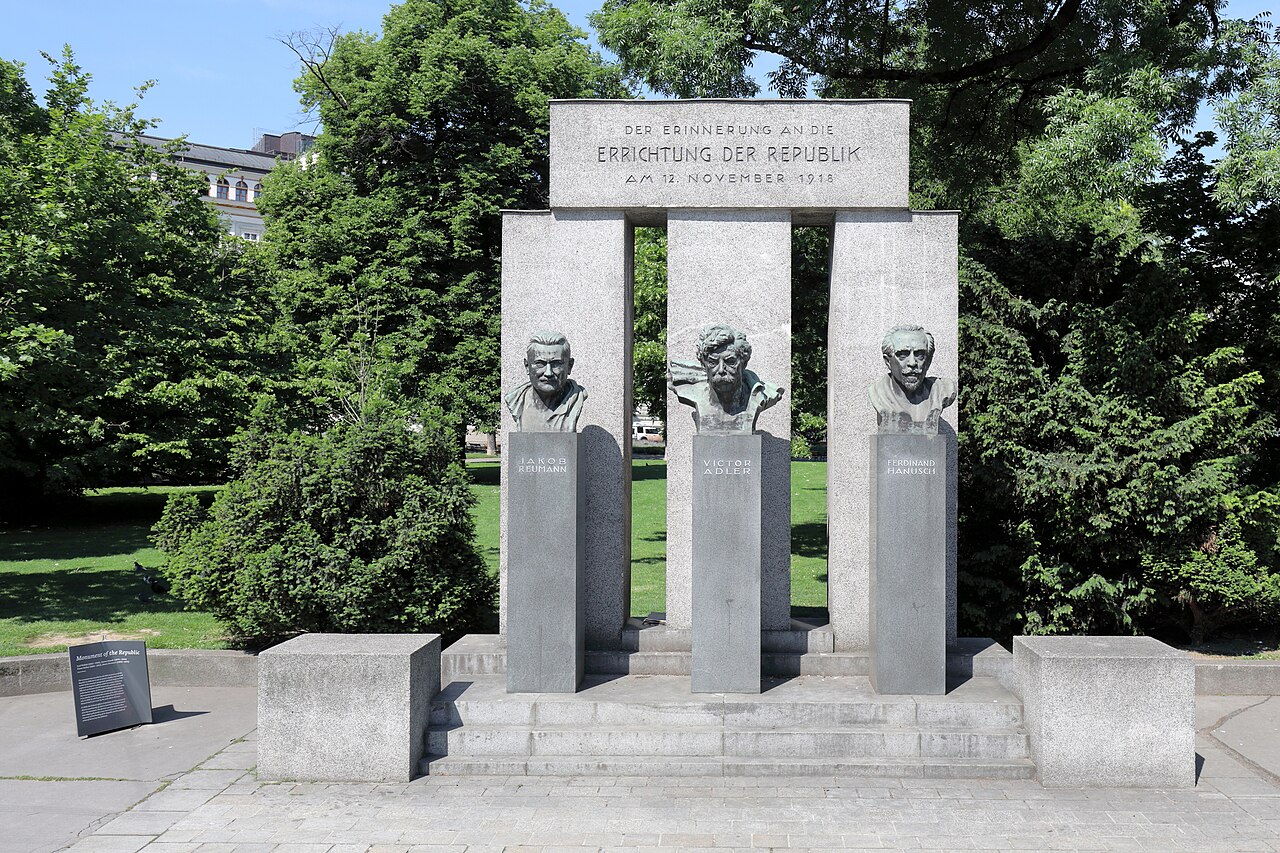
Denkmal der Republik
Reviewed by Elena Voss · Roavina Travel Editor
| Monday | 00:00 – 23:59 |
|---|---|
| Tuesday | 00:00 – 23:59 |
| Wednesday | 00:00 – 23:59 |
| Thursday | 00:00 – 23:59 |
| Friday | 00:00 – 23:59 |
| Saturday | 00:00 – 23:59 |
| Sunday | 00:00 – 23:59 |
Parsed from OpenStreetMap opening hours on 2026-09-09.
Read from the OpenStreetMap access tags; anything not listed has no tag recorded.
Set the group type to family in the planner and the day window contracts to about three quarters of a solo day.
This place is a Monument. It opened in 1928. It carries the Listed objects in Austria heritage designation.
Republikdenkmal, also known as Denkmal der Republik, commemorates the founding of the Austrian Republic in 1918. The monument marks the political transition that followed the end of Habsburg imperial rule and the emergence of republican government. For travellers, it offers a concise encounter with Austria’s modern political memory within Vienna’s historic urban landscape. This is a commemorative monument rather than a museum complex, so its value lies in the meaning attached to the site and the opportunity to connect the monument with the wider twentieth-century history of the city. Visit it as part of a route focused on Vienna’s public spaces, monuments and civic institutions.
Checked 2026-08-26 · Source
Republikdenkmal is an outdoor commemorative site, so there is no interior gallery or enclosed visitor sequence to explore. The experience comes from seeing the monument in its urban setting and considering the event it represents: the establishment of the Austrian Republic in 1918. Read any visible commemorative elements at the site and allow the surrounding streets to provide the broader context. It works best for travellers who enjoy monuments as historical markers rather than attractions built around displays and activities. The compact format makes it easy to combine with other places connected to Vienna’s political and civic history.
Checked 2026-08-26 · Source
Plan for approximately fifteen to thirty minutes. This allows time to look at the monument, read its commemorative meaning and take photographs without rushing. Visitors with a strong interest in Austrian political history may stay longer for reflection, especially when connecting the site with other monuments and government-related places in central Vienna. For most itineraries, the Republikdenkmal is a focused stop within a larger walk rather than a destination requiring a long independent visit. Its short duration makes it useful between museums, historic squares or other central landmarks, particularly on a day built around urban history.
Checked 2026-08-26 · Source
Choose a daytime visit if you want to see the monument clearly and read its commemorative details. As an outdoor monument, it fits naturally into a walking itinerary through Vienna. Spring and autumn often suit extended outdoor walks, while summer can bring more people and winter requires warm clothing for an exposed stop. Leave enough flexibility for the surrounding streets, since your experience depends on normal public-space conditions rather than a timed indoor programme. A daytime route also makes it easier to continue to nearby civic, cultural and historic sites without a break in the flow of the walk.
Checked 2026-08-26 · Source
Republikdenkmal is an outdoor commemorative monument and the visit is treated as a public-space stop rather than a ticketed attraction. There is no museum-style entry sequence to plan around. You can include it in a city walk without purchasing a dedicated admission ticket or reserving a time slot. Any expenses connected with nearby transport, cafés or separate museums belong to those activities, not to viewing the monument. The straightforward format suits travellers who want to add a meaningful historical marker to a central Vienna itinerary without committing a large block of time or a separate attraction budget.
Checked 2026-08-26 · Source
The monument is located within Vienna’s inner city and is best approached as part of a central walking route. The city’s underground, tram and bus networks serve the wider inner-city districts, while the final approach is handled on foot. Walking from the Hofburg or Kunsthistorisches Museum is practical for visitors already exploring the central historic area. Because the exact approach can depend on your starting point, use the monument’s mapped position together with current city transport information when planning the route. The site’s urban setting makes it suitable for combining civic history with museums, palaces and public squares.
Checked 2026-08-26 · Source
Treat Republikdenkmal as a commemorative place and give other visitors room for quiet observation. Its outdoor setting means you may encounter ordinary pedestrian, bicycle and street movement nearby, so remain attentive while looking at the monument or taking photographs. Weather can affect comfort, especially during a longer stop in winter or rain. Keep personal belongings secure in central Vienna and avoid standing in movement lanes. If construction, a civic gathering or another temporary urban activity changes the immediate space, continue respectfully and incorporate the monument into a later part of your walk.
Checked 2026-08-26 · Source
Personal photography suits the monument’s outdoor setting. Begin with a context photograph that shows Republikdenkmal within the surrounding urban space, then make closer images of its commemorative details. Stand where you do not obstruct pedestrians or people who are observing the memorial. A short hand-held session is usually more practical than setting up extensive equipment in a public thoroughfare. Photograph with restraint and remember that the monument represents a politically significant moment in Austrian history. If you are documenting several Vienna monuments, record the surrounding setting as carefully as the monument itself so the civic context remains visible.
Checked 2026-08-26 · Source
It commemorates the founding of the Austrian Republic in 1918 and the transition from Habsburg monarchy to republican government.
No. It is an outdoor commemorative monument in Vienna’s urban landscape, without a museum-style interior visitor route.
Allow about fifteen to thirty minutes for viewing, reading the commemorative meaning and taking photographs.
Approach it as part of a central Vienna walking route; the inner-city underground, tram and bus network serves the wider area before the final walk.
Personal photography is suitable in the outdoor setting; keep clear of pedestrian movement and give other visitors room for quiet observation.
It works as a short historical stop alongside the Hofburg, Kunsthistorisches Museum and other civic or commemorative places in central Vienna.
Loading the interactive map…
The interactive map could not be loaded.
Last updated:
Source: OpenStreetMap contributors, Wikidata ·