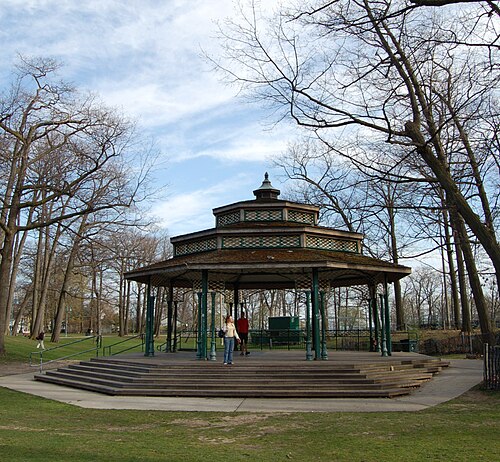
A photograph of Toronto

City guide · Canada

Up to 1 hour in Toronto, Canada — page 3

Toronto is a city of neighbourhoods arranged around a compact downtown and long transit corridors. The City Centre contains the financial, entertainment and wat...

Photograph · Jchmrt · CC BY-SA 4.0

5,225 Places
Suggested stay
Not recorded
Getting around
Walk and use TTC subway, streetcar and bus services

Turn this list into a plan

Set your days, your pace and the hours you actually want to be out. The planner works around closing days and travel time, and leaves room to eat.

Plan Toronto

Reviewed by Elena Voss · Roavina Travel Editor

Toronto is a city of neighbourhoods arranged around a compact downtown and long transit corridors. The City Centre contains the financial, entertainment and waterfront districts; Old Town lies east, the Westside extends through Queen West and beyond, and Midtown and Uptown follow the main north-south axes. Toronto Islands, Scarborough and Etobicoke are separate trips. Group downtown sights on foot and use the TTC for wider movement.

Checked 2026-08-26

Practical information

Language spoken
English and French
National practical orientation; regional and minority languages may also be used
Dialling code
+1
International calling code; local area and mobile prefixes still apply
Currency
Canadian dollar (CAD)
Use the official local currency; card acceptance varies by place
Emergency number
911
Use only for an emergency; tourist assistance may use a separate number
Plug type
Type A and B · 120 V
Check that chargers support the recorded voltage before using an adapter
Tap water
Not recorded
Water systems and advisories are managed by multiple jurisdictions

Planning a visit

September · September in Toronto has mean high 20.7°C, mean low 13.2°C, rainfall 83.4 mm, 10.6 rain days. Warm daytime conditions make Toronto's neighbourhoods, parks, and waterfront easier to explore. September supports a full day of outdoor stops in Toronto.

  1. January: recurring difficult conditions
  2. February: recurring difficult conditions
  3. March: viable with meaningful trade-offs
  4. April: good time to visit
  5. May: good time to visit
  6. June: best time to visit
  7. July: best time to visit
  8. August: good time to visit
  9. September: best time to visit — current month
  10. October: good time to visit
  11. November: viable with meaningful trade-offs
  12. December: viable with meaningful trade-offs

Sources

Top things to see

Ranked by importance — sitelinks, pageviews and heritage status, not editor preference.

  1. Corktown Commons Corktown Commons
    32 1 hour

    Corktown Commons

    Corktown Common

    Corktown Common is a large public park in Toronto’s West Don Lands. It combines recreation, habitat, and flood protection for the lower Don River area.

    • Must see
    • Nature site
  2. Berczy Park Berczy Park
    33 1 hour

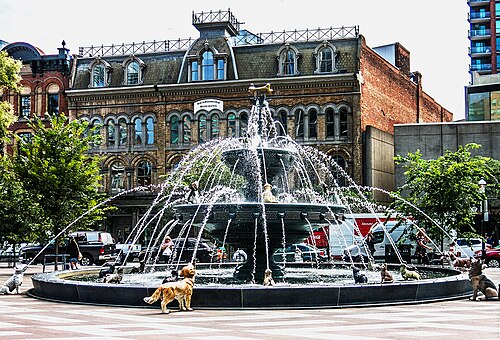
    Berczy Park

    Berczy Park is a compact public park in Toronto’s Old Town, close to Front Street, Scott Street, St. Lawrence Market, and the historic commercial streets around them.

    • Must see
    • Nature site
  3. Sugar Beach Sugar Beach
    34 1 hour

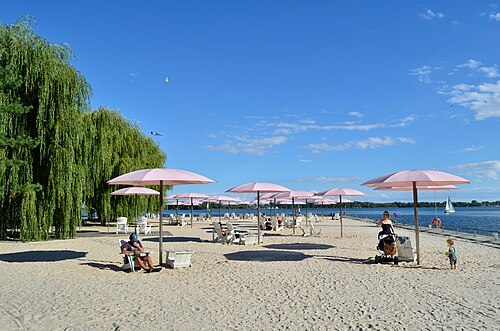
    Sugar Beach

    Sugar Beach is a public waterfront park on Toronto's eastern harbour. Its sandy beach, pink umbrellas, and shoreline seating create a distinctive public space beside an area shaped by industrial harbour activity.

    • Must see
    • Nature site
  4. HTO Park HTO Park
    35 1 hour

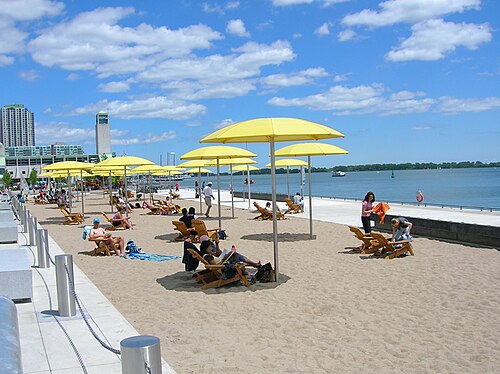
    HTO Park

    HTO Park is an urban beach park located on Toronto's central waterfront. The park features sandy beach areas, grassy lawns, and distinctive yellow umbrellas that have become a visual signature.

    • Must see
    • Nature site
  5. Canoe Landing Park Canoe Landing Park
    36 1 hour

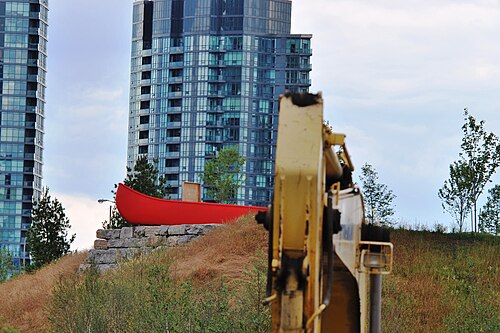
    Canoe Landing Park

    Canoe Landing Park is a public park in Toronto's CityPlace neighbourhood, surrounded by high-rise residential towers and former railway lands. Its identity comes from public art by Canadian artist and author Douglas Coupland, especially the large red canoe.

    • High
    • Nature site
  6. The Bentway The Bentway
    37 45 min

    The Bentway

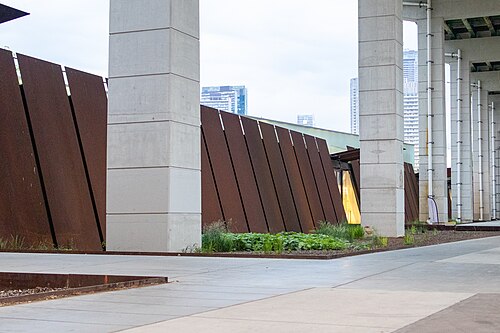
    The Bentway is a public realm and arts space located beneath the elevated Gardiner Expressway in Toronto. It functions as a linear corridor connecting the historic Fort York district to the city's waterfront area.

    • High
    • Historic monument
  7. RBC Amphitheatre RBC Amphitheatre
    38 1 hour

    RBC Amphitheatre

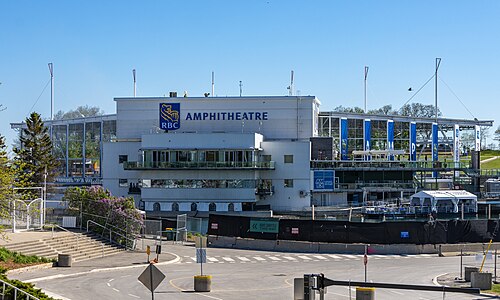
    Budweiser Stage, locally known as RBC Amphitheatre, is a large outdoor amphitheatre situated on the Exhibition Place grounds in Toronto, Canada. The venue hosts major concerts and live entertainment events, operated under the Live Nation network.

    • High
    • Art and culture venue
  8. Roy Thomson Hall Roy Thomson Hall
    39 1 hour

    Roy Thomson Hall

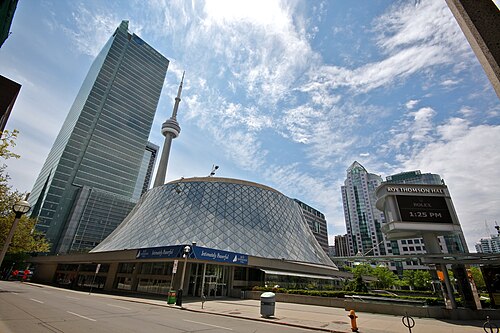
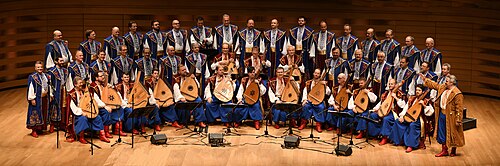
    Roy Thomson Hall is a major concert venue in downtown Toronto, located on King Street West. It serves as the primary home of the Toronto Symphony Orchestra.

    • High
    • Art and culture venue
  9. Four Seasons Centre for the Performing Arts Four Seasons Centre for the Performing Arts
    40 1 hour

    Four Seasons Centre for the Performing Arts

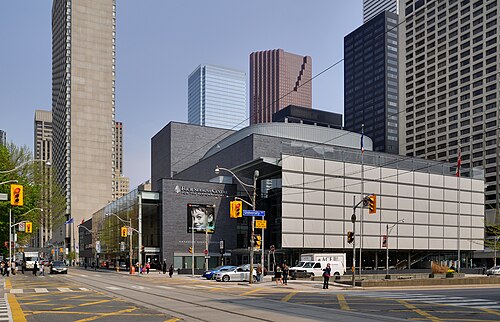
    The Four Seasons Centre for the Performing Arts is a landmark downtown Toronto venue devoted to opera and ballet.

    • High
    • Art and culture venue
  10. Princess of Wales Theatre Princess of Wales Theatre
    41 1 hour

    Princess of Wales Theatre

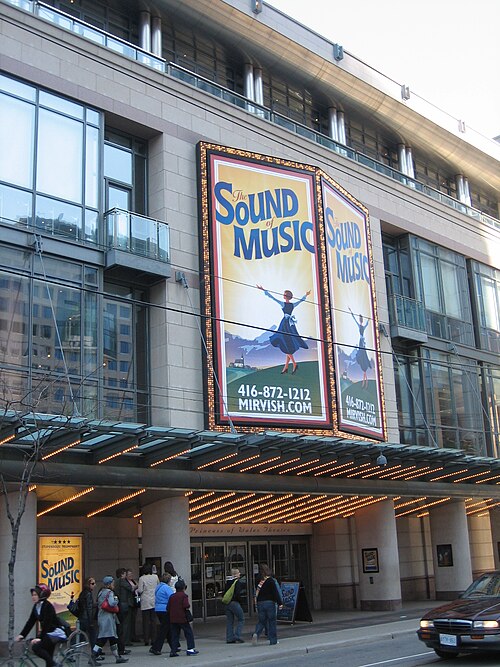
    Princess of Wales Theatre is a major commercial theatre in Toronto’s Entertainment District. Developed by the Mirvish family, it is one of the city’s principal venues for large touring productions, especially Broadway-style musicals that need a substantial stage and auditorium.

    • High
    • Art and culture venue
  11. TIFF Lightbox TIFF Lightbox
    42 1 hour

    TIFF Lightbox

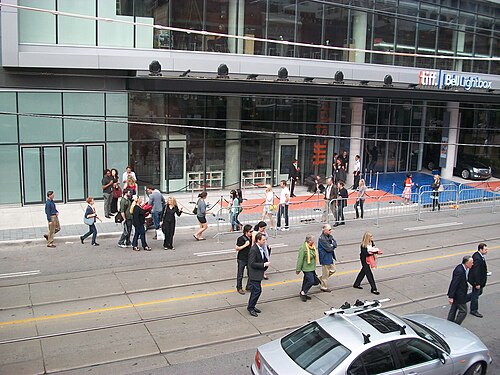
    TIFF Bell Lightbox is the permanent headquarters of the Toronto International Film Festival, located in Toronto's Entertainment District. The facility serves as a year-round cultural centre dedicated to film exhibition, education, and presentation.

    • High
    • Art and culture venue
  12. Koerner Hall Koerner Hall
    43 1 hour

    Koerner Hall

    Koerner Hall is a concert venue within Toronto’s Royal Conservatory of Music. It hosts classical, jazz, chamber, and contemporary performances in an intimate hall designed around close audience-performer contact and carefully shaped acoustics.

    • High
    • Art and culture venue
  13. Metropolitan United Church Metropolitan United Church
    44 30 min

    Metropolitan United Church

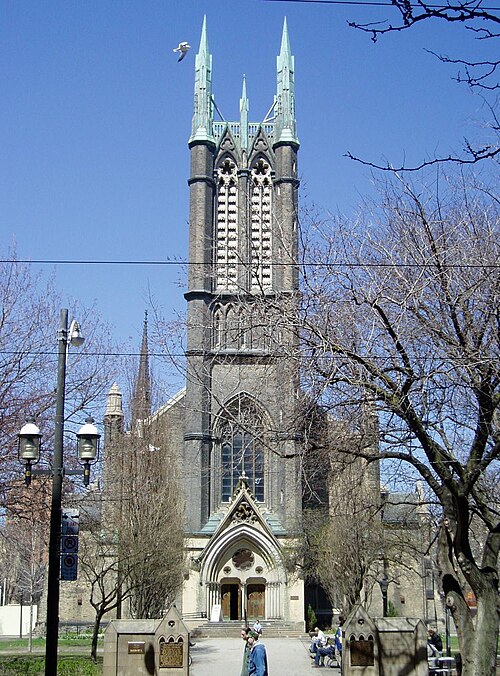
    Metropolitan United Church is a large historic place of worship in downtown Toronto. Its Gothic Revival character and prominent central location make it an architectural landmark as well as a living religious institution.

    • High
    • Place of worship
  14. Kew Gardens Kew Gardens
    45 1 hour

    Kew Gardens

    Kew Gardens is a historic public park in Toronto’s Beaches neighbourhood, close to Lake Ontario. It is a neighbourhood green space rather than a botanical institution, offering landscaped areas, lawns, trees and room for community life.

    • High
    • Nature site

Source: OpenStreetMap contributors, Wikidata ·

How the city is laid out

Lake Ontario forms Toronto's southern edge, with the downtown core immediately north of the waterfront. The Entertainment District and Financial District sit centrally; Old Town and the Distillery District are east, while Queen West, Ossington and High Park extend west. Midtown and Uptown follow Yonge Street north. The Toronto Islands require a ferry, and Scarborough and Etobicoke sit well outside the central walking area.

Checked 2026-08-26

Getting around

Walk through the compact downtown and use the TTC subway, streetcars and buses for longer journeys. Streetcars are particularly useful across east-west neighbourhood corridors, while the subway handles the principal north-south and cross-city axes. The PATH provides an underground pedestrian network through the downtown core. Ferries serve the Toronto Islands, and regional rail is useful for airport and Greater Toronto connections.

Checked 2026-08-26

Common questions

How many days should I spend in Toronto?

A fixed stay length is not recorded. Plan the downtown and waterfront first, then add neighbourhoods, Toronto Islands or an outer district according to your interests.

Is downtown Toronto walkable?

Yes. The City Centre, waterfront, Old Town and nearby westside districts are accessible on foot, with the TTC available for longer links.

What is the best way to get around Toronto?

Use a combination of walking and TTC subway, streetcar and bus services. The network connects downtown with neighbourhoods along the city's main corridors.

What is the PATH?

PATH is an underground pedestrian network through downtown Toronto. It links buildings and services and can provide a sheltered walking option in poor weather.

Can I walk to the Toronto Islands?

No. The islands are offshore and require a ferry or another authorised water connection. Treat them as a separate excursion from the downtown waterfront.