
28 min walk
Garden of Archimedes
- Must see
- Museum
Language · 11 published
Museum · Florence
La Fabbrica dei Saperi
Reviewed by Elena Voss · Roavina Travel Editor
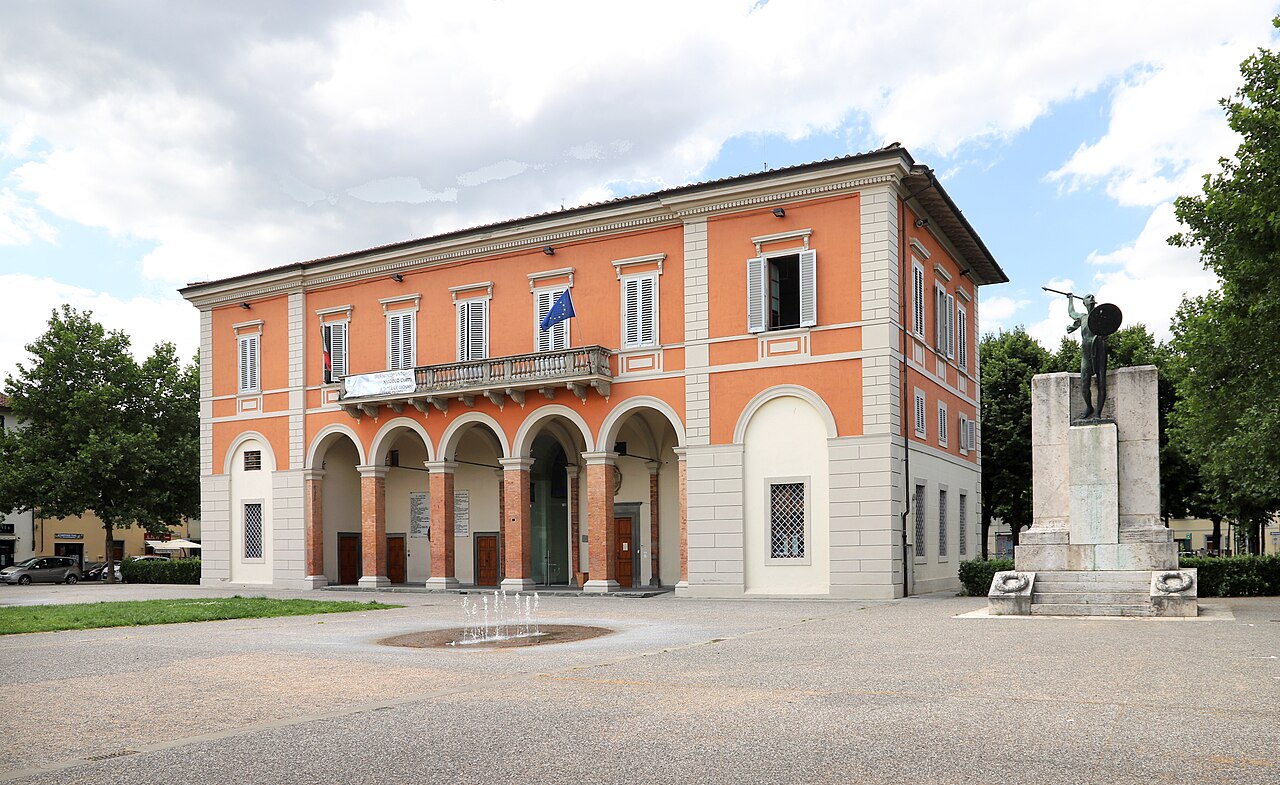
This place is a Museum. It opened in 1870. It was built in the Renaissance Revival architecture style. It was designed by Francesco Martelli. It carries the Italian national heritage heritage designation.
Comune vecchio is the local name associated with La Fabbrica dei Saperi in Florence. The name connects the place with an older municipal identity and with the idea of a house of knowledge or learning. For travelers, it is a smaller cultural stop within Florence’s broader urban heritage, offering an opportunity to look beyond famous churches, palaces, and major museums. Its interest lies in the relationship between civic history, local naming, and the city’s continuing cultural life. La Fabbrica dei Saperi, locally known as Comune vecchio, is a ranked visitor place in Florence retained from the city fact pack and matched exactly to the production city pool. The node places it within Florence's municipal area.
Checked 2026-08-26 · Source
The supplied record identifies La Fabbrica dei Saperi and the local name Comune vecchio, but it does not establish a dependable list of interiors, permanent objects, exhibitions, or workshops. Read the site through its civic and educational associations rather than expecting a defined museum collection. The name suggests a place where municipal memory and knowledge-related activity meet. Its value for a curious traveler is therefore contextual: notice the building’s role within Florence and how local cultural places sit alongside the city’s internationally known monuments.
Checked 2026-08-26 · Source
Plan a flexible thirty-minute to one-hour stop if you are exploring the surrounding Florence neighborhood. The visit can be shorter when you are viewing the place as part of a civic-heritage walk, or longer if a cultural activity or accessible interior gives you more to engage with. Do not let this smaller attraction displace the city’s principal museums when time is tight. It works best as an additional layer in an itinerary focused on local history, urban architecture, and the less obvious places that give Florence character.
Checked 2026-08-26 · Source
Use Comune vecchio as a daytime stop within a broader walk through Florence. Spring and autumn provide comfortable conditions for moving between neighborhoods, while summer is easier earlier in the day or after the strongest heat. Winter can be appealing for a quieter cultural route. The site’s civic and educational character makes it a natural companion to other local-history sights rather than a destination requiring a full day. Leave space in your schedule for nearby streets and public buildings, since the surrounding urban context is part of the experience.
Checked 2026-08-26 · Source
The supplied place record does not establish an admission amount, discount, city-pass inclusion, or reservation condition for Comune vecchio. Keep the stop adaptable and avoid treating it as a confirmed paid museum entry in your budget. Its role in a Florence itinerary is cultural and civic, complementing major ticketed landmarks with a smaller place connected to local identity. If you are planning several formal attractions in one day, use Comune vecchio as an optional addition rather than the anchor of the schedule.
Checked 2026-08-26 · Source
Comune vecchio is located within Florence’s municipal area and can be approached as part of an urban walking route. The supplied record does not identify a dependable street address, transit stop, parking location, or precise entrance. Use the mapped point for the final approach and allow time to orient yourself in the surrounding streets. Walking and public transport are useful ways to move through Florence, while vehicle access in historic areas can be restricted. Treat this as a neighborhood stop, not a landmark with a single universally recognized entrance.
Checked 2026-08-26 · Source
Comune vecchio is a smaller civic-cultural place, so its experience may differ from Florence’s large, highly staffed museums. The supplied record does not establish access features, visitor facilities, language provision, crowd levels, or bag rules. Historic buildings can include uneven floors or stairs. Keep personal belongings secure while moving through busy urban streets, and give the site appropriate respect if civic or educational activity is taking place. A calm, observant approach works better than expecting a conventional gallery sequence or extensive tourist infrastructure.
Checked 2026-08-26 · Source
The building and its civic setting are the most useful photographic subjects associated with Comune vecchio. The supplied record does not establish a specific photography policy, so follow signs and respect any activity taking place inside or around the property. Focus on architectural details, entrances, surfaces, and the way the place sits within Florence’s streets. Keep equipment unobtrusive, especially if the building serves an active public or educational purpose. A few contextual images can communicate more than a long series of isolated façade shots.
Checked 2026-08-26 · Source
Comune vecchio is the local name associated with La Fabbrica dei Saperi, a smaller civic-cultural place in Florence.
The name evokes a house of knowledge or learning and gives the site an educational and cultural character within Florence’s urban heritage.
Plan approximately thirty minutes to one hour, depending on whether you are exploring only the place or a wider local-history route.
It is better understood as a smaller civic-cultural stop rather than one of Florence’s large museum collections.
Use it as an optional addition to a daytime walk focused on local history, civic buildings, architecture, and less prominent cultural places.
Photograph the building in context, including its façade, entrances, architectural details, and relationship with Florence’s surrounding streets.
Loading the interactive map…
The interactive map could not be loaded.
Last updated:
Source: OpenStreetMap contributors, Wikidata ·