
2 min walk
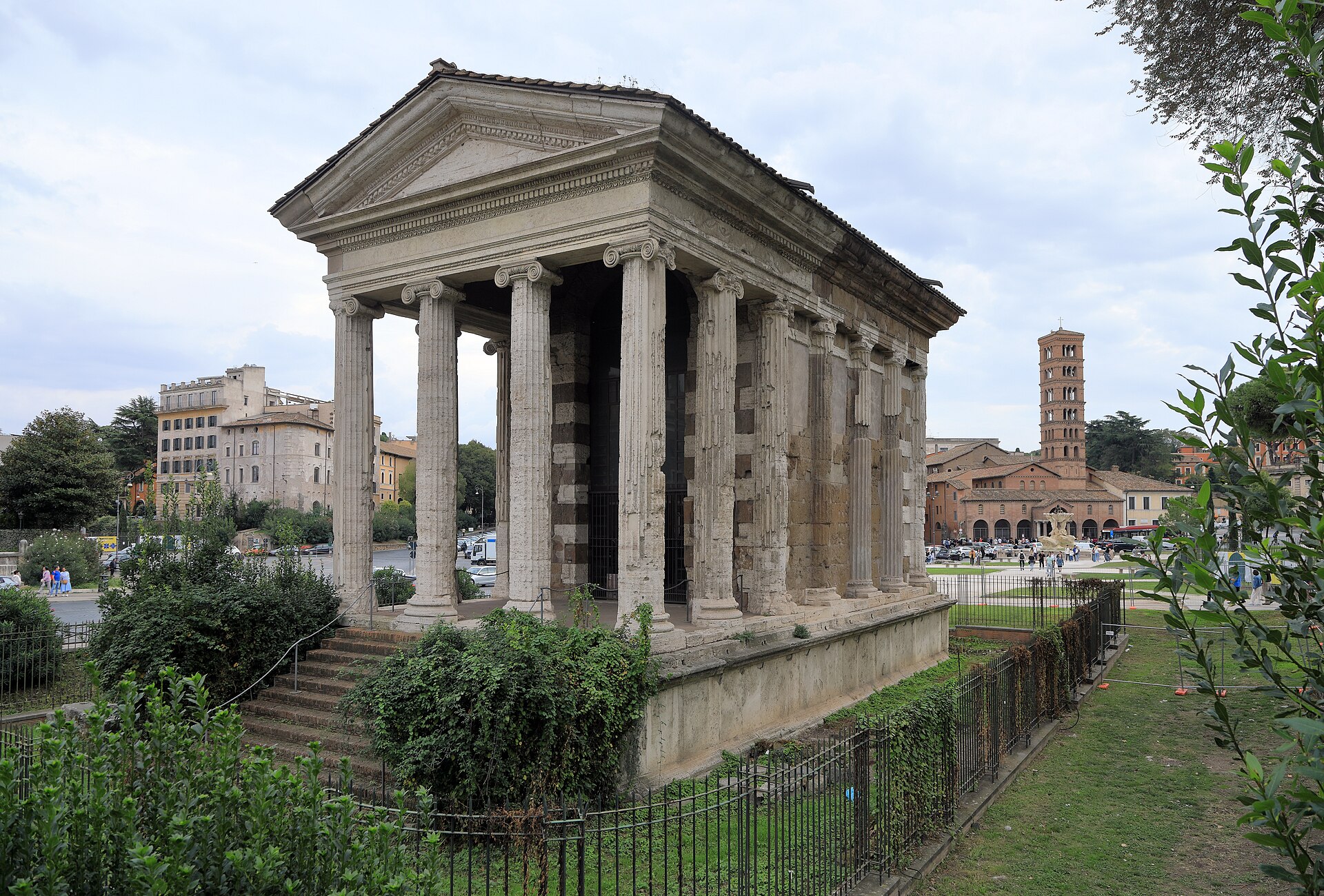
Temple of Portunus
- Must see · Heritage site
- Historic monument
Language · 11 published
Art and culture venue · Rome
Reviewed by Elena Voss · Roavina Travel Editor
This place is a Artwork. It is built of marble.
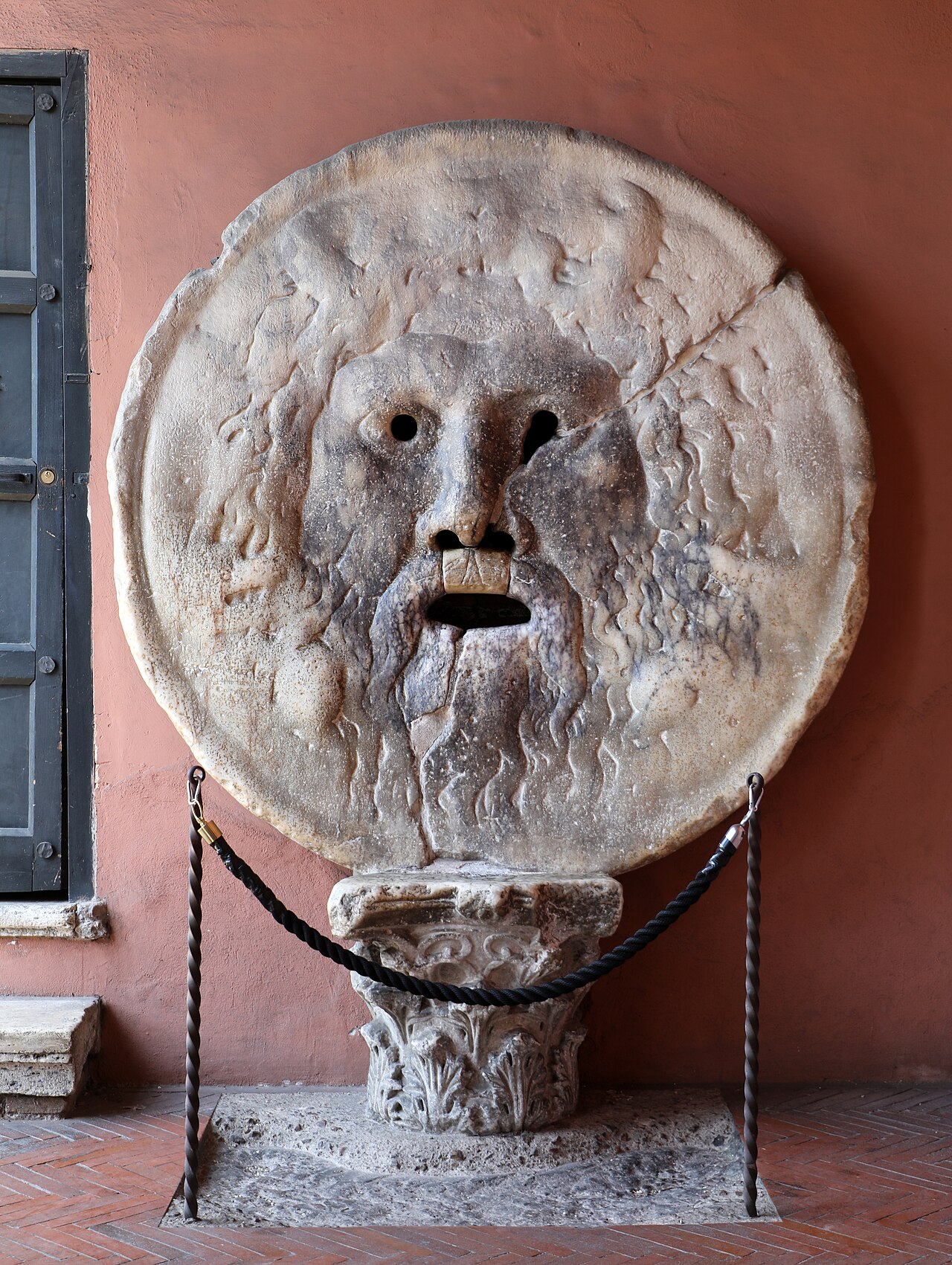
The Bocca della Verità is a large ancient marble mask set into the wall of the portico of the church of Santa Maria in Cosmedin in Rome. The carved face, whose name translates to Mouth of Truth, features an open mouth with holes for eyes and nostrils. Its original purpose remains uncertain, with theories suggesting it may have been a drain cover, manhole, or decorative element from a Roman temple or fountain. The disk has become one of Rome's most visited symbols through popular culture rather than documented ancient significance.
Checked 2026-08-26
Visitors encounter a circular marble relief approximately face-height, mounted on the church's exterior wall in a covered walkway. The mask depicts a bearded male face with wide-open mouth. There is no interior chamber or separate exhibition. The attraction consists solely of this single sculptural element, with visitors typically queuing to place a hand inside the mouth. The adjacent church of Santa Maria in Cosmedin, a medieval structure with its own architectural interest and the reputed relics of Saint Valentine, stands immediately alongside but constitutes a separate visitor experience.
Checked 2026-08-26
Most visitors spend between fifteen and thirty minutes at the Bocca della Verità, with the majority of this duration consumed by waiting in line. The actual interaction with the sculpture takes mere moments: approaching the mask, inserting a hand into the mouth for the traditional photograph, and stepping aside for the next visitor. Those wishing to enter the church of Santa Maria in Cosmedin should allocate additional time separately. The site functions as a brief stop rather than a prolonged destination within a broader Rome itinerary.
Checked 2026-08-26
The Bocca della Verità stands in an open portico, making it physically accessible at all hours from the exterior walkway, though official supervision and the opportunity to approach and touch the mask presumably occurs only during staffed periods. Seasonal variations in daylight and tourist density affect the visitor experience. Summer months typically bring heavier crowds and longer queues. Early morning arrivals may offer reduced waiting times. Visitors should verify current operational status through official channels before planning a specific visit. Check the operator's own site for the travel date before relying on a schedule or fare.
Checked 2026-08-26
The Bocca della Verità has historically been accessible without charge, though donations toward church maintenance are sometimes encouraged. No formal ticketing infrastructure is evident from external observation. Visitors should not assume payment is required without current verification. Any changes to access policy, including the introduction of fees or reservation systems, would supersede historical practice. Budget-conscious travellers should confirm present arrangements through official church or municipal sources rather than relying on outdated guidebook information or third-party assumptions about cost-free entry. Check the operator's own site for the travel date before relying on a schedule or fare.
Checked 2026-08-26
The Bocca della Verità occupies a position in the historic centre of Rome, south of the Capitoline Hill and near the Tiber River. The Circus Maximus lies in close proximity. Multiple bus routes serve the surrounding area. The nearest Metro station is Circo Massimo on Line B, requiring a short walk. The site sits within reasonable walking distance of the Colosseum, the Roman Forum, and other major ancient monuments. Pedestrian navigation through Rome's dense historic fabric presents the most straightforward approach for visitors already exploring the central archaeological zone on foot.
Checked 2026-08-26
Queues for the Bocca della Verità can become substantial, particularly during peak tourist seasons and midday hours. Visitors should anticipate waiting in direct sun or inclement weather, as the line forms in the open portico with limited shelter. The surrounding pavement is uneven ancient stone, presenting trip hazards and accessibility challenges. Pickpockets may operate in crowded tourist concentrations. The hand-in-mouth gesture, while traditional, requires visitors to place extremities into a surface touched by countless previous visitors. Personal hygiene considerations and any health vulnerabilities should inform individual decisions about physical interaction with the sculpture.
Checked 2026-08-26
Photography of the Bocca della Verità is permitted and constitutes the primary activity for most visitors. The iconic image shows a hand inserted into the mask's mouth, referencing the popular legend that liars will lose their hand to the stone. Achieving this photograph requires cooperation from companions or fellow queue members, as no official photography service operates. Lighting conditions in the portico vary throughout the day. Flash photography may produce harsh results given the marble's reflective surface. Visitors should remain aware of queue pressure and limit posed sessions to maintain consideration for waiting individuals.
Checked 2026-08-26
The legend that the mask bites off the hands of liars is a medieval folklore tradition without historical basis. The sculpture has no mechanical function.
The church of Santa Maria in Cosmedin stands adjacent to the Bocca della Verità. Entry policies and hours for the church are separate and should be verified independently.
No booking requirement is recorded. The site traditionally operates on a walk-up basis, though visitors should confirm current arrangements through official sources.
The historic portico and surrounding area present uneven ancient paving. Accessibility conditions are not formally recorded and may present challenges.
The precise age and origin are uncertain. It is ancient Roman in manufacture, though whether it dates to the Republican or Imperial period remains undetermined.
Popular recognition derives substantially from its appearance in the 1953 film Roman Holiday starring Audrey Hepburn and Gregory Peck, which established the hand-in-mouth gesture as an iconic tourist ritual.
Loading the interactive map…
The interactive map could not be loaded.
Last updated:
Source: OpenStreetMap contributors, Wikidata ·