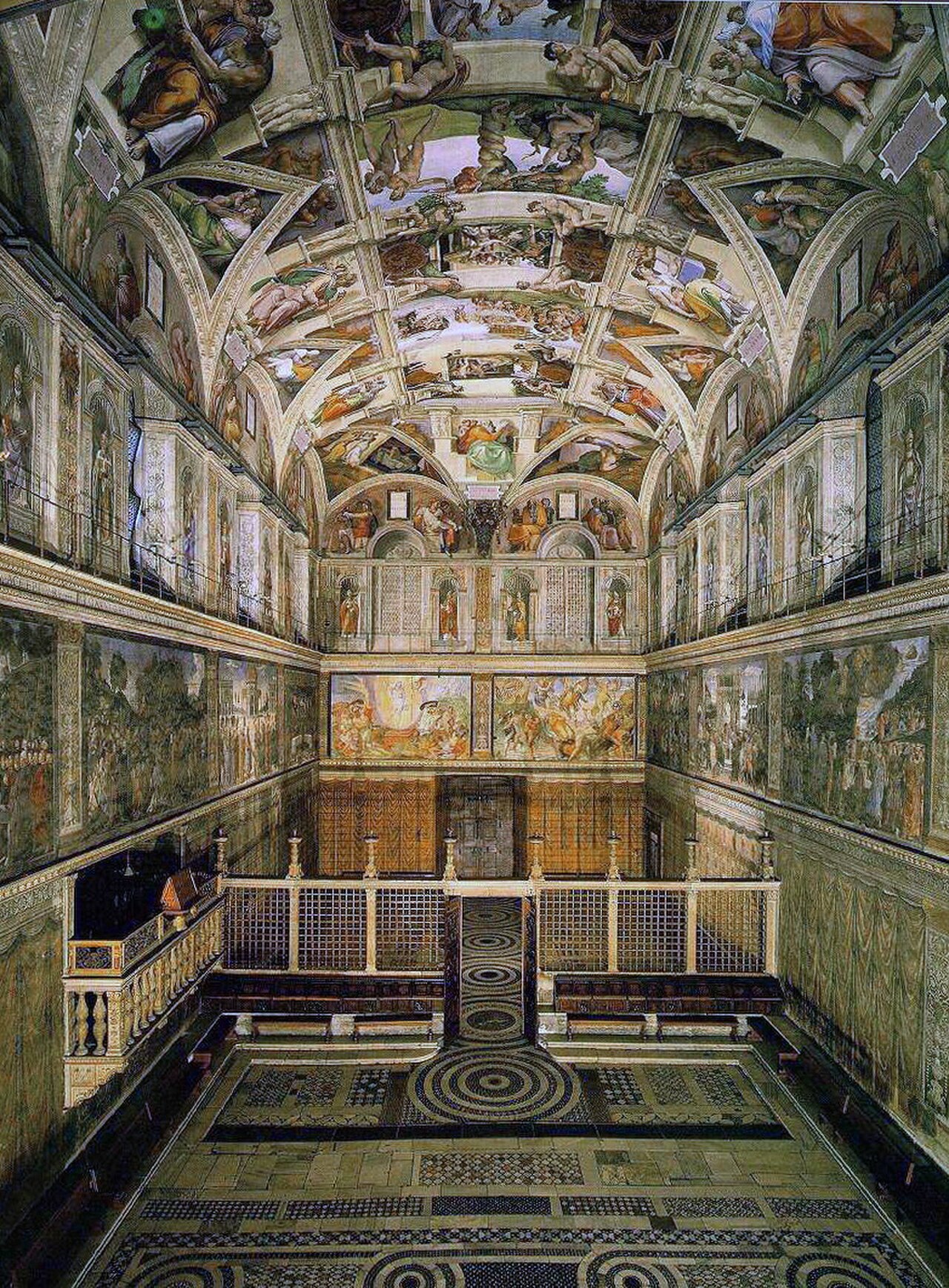
1 min walk
Sistine Chapel
- Must see
- Historic site
Art and culture venue · Rome
Pietà
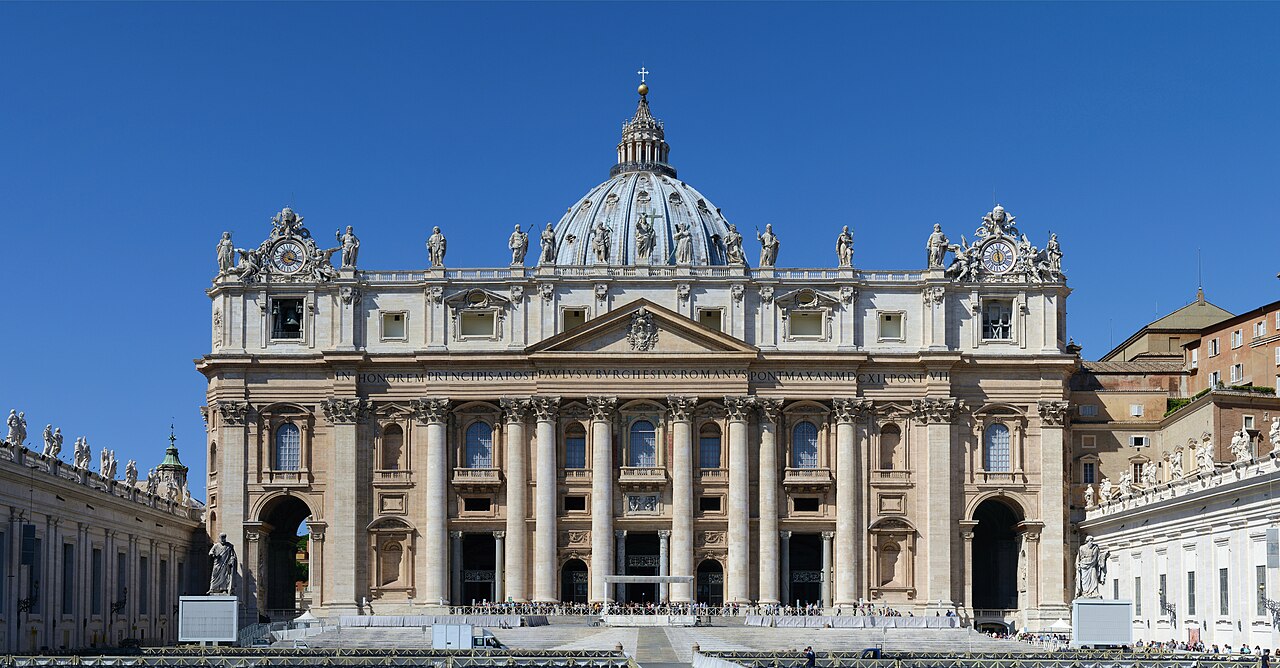
The Pietà (Madonna della Pietà, 1498–1499) is a Carrara marble sculpture by Michelangelo Buonarroti in St Peter's Basilica, Vatican City, showing the moment when Jesus, taken down from the cross, is given to his mother Mary. It is a key work of Italian Renaissance sculpture and is often taken as the start of the High Renaissance. It was commissioned by the French cardinal Jean Bilhères de Lagraulas, then French ambassador in Rome, probably as an altarpiece for his funeral chapel in Old St Peter's. When that chapel was demolished the statue was preserved, and in the 18th century it was moved to its present place, the first chapel on the north side after the entrance of the new basilica.
Checked 2026-11-05 · Source
The composition is pyramidal, with its apex at Mary's head, widening down the drapery of her dress to the base, the rock of Golgotha. Much of Mary's body is hidden by her monumental drapery, which makes the relationship of the two figures look natural despite the difficulty of showing a grown man lying full-length in a woman's lap. Mary appears younger than her son; art historians believe Michelangelo was inspired by a passage of Dante's Paradiso: 'O virgin mother, daughter of your Son'. The work balances early naturalism with Renaissance ideals of classical beauty, and it is the only piece Michelangelo ever signed.
Checked 2026-11-05 · Source
The statue had to be restored after the figure of Mary was vandalised on Pentecost Sunday 1972, and since that attack it has been protected by a bulletproof glass screen. That screen was replaced and modernised in November 2024 in preparation for the 2025 Jubilee. The sculpture stands in the first chapel on the north side after the entrance of St Peter's Basilica, so it is one of the first works visitors reach on entering.
Checked 2026-11-05 · Source
In the first chapel on the north side after the entrance of the basilica.
The figure of Mary was vandalised on Pentecost Sunday 1972; since then a bulletproof glass screen protects the statue.
Yes. It is the only piece Michelangelo ever signed.
Loading the interactive map…
The interactive map could not be loaded.
Last updated:
Source: OpenStreetMap contributors, Wikidata ·