
2 min walk
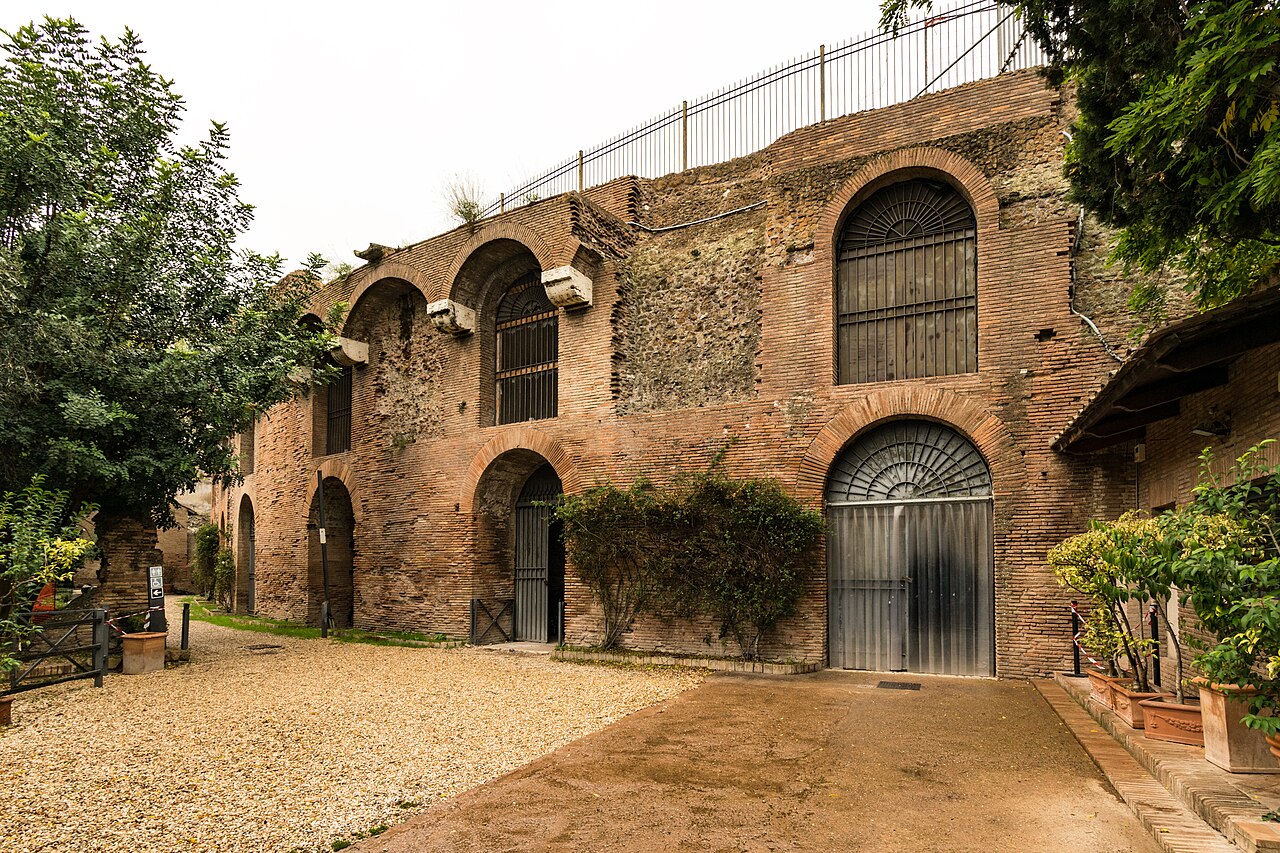
Aurelian Walls
- Must see · Heritage site
- Historic site
Art and culture venue · Rome
Mosè
Michelangelo's Moses (c. 1513–1515) is a marble sculpture housed in the Basilica of San Pietro in Vincoli in Rome. It was made for the tomb of Pope Julius II, who commissioned the tomb from Michelangelo in 1505; Julius died in 1513 and the tomb was finally completed in 1545. Michelangelo's initial design was massive, calling for more than 40 statues, with Moses on a tier about 3.74 metres high opposite a figure of St Paul; in the final design the seated Moses occupies the centre of the bottom tier. The statue measures 235 by 210 centimetres. Giorgio Vasari called it unequalled by any modern or ancient work.
Checked 2026-11-05 · Source
Moses is shown seated, resting one arm on the tablets of the Law and holding his long beard with the other hand; Vasari wrote that the hair, so difficult to render in sculpture, is so soft that the chisel seems to have become a brush. The figure has horns on his head, based on a description in chapter 34 of Exodus in the Vulgate, the Latin Bible used at the time; some scholars see an antisemitic implication in the horns, while others consider them simply a convention based on a translation error. Sigmund Freud's 1916 interpretation of the statue is particularly well known, and the delicacy of features such as the flowing hair is seen as a remarkable technical achievement.
Checked 2026-11-05 · Source
In the Basilica of San Pietro in Vincoli in Rome, at the centre of the tomb of Pope Julius II.
They follow a description in Exodus 34 in the Vulgate, the Latin Bible used at the time; some consider it a convention based on a translation error.
Around 1513–1515, for the tomb of Pope Julius II commissioned in 1505.
Loading the interactive map…
The interactive map could not be loaded.
Last updated:
Source: OpenStreetMap contributors, Wikidata ·