2 min walk
Appian Way
- Must see
- Historic monument

Historic monument · Rome
Catacombe di San Sebastiano
The Catacombs of San Sebastiano are an ancient underground cemetery complex beside the Appian Way. The site takes its name from Saint Sebastian, the Christian martyr traditionally associated with burial here. Early Christian communities cut passages, chambers and burial niches into Rome’s volcanic tufa, creating a layered cemetery beneath the road’s archaeological landscape. The connection with Saint Sebastian made San Sebastiano an important pilgrimage destination. Visit for the contrast between the open Roman road above and the confined, subterranean world below it. The Catacombs of San Sebastiano are an ancient underground burial complex located along the Appian Way in Rome. The site takes its name from Saint Sebastian, a Christian martyr traditionally believed to have been buried here. The underground passages present significant challenges including stairs and uneven surfaces. Visitors with mobility concerns should contact the site directly to assess current accessibility provisions.
Checked 2026-08-26 · Source
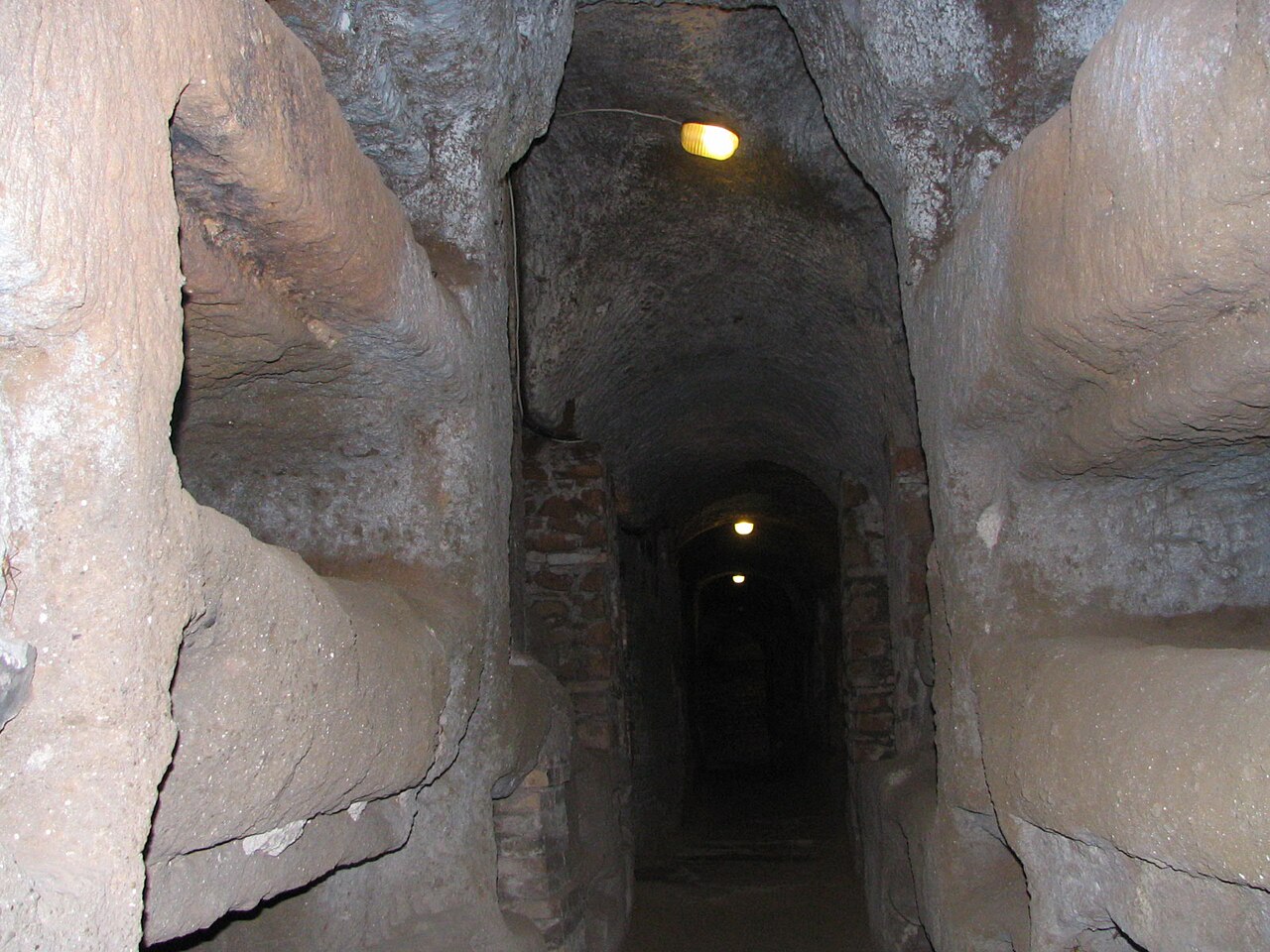
The underground route runs through passages and chambers carved from tufa, with loculi, arcosolia and cubicula showing different burial forms. Inscriptions and fragments of early Christian art connect the physical spaces with the people and beliefs of the cemetery. The associated basilica above ground adds another historical layer, linking the catacombs to later Christian architecture and devotion. The visit is not a broad underground walk: the catacomb passages are a guided, focused encounter with burial spaces, carved surfaces and the changing relationship between the cemetery and the church above.
Checked 2026-08-26 · Source
Allow about one hour for the catacomb visit, with the group’s guided progression setting the pace underground. Add time for the basilica above ground and the Appian Way if you are making San Sebastiano part of a wider archaeological outing. Stairs, uneven ancient surfaces and narrow passages make the visit slower than its duration suggests. Comfortable shoes with reliable grip help on the descent and through the burial levels. A combined excursion can easily take a half-day once the approach and nearby monuments are included.
Checked 2026-08-26 · Source
The underground spaces maintain more stable temperatures than the Appian Way above, making San Sebastiano a useful contrast during hot Roman weather. Summer heat and winter rain affect the outdoor approach rather than the catacomb environment itself. Pair the visit with an early or late outdoor walk when the road is cooler and more comfortable. The catacombs are a working religious and heritage site, and the guided format means the visit must fit the group’s scheduled movement. Leave enough time for the basilica and return journey.
Checked 2026-08-26 · Source
The catacombs use a dedicated admission system associated with ecclesiastical or heritage management, separate from walking on the public Appian Way. Individual visitors and groups follow the site’s own entry arrangements, while guided access forms the standard way to enter the underground passages. The above-ground basilica and nearby attractions may have different arrangements. Treat San Sebastiano as a separately ticketed destination when building an Appian Way route, and allow the guided visit to determine the timing of the rest of the excursion.
Checked 2026-08-26 · Source
The catacombs lie along Via Appia Antica on Rome’s rural-urban fringe. Buses connect the area with central Rome, but the final approach can require walking along the historic road. Cycling is useful for linking San Sebastiano with nearby Appian Way monuments. A private car can simplify the outer-city approach, although vehicle restrictions affect sensitive sections of the ancient route. Plan the return journey as carefully as the outward trip because services are less frequent here than in central Rome.
Checked 2026-08-26 · Source
Expect stairs, uneven floors, narrow passages and subdued lighting underground. These conditions can be difficult for wheelchair users and visitors with limited mobility, respiratory concerns or claustrophobia. Wear shoes with dependable grip and keep personal belongings secure while using stairs. The catacombs are burial and religious spaces, so remain quiet and follow the guide’s route through restricted areas. Surface and underground temperatures differ, which can affect comfort. The guided format is part of the experience: stay with the group and do not wander beyond the permitted path.
Checked 2026-08-26 · Source
Underground photography is secondary to the preservation and religious character of the catacombs. The passages are dim, so handheld photographs can be difficult without raising sensitivity to flash or disturbing other visitors. Follow the site’s instructions and the guide’s directions before photographing niches, inscriptions or devotional spaces. Flash may be restricted in order to protect archaeological material and preserve the atmosphere. Above ground, the basilica and Appian Way offer more open compositions, with tufa, stone, vegetation and the road providing visual context for the underground visit.
Checked 2026-08-26 · Source
Guided tours form the standard access method for the underground sections, and independent exploration is generally not permitted.
The underground visit takes about one hour, with extra time needed for the basilica above ground and nearby Appian Way sites.
The route includes loculi, arcosolia and cubicula carved into volcanic tufa, together with inscriptions and fragments of early Christian art.
Wear comfortable footwear with reliable grip for stairs and uneven surfaces, and choose clothing suitable for cooler underground conditions.
Yes. The catacombs stand beside Via Appia Antica and can be combined with the ancient road, nearby monuments and the associated basilica.
Narrow passages, stairs, uneven flooring and subdued lighting can challenge visitors with limited mobility or claustrophobia.
Loading the interactive map…
The interactive map could not be loaded.
Last updated:
Source: OpenStreetMap contributors, Wikidata ·
_(14760292146).jpg)